
Isaiah

66 Chapters
Isaiah: The Whole Book, Chapter by Chapter
A Crowded Temple and a City Full of Blood
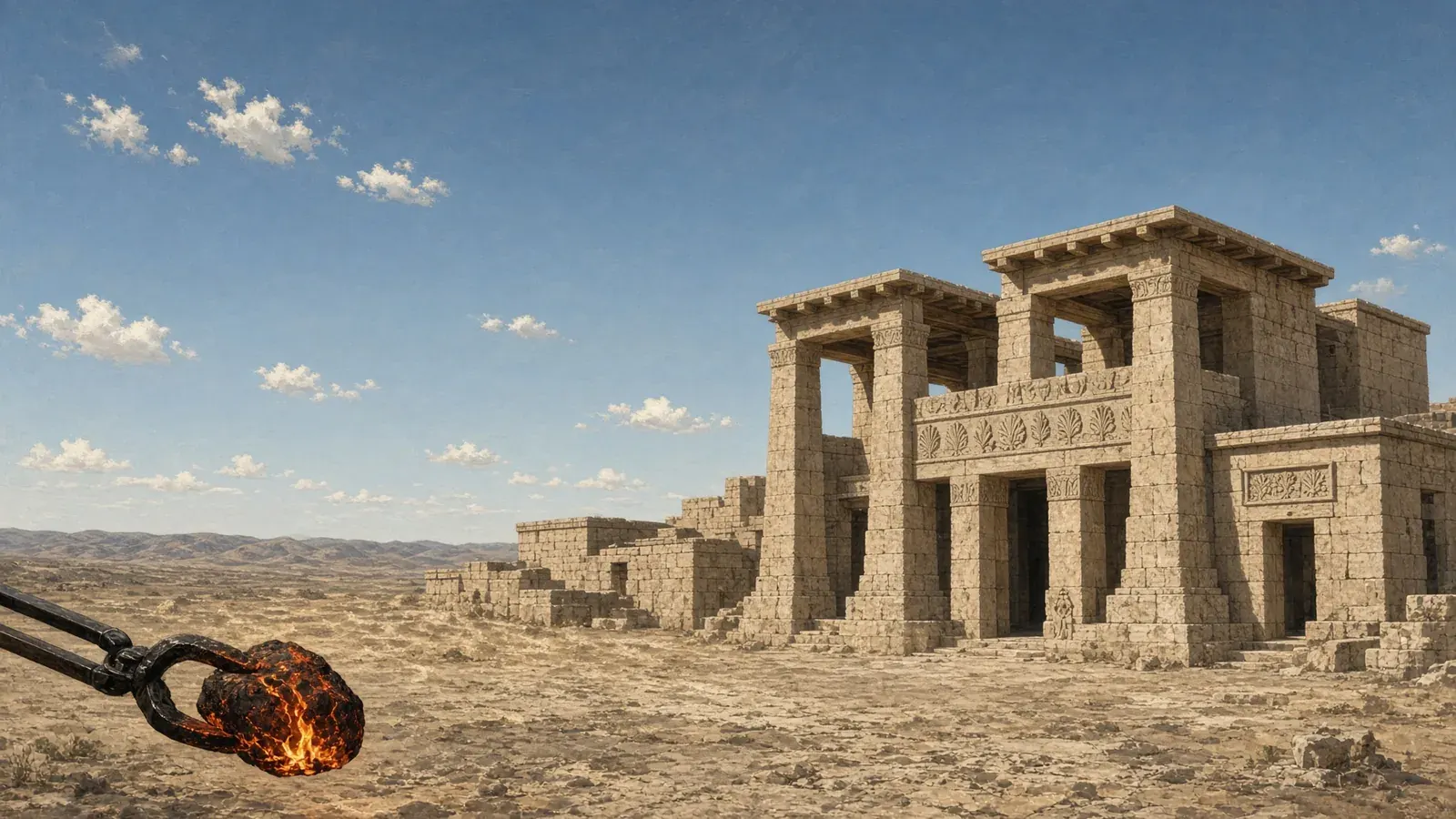
Isaiah opens by putting Judah in the uncomfortable position of a child who has forgotten the hand that raised it. The images keep changing, but the charge does not soften: an untreated body, a besieged field hut, bloodied hands lifted in prayer, silver gone to dross, wine diluted with water. Religious activity is everywhere, yet justice for the oppressed, the fatherless, and the widow is missing where it should be easiest to find. The chapter refuses both easy despair and easy reassurance. Zion is not discarded, but neither is its survival mistaken for approval. Cleansing has moral content, restoration passes through judgment, and the faithful city's old name is recovered only after the corruption attached to it is burned away. Isaiah ends where he began, with dependence exposed: the chosen garden cannot water itself.
One complete chapter pageOpen chapter →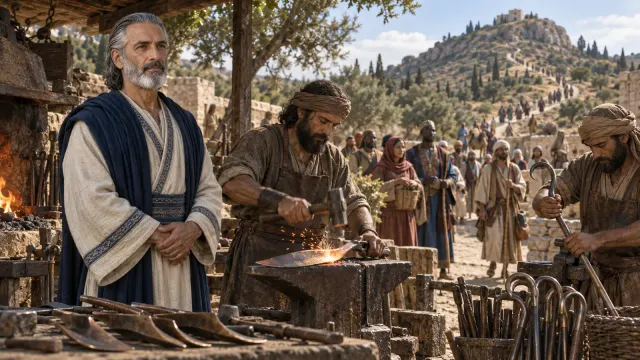
The Mountain Rises and Human Grandeur Falls
Isaiah 2 begins with one of the book's great reversals of motion: nations flow uphill toward the LORD's mountain because instruction is going out from Zion. Weapons are remade for cultivation and war itself becomes something no longer studied. That future exposes Judah's present fullness. Its land is crowded with silver, gold, horses, chariots, imported practices, and handmade gods, yet none of that abundance produces the understanding the nations seek. The rest of the chapter is organized by height. Proud looks, trees, mountains, towers, walls, and ships all enter a catalogue of things that seem impressive enough to stand. They do not. People who trusted visible grandeur end up crawling into rocks while their precious idols are discarded to creatures of the dark. Only the LORD's exaltation survives the leveling, and Isaiah ends by reducing human grandeur to a breath in the nostrils.
One complete chapter pageOpen chapter →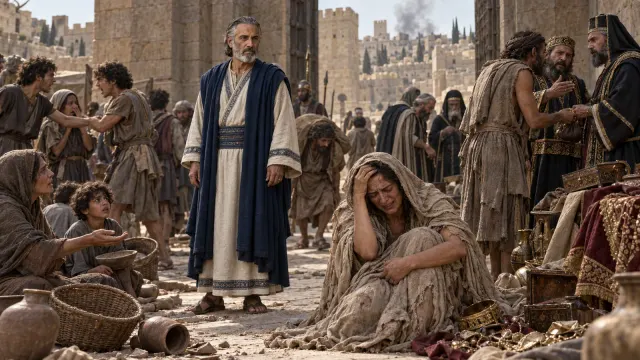
A Society Runs Out of Supports
Isaiah 3 imagines collapse by removing the supports that make ordinary society possible. Bread and water disappear beside soldiers, judges, elders, craftsmen, and counsellors, until leadership becomes so scarce that owning a coat almost qualifies a man for office. The chapter then shows that the ruin is not merely accidental institutional failure. The LORD brings a case against rulers whose houses contain the spoil of the poor, making exploitation visible as evidence. Isaiah turns next to conspicuous display, cataloguing the ornaments and garments of Zion's daughters before replacing fragrance, arranged hair, and finery with signs of humiliation and mourning. The final movement widens from individuals to the city herself. Warriors fall, gates lament, and Zion sits on the ground. Everything that had projected stability, status, and beauty has been stripped until the society is pictured in the posture of bereavement.
One complete chapter pageOpen chapter →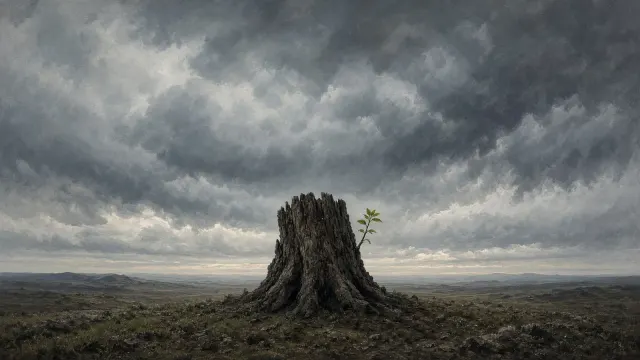
After the Stripping, a Shelter Over Zion
Isaiah 4 begins in the debris left by the previous chapter and then changes the kind of beauty the book is willing to celebrate. The desperate search for a man's name belongs to a city depleted by war, not to an isolated discussion of marriage. From that exposed condition Isaiah moves to the branch of the LORD, the fruit of the land, and a surviving community called holy only after blood and filth have been washed away. Restoration therefore does not mean putting the ornaments back on the old corruption. It means cleansing first, then belonging. The chapter ends with protection that Zion does not manufacture for itself. Cloud, smoke, fire, shade, refuge, and covering are created over its dwellings and assemblies. The fragile field hut of chapter 1 has become a city under shelter, and the movement from exposure to covering passes directly through judgment.
One complete chapter pageOpen chapter →
The Vineyard Song Becomes an Indictment
Isaiah 5 begins as a love song about careful cultivation and turns into a courtroom trap. The vineyard has received everything it needs, yet its fruit is wild, and Jerusalem is invited to judge the case before discovering that it is the vineyard. The rest of the chapter names the crop: land accumulation that empties neighborhoods, feasting that notices everything except the LORD's work, moral language turned upside down, self-congratulation, bribed verdicts, and strength wasted at the wine jar. The chapter's imagery repeatedly reverses appetite and possession. Great estates yield almost nothing, drinkers become the swallowed, and people who haul sin like a cart eventually face fire at root and blossom. Then a distant army arrives with terrifying readiness, down to the unbroken sandal strap. The vineyard song ends not in harvest celebration but in roaring, darkness, and a land from which light itself seems to withdraw.
One complete chapter pageOpen chapter →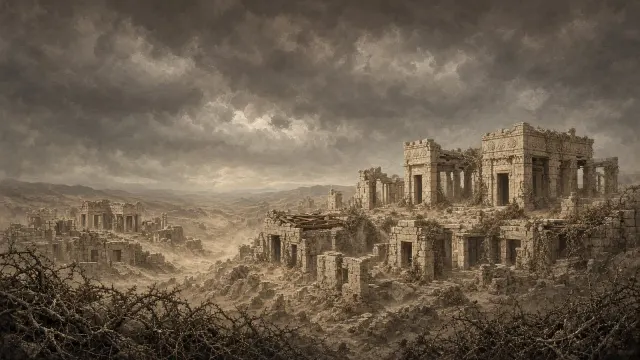
Unclean Lips Before the Living King
Isaiah 6 places the prophet himself inside the judgment he has been announcing. The year is marked by Uzziah's death, but the throne in the vision is occupied, the temple shakes, and the seraphim answer one another with "holy, holy, holy." Isaiah's first response is not a message for somebody else. He says "Woe is me," naming his own unclean lips among a people of unclean lips. A coal from the altar touches the place he confessed, and cleansing comes before commission. Only then does Isaiah answer, "Here am I; send me." The assignment, however, is no victory tour. He is sent to people who will hear without understanding, and when he asks how long, the answer is measured in empty cities and removed inhabitants. Yet the last image refuses absolute erasure. A felled tree still has substance, and Isaiah calls that remaining substance the holy seed.
One complete chapter pageOpen chapter →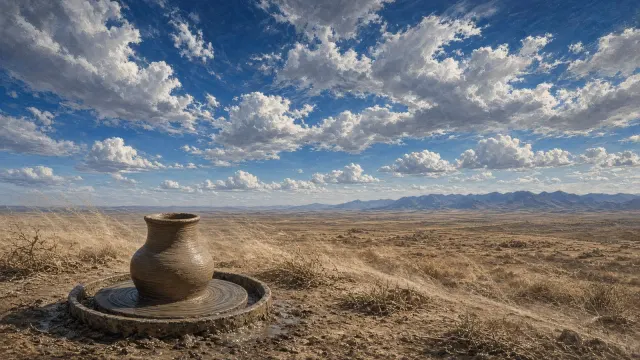
A Threatened House and a Sign It Did Not Request
Isaiah 7 puts political panic beside prophetic scale. Syria and Ephraim threaten Jerusalem, and the house of David shakes like trees in a wind, while the LORD calls the same kings two smoking stubs of firewood. Ahaz is offered a sign broad enough to reach depth or height, refuses with language that sounds pious, and receives a sign anyway: a child called Immanuel whose early development becomes the clock for the disappearance of the two kings. Yet relief from that immediate threat does not equal safety. Assyria, the power connected with their removal, becomes a razor hired to shave Judah bare. The chapter closes not with royal confidence but with survivors living among briers, thorns, pasture, and abandoned vineyards. Butter and honey remain, but inside a reduced economy. "God with us" is spoken into a land that will still pass through invasion.
One complete chapter pageOpen chapter →
A Child's Name and a Flood at the Neck
Isaiah 8 turns the prophet's household into public evidence. A name is written and witnessed before his son is born, and the child's first words become a clock for the fall of Damascus and Samaria. Then Assyria swells from political power into a river, overflowing its banks and rising to Judah's neck. The land is endangered but not finally surrendered, and the name Immanuel reappears in the middle of the flood. Isaiah is told not to share the people's dominant fear. The LORD is sanctuary and stumbling stone in the same passage, so nationality does not make refuge automatic. The chapter closes with testimony bound and sealed among disciples while other voices mutter from attempts to consult the dead. Isaiah waits while the LORD's face is hidden. Hunger, anger, and darkness then fill the final lines, creating the exact night into which chapter 9 will announce its light.
One complete chapter pageOpen chapter →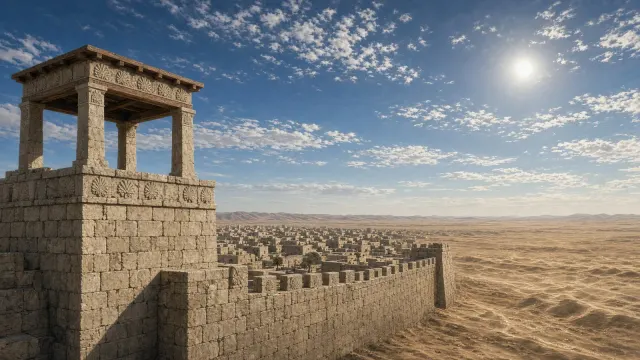
A Child Bears Government While the Nation Consumes Itself
Isaiah 9 opens where chapter 8 ended, in named darkness, and lets light break first over the northern regions that had known affliction. Oppression is broken, battle gear is burned, and a child receives a government that rests on judgment, justice, peace, and the zeal of the LORD. Then the chapter turns hard toward Ephraim. Fallen bricks are answered with grander construction plans, as though improved materials could refute the word that brought the damage. Misleading leaders, corrupt speech, and violence spread through the social body until brothers consume brothers. The recurring refrain keeps closing each movement without ending the judgment: the LORD's anger is not turned away, his hand is stretched out still. Isaiah places two kinds of government side by side. One is carried by the promised child and grows with peace. The other boasts, misleads, devours, and finally burns its own people as fuel.
One complete chapter pageOpen chapter →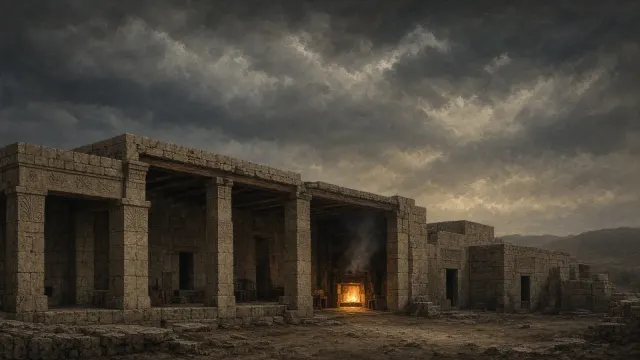
The Axe Boasts and the Forest Falls
Isaiah 10 closes the repeated judgment cycle with injustice made respectable on paper, then turns the same scrutiny toward Assyria. The empire is the rod of the LORD's anger, but it does not share the LORD's intention. Its king interprets conquest as proof of his own hand, wisdom, and unrestricted authority until Isaiah answers with the absurd image of an axe boasting against the one who swings it. The forest of imperial grandeur is cut until a child could count the remaining trees. At the same time, a remnant of Israel is promised, not as a denial of loss but as a people whose dependence changes. They no longer lean on the power that struck them. The final movement follows Assyria town by town toward Jerusalem, so close that the invader gestures at Zion from Nob. Then the march stops inside another forest image. The lofty growth is felled, preparing the stump from which chapter 11 will bring new life.
One complete chapter pageOpen chapter →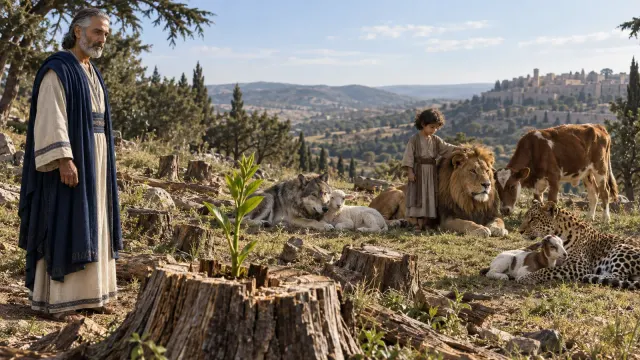
A Shoot from Jesse and a World No Longer Feeding on Weakness
Isaiah 11 begins in the sawdust left by chapter 10. The lofty forest has fallen, yet a shoot comes from Jesse's stem and a Branch grows from roots that looked finished. The promised ruler is marked not by the size of his army but by the Spirit's wisdom, understanding, counsel, might, knowledge, and fear of the LORD. His judgment refuses superficial appearances and gives righteousness to the poor and meek. From there the vision widens until predation itself seems to lose its habits: wolves, leopards, lions, bears, and serpents no longer make vulnerability dangerous. The root of Jesse then becomes a signal sought by the nations and a center for gathering Israel and Judah. Even their old rivalry disappears. The chapter ends with water barriers opened and a highway for return, making the new deliverance deliberately echo the exodus from Egypt.
One complete chapter pageOpen chapter →
The Anger Refrain Finally Turns Into a Song
Isaiah 12 is only six verses long, but it gives the preceding sequence a genuine landing place. The anger that chapters 9 and 10 repeatedly said was "not turned away" is finally described as turned away, and the result is comfort rather than denial that judgment ever happened. Salvation is spoken as something trusted, sung, and drawn like water from a well. Then the song turns outward. The restored people are told to declare the LORD's doings among the peoples and make his name known through the earth. Zion remains central, but Zion does not keep the news to itself. The title "Holy One of Israel," so often heard in accusation through the opening chapters, now appears at the end of a shout of joy because the Holy One is "in the midst of thee." Estranged children, bloodied hands, invasion, remnant, and return have arrived at water, comfort, presence, and song.
One complete chapter pageOpen chapter →
Babylon's Splendor Under a Darkened Sky
Isaiah 13 opens the burdens against foreign kingdoms with Babylon already under summons. A banner rises, nations gather, and the LORD of hosts musters the force before Babylon gets a word. The judgment then expands beyond city walls into darkened stars, sun, and moon, a shaken heaven and earth, and language broad enough to make the fall of one empire feel like a world coming apart. Yet Isaiah does not leave the oracle at cosmic scale. He narrows it to hunted people, murdered children, violated women, looted houses, and an army unmoved by silver or gold. Babylon's wealth cannot buy its way out. The final reversal is architectural and almost eerie. The "glory of kingdoms" loses human occupants, and wilderness creatures inherit palaces once built to display permanence. Isaiah moves from imperial splendor to a city whose finest rooms answer with animal cries.
One complete chapter pageOpen chapter →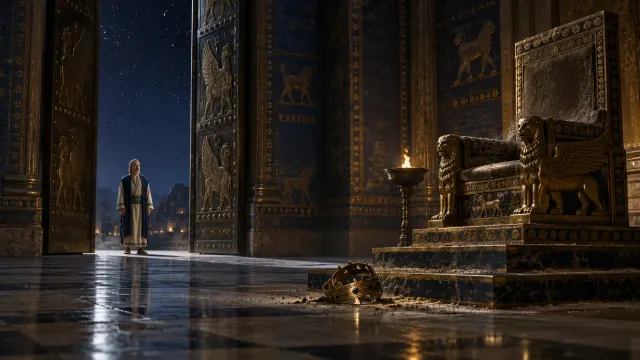
The Throne Above the Stars Ends Below the Ground
Isaiah 14 begins with Jacob's promised relief and then hands Israel a taunt for the king of Babylon. The ruler who shook kingdoms is received beneath the earth by dead kings asking whether he has become as weak as they are. His imagined ascent above stars and clouds collapses into descent, worms, a dishonored body, and a dynasty cut off. The poem reaches spectacular heights only to make ordinary mortality the final insult. Isaiah then turns from Babylon to Assyria, repeating the image of a burden lifted from shoulders because the LORD's purpose cannot be cancelled. A separate oracle to Philistia warns that the breaking of one hostile rod does not make the future safe. The chapter's movements differ, but one claim holds them together: political powers may change shape, successor, and direction, while the LORD's purpose remains the fixed point by which their rise and fall are measured.
One complete chapter pageOpen chapter →
Moab's Lament Travels from Town to Town
Isaiah 15 makes Moab's fall audible before it makes it explainable. Two cities are silenced in the night, yet the rest of the chapter fills with howling, weeping, and cries moving from town to town, rooftop to street, soldier to refugee, and finally around the borders. Mourning is written on bodies through shaved heads, cut beards, and sackcloth. Then the prophetic voice itself joins the lament: "My heart shall cry out for Moab." The oracle does not treat foreign suffering as a spectacle to enjoy. Refugees climb roads through a landscape where water and grass fail, carrying away whatever stored wealth can still be moved by hand. Even the border offers no clean escape. Water becomes blood and danger reaches those who survived the first destruction. Isaiah closes the chapter without emotional or geographical relief, carrying Moab's displaced people directly into the search for shelter in chapter 16.
One complete chapter pageOpen chapter →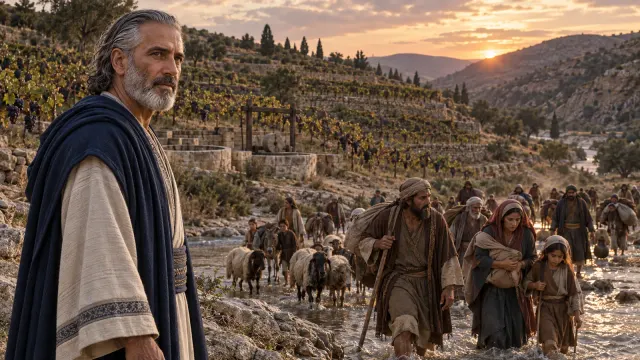
Shelter, Pride, and a Harvest Without Singing
Isaiah 16 continues Moab's distress with a request for shelter and then lets the chapter sound increasingly like a field after harvest music has died. A lamb is sent toward Zion, displaced people are compared to birds pushed from a nest, and the appeal calls for shade at noon, concealment, and refusal to betray the wanderer. The passage then looks toward a throne established in mercy and Davidic justice. Against that kind of rule stands Moab's repeated pride, followed by fields that languish and vines cut back from their former reach. Isaiah's own lament waters Heshbon and Elealeh with tears while singing and shouting disappear from the winepresses. Even prayer at Moab's sanctuary does not reverse the loss. The final two verses tighten the entire burden into a measured deadline: three years counted like a hired worker's contract, ending with a remnant described as very small and feeble.
One complete chapter pageOpen chapter →
A Few Olives Left After the Shaking
Isaiah 17 is introduced as a burden of Damascus and immediately refuses to stay inside Damascus. Ephraim and Jacob are drawn into the same field of loss, where cities empty, bodies grow lean, grain is reaped, and olives are shaken until only a few remain on the outer branches. The remainder is visible, but it measures the severity of the harvesting before it offers comfort. Then the chapter turns the human gaze away from altars and images made by fingers toward the Maker and the Holy One of Israel. Pleasant planting and rapid growth cannot compensate for forgetting the God called rock and salvation, so the harvest collapses into grief. Finally the scale expands again. Many nations roar like a sea, then one rebuke changes the comparison completely: the apparent ocean becomes chaff before wind. Evening trouble is gone before morning, and the spoiler discovers that overwhelming noise never made it permanent.
One complete chapter pageOpen chapter →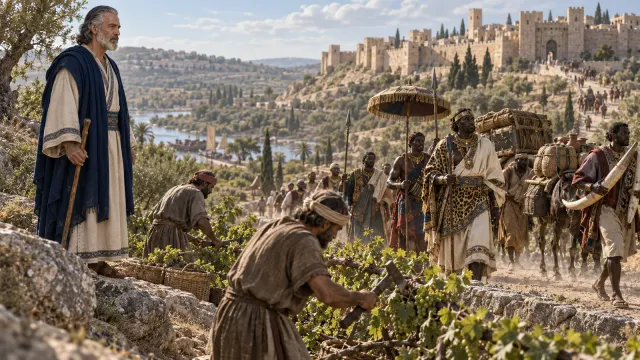
Swift Envoys Before a LORD Who Waits
Isaiah 18 begins in a blur of wings, rivers, envoys, and light vessels, then sets all that urgency against a LORD who refuses to be hurried. The distant mission is never fully explained, and several descriptions of the people remain difficult, but the chapter does not depend on solving every adjective. Its center is the contrast in pace. While nations move quickly, the LORD says he will rest and consider until the chosen moment, when ripening branches are cut before harvest. The long consequences are left to birds and beasts. Yet the oracle does not end with exposure. It returns to the same distant people and redirects their movement toward Mount Zion, where a present is brought to the LORD of hosts. Human diplomacy opens the chapter, but acknowledgment of the LORD supplies its destination.
One complete chapter pageOpen chapter →
Egypt Is Struck, Healed, and Called My People
Isaiah 19 begins with Egypt's most impressive supports coming apart at once. Idols tremble, internal unity fractures, the river economy fails, and counselors who boast of ancient wisdom cannot explain what is happening. Yet the chapter refuses to leave Egypt inside that collapse. Its repeated "in that day" carries the nation from fear into allegiance, worship, answered cries, and healing. Egyptians who once represented the great land of oppression now cry because of oppressors, and the LORD sends deliverance. The final movement is larger still. A highway joins Egypt and Assyria, not as a campaign route but as a path of reciprocal movement and shared service, with Israel as a third. The LORD's closing names overturn the chapter's opening expectations: Egypt is "my people," Assyria "the work of my hands," and Israel "mine inheritance."
One complete chapter pageOpen chapter →
The Prophet Wears the Defeat of a Hoped-for Ally
Isaiah 20 turns a geopolitical argument into something visible on the prophet's body. Ashdod falls to Assyria, and Isaiah is commanded to remove sackcloth and footwear, carrying for three years a sign of the exposure awaiting Egypt and Ethiopia. The point is not spectacle for its own sake. These nations have been treated as possible shelter from Assyria, yet the chapter pictures them as captives marched by the very empire from which others hoped they would provide escape. Young and old share the humiliation. By the final verse, the crisis has moved from their defeat to the collapse of the hope invested in them. The people who called Ethiopia their expectation and Egypt their glory are left asking how they themselves can escape. The imagined rescuers are shown needing rescue, and reliance on them is exposed with them.
One complete chapter pageOpen chapter →
Watchmen, Broken Nights, and a Fallen Babylon
Isaiah 21 gathers three short burdens around disturbed expectation. A grievous vision turns a pleasant night into fear, and a banquet gives way to the command to arm. A watchman then stands through days and whole nights for the brief report, "Babylon is fallen, is fallen," while the prophet addresses people under the pressure of threshing. Seir's repeated question about the night receives an answer that includes both morning and further night, leaving certainty deliberately incomplete. Arabia's trading companies become fugitives, met with water and bread while swords and bent bows drive them from ordinary routes. Kedar's glory is given a one-year limit. Across the chapter, great events are measured through sleepless watch, bodily pain, interrupted meals, thirsty travelers, and a hired worker's calendar. Disaster is not allowed to remain an abstraction.
One complete chapter pageOpen chapter →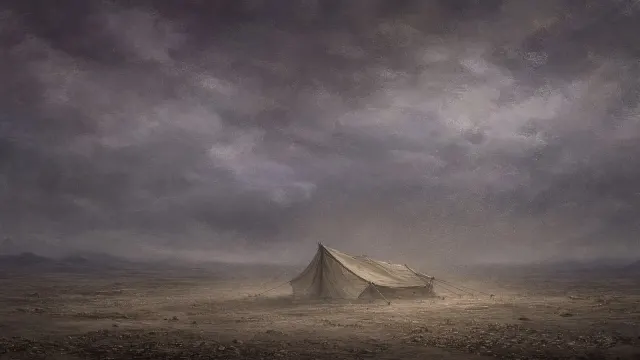
A City Studies Its Walls and Overlooks Its Maker
Isaiah 22 turns Jerusalem's crisis into a study of what the city notices and what it manages not to see. Rooftop noise and civic excitement stand beside captivity, enemy deployment, and Isaiah's bitter grief. The defenders then work hard: they inspect weapons, count houses, strengthen walls, and secure water. Their failure is not laziness but omission. They look at everything except the Maker who fashioned the circumstances long before. A feast answers the LORD's call to mourning. The second half narrows the same problem into public office. Shebna carves a grand tomb as though status could secure permanence, only to hear that he will die elsewhere. Eliakim receives robe, key, and responsibility, yet even the image of a firmly fastened peg ends under the weight hung upon it. Human authority remains useful and limited at once.
One complete chapter pageOpen chapter →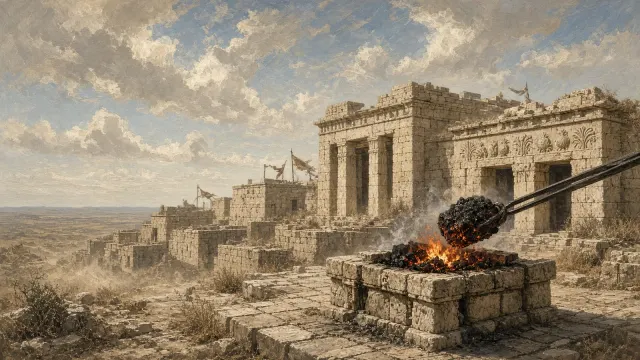
The Trading City Loses Its Harbor and Finds a Different Use for Wealth
Isaiah 23 treats Tyre not simply as a city but as the center of a commercial world. Ships hear the news of its fall before reaching the harbor, merchants and grain routes feel the loss, and the sea itself is pictured as bereaved. Tyre's antiquity, wealth, and social rank cannot protect it from the LORD's purpose to bring proud glory low. Even migration across the sea does not guarantee rest. After the announcement of ruin, however, the chapter takes an unexpected turn. Tyre is forgotten for a bounded period and then returns to the business that once made its name. The restored commerce is not romanticized, but its revenue receives a new destination. Merchandise and hire become "holiness to the LORD," not treasure stored for prestige, and they provide food and durable clothing. Commercial abundance survives, but hoarding does not get the last word.
One complete chapter pageOpen chapter →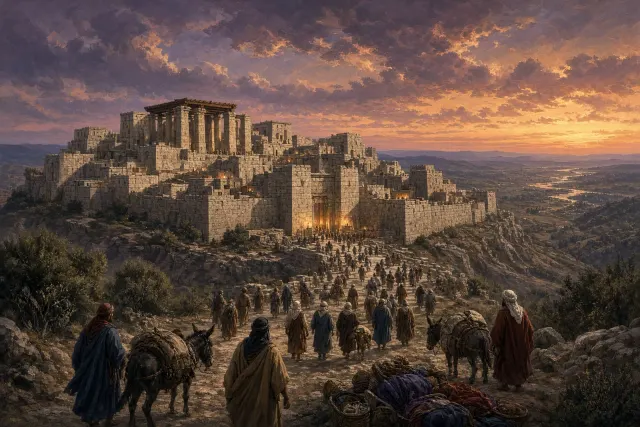
The Earth Staggers, and Distant Voices Begin to Sing
Isaiah 24 widens the horizon until named nations disappear into an earth shaken by the conduct of its inhabitants. Social rank, economic position, and religious status provide no protected side of the transaction. The earth is defiled, cities lose their music, houses close, gates fall, and only gleanings remain. Yet praise rises from distant places in the middle of that devastation, not after every grief has been neatly resolved. Isaiah himself answers the songs with anguish over continuing treachery. Fear, pit, and snare then make escape unreliable while the ground itself reels under the weight of transgression. The chapter's final reach is larger still. Powers on high and kings on earth are gathered under judgment, and even sun and moon lose their familiar splendor before the LORD reigning in Zion. The world comes apart, but divine kingship does not.
One complete chapter pageOpen chapter →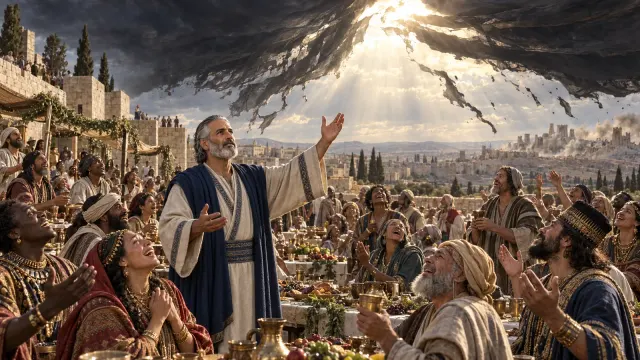
The Feast Where Death Becomes the Thing Swallowed
Isaiah 25 answers the collapse of the previous chapter with praise rooted in the LORD's faithful purpose. A fortified city becomes a ruin, but the poor and needy discover strength as refuge rather than domination. The mountain of the LORD then becomes the setting for a feast whose richness is deliberately excessive: abundant food and refined wine for all peoples. Yet the meal is only the beginning. The covering over the nations is removed, tears are wiped away, and death, the great consumer, becomes the thing swallowed in victory. Waiting ends in recognition and rejoicing: "this is our God." The chapter does not let that universal horizon turn pride into something harmless. Moab is still brought low, and its lofty fortification descends all the way to dust. The secure mountain is secure because the LORD's hand rests there, not because height itself can save.
One complete chapter pageOpen chapter →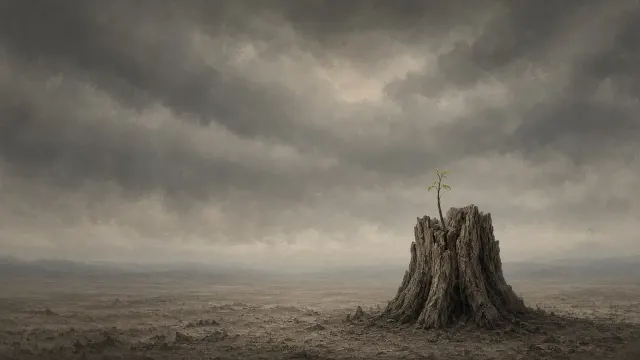
A Song of Strong Walls Reaches Into the Dust
Isaiah 26 is a song about security that repeatedly refuses to confuse strength with self-sufficiency. Its strong city is protected by salvation, not merely by walls, and its gates open to a people characterized by faithfulness. Against it stands the lofty city brought down until the poor walk over its remains. The prayer that follows holds longing and resistance in the same world: some wait for the LORD through the night, while others refuse to learn even under favor. Former lords who exercised real dominion lose both rule and remembrance. The people's own painful labor, meanwhile, is confessed to have produced no deliverance. Then the chapter crosses a boundary human effort cannot cross: the dead live, dust awakens, and the earth releases those it held. The closing call to shelter is temporary, while concealed blood is exposed and no longer covered.
One complete chapter pageOpen chapter →
The Vineyard Is Kept, and the Scattered Are Gathered One by One
Isaiah 27 moves from a sea monster under the LORD's sword to a vineyard under his constant care. The opening places even the most formidable hostile power beneath divine authority. Then the vineyard image from earlier in Isaiah is reversed: protection is restored, water is given every moment, and Jacob takes root until fruit reaches the face of the world. Chastening still appears, but Isaiah distinguishes it from the destruction dealt to those who struck Jacob. Purging becomes visible through crushed altars and fallen images, while a defended city can still become pasture when understanding is absent. The chapter ends not with abandoned walls but with harvest and trumpet. A wide region is searched, people are gathered "one by one," and those ready to perish in Assyria or cast out in Egypt are brought to the holy mountain to worship the LORD.
One complete chapter pageOpen chapter →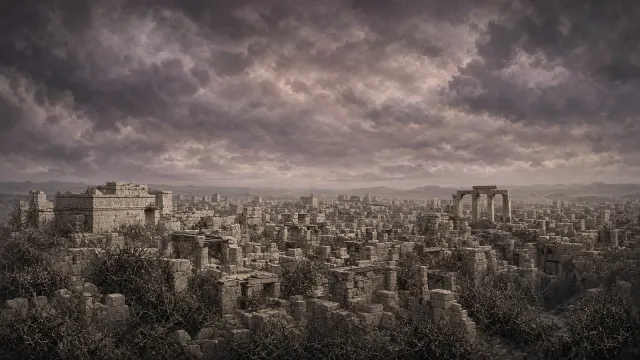
A Fading Crown, a Firm Stone, and a Farmer Who Knows When to Stop
Isaiah 28 begins with a beautiful crown already fading. Ephraim's intoxicated glory is brought down, and Jerusalem's own leaders prove equally unable to hear what matters. Priests and prophets stagger in tasks that require perception, while repeated instruction is mocked or refused until another tongue becomes part of the judgment. The rulers then boast of an arrangement that will keep the coming scourge from reaching them, only to hear that their refuge is built on lies. Against it, the LORD lays a tested cornerstone in Zion and measures by judgment and righteousness. A short bed and narrow blanket make the failure of false security almost embarrassingly ordinary. The chapter finally leaves rulers and returns to a farmer, whose work depends on proportion, timing, and knowing when to stop. Agricultural discretion becomes the closing picture of the LORD's counsel.
One complete chapter pageOpen chapter →
The City Keeps Its Festivals While the Book Stays Closed
Isaiah 29 places Jerusalem's religious continuity beside a crisis of perception. Sacrifices continue year after year, yet Ariel is besieged by the LORD and its confident voice sinks to a whisper from the dust. The nations attacking Zion then discover their own expectation is as empty as eating in a dream and waking hungry. The deeper problem, however, lies within the city: prophets are covered, a book is sealed, learned and unlearned readers alike leave it unread, and lips honor the LORD while hearts remain far away. Secret planners then behave like pottery judging the potter's competence. The chapter's ending reverses each failure. The deaf hear the book, blind eyes see from darkness, the poor rejoice, corrupt legal traps disappear, Jacob's shame lifts, and those who erred in spirit come to understanding. Perception and justice are restored together.
One complete chapter pageOpen chapter →
The Road to Egypt Leads Away from the Voice They Refuse
Isaiah 30 follows Judah south toward Egypt and keeps asking what the journey is buying. Counsel is taken without the LORD, treasure rides on animals through dangerous country, and the hoped-for ally is repeatedly described as unable to profit those seeking help. At home, the same refusal appears in speech. The people ask prophets for smooth things and try to remove the Holy One from the message, only to hear the Holy One answer them directly. Their preferred strength is speed, so their swift horses become instruments of flight before equally swift pursuers. Then the chapter turns. The LORD waits to be gracious, teachers are visible again, a guiding voice returns, idols are discarded, rain and pasture restore ordinary work, and wounds are bound. The closing movement brings Assyria down not by imported military strength but through the LORD's own voice.
One complete chapter pageOpen chapter →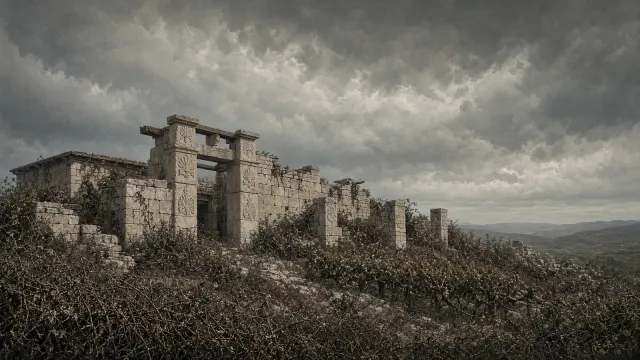
Horses Are Flesh, and Zion Has a Different Defender
Isaiah 31 reduces Judah's Egyptian strategy to one overlooked distinction: the Egyptians are men and their horses are flesh. Chariots are many and horsemen are strong, so the attraction is not irrational on its own terms. The problem is that the calculation stops before the Holy One is considered. Isaiah's dry "yet he also is wise" exposes planners who have treated their own counsel as the whole field of wisdom. When the LORD stretches out his hand, helper and helped share the same vulnerability. Two animal images then recast Zion's defense. Like a lion, the LORD is not frightened away by surrounding noise; like birds in flight, he protects and preserves. The final verses join return with discarded idols and Assyria's fall by a sword specifically distinguished from human weapons. Judah sought decisive strength abroad, but the chapter ends with the LORD's fire already in Zion.
One complete chapter pageOpen chapter →
True Quiet Grows from Righteousness, Not Complacency
Isaiah 32 begins with righteous government and follows its effects all the way down to ordinary speech, hunger, thirst, fields, and working animals. A righteous king and just princes provide shelter rather than exposure, while eyes, ears, hearts, and tongues begin functioning clearly. Flattering names no longer conceal destructive character: the generous are known by generosity, and the vile by the harm they devise against the needy. The chapter then turns to women living at ease and warns that familiar harvests and joyful houses can disappear. Their complacent quiet is not the peace Isaiah finally values. The ruined landscape remains so "until" the Spirit is poured out, the wilderness becomes fruitful, and righteousness produces quietness and assurance. A final lowered city stands beside seed sown near abundant water. True stability appears not as careless comfort but as the lived effect of righteous order.
One complete chapter pageOpen chapter →
The Plunderer Is Plundered, and the Wounded City Becomes a Home
Isaiah 33 begins with a spoiler whose success already contains its reversal. The one who plunders will be plundered, while Zion asks the LORD for strength "every morning" and salvation in trouble. Failed peace envoys, empty highways, and a mourning land make the crisis tangible until the LORD announces three times that now he will rise. Yet Zion's rescue does not place its own sinners beyond scrutiny. The fire that threatens enemies also frightens hypocrites inside the city, and secure dwelling is associated with upright speech, refusal of bribes, and rejection of bloodshed. The horizon then widens from terror to the king in beauty and finally to Jerusalem as a quiet habitation whose cords hold. The LORD is judge, lawgiver, and king. Even the lame share spoil, sickness recedes, and the chapter's final condition is not merely military relief but forgiven iniquity.
One complete chapter pageOpen chapter →
A Kingdom Measured Out for Emptiness
Isaiah 34 takes the judgment announced against the nations and gives it a geographical center in Edom, but it never lets the reader mistake the scene for a small border war. The sky itself is pictured rolling away, armies become the material of a dreadful sacrifice, and the land is unmade until streams, dust, palaces, and fortresses no longer serve their former purposes. The most unnerving turn comes after the rulers are gone. The empty country is not left outside divine order. Wild creatures settle where nobles once lived, and even their mates and territories are described as appointed. The Book of Isaiah uses measuring lines twice in the chapter, first where a kingdom once stood and finally where new inhabitants receive their allotment. Human government vanishes, but nothing in the chapter suggests that events have become random. Judgment removes an old order with terrible completeness, and the closing image is not chaos escaping God's control, but desolation itself measured out under his command.
One complete chapter pageOpen chapter →
The Wilderness Becomes the Road Home
Isaiah 35 answers the wasteland of the preceding chapter with a transformation so complete that the same kinds of places now rejoice, bloom, carry water, and become passable. The wilderness receives the beauty of Lebanon, Carmel, and Sharon, while weak hands, feeble knees, blind eyes, deaf ears, lame legs, and silent tongues all participate in the same reversal. Restoration is not scenery added around unchanged people. Bodies and ground recover together. The chapter then gives the renewed landscape a destination: Zion. A highway crosses the wilderness, protected from danger and identified with holiness, so the return is not merely escape from somewhere bad but movement toward restored belonging. The Book of Isaiah makes vengeance and salvation two sides of one divine coming, depending on what threatens whom. By the end, sorrow and sighing are the fugitives. The people who once fled are now the ones arriving, singing, while the things that marked displacement are the things driven away.
One complete chapter pageOpen chapter →
An Army Outside and an Argument on the Wall
Isaiah 36 is a siege chapter in which almost nothing is decided by combat. Assyria arrives with a real military record behind its words, and Rabshakeh turns that record into a carefully staged argument aimed at collapsing Jerusalem before the wall is breached. He attacks confidence in Egypt, mocks Judah's military capacity, misreads Hezekiah's reforms, claims authorization from the LORD, and then shifts audiences when the royal officials ask him to speak diplomatically. His most attractive offer hides deportation inside the word "until": keep your vines, fig trees, and cisterns until Assyria removes you to another land. The theological pressure is even sharper. Jerusalem is asked to classify the LORD as one defeated national god among many. The Book of Isaiah lets the speech expose its own flexibility and contradictions without interrupting every claim. The chapter ends not with a clever rebuttal but with commanded silence, torn clothes, and the threat carried intact to Hezekiah.
One complete chapter pageOpen chapter →
The Letter Is Opened Before the Living God
Isaiah 37 takes Assyria's challenge from the city wall into the temple and turns the central question from military arithmetic to divine identity. Hezekiah does not deny the empire's record. He admits that Assyrian kings have destroyed nations and burned their gods, then insists that those objects were wood and stone rather than living rivals to the Creator. The distinction is the heart of his prayer. Isaiah's answer then dismantles Sennacherib's self-understanding: the conqueror who credits himself with unrestricted mastery has acted within a purpose older than his campaign and will be turned back like an animal under hook and bridle. The promised deliverance is practical as well as dramatic, extending into future harvests and a remnant taking root again. When the Assyrian army falls, Judah contributes no heroic battle scene. The Book of Isaiah ends with Sennacherib back in his own land, killed in the sanctuary of the god whose impotence his own argument had never considered.
One complete chapter pageOpen chapter →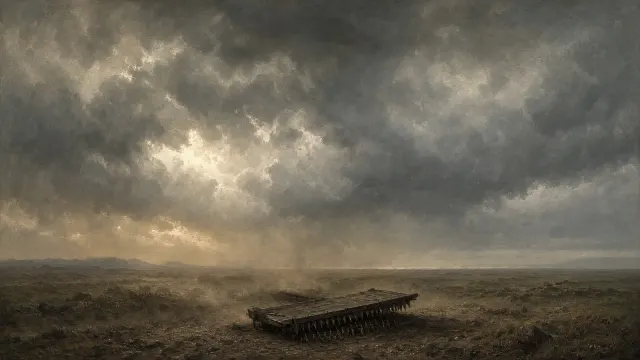
A King Hears the Loom Cutting His Life Short
Isaiah 38 brings danger inside Hezekiah's house. The king who survived an empire now receives a personal sentence of death, turns his face toward the wall, prays, and weeps. The answer is specific: fifteen more years, deliverance for the city, and a sign involving the shadow on the degrees of Ahaz. Yet the center of the chapter is Hezekiah's own writing after recovery. He imagines life dismantled like a shepherd's tent, cut from a loom before the weaving is complete, crushed like bones beneath a lion, and reduced from royal speech to the small strained sounds of birds. Recovery does not erase the bitterness of that experience. It turns life back toward praise, teaching, and the house of the LORD. The Book of Isaiah ends the episode with a lump of figs and a question about returning to worship, keeping divine promise, bodily treatment, and public thanksgiving in the same frame without forcing them into competition.
One complete chapter pageOpen chapter →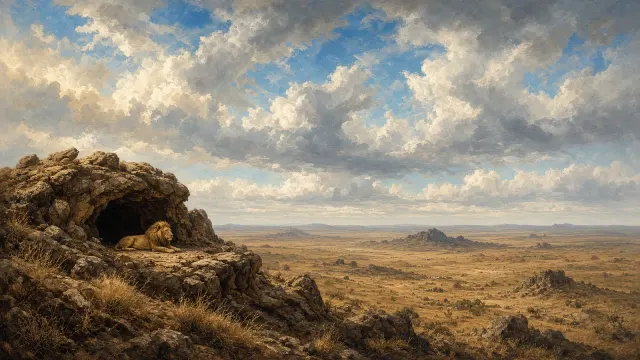
The Visitors See Everything, and the Future Changes
Isaiah 39 is short enough to look almost transitional, but it changes the direction of the book. Babylon sends letters and a gift after hearing of Hezekiah's recovery, and the king answers hospitality with total exposure. Silver, gold, spices, ointment, armaments, and every treasure are shown without exception. Isaiah's questions do not speculate about motives. They simply force the king to say aloud what the chapter has already shown: the visitors came from Babylon, and they saw everything. That repeated completeness becomes the shape of the judgment. Everything stored by Hezekiah and his fathers will be carried to Babylon, and members of his own line will serve there. The Book of Isaiah moves from the Assyrian danger that did not take Jerusalem to the Babylonian future that will. Hezekiah calls the word good and notes that peace and truth will remain in his own days, leaving an uneasy distance between present security and the future cost borne by his house.
One complete chapter pageOpen chapter →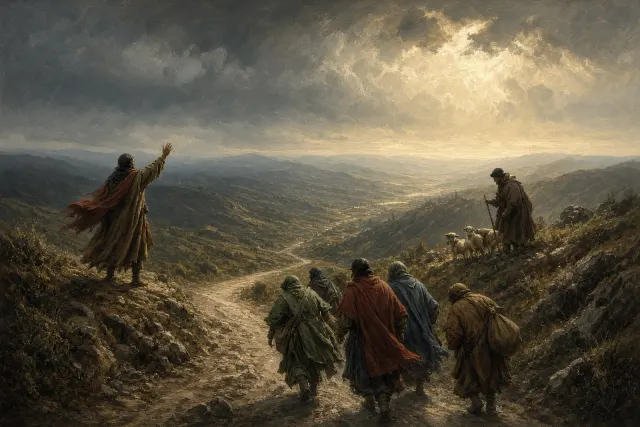
Comfort Begins with the God Who Has Not Grown Tired
Isaiah 40 begins with comfort, but it refuses sentimental comfort. Jerusalem is told that service is completed and iniquity pardoned, a highway is prepared for the LORD, and a voice immediately reminds every listener that human strength is grass. Hope rests somewhere sturdier: "the word of our God shall stand for ever." From there the chapter expands until oceans fit in a hand, nations become a bucket drop, rulers wither like plants, and the stars answer roll call by name. That immense scale is not an end in itself. The Book of Isaiah keeps drawing it toward one wounded complaint: Jacob thinks his way is hidden and his cause has passed out of God's sight. The answer is that the everlasting Creator neither faints nor loses track. More than that, he gives strength to those who do faint. The chapter that spans creation closes with people walking without collapsing, making cosmic power matter at the scale of one more faithful step.
One complete chapter pageOpen chapter →
The Nations Enter Court, and Jacob Is Taken by the Hand
Isaiah 41 stages a courtroom in which the nations and their gods are asked to explain events, announce what comes next, or do anything effective enough to justify their claims. The contrast repeatedly slips from courtroom to workshop. Frightened people encourage one another, craftsmen cooperate, and the resulting image must be nailed down so it will not move. Between those scenes, Israel hears a radically different set of verbs: chosen, taken, strengthened, helped, upheld, and held by the hand. The Book of Isaiah does not conceal Jacob's weakness. It calls him a worm, then makes that disproportion the starting point for becoming a sharp threshing instrument. It begins with poor people whose tongues fail for thirst, then fills their wilderness with rivers, pools, and trees. By the end, the idols still cannot produce a witness. Divine agency has been displayed in history, in sustaining the weak, and in making a desert live, while the manufactured rivals remain eloquent only through their makers.
One complete chapter pageOpen chapter →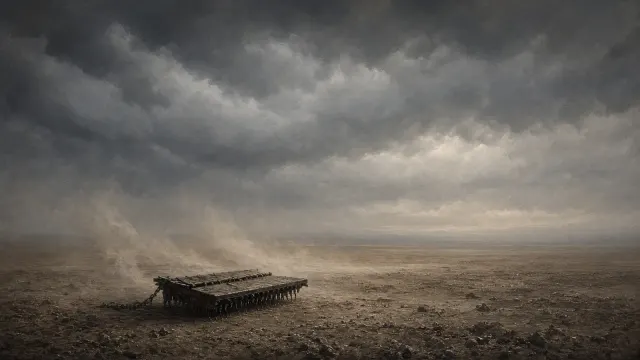
The Servant Protects a Bruised Reed, but Israel Will Not See
Isaiah 42 opens with a servant whose strength appears in restraint. He will establish judgment among the nations without breaking a bruised reed or extinguishing a dim wick, and he will not abandon the task through his own weariness. The Creator who gives breath commissions that servant as covenant and light, with work reaching blind eyes and prison darkness. A new song then pulls islands, wilderness settlements, seafarers, and mountain people into the announcement before the LORD's long restraint gives way to forceful action. The chapter's final turn is deliberately painful. The servant language shifts onto Israel, now described as blind and deaf despite seeing and hearing. The Book of Isaiah places the faithful servant's vocation beside the servant people's failure to perceive, making the contrast internal to the calling itself. Those meant to witness and carry instruction have become prisoners who need the very release the opening commission promised to bring.
One complete chapter pageOpen chapter →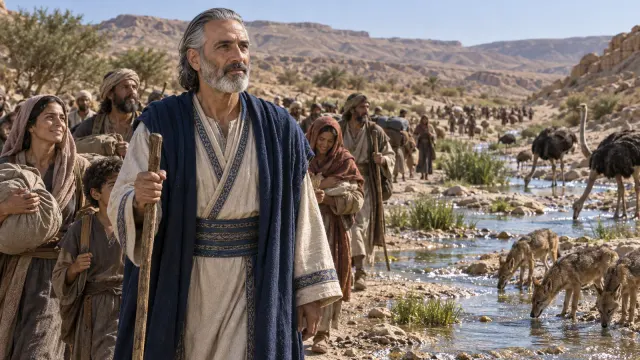
Called by Name and Called to Bear Witness
Isaiah 43 begins exactly where the previous chapter seemed to leave Israel in the fire. "But now" does not deny judgment; it answers judgment with a renewed claim of ownership. Jacob is created, formed, redeemed, called by name, and promised divine presence through water and flame. The gathering reaches every compass point, bringing sons and daughters home from the earth's ends. Then the surprising move: the blind people are called as witnesses in a case about the only Savior. Their testimony rests not on flawless perception but on what the LORD has declared and done in their history. Deliverance from Babylon is pictured through exodus language, yet the new act will not merely repeat the old route. Water once opened to make a road; now water accompanies a road through the desert. The Book of Isaiah ends by refusing to sentimentalize the people being rescued. Their worship and obedience have failed, so forgiveness itself must be part of the redemption.
One complete chapter pageOpen chapter →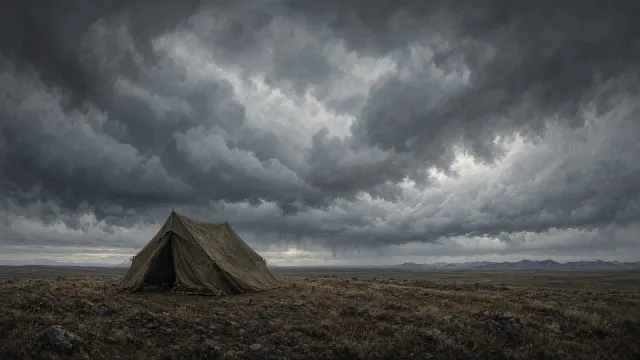
The Same Log Cooks Supper and Becomes a God
Isaiah 44 moves from promised renewal to one of the book's most sustained exposures of idolatry, then closes by naming the ruler who will help rebuild Jerusalem. Israel's descendants are pictured receiving the Spirit like dry ground receiving water and publicly identifying themselves with the LORD. Against that living claim, Isaiah follows a manufactured god through the entire production line. A smith grows hungry, a carpenter measures timber, rain nourishes the tree, and the same log becomes both cooking fuel and an object asked for deliverance. The humor turns serious when the worshipper can no longer recognize the contradiction in his own hand. The Book of Isaiah answers that blindness by returning to the Maker who formed Israel, blots out sin, and does not forget his servant. Creation is summoned to praise before the chapter becomes startlingly specific: Cyrus is named as the shepherd appointed to perform work concerning Jerusalem and the temple foundation. The Creator does not need to be manufactured; he names the human instrument he intends to use.
One complete chapter pageOpen chapter →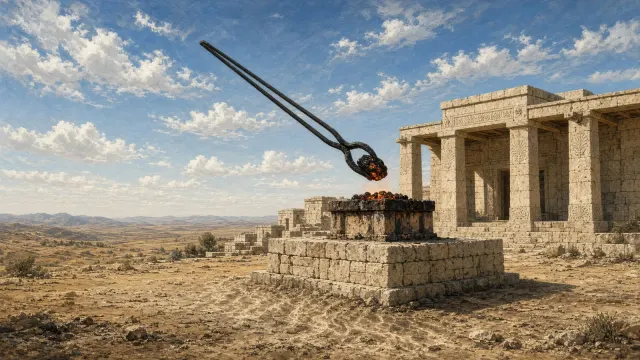
Cyrus Is Called, and the Ends of the Earth Are Invited
Isaiah 45 takes the astonishing name introduced at the end of chapter 44 and addresses Cyrus directly as the LORD's anointed. The title marks appointment, not prior religious knowledge, because the chapter twice says Cyrus has not known the God who calls him. Gates, bars, treasures, and kings fall within a commission ultimately explained "for Jacob my servant's sake." From there the chapter expands the theological claim: light and darkness, peace and calamity do not belong to rival divine realms, and the Maker is not answerable to the clay for using an unexpected instrument. The Book of Isaiah refuses to leave the argument at Cyrus. Nations are summoned, idol makers exposed, and the Creator who made the earth to be inhabited says that seeking him was never an empty invitation. The chapter ends at the ends of the earth, where salvation is openly offered and universal homage is announced. Cyrus matters because he serves a purpose much larger than Cyrus.
One complete chapter pageOpen chapter →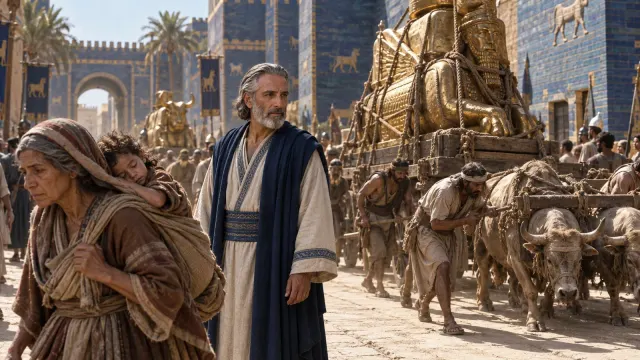
The Gods Are Carried Away; the LORD Carries His People
Isaiah 46 makes its argument through the simple question of who carries whom. Babylon's gods, Bel and Nebo, become freight loaded onto exhausted animals and carried into captivity. They cannot rescue the burden because they are part of it. The LORD answers by telling Jacob that the direction has always been opposite: Israel has been borne from the womb and will still be carried into old age and gray hair. The chapter then revisits expensive image making, showing that lavish materials do not solve the basic problem. A god placed carefully in position still cannot move, answer, or save. The Book of Isaiah sets that immobility against a divine purpose announced from the beginning and brought to completion through an agent called from afar. Speech becomes action because the speaker can perform what he declares. The final promise is especially sharp: people described as far from righteousness are told that God's righteousness is coming near. Rescue depends on the approaching Savior, not on the captive learning to carry itself.
One complete chapter pageOpen chapter →
Babylon Loses the Throne It Called Permanent
Isaiah 47 brings Babylon down from the throne and makes the fall personal through the figure of a royal woman forced into dust, labor, exposure, and silence. The chapter does not accuse the empire only of abstract pride. The LORD says he gave his people into Babylon's hand during judgment and then charges Babylon with showing them no mercy, placing an especially heavy yoke on the elderly. Imperial usefulness did not erase imperial responsibility. Babylon's inner claim, "I am, and none else beside me," echoes language reserved for the LORD in the surrounding chapters and becomes the verbal center of its self-sufficiency. The Book of Isaiah answers supposed permanence with sudden widowhood, child loss, and disaster beyond the reach of accumulated wisdom. Sorcery, astrology, merchants, and advisers are finally summoned to prove their usefulness and cannot even rescue themselves. Babylon has no shortage of resources, expertise, or partners. What it lacks is a savior when those systems fail.
One complete chapter pageOpen chapter →
A Familiar Name Is Not the Same as a Listening People
Isaiah 48 closes this movement of the book by confronting the uncomfortable distance between Israel's religious vocabulary and Israel's actual hearing. The people carry the names Jacob, Israel, Judah, the holy city, and the God of Israel, yet they invoke those names "not in truth, nor in righteousness." Their resistance is described as an iron neck and a brass forehead. Earlier predictions and newly announced acts are explained as deliberate answers to that stubbornness, blocking Israel from crediting idols or claiming it knew everything already. Still, judgment has not ended in extinction. The LORD restrains anger for his own name and glory, refining a people he continues to claim. The Book of Isaiah returns to creation, Cyrus's commissioned work against Babylon, and the persistent command to hear. It ends with a call to leave Babylon singing of redemption, but adds one last hard sentence: geographic release is not identical with peace. Wickedness can cross the border too.
One complete chapter pageOpen chapter →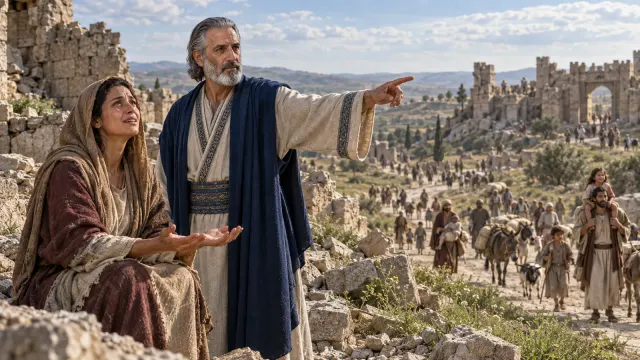
A Servant for the Nations and a City Not Forgotten
The Book of Isaiah begins this movement with a servant whose preparation has been hidden and whose labor can feel wasted, yet whose commission expands instead of shrinking. He embodies Israel while being sent to restore Israel, then is made a light reaching to the earth’s end. That widening purpose turns toward Zion, where public celebration is interrupted by the city’s own accusation that the LORD has forgotten her. The answer comes through images that refuse abstraction: a nursing mother, engraved palms, visible walls, returning children, and a city suddenly too small for its own household. Even the captor’s apparent legal or military claim does not settle the matter. The chapter closes with the LORD taking up Zion’s cause himself, rescuing her children and making his identity as Savior and Redeemer publicly known.
One complete chapter pageOpen chapter →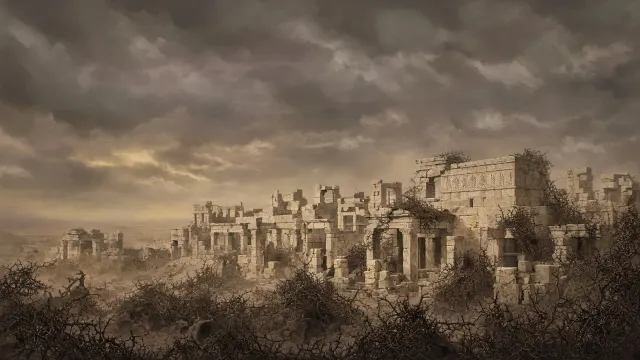
The Opened Ear and the Face Set Like Flint
Chapter 50 of the Book of Isaiah rejects the idea that separation proves the LORD has lost the power to redeem. The opening legal questions expose no unpaid creditor and no stronger owner. The rupture is real, but its cause lies in transgression, not in divine insolvency. Against the unanswered call of the people stands another speaker whose ear is opened morning by morning. He learns before he speaks, receives a word for the weary, and does not retreat when obedience brings blows, hair-pulling, shame, and spitting. His face set like flint is therefore not an untouched face. It is a wounded face held steady by confidence in the one who vindicates. The chapter closes with a deliberately uncomfortable distinction: a person who fears the LORD may still walk without visible light, while those who manufacture their own brightness are told that their sparks will not save them.
One complete chapter pageOpen chapter →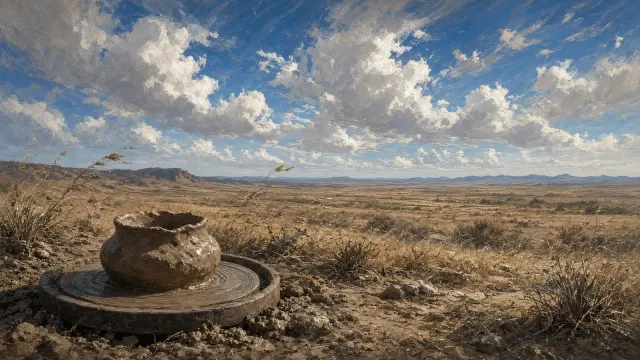
The Arm Is Called to Wake, and Jerusalem Is Called to Rise
Chapter 51 of the Book of Isaiah is built from calls to listen, remember, awaken, and rise. The people are sent back to Abraham and Sarah, not as nostalgia, but as evidence that a nation can begin with almost nothing and still become larger than its visible starting point. Salvation and righteousness are then measured against things that appear far more durable: sky, earth, garments, and the voices of people who revile. The chapter’s own plea calls the arm of the LORD to wake by recalling the exodus, but the answer turns the summons back toward Jerusalem. She has drained the cup of fury and cannot steady herself, yet the decisive action is not her sudden recovery of balance. The LORD removes the cup. The city once flattened like a road beneath its oppressors is told that the instrument of judgment will pass into other hands, while the Maker who rules the sea again names Zion as his people.
One complete chapter pageOpen chapter →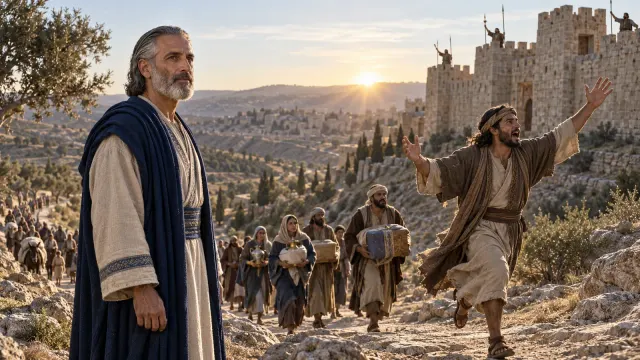
Zion Rises, the Herald Arrives, and the Servant Is Revealed
The Book of Isaiah moves Jerusalem from dust, chains, and captivity into strength, beautiful garments, and a protected departure. Redemption is explicitly separated from payment to the captor: the people were sold for nothing and will be released without money. That restoration becomes public news when a herald crosses the mountains announcing peace, salvation, and the reign of God. The message spreads from one set of feet to singing watchmen, then to the city’s waste places and finally to the ends of the earth. The return is not a panicked escape. The LORD goes ahead and also serves as the rear guard. Then the chapter makes a startling transition without actually changing subjects: the servant is announced as exalted and very high, yet his appearance is so marred that nations are astonished. Chapter 53 of the Book of Isaiah will explain how humiliation and exaltation belong to one work.
One complete chapter pageOpen chapter →
The Rejected Servant Bears the Guilt of the Many
Chapter 53 of the Book of Isaiah overturns the first human verdict on the servant. He appears unimpressive, is despised, rejected, wounded, oppressed, silenced, cut off from the living, and buried. Those facts are not denied. What changes is their explanation. The speakers confess that they had treated his affliction as evidence against him, only to discover that the griefs, transgressions, and iniquities in view were their own. The servant’s suffering is therefore connected to peace, healing, and the bearing of guilt for others. His innocence is stated directly: no violence, no deceit. Even the grave does not close the account. His life becomes an offering for sin, yet he sees seed, prolongs days, and witnesses the result of his travail. The LORD finally names him “my righteous servant,” joins his death to the justification of many, and explains his exaltation through the very self-giving that had made him look defeated.
One complete chapter pageOpen chapter →
The Forsaken City Becomes a Household with Room to Grow
Chapter 54 of the Book of Isaiah takes the restoration announced through the servant and gives it the shape of a household, a marriage, a covenant, and a rebuilt city. Zion is first addressed as barren and desolate, yet told to enlarge the tent before the promised children arrive. The city that felt forsaken is then claimed by the Maker as husband and Redeemer, with a mercy described as more durable than mountains and hills. Rebuilding reaches deeper than ornament. Precious stones enter foundations and gates, but the living center of the city is a generation taught by the LORD and established in righteousness. The chapter does not promise the disappearance of every hostile gathering or accusation. It places those threats beneath a greater authority. Smith, weapon, destroyer, and condemning tongue do not create their own final outcome. The promised heritage is vindication that comes from the LORD to his servants.
One complete chapter pageOpen chapter →
The Invitation Costs Nothing and Changes the Landscape
Chapter 55 of the Book of Isaiah begins like a marketplace and immediately breaks the market’s rules. Water, wine, milk, and rich food are offered to people who have no money, while the real waste is exposed as labor spent on what cannot satisfy. Listening becomes the means of receiving the gift, and the invitation opens into an everlasting covenant rooted in the sure mercies of David and extending toward nations not previously known. The chapter’s famous contrast between divine and human thoughts is placed inside a call to return from wicked ways and receive abundant pardon. Higher ways are therefore seen in mercy as well as majesty. The word that announces these things is compared with rain and snow that leave the earth productive rather than returning empty. By the end, the same abundance has moved into the landscape itself: mountains sing, trees clap, thorn and brier give way, and the road home becomes an enduring sign.
One complete chapter pageOpen chapter →
The House Opens Wider While Its Watchmen Sleep
Chapter 56 of the Book of Isaiah joins the nearness of salvation to justice, Sabbath, covenant loyalty, and a radical widening of belonging. Foreigners and eunuchs are allowed to speak the fears their status creates, but those fears are not granted the final word. A eunuch who called himself a dry tree receives a place and an everlasting name, while covenant-keeping foreigners are brought to the holy mountain, made joyful in the house of prayer, and accepted at the altar. The gathering God says plainly that he is not finished when Israel’s existing outcasts have returned. Then the chapter turns with brutal satire toward people who already hold recognized positions. The watchmen are blind, the guard dogs silent, and the shepherds unable to understand, yet their appetites and pursuit of gain work perfectly well. The Book of Isaiah places supposedly marginal worshippers beside established leaders and lets fidelity, not status, expose the difference.
One complete chapter pageOpen chapter →
The High and Holy One Dwells with the Contrite
Chapter 57 of the Book of Isaiah begins with a loss the community has failed even to interpret. Righteous and merciful people die, while those around them do not reckon with the evil from which the dead have been removed. The chapter then exposes another kind of blindness: idolatry pursued through mockery, bloodshed, sexualized covenant betrayal, costly alliances, and an exhausting journey that never admits defeat. The objects of trust will scatter like something caught by the wind. Against that emptiness stands one of the most striking descriptions in the Book of Isaiah of divine nearness. The high and lofty One who inhabits eternity also dwells with the contrite and humble in order to revive them. Discipline and anger are real, yet they are not endless, and healing is promised even after stubborn resistance. The chapter closes by refusing to flatten that promise into universal peace. Peace is announced to far and near, but persistent wickedness remains a troubled sea that cannot rest.
One complete chapter pageOpen chapter →
The Fast That Leaves Other People Hungry
Chapter 58 of the Book of Isaiah examines religious seriousness by asking what happens to other people while the worshippers are being serious. The community seeks God daily, asks about justice, fasts, bows its head, and uses sackcloth and ashes, yet complains that heaven has not noticed. The LORD answers by pointing to labor exacted, strife, violence, hunger, homelessness, nakedness, accusation, and yokes that the fast has left untouched. The chosen fast is therefore measured in release and provision, not theatrical misery. Light, healing, guidance, answered prayer, and an unfailing spring are promised in connection with a transformed social order. The restored people then become repairers of breaches and builders of waste places, so renewal reaches streets and foundations as well as bodies. The closing Sabbath section continues the same issue of whose pleasure governs sacred time, ending with delight redirected from self-serving use of the day toward the LORD himself.
One complete chapter pageOpen chapter →
Truth Falls in the Street, and the LORD Puts on Armor
Chapter 59 of the Book of Isaiah begins by clearing the LORD of the charge that rescue has failed because his hand is too short or his ear too dull. The separation is traced instead through bloodshed, lies, violence, crooked paths, and a justice system in which truth is no longer being pleaded. The accusation then becomes a confession. The community speaks in the first person, admits that its sins testify against it, and describes truth fallen in the street while anyone departing from evil becomes prey. When no adequate human intercessor appears, the LORD supplies the intervention himself. Righteousness becomes his breastplate, salvation his helmet, and judgment answers conduct already exposed. The scope expands from Zion to west and east, but the chapter returns at the end to mouths and words. The Redeemer comes, and a covenant of Spirit and speech promises that a different word will remain through succeeding generations.
One complete chapter pageOpen chapter →
Zion Receives a Light That Does Not Set
Chapter 60 of the Book of Isaiah imagines Zion filled with arrivals, but the chapter carefully identifies the source of the light drawing them. The city shines because the glory of the LORD rises upon it, not because it discovers brightness hidden in its own resources. Nations and kings move toward that light, and the abstract promise quickly becomes crowded with returning children, camels, flocks, ships, silver, gold, timber, builders, and rulers. Former relationships of power are reversed as foreigners rebuild and kings serve, while open gates signal changed conditions rather than careless exposure. Yet the vision refuses to stop at better materials. Gold replaces brass, but peace and righteousness also replace the old character of officials. Violence disappears from the city’s soundscape. Finally even sun and moon cease to define its illumination, because the LORD himself is everlasting light. The people are his planting and handiwork, and their growth occurs on the timetable of the one who made them shine.
One complete chapter pageOpen chapter →
The Anointed Proclamation Clothes Mourners in Praise
Chapter 61 of the Book of Isaiah gathers the restoration of the preceding chapters into the commission of an anointed speaker. The Spirit of the Lord GOD rests upon him for work measured by its effect on afflicted people: good tidings to the meek, binding for the brokenhearted, liberty for captives, comfort for mourners, and a public exchange of ashes, heaviness, and grief for beauty, joy, and praise. Those restored people do not remain passive recipients. They become trees of righteousness, rebuilders of long-desolate places, and a people named for priestly service. The nations remain in the picture through labor, resources, recognition, and witness. The LORD’s everlasting covenant is grounded in his love of judgment and hatred of robbery, so sacred language cannot make injustice acceptable. The chapter closes with two images of received transformation. Salvation and righteousness are worn like wedding garments, while righteousness and praise grow like a garden whose life becomes visible before all nations.
One complete chapter pageOpen chapter →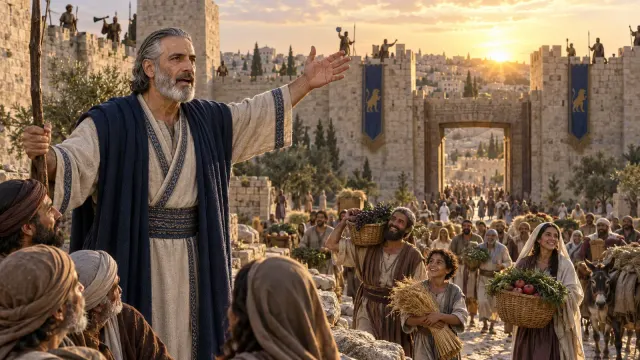
The City Called Forsaken Receives Another Name
Isaiah 62 will not let Zion's old names stand. The chapter begins with a refusal to keep silent until Jerusalem's righteousness shines publicly, then gives the city names that answer abandonment with delight, marriage, and belonging. Watchmen take up the same refusal to rest, speaking until the promised change is established in the earth. The restoration becomes concrete when the LORD swears that grain and wine will reach the people who actually labored for them instead of feeding hostile outsiders. The ending turns outward again: gates open, stones are removed from the highway, a standard is raised, and salvation approaches. The people are called holy and redeemed, while the city once called Forsaken is publicly known as Sought out and not forsaken.
One complete chapter pageOpen chapter →
The Stained Garments and the Remembered Mercies
Isaiah 63 begins with a figure whose splendid garments are stained by judgment. Coming from Edom and Bozrah, he explains that he has trodden the winepress alone, placing vengeance against oppressors beside the arrival of redemption for his people. The chapter then changes register without changing its concern with salvation. A communal voice remembers the LORD's lovingkindness, his carrying care, the exodus, and the guidance of his holy Spirit, but refuses to turn memory into nostalgia by omitting Israel's rebellion. That remembered mercy becomes the basis of appeal. The people ask the Father and Redeemer to look down, then confront the difficult reality of hardened hearts, a trampled sanctuary, and a covenant identity that seems contradicted by visible ruin. The prayer remains unresolved and presses directly into Isaiah 64.
One complete chapter pageOpen chapter →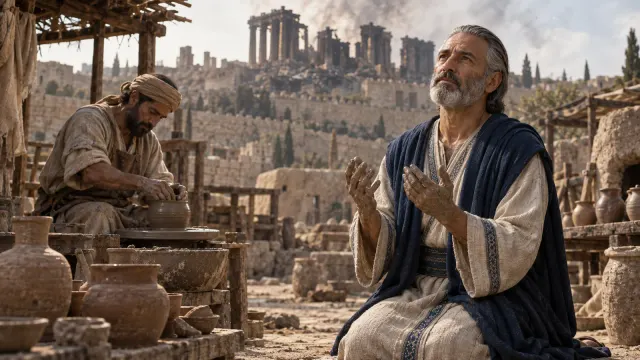
The Clay Appeals to the Hands That Formed It
Isaiah 64 intensifies the prayer from the previous chapter. Asking the LORD to look down is no longer enough; the people want the heavens torn open and the divine presence to descend with the force that makes mountains flow. Yet the chapter does not blame distance alone for the crisis. The community confesses sin, uncleanness, fading strength, and a failure even to stir itself to call upon God. Its own righteousness cannot provide a clean covering. From there the prayer turns with "But now" to Father and Potter, appealing to the one who formed the clay without retracting the confession. The final evidence is Jerusalem itself: holy cities are wilderness, the beautiful house of inherited praise is burned, and pleasant things lie waste. The chapter closes on a question about continued silence, leaving Isaiah 65 to supply the answer.
One complete chapter pageOpen chapter →
The Servants' Future Is Not the Rebels' Future
Isaiah 65 answers the complaint of divine silence by showing that the LORD's hands have been stretched out while a rebellious people refused his call. Religious activity does not excuse that refusal; gardens, graves, forbidden food, rival sacred tables, and claims of superior holiness all become evidence of chosen ways. Yet the answer does not collapse everyone into one judgment. Like new wine preserved because a blessing remains in the cluster, servants are spared and given an inheritance. The chapter then expands the contrast between rebels and servants into two lived futures: hunger against eating, thirst against drinking, sorrow against songs, and a cursed name against a new one. From there the horizon becomes new creation. Jerusalem is joy, labor reaches its proper fruit, families endure, prayer is answered before speech is finished, and the holy mountain becomes a place where feeding no longer depends on violence.
One complete chapter pageOpen chapter →
The Creator Gathers Worshippers and Judges Rebellion
Isaiah 66 closes the book by refusing to let sacred scale be confused with spiritual weight. Heaven is the LORD's throne and earth his footstool, so no human building can contain the Creator; his regard rests on the poor and contrite person who trembles at his word. Worship that keeps its forms while choosing rebellion is rejected. From there Zion's restoration arrives with startling speed, like a birth completed before ordinary labor has run its course, and mourners receive comfort in images of nursing, carrying, and a mother's consolation. The chapter then returns to fire and judgment before widening to all nations and tongues. Survivors are sent to distant peoples, the dispersed are brought home, and worship gathers around the holy mountain. The final verses hold new creation, enduring name, recurring worship, and the exposed consequence of rebellion in the same frame. Isaiah ends with both gathering and judgment still visible.
One complete chapter pageOpen chapter →Source: eBible.org · eng-kjv2006