The big picture
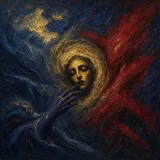
Babylon, an imperial city, is home to the Chaldeans, its ruling people. It is pictured as a pampered woman losing her throne. The warning from Isaiah, God's prophet, strips away her claim to permanent command over other kingdoms. God had allowed his people to fall into her hands, but she treated them without mercy. She trusted pleasure, secrecy, and hidden arts to preserve her future. Sudden loss will expose those supports. Her shame will be severe. Nor can her many wise guides save her. They cannot even save themselves.
In this chapter
- The Royal City Is Brought Low Isaiah 47:1-4
Babylon must leave its throne and sit in dust.
- Merciless Rule Has Mistaken Its Permission Isaiah 47:5-7
Babylon must sit silent in darkness instead of claiming to be mistress of kingdoms.
- Sudden Loss Breaks the Claim of Invulnerability Isaiah 47:8-11
The city delights in pleasure and speaks as if no rival exists.
- The Forecasters Cannot Save Their Own Lives Isaiah 47:12-15
Babylon now faces a challenge: rely on those spells used since youth.
Central truth
God brings Babylon's merciless pride to an end, exposing the helplessness of the secret arts and advisers it trusted for lasting security.


Scripture beside the summary
Isaiah · King James Version · 15Isaiah 47:1-4
The Royal City Is Brought Low
Babylon must leave its throne and sit in dust. The woman who expected delicate treatment must grind meal like a servant. Clothing is lifted for crossing rivers, and her nakedness and shame are exposed. The forced shame is harsh. She has not chosen a new dress or job. God announces vengeance that human resistance will not stop. A voice then names the rescuer of Israel, God's people. He is their holy Lord, ruling over all. The city that shamed others is no longer beyond being shamed herself.

In everyday life
A support volunteer lays plain clothes and blankets beside people who have fled the collapse of an abusive regime. She keeps the changing area private and lets each person regain some dignity without spectators. The scene stays with needs after public upheaval. Isaiah depicts a city's forced exposure as judgement, which this care scene does not reproduce.
Notice
Isaiah 47:1 The command removes the throne before naming the new work. The city's loss is one of power and protected status, not merely a reduction in comfort.
Isaiah 47:1-4
King James Version1Come down, and sit in the dust, O virgin daughter of Babylon, sit on the ground: there is no throne, O daughter of the Chaldeans: for thou shalt no more be called tender and delicate.
2Take the millstones, and grind meal: uncover thy locks, make bare the leg, uncover the thigh, pass over the rivers.
3Thy nakedness shall be uncovered, yea, thy shame shall be seen: I will take vengeance, and I will not meet thee as a man.
4As for our redeemer, the LORD of hosts is his name, the Holy One of Israel.
Isaiah 47:5-7
Merciless Rule Has Mistaken Its Permission
Babylon must sit silent in darkness instead of claiming to be mistress of kingdoms. God explains that he was angry with his own people and gave them into her hand. She showed no mercy, pressing a heavy burden even on the elderly. She assumed her position would last forever and did not consider the end of her actions. She had been allowed to win the war. That was no right to abuse those she took. God had judged his people. He now judges the harsh acts of the power that seized them.
In everyday life
A care-home receiver takes temporary control of a failing residence, then cuts support for the frailest residents to increase returns. At the review, the appointment letter is placed beside the record of neglect. Permission to manage was never permission to harm. Babylon must answer for the harsh treatment of a conquered people under its rule.
Notice
Isaiah 47:6 The heavy burden on elderly people is singled out as evidence of mercilessness. The city cannot excuse its chosen cruelty by pointing to God's earlier anger at the captives.
Isaiah 47:5-7
King James Version5Sit thou silent, and get thee into darkness, O daughter of the Chaldeans: for thou shalt no more be called, The lady of kingdoms.
6I was wroth with my people, I have polluted mine inheritance, and given them into thine hand: thou didst shew them no mercy; upon the ancient hast thou very heavily laid thy yoke.
7And thou saidst, I shall be a lady for ever: so that thou didst not lay these things to thy heart, neither didst remember the latter end of it.
Isaiah 47:8-11
Sudden Loss Breaks the Claim of Invulnerability
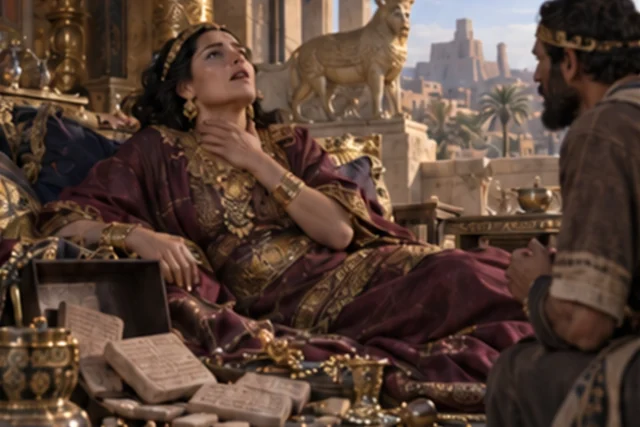
The city delights in pleasure and speaks as if no rival exists. Widowhood and the loss of children seem impossible to her. God says both losses will come fully and suddenly, despite her many spells. She has trusted wickedness and the belief that no one sees. Her wisdom has led her astray by supporting that false self-confidence. Disaster will rise from a source she cannot read or control. Her spells were meant to keep loss away. They will fail when she needs them most.
In everyday life
A bereavement counsellor sits with a formerly self-assured client whose carefully planned life has suffered a devastating loss. She does not repeat his old claims that every risk was under control. The room allows grief that those claims never admitted. Isaiah announces judgement on Babylon's wickedness, not a moral explanation for this client's bereavement.
Notice
Isaiah 47:10 The city's knowledge is named as part of what misled her. Skill has fed a false claim. She thinks no one sees her wrongs, and that she can always escape their cost.
Isaiah 47:8-11
King James Version8Therefore hear now this, thou that art given to pleasures, that dwellest carelessly, that sayest in thine heart, I am, and none else beside me; I shall not sit as a widow, neither shall I know the loss of children:
9But these two things shall come to thee in a moment in one day, the loss of children, and widowhood: they shall come upon thee in their perfection for the multitude of thy sorceries, and for the great abundance of thine enchantments.
10For thou hast trusted in thy wickedness: thou hast said, None seeth me. Thy wisdom and thy knowledge, it hath perverted thee; and thou hast said in thine heart, I am, and none else beside me.
11Therefore shall evil come upon thee; thou shalt not know from whence it riseth: and mischief shall fall upon thee; thou shalt not be able to put it off: and desolation shall come upon thee suddenly, which thou shalt not know.
Isaiah 47:12-15
The Forecasters Cannot Save Their Own Lives
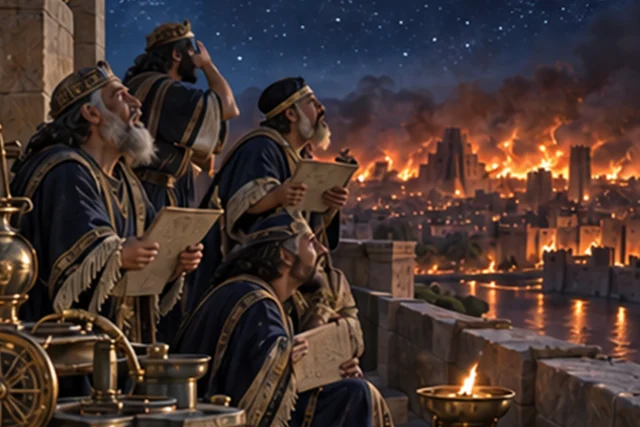
Babylon now faces a challenge: rely on those spells used since youth. Its many advisers have worn it out. Let the readers of stars and monthly signs now rise and save it from what is coming. They are like dry stalks consumed by fire, unable to deliver even themselves. This is no hearth offering warmth and comfort. The merchants and companions who worked with the city turn towards their own places. None of those once trusted will save the city. Their work has no help to give.
In everyday life
An entertainment venue owner calls the advisers who sold her predictions of guaranteed success. As the business closes, each clears a desk and leaves for another client. None can provide the rescue their confident charts implied. The coming ruin consumes the forecasters themselves; it does not leave them free to find new clients.
Notice
Isaiah 47:14 The fire is explicitly unlike a warming hearth. No comfort waits in this blaze. It burns the advisers instead of giving them a safe place to sit.
Isaiah 47:12-15
King James Version12Stand now with thine enchantments, and with the multitude of thy sorceries, wherein thou hast laboured from thy youth; if so be thou shalt be able to profit, if so be thou mayest prevail.
13Thou art wearied in the multitude of thy counsels. Let now the astrologers, the stargazers, the monthly prognosticators, stand up, and save thee from these things that shall come upon thee.
14Behold, they shall be as stubble; the fire shall burn them; they shall not deliver themselves from the power of the flame: there shall not be a coal to warm at, nor fire to sit before it.
15Thus shall they be unto thee with whom thou hast laboured, even thy merchants, from thy youth: they shall wander every one to his quarter; none shall save thee.
Details worth noticing
The opening image
Isaiah 47:1 begins with “Come down, and sit in the dust, O virgin daughter of Babylon, sit on the ground: there is no throne, O daughter of the Chaldeans: for thou shalt no more be…”
Where the chapter turns
Isaiah 47:8 forms a natural hinge: “Therefore hear now this, thou that art given to pleasures, that dwellest carelessly, that sayest in thine heart, I am, and none else beside me; I shall not…”
The final note
Isaiah 47:15 leaves the reader with “Thus shall they be unto thee with whom thou hast laboured, even thy merchants, from thy youth: they shall wander every one to his quarter; none shall save…”
A word trail through the chapter
The words daughter, didst, heart, know, multitude, able help reveal the chapter’s repeated concerns.
KJV words made clear
- ancient
- An elderly person in this context, not an object from the distant past.
- prognosticators
- People who claim to predict future events from signs or patterns.
- stubble
- Dry stalks left after harvest, which burn rapidly.
Music and video connected to the passage
Related media appears when its Scripture reference overlaps this study. Music and video can illuminate a theme while the biblical text remains the foundation.