
The big picture
A long prayer returns again and again to God's commands, promises, and help. The speaker loves what God has said, yet still needs teaching, strength, and rescue. Proud enemies threaten him; grief and weariness press close. His trust does not remove the need to ask for life. Words such as law, statutes, and precepts refer to God's teaching in different ways. The ending is a plea from someone who has strayed like a sheep and needs to be found.
In this chapter
- Blessing Starts with a Whole Heart Psalms 119:1-8
The prayer begins by calling those who follow God's law blessed.
- Words Kept Within Shape Conduct Psalms 119:9-16
How does a young man keep his path clean?
- A Stranger Seeks Clear Sight Psalms 119:17-24
The servant asks for generous care so he can live and obey.
- Grief Needs Strength to Keep Walking Psalms 119:25-32
Pressed down to the dust, the speaker asks for life in keeping with God's promise.
- Even Desire Needs God’s Guidance Psalms 119:33-40
Guidance is sought for a path the speaker can keep to the end.
- Trust Makes Room for Open Speech Psalms 119:41-48
Mercy and rescue are sought according to God's promise.
- Remembered Words Sustain a Hard Night Psalms 119:49-56
Remembering the promise is the servant's request to God, since that promise gave him hope.
- A Changed Course Joins Grateful Company Psalms 119:57-64
Calling God his portion, the speaker treats him as his share and treasure.
- Hardship Changes the Value of Instruction Psalms 119:65-72
God has dealt well with his servant in keeping with his word.
- The Maker Is Asked to Teach Psalms 119:73-80
The hands that made the speaker are asked to give him understanding.
- Worn Out Yet Still Waiting Psalms 119:81-88
The speaker grows faint while waiting for rescue, but keeps hoping in God's word.
- A Lasting Word Holds a Fragile Life Psalms 119:89-96
God's word stands firm in heaven, and his faithfulness reaches each generation.
- Loved Teaching Becomes Practical Wisdom Psalms 119:97-104
Throughout the day, the speaker thinks about the law he loves.
- A Lamp Guides a Risky Path Psalms 119:105-112
God's word is pictured as a lamp near the speaker's feet and light along his path.
- Refuge Does Not Remove Awe Psalms 119:113-120
The speaker rejects empty thoughts and loves God's law.
- A Faithful Servant Asks for Backing Psalms 119:121-128
The servant says he has acted fairly and asks not to be left to oppressors.
- Light Meets Hunger and Grief Psalms 119:129-136
God's teaching is full of wonder, so the speaker keeps it.
- Truth Still Matters When Status Is Low Psalms 119:137-144
Rightness belongs to the Lord and to the judgements he gives.
- Prayer Begins Before the Dawn Psalms 119:145-152
A whole heart cries for God to hear and save.
- Mercy Is Asked to Defend the Case Psalms 119:153-160
His pain prompts a plea for God to see, take his side, and bring him out.
- Deep Respect Outweighs Fear of Rulers Psalms 119:161-168
Rulers persecute the speaker without cause, yet his deepest awe is before God's word.
- The Devoted Servant Still Needs Finding Psalms 119:169-176
The final cries ask to reach God and receive understanding and rescue according to his word.
Central truth
Love for God's teaching grows through distress, but the devoted speaker still depends on God to teach, sustain, correct, and seek him.


Scripture beside the summary
Psalms · King James Version · 176Psalms 119:1-8
Blessing Starts with a Whole Heart
The prayer begins by calling those who follow God's law blessed. They seek him with their whole heart and do no wrong. The speaker knows that God requires close care in keeping his commands. Yet he speaks as one who still needs his steps directed. He wants freedom from shame through attending to all that God says. Praise will grow as he learns right judgement. His resolve to obey ends with a plea not to be left alone. Commitment and need stand together from the start.

In everyday life
A cobbler studies the repair instructions for an unfamiliar boot and lays out the right tools. He wants the whole job done well, not only the visible stitching. Before cutting, he calls his experienced mentor over to check the plan. His resolve does not remove his need for help. The prayer seeks God's guidance for an entire life.
Notice
Psalms 119:8 A plea against abandonment follows the promise of obedience. The speaker's firm intention does not mean he thinks he can manage alone.
Psalms 119:1-8
King James Version1Blessed are the undefiled in the way, who walk in the law of the LORD.
2Blessed are they that keep his testimonies, and that seek him with the whole heart.
3They also do no iniquity: they walk in his ways.
4Thou hast commanded us to keep thy precepts diligently.
5O that my ways were directed to keep thy statutes!
6Then shall I not be ashamed, when I have respect unto all thy commandments.
7I will praise thee with uprightness of heart, when I shall have learned thy righteous judgments.
8I will keep thy statutes: O forsake me not utterly.
Psalms 119:9-16
Words Kept Within Shape Conduct
How does a young man keep his path clean? The answer is to attend to God's word. The speaker seeks God with an undivided heart and asks not to stray. He stores the word within so that it checks sin before action. He also asks to be taught, speaks God's judgements aloud, and delights in them like wealth. Thought, speech, and memory work together here. His pledge not to forget grows from pleasure in the teaching, rather than treating it only as a list to pass.

In everyday life
An apprentice glassblower quietly repeats the steps before lifting a hot piece from the furnace. She has written them in a small book, but now draws on what she remembers. Her teacher listens as she names the next action. Knowledge carried within guides her hands as she works. The psalm concerns resisting sin, not mastering a craft.
Notice
Psalms 119:11 Keeping the word in the heart has the aim of avoiding sin. Memory matters here because it shapes conduct, not because reciting is an end in itself.
Psalms 119:9-16
King James Version9Wherewithal shall a young man cleanse his way? by taking heed thereto according to thy word.
10With my whole heart have I sought thee: O let me not wander from thy commandments.
11Thy word have I hid in mine heart, that I might not sin against thee.
12Blessed art thou, O LORD: teach me thy statutes.
13With my lips have I declared all the judgments of thy mouth.
14I have rejoiced in the way of thy testimonies, as much as in all riches.
15I will meditate in thy precepts, and have respect unto thy ways.
16I will delight myself in thy statutes: I will not forget thy word.
Psalms 119:17-24
A Stranger Seeks Clear Sight
The servant asks for generous care so he can live and obey. He wants his eyes opened to the wonders in God's law. Calling himself a stranger on earth, he pleads for access to the commands he needs. Longing for sound judgement fills him. Proud people who stray receive rebuke, while rulers sit and speak against him. He asks for shame to be removed and keeps thinking about God's teaching. The words he loves become his advisers when people with rank are speaking as foes.

In everyday life
A newcomer to a port town spreads the local transit map on a bench while commuters hurry past. She asks a station helper to mark the route to her new home. The printed lines become useful as someone explains them. Being present in the town is not the same as knowing her way. The speaker asks God to open his understanding.
Notice
Psalms 119:24 God's teachings serve as advisers while rulers speak against the servant. Guidance comes from the words he trusts rather than from the rank of his critics.
Psalms 119:17-24
King James Version17Deal bountifully with thy servant, that I may live, and keep thy word.
18Open thou mine eyes, that I may behold wondrous things out of thy law.
19I am a stranger in the earth: hide not thy commandments from me.
20My soul breaketh for the longing that it hath unto thy judgments at all times.
21Thou hast rebuked the proud that are cursed, which do err from thy commandments.
22Remove from me reproach and contempt; for I have kept thy testimonies.
23Princes also did sit and speak against me: but thy servant did meditate in thy statutes.
24Thy testimonies also are my delight and my counsellors.
Psalms 119:25-32
Grief Needs Strength to Keep Walking
Pressed down to the dust, the speaker asks for life in keeping with God's promise. He has told God about his ways and been heard. Now he seeks teaching and enough understanding to speak of God's wonders. Grief drains him, so he asks for strength. He wants false paths removed and chooses the way of truth. Holding to God's teaching, he fears being put to shame. The ending imagines running along the commanded path once God has enlarged his heart, giving room and strength within.

In everyday life
A marathon runner sits on the kerb after grief has broken months of training. Her coach kneels beside her and listens before helping her set a shorter route for the day. She ties her shoes again and starts at a walk. Desire needs support before it becomes movement. The psalm asks God for inner strength to follow his word.
Notice
Psalms 119:32 Running follows the request for an enlarged heart. The image links freer movement in obedience with help received within, rather than willpower alone.
Psalms 119:25-32
King James Version25My soul cleaveth unto the dust: quicken thou me according to thy word.
26I have declared my ways, and thou heardest me: teach me thy statutes.
27Make me to understand the way of thy precepts: so shall I talk of thy wondrous works.
28My soul melteth for heaviness: strengthen thou me according unto thy word.
29Remove from me the way of lying: and grant me thy law graciously.
30I have chosen the way of truth: thy judgments have I laid before me.
31I have stuck unto thy testimonies: O LORD, put me not to shame.
32I will run the way of thy commandments, when thou shalt enlarge my heart.
Psalms 119:33-40
Even Desire Needs God’s Guidance
Guidance is sought for a path the speaker can keep to the end. Understanding is needed for wholehearted obedience. He wants God to guide his steps towards commands that already give him delight. The prayer then reaches inward to desire and outward to sight. Let his heart turn towards God's teaching instead of greed; let his eyes turn from empty things. He seeks life, a firm promise, and release from feared disgrace. Knowing the right path is not enough if his desires pull elsewhere.

In everyday life
A jeweller closes a catalogue of costly stock and returns to the repair promised to an elderly customer. She asks her business partner to help keep the week's work focused on existing duties. The tempting display had drawn her away from what she agreed to do. She needs more than knowing the schedule. The prayer asks God to redirect the heart itself.
Notice
Psalms 119:36 The request concerns where the heart leans, not only what the hands do. Greed is treated as a rival desire that can draw obedience off course.
Psalms 119:33-40
King James Version33Teach me, O LORD, the way of thy statutes; and I shall keep it unto the end.
34Give me understanding, and I shall keep thy law; yea, I shall observe it with my whole heart.
35Make me to go in the path of thy commandments; for therein do I delight.
36Incline my heart unto thy testimonies, and not to covetousness.
37Turn away mine eyes from beholding vanity; and quicken thou me in thy way.
38Stablish thy word unto thy servant, who is devoted to thy fear.
39Turn away my reproach which I fear: for thy judgments are good.
40Behold, I have longed after thy precepts: quicken me in thy righteousness.
Psalms 119:41-48
Trust Makes Room for Open Speech
Mercy and rescue are sought according to God's promise. Help will give the speaker an answer to the person who shames him. He asks that truthful speech not leave his mouth, since his hope rests in God's judgements. He intends to keep the law and walk freely while seeking its commands. He will speak before kings without shame. Love and delight mark this obedience, with lifted hands expressing devotion. The prayer pictures God's teaching as a source of freedom and courage, rather than a reason to hide.

In everyday life
A tradeswoman brings the signed building specifications to a formal meeting with wealthy clients. She points to the agreed standard and explains why she has kept it despite their pressure. The document gives her room to speak without guessing what will please them. Her hands stop shaking as she reads. The psalm's courage rests in God's truth and rescue.
Notice
Psalms 119:45 Freedom is joined to seeking God's precepts. The speaker does not picture liberty as having no guide, but as walking with a guide he trusts.
Psalms 119:41-48
King James Version41Let thy mercies come also unto me, O LORD, even thy salvation, according to thy word.
42So shall I have wherewith to answer him that reproacheth me: for I trust in thy word.
43And take not the word of truth utterly out of my mouth; for I have hoped in thy judgments.
44So shall I keep thy law continually for ever and ever.
45And I will walk at liberty: for I seek thy precepts.
46I will speak of thy testimonies also before kings, and will not be ashamed.
47And I will delight myself in thy commandments, which I have loved.
48My hands also will I lift up unto thy commandments, which I have loved; and I will meditate in thy statutes.
Psalms 119:49-56
Remembered Words Sustain a Hard Night
Remembering the promise is the servant's request to God, since that promise gave him hope. That word has brought life and comfort within affliction. Proud people mock him, but he has not left the law. Remembering God's past judgements steadies him. He feels horror at people who abandon that law, while its commands become songs in the place where he stays as a traveller. At night he remembers God's name and keeps his teaching. The same words give him something to sing, recall, and follow through an unsettled life.

In everyday life
A hostel resident opens a letter from her daughter when the corridor grows quiet. She reads the promise of a visit, then hums the tune they used to sing together. The bed is still unfamiliar, but she has something known to carry through the night. Morning remains ahead of her. The psalm finds comfort in God's commands and promise.
Notice
Psalms 119:54 Commands become songs where the speaker lives as a traveller. What guides conduct also gives a voice to hope in a place that feels temporary.
Psalms 119:49-56
King James Version49Remember the word unto thy servant, upon which thou hast caused me to hope.
50This is my comfort in my affliction: for thy word hath quickened me.
51The proud have had me greatly in derision: yet have I not declined from thy law.
52I remembered thy judgments of old, O LORD; and have comforted myself.
53Horror hath taken hold upon me because of the wicked that forsake thy law.
54Thy statutes have been my songs in the house of my pilgrimage.
55I have remembered thy name, O LORD, in the night, and have kept thy law.
56This I had, because I kept thy precepts.
Psalms 119:57-64
A Changed Course Joins Grateful Company
Calling God his portion, the speaker treats him as his share and treasure. He seeks mercy with his whole heart. After considering his own conduct, he turns his feet towards God's teaching without delay. Robbers have stripped him, yet he has not forgotten the law. Even midnight brings a reason to rise in thanks for God's fair judgements. He joins those who revere God and keep his commands. The stanza closes by seeing mercy throughout the earth and asking again to be taught how to live.

In everyday life
A delivery rider checks the route log and sees where he kept taking a wrong turn. He changes the next stop at once rather than defending the lost time. At the depot he joins riders who share accurate directions and thanks the colleague who corrected him. A better path comes with better company. The speaker's chosen share is God himself.
Notice
Psalms 119:60 The turn towards obedience is made without delay after the speaker reflects on his ways. Thought leads to a changed path rather than remaining private regret.
Psalms 119:57-64
King James Version57Thou art my portion, O LORD: I have said that I would keep thy words.
58I intreated thy favour with my whole heart: be merciful unto me according to thy word.
59I thought on my ways, and turned my feet unto thy testimonies.
60I made haste, and delayed not to keep thy commandments.
61The bands of the wicked have robbed me: but I have not forgotten thy law.
62At midnight I will rise to give thanks unto thee because of thy righteous judgments.
63I am a companion of all them that fear thee, and of them that keep thy precepts.
64The earth, O LORD, is full of thy mercy: teach me thy statutes.
Psalms 119:65-72
Hardship Changes the Value of Instruction
God has dealt well with his servant in keeping with his word. The servant asks for good judgement because he trusts the commands. He recalls straying before affliction, then learning to keep the word through it. God is good and does good. Proud foes spread lies and grow dull within, but the speaker delights in the law. He calls his own hardship useful because it taught him. The teaching now outweighs heaps of silver and gold. This is his account of what suffering did, not a claim about every sufferer.

In everyday life
A novice beekeeper opens the inspection notes after losing a hive through neglected checks. She marks what she missed and follows each step carefully at the remaining hive. The loss has changed how she values guidance once skimmed in haste. She would not choose the loss again. The psalm credits God with teaching the speaker through his affliction.
Notice
Psalms 119:71 The speaker says hardship helped him learn God's statutes. He describes the value found in his own affliction rather than blaming other people for theirs.
Psalms 119:65-72
King James Version65Thou hast dealt well with thy servant, O LORD, according unto thy word.
66Teach me good judgment and knowledge: for I have believed thy commandments.
67Before I was afflicted I went astray: but now have I kept thy word.
68Thou art good, and doest good; teach me thy statutes.
69The proud have forged a lie against me: but I will keep thy precepts with my whole heart.
70Their heart is as fat as grease; but I delight in thy law.
71It is good for me that I have been afflicted; that I might learn thy statutes.
72The law of thy mouth is better unto me than thousands of gold and silver.
Psalms 119:73-80
The Maker Is Asked to Teach
The hands that made the speaker are asked to give him understanding. He expects others who revere God to be glad at seeing his hope. He accepts God's judgements as right, even in the affliction he has suffered. Still, he asks for kindness, comfort, and life. Proud people harmed him without cause, so he asks that shame return to them. He keeps thinking about God's commands and hopes faithful people will come near. An undivided heart matters more than merely looking sound before that gathered company.
In everyday life
A pottery learner brings a cracked bowl back to the tutor who first taught her to shape clay. She asks him to explain where the wall became weak. Other learners draw close to watch the repair attempt. Correction and patient help arrive from the same hands that guided her first work. The psalm addresses the one who made the speaker himself.
Notice
Psalms 119:73 Creation becomes a reason to ask for understanding. The speaker appeals to the maker of his body for the insight needed to live faithfully.
Psalms 119:73-80
King James Version73Thy hands have made me and fashioned me: give me understanding, that I may learn thy commandments.
74They that fear thee will be glad when they see me; because I have hoped in thy word.
75I know, O LORD, that thy judgments are right, and that thou in faithfulness hast afflicted me.
76Let, I pray thee, thy merciful kindness be for my comfort, according to thy word unto thy servant.
77Let thy tender mercies come unto me, that I may live: for thy law is my delight.
78Let the proud be ashamed; for they dealt perversely with me without a cause: but I will meditate in thy precepts.
79Let those that fear thee turn unto me, and those that have known thy testimonies.
80Let my heart be sound in thy statutes; that I be not ashamed.
Psalms 119:81-88
Worn Out Yet Still Waiting
The speaker grows faint while waiting for rescue, but keeps hoping in God's word. His eyes strain for comfort. He feels like a skin bottle shrivelled in smoke, yet does not forget the rules. He asks how long he has left and when his pursuers will face judgement. Proud foes have dug traps against the law. They nearly ended his life. He calls God's commands faithful and asks for help and renewed life through mercy. The resolve to obey continues, but it is voiced from exhaustion, not ease.
In everyday life
A missing-persons volunteer watches the phone after another day of fruitless enquiries. The worn list beside her is full of calls already made. She asks the search lead when the next report will come, then checks the details once more. Waiting has not erased her commitment, but it has drained her. The psalm waits for God's rescue from active persecutors.
Notice
Psalms 119:83 A bottle in smoke means a worn skin container rather than a modern glass bottle. The image makes the speaker's drawn and weakened state visible.
Psalms 119:81-88
King James Version81My soul fainteth for thy salvation: but I hope in thy word.
82Mine eyes fail for thy word, saying, When wilt thou comfort me?
83For I am become like a bottle in the smoke; yet do I not forget thy statutes.
84How many are the days of thy servant? when wilt thou execute judgment on them that persecute me?
85The proud have digged pits for me, which are not after thy law.
86All thy commandments are faithful: they persecute me wrongfully; help thou me.
87They had almost consumed me upon earth; but I forsook not thy precepts.
88Quicken me after thy lovingkindness; so shall I keep the testimony of thy mouth.
Psalms 119:89-96
A Lasting Word Holds a Fragile Life
God's word stands firm in heaven, and his faithfulness reaches each generation. Earth remains because he set it in place; all things serve him. The speaker links that wide stability to his own survival. Delight in the law kept him from being lost in affliction. He will remember the commands through which life was renewed. Claiming to belong to God, he asks rescue while wicked people wait to destroy him. Human perfection has limits, but God's command reaches further than the speaker can see or exhaust.
In everyday life
A weather-station keeper compares today's damaged instrument with years of recorded readings kept in a dry cabinet. One broken gauge has not erased the stable record she can return to. She uses it while arranging repairs and preparing the next report. The present fault does not fill her whole view. God's word in the psalm sustains earth itself.
Notice
Psalms 119:92 The speaker moves from the earth's endurance to his own survival in trouble. Delight in God's law is named as help that kept him from perishing.
Psalms 119:89-96
King James Version89For ever, O LORD, thy word is settled in heaven.
90Thy faithfulness is unto all generations: thou hast established the earth, and it abideth.
91They continue this day according to thine ordinances: for all are thy servants.
92Unless thy law had been my delights, I should then have perished in mine affliction.
93I will never forget thy precepts: for with them thou hast quickened me.
94I am thine, save me; for I have sought thy precepts.
95The wicked have waited for me to destroy me: but I will consider thy testimonies.
96I have seen an end of all perfection: but thy commandment is exceeding broad.
Psalms 119:97-104
Loved Teaching Becomes Practical Wisdom
Throughout the day, the speaker thinks about the law he loves. He says its commands make him wiser than enemies, teachers, and elders. The reason is not youth or pride in quick thinking. He keeps the teaching close and puts it into practice. He has held his feet back from wrong paths because God has taught him. The words taste sweeter than honey. Understanding grows into rejection of false ways. The pleasure is real, but it is joined to choices about where to walk and what to refuse.
In everyday life
A kitchen assistant notices a cooling tray left in the wrong place and checks the food-safety sheet before service. She follows the rule even when older staff wave her on. Her careful attention catches a risk their routine has missed. She moves the tray and records the change. The psalm's wisdom comes from loving and keeping God's commands.
Notice
Psalms 119:100 Greater understanding than elders is linked to keeping the precepts. Age alone is not the measure here; the speaker points to attention expressed through conduct.
Psalms 119:97-104
King James Version97O how love I thy law! it is my meditation all the day.
98Thou through thy commandments hast made me wiser than mine enemies: for they are ever with me.
99I have more understanding than all my teachers: for thy testimonies are my meditation.
100I understand more than the ancients, because I keep thy precepts.
101I have refrained my feet from every evil way, that I might keep thy word.
102I have not departed from thy judgments: for thou hast taught me.
103How sweet are thy words unto my taste! yea, sweeter than honey to my mouth!
104Through thy precepts I get understanding: therefore I hate every false way.
Psalms 119:105-112
A Lamp Guides a Risky Path
God's word is pictured as a lamp near the speaker's feet and light along his path. He has sworn to keep God's fair judgements and intends to do so. Deep affliction leads him to ask for life. He offers willing praise and still asks for teaching. Danger is constant, with traps laid by the wicked, but he has not left the commanded way. He takes God's teaching as a lasting inheritance and a source of joy. His heart is set on following it through to the end.
In everyday life
A cave surveyor lowers her lamp towards the next uneven stretch of rock. The beam shows where to put a foot while much of the passage remains dark. She checks the line and moves with care rather than rushing beyond the light. Help is enough for the next step. The psalm's lamp is God's teaching amid moral danger.
Notice
Psalms 119:105 The light is close to the feet and path. The image concerns guidance for walking, not a claim that every distant event has already been shown.
Psalms 119:105-112
King James Version105Thy word is a lamp unto my feet, and a light unto my path.
106I have sworn, and I will perform it, that I will keep thy righteous judgments.
107I am afflicted very much: quicken me, O LORD, according unto thy word.
108Accept, I beseech thee, the freewill offerings of my mouth, O LORD, and teach me thy judgments.
109My soul is continually in my hand: yet do I not forget thy law.
110The wicked have laid a snare for me: yet I erred not from thy precepts.
111Thy testimonies have I taken as an heritage for ever: for they are the rejoicing of my heart.
112I have inclined mine heart to perform thy statutes alway, even unto the end.
Psalms 119:113-120
Refuge Does Not Remove Awe
The speaker rejects empty thoughts and loves God's law. He calls God his hiding place and shield, then tells evildoers to leave him. He wants to keep the commands without their pressure. His safety still depends on God holding him up, so he asks not to be ashamed of his hope. God rejects those who stray and removes the wicked like waste from refined metal. That judgement deepens the speaker's love for the teaching, but also makes his body tremble. Trust in refuge stands beside real fear of judgement.
In everyday life
A metalworker stands behind the marked screen as waste is skimmed from a furnace. He checks that the barrier is secure and keeps his gloves on. Having a protected place does not make the heat harmless. He watches the process with care from where he has been told to stand. The psalm's fear concerns God's judgement of wickedness.
Notice
Psalms 119:120 The speaker trembles after calling God his shield. Protection and awe are not opposites in this prayer; the trusted protector also judges evil.
Psalms 119:113-120
King James Version113I hate vain thoughts: but thy law do I love.
114Thou art my hiding place and my shield: I hope in thy word.
115Depart from me, ye evildoers: for I will keep the commandments of my God.
116Uphold me according unto thy word, that I may live: and let me not be ashamed of my hope.
117Hold thou me up, and I shall be safe: and I will have respect unto thy statutes continually.
118Thou hast trodden down all them that err from thy statutes: for their deceit is falsehood.
119Thou puttest away all the wicked of the earth like dross: therefore I love thy testimonies.
120My flesh trembleth for fear of thee; and I am afraid of thy judgments.
Psalms 119:121-128
A Faithful Servant Asks for Backing
The servant says he has acted fairly and asks not to be left to oppressors. He wants God to stand behind him for good. His eyes grow tired while waiting for rescue and the promised right outcome. Mercy and teaching are still needed by one who calls himself God's servant. He asks for action because others have treated the law as void. Against that rejection, he values the commands more than fine gold. He regards them as right in all things and rejects every false path.
In everyday life
A renter brings receipts to a housing adviser after repeated demands for money already paid. She asks the adviser to stand with her when the account is reviewed. Keeping records has not stopped the pressure, and she is tired of waiting. She needs support as well as a sound case. The prayer seeks God as guarantor and rescuer.
Notice
Psalms 119:126 The call for God to act is linked to people treating his law as worthless. The plea concerns more than the speaker's wish for personal relief.
Psalms 119:121-128
King James Version121I have done judgment and justice: leave me not to mine oppressors.
122Be surety for thy servant for good: let not the proud oppress me.
123Mine eyes fail for thy salvation, and for the word of thy righteousness.
124Deal with thy servant according unto thy mercy, and teach me thy statutes.
125I am thy servant; give me understanding, that I may know thy testimonies.
126It is time for thee, LORD, to work: for they have made void thy law.
127Therefore I love thy commandments above gold; yea, above fine gold.
128Therefore I esteem all thy precepts concerning all things to be right; and I hate every false way.
Psalms 119:129-136
Light Meets Hunger and Grief
God's teaching is full of wonder, so the speaker keeps it. As the words open, they give light and understanding to those without skill. He longs for the commands like a person gasping for air. He asks for the mercy God gives those who love his name. Let the word guide his steps, let sin lose its rule, and let human oppression end. He seeks God's favour and teaching. The stanza closes with tears because others ignore the law he so deeply wants to follow.
In everyday life
A swimming learner reaches the pool edge, catches her breath, and asks the instructor to explain the stroke once more. This time the small correction makes sense, and she tries it slowly while holding the rail. She wants the guidance that will make her movements sound. The psalm's hunger for teaching includes grief at other people's disobedience.
Notice
Psalms 119:136 The tears concern people not keeping God's law, rather than only the speaker's own pain. His love for the teaching includes sorrow over its rejection.
Psalms 119:129-136
King James Version129Thy testimonies are wonderful: therefore doth my soul keep them.
130The entrance of thy words giveth light; it giveth understanding unto the simple.
131I opened my mouth, and panted: for I longed for thy commandments.
132Look thou upon me, and be merciful unto me, as thou usest to do unto those that love thy name.
133Order my steps in thy word: and let not any iniquity have dominion over me.
134Deliver me from the oppression of man: so will I keep thy precepts.
135Make thy face to shine upon thy servant; and teach me thy statutes.
136Rivers of waters run down mine eyes, because they keep not thy law.
Psalms 119:137-144
Truth Still Matters When Status Is Low
Rightness belongs to the Lord and to the judgements he gives. His commands are faithful, but the speaker's enemies have forgotten them. That neglect consumes him with zeal. He loves God's word because it is pure and tested. Though small and despised, he does not forget what he has been taught. Trouble and anguish have taken hold, yet the commands remain his delight. God's rightness and teaching last. The speaker asks for enough understanding to live within this truth, even when others give him little standing.
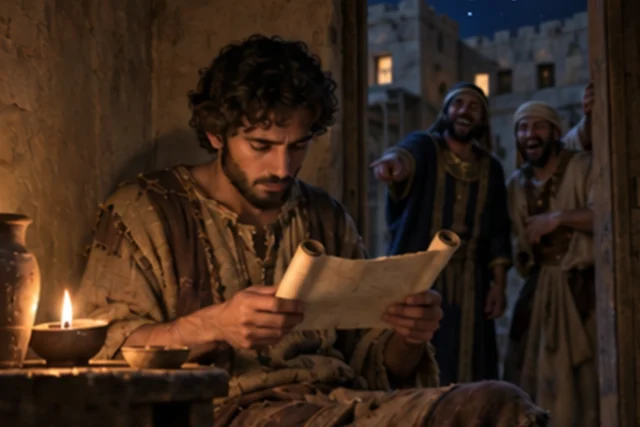
In everyday life
A junior laboratory worker checks the calibration record after senior staff dismiss her concern. Her rank is low, but the figures still need an answer. She repeats the measurement and puts the result beside the required standard. Being overlooked does not alter the result she has in front of her. The psalm trusts God's lasting truth under personal distress.
Notice
Psalms 119:141 Being small and despised is placed beside refusing to forget the commands. Low social standing does not settle the worth of the teaching the speaker keeps.
Psalms 119:137-144
King James Version137Righteous art thou, O LORD, and upright are thy judgments.
138Thy testimonies that thou hast commanded are righteous and very faithful.
139My zeal hath consumed me, because mine enemies have forgotten thy words.
140Thy word is very pure: therefore thy servant loveth it.
141I am small and despised: yet do not I forget thy precepts.
142Thy righteousness is an everlasting righteousness, and thy law is the truth.
143Trouble and anguish have taken hold on me: yet thy commandments are my delights.
144The righteousness of thy testimonies is everlasting: give me understanding, and I shall live.
Psalms 119:145-152
Prayer Begins Before the Dawn
A whole heart cries for God to hear and save. The speaker promises obedience while asking rescue. He rises before dawn to pray and stays awake through the night's watches to think on God's word. Mercy is the ground on which he seeks a hearing and renewed life. Those who pursue harm draw close while staying far from God's law. Yet the Lord is near too, and his commands are true. The speaker has long known that this teaching was made to last, not only to meet the present threat.

In everyday life
A dawn-shift rail inspector phones the control room before trains begin running because trespassers have been seen near the track. She hears the controller answer at once and keeps the line open while checking the fence. The danger is close, but help is also in contact. The psalm names God's nearness through prayer and trustworthy commands.
Notice
Psalms 119:151 The Lord's nearness answers the previous verse's approach of harmful people. The speaker does not deny the threat; he names another presence close at hand.
Psalms 119:145-152
King James Version145I cried with my whole heart; hear me, O LORD: I will keep thy statutes.
146I cried unto thee; save me, and I shall keep thy testimonies.
147I prevented the dawning of the morning, and cried: I hoped in thy word.
148Mine eyes prevent the night watches, that I might meditate in thy word.
149Hear my voice according unto thy lovingkindness: O LORD, quicken me according to thy judgment.
150They draw nigh that follow after mischief: they are far from thy law.
151Thou art near, O LORD; and all thy commandments are truth.
152Concerning thy testimonies, I have known of old that thou hast founded them for ever.
Psalms 119:153-160
Mercy Is Asked to Defend the Case
His pain prompts a plea for God to see, take his side, and bring him out. He has not forgotten the law. Those who refuse God's statutes are far from rescue, but the Lord's tender mercies are great. Many enemies pursue the speaker without making him turn away. He grieves at people who will not keep the word and asks God to see his own love for it. Repeated pleas for life depend on kindness. The ending trusts the word as true from the start and God's judgements as lasting.

In everyday life
A legal-aid worker listens while a client places a stack of unanswered claims on the table. The client asks her to take up the case rather than merely note the delay. Several opponents have worn him down, but he still brings the records intact. He needs someone to act on what they show. God's mercy is the prayer's ground for life.
Notice
Psalms 119:159 The request to consider the speaker's love for the precepts ends by appealing to kindness. Devotion does not replace the need for God's mercy.
Psalms 119:153-160
King James Version153Consider mine affliction, and deliver me: for I do not forget thy law.
154Plead my cause, and deliver me: quicken me according to thy word.
155Salvation is far from the wicked: for they seek not thy statutes.
156Great are thy tender mercies, O LORD: quicken me according to thy judgments.
157Many are my persecutors and mine enemies; yet do I not decline from thy testimonies.
158I beheld the transgressors, and was grieved; because they kept not thy word.
159Consider how I love thy precepts: quicken me, O LORD, according to thy lovingkindness.
160Thy word is true from the beginning: and every one of thy righteous judgments endureth for ever.
Psalms 119:161-168
Deep Respect Outweighs Fear of Rulers
Rulers persecute the speaker without cause, yet his deepest awe is before God's word. Finding it brings joy like finding a great prize. He hates falsehood and loves the law, praising God's fair judgements repeatedly through the day. Those who love that law have great peace and are not made to stumble. Hope for rescue is joined to doing the commands. The speaker keeps the teaching because he loves it deeply. All his ways lie before God, whose sight matters more than the rulers' false judgement.

In everyday life
A refugee musician opens the case containing the instrument recovered after years of loss. He draws the bow across one string and pauses to hear it. Hostile letters still lie on the table, but this recovered treasure fills the room with a different sound. His whole day is not owned by the letters. The psalm's greater treasure is God's word.
Notice
Psalms 119:168 All the speaker's ways lie open before God. Obedience is set within being fully seen, rather than merely managing what hostile rulers know.
Psalms 119:161-168
King James Version161Princes have persecuted me without a cause: but my heart standeth in awe of thy word.
162I rejoice at thy word, as one that findeth great spoil.
163I hate and abhor lying: but thy law do I love.
164Seven times a day do I praise thee because of thy righteous judgments.
165Great peace have they which love thy law: and nothing shall offend them.
166LORD, I have hoped for thy salvation, and done thy commandments.
167My soul hath kept thy testimonies; and I love them exceedingly.
168I have kept thy precepts and thy testimonies: for all my ways are before thee.
Psalms 119:169-176
The Devoted Servant Still Needs Finding
The final cries ask to reach God and receive understanding and rescue according to his word. The speaker expects teaching to bring praise to his lips. He has chosen God's commands and longs for salvation, but still needs God's hand to help him. Let him live so that he can praise. Then the long prayer ends with an admission of straying like a lost sheep. He asks God to seek him. Remembering the commands and loving the law have not removed his need to be found and brought back.

In everyday life
A shepherd hears a faint bell beyond the safe path and searches the scrub until he finds the missing ewe. The animal is still part of his flock, but belonging has not kept it from wandering. He clears the thorned route and leads it back. The psalm's speaker asks God to seek a servant who remembers his commands.
Notice
Psalms 119:176 The final request is to be sought like a lost sheep. After so much declared love for the law, the speaker ends by admitting his need for rescue.
Psalms 119:169-176
King James Version169Let my cry come near before thee, O LORD: give me understanding according to thy word.
170Let my supplication come before thee: deliver me according to thy word.
171My lips shall utter praise, when thou hast taught me thy statutes.
172My tongue shall speak of thy word: for all thy commandments are righteousness.
173Let thine hand help me; for I have chosen thy precepts.
174I have longed for thy salvation, O LORD; and thy law is my delight.
175Let my soul live, and it shall praise thee; and let thy judgments help me.
176I have gone astray like a lost sheep; seek thy servant; for I do not forget thy commandments.
Details worth noticing
The opening image
Psalms 119:1 begins with “Blessed are the undefiled in the way, who walk in the law of the LORD.”
Where the chapter turns
Psalms 119:84 forms a natural hinge: “How many are the days of thy servant? when wilt thou execute judgment on them that persecute me?”
The final note
Psalms 119:176 leaves the reader with “I have gone astray like a lost sheep; seek thy servant; for I do not forget thy commandments.”
A word trail through the chapter
The words word, LORD, keep, statutes, testimonies, commandments help reveal the chapter’s repeated concerns.
KJV words made clear
- precepts
- Instructions or commands that guide how a person lives.
- quicken
- Give life or restore strength to someone.
- surety
- Someone who pledges to stand behind another person or meet an obligation.
- dross
- Waste removed from melted metal as it is purified.
- prevented
- Came before or anticipated, rather than stopped, in this older use.
Music and video connected to the passage
Related media appears when its Scripture reference overlaps this study. Music and video can illuminate a theme while the biblical text remains the foundation.