The big picture
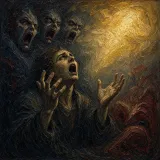
A distressed speaker asks God for rescue from lies. He knows what it is to be heard. Yet the place where he lives remains hostile. Mesech, a distant people, and Kedar, a people known for tents, give names to his sense of living far from peace. The poem does not explain exactly how these places relate to his home. Its closing problem is plain: he seeks peace, but those around him answer his words with war.
In this chapter
- Lying Words Face a Severe Answer Psalms 120:1-4
The speaker recalls crying to the Lord in trouble and being heard.
- Words of Peace Meet a Call for War Psalms 120:5-7
The speaker laments living among people who feel foreign and hostile.
Central truth
A speaker surrounded by lies asks God for rescue while facing people who answer his desire for peace with war.
Scripture beside the summary
Psalms · King James Version · 7Psalms 120:1-4
Lying Words Face a Severe Answer
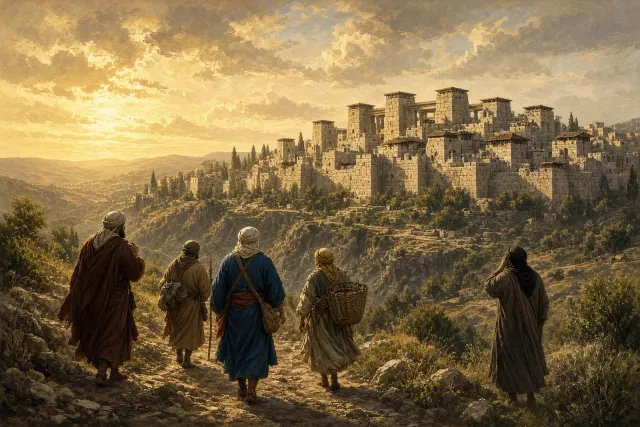
The speaker recalls crying to the Lord in trouble and being heard. He now asks to be saved from people whose words deceive. Then the poem addresses the false tongue itself and asks what it will receive. The answer is sharp arrows and fierce coals. Lies are not treated as a harmless feature of speech. The images give their judgement pain and force. No account of carrying out that punishment follows. The prayer puts the deceit before God and names a severe answer to it.

In everyday life
A falsely accused shopkeeper brings a set of altered receipts to an investigator. She points out where figures were changed and asks for the lie to be answered. Her damaged name cannot be repaired by pretending the words meant nothing. The papers stay on the desk as evidence. The psalm pictures a much harsher judgement through arrows and fire.
Notice
Psalms 120:4 Sharp arrows and burning coals answer the lying tongue. The punishment images make clear that the poem regards deceit as serious harm, not clever talk.
Psalms 120:1-4
King James Version1In my distress I cried unto the LORD, and he heard me.
2Deliver my soul, O LORD, from lying lips, and from a deceitful tongue.
3What shall be given unto thee? or what shall be done unto thee, thou false tongue?
4Sharp arrows of the mighty, with coals of juniper.
Psalms 120:5-7
Words of Peace Meet a Call for War
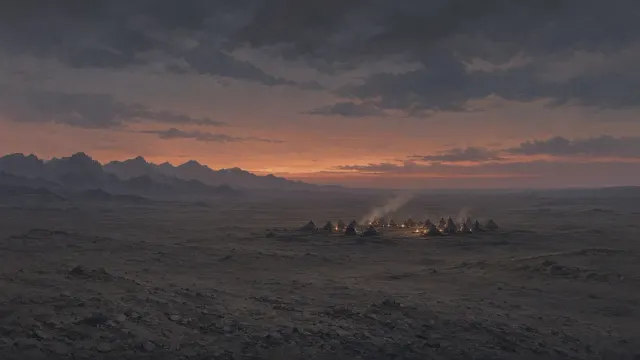
The speaker laments living among people who feel foreign and hostile. The named places give the complaint a sense of distance from home and peace. He says this has gone on for a long time. The deepest trouble is not only being away from familiar surroundings; it is living with those who hate peace. His own wish is for peace, yet when he speaks, they choose war. The poem ends without a settlement. Being heard by God has not yet made the neighbours willing to listen.
In everyday life
A tenant carries a written offer to share a disputed driveway to the adjoining house. The neighbour pushes it back and announces another complaint instead. She has prepared a practical peace, but the reply seeks a fresh fight. She takes the paper home without agreement. The psalm's speaker faces people who want war, not a property quarrel.
Notice
Psalms 120:7 The conflict grows when the speaker speaks. His wish for peace does not ensure a peaceful reply, so the ending leaves the tension unresolved.
Psalms 120:5-7
King James Version5Woe is me, that I sojourn in Mesech, that I dwell in the tents of Kedar!
6My soul hath long dwelt with him that hateth peace.
7I am for peace: but when I speak, they are for war.
Details worth noticing
The opening image
Psalms 120:1 begins with “In my distress I cried unto the LORD, and he heard me.”
Where the chapter turns
Psalms 120:3 forms a natural hinge: “What shall be given unto thee? or what shall be done unto thee, thou false tongue?”
The final note
Psalms 120:7 leaves the reader with “I am for peace: but when I speak, they are for war.”
A word trail through the chapter
The words LORD, peace, soul, tongue, arrows, coals help reveal the chapter’s repeated concerns.
KJV words made clear
- sojourn
- Live somewhere as a visitor or temporary resident.
Music and video connected to the passage
Related media appears when its Scripture reference overlaps this study. Music and video can illuminate a theme while the biblical text remains the foundation.