
The big picture
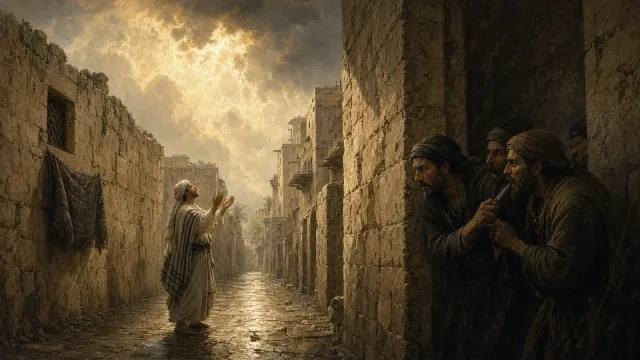
Violent people gather, plan harm, and lay hidden traps for the speaker. Their speech is pictured as snake venom. The prayer asks the Lord for protection, remembering him as a shield in battle. It also asks that the attackers' own words and plots return on them in severe judgement. The ending trusts God to defend afflicted and poor people. Their promised future is thanks in his presence, in place of the net laid beside their path.
In this chapter
- Words and Hidden Traps Threaten the Path Psalms 140:1-5
Deliverance from evil and violent people is the opening plea.
- Past Protection Supports a New Plea Psalms 140:6-8
Claiming the Lord as his God, the speaker asks for a hearing.
- The Poor Await God’s Defence Psalms 140:9-13
Let the attackers' harmful words return upon them: this is the plea now made to God.
Central truth
The threatened speaker asks God to block violent plots, turn harm back on the wicked, and uphold the rights of afflicted people.

Scripture beside the summary
Psalms · King James Version · 13Psalms 140:1-5
Words and Hidden Traps Threaten the Path
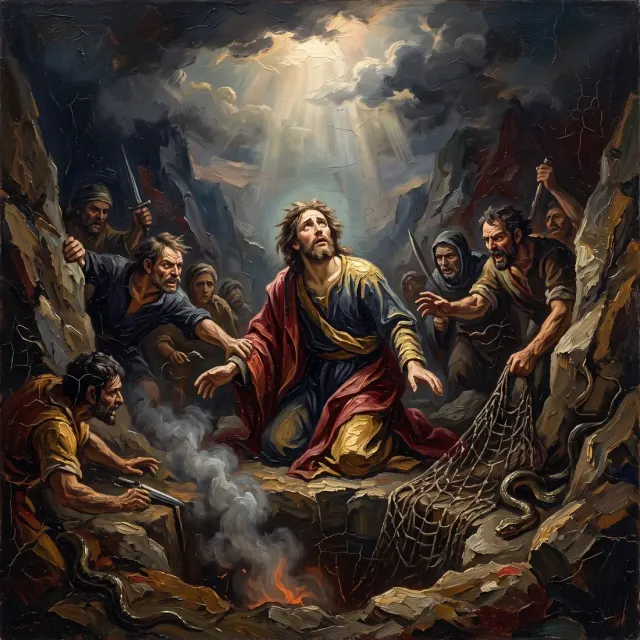
Deliverance from evil and violent people is the opening plea. They plan harm inwardly and gather for conflict again and again. Their tongues are sharpened like a snake's, with poison beneath their lips. Words belong to the attack, not merely to an argument around it. The plea for protection then names the plan to trip him up. Proud foes have hidden ropes, nets, and traps beside his route. Danger lies in both open hostility and things placed where he does not expect them. He needs keeping before the next step.
In everyday life
A warehouse worker finds that a colleague has changed the stock log and spread a claim blaming her for missing goods. She photographs the pages and asks the supervisor to check access records before the shift ends. Words and concealed acts are working together against her. The psalm describes a threat of violence, not only damage to a job.
Notice
Psalms 140:3 The poison belongs to tongues and lips. Speech is treated as a means of injury, linking the plotters' words with the violence they intend.
Psalms 140:1-5
King James Version1Deliver me, O LORD, from the evil man: preserve me from the violent man;
2Which imagine mischiefs in their heart; continually are they gathered together for war.
3They have sharpened their tongues like a serpent; adders’ poison is under their lips. Selah.
4Keep me, O LORD, from the hands of the wicked; preserve me from the violent man; who have purposed to overthrow my goings.
5The proud have hid a snare for me, and cords; they have spread a net by the wayside; they have set gins for me. Selah.
Psalms 140:6-8
Past Protection Supports a New Plea
Claiming the Lord as his God, the speaker asks for a hearing. He remembers divine strength protecting his head during battle. That past care gives the present plea a clear ground. He asks God not to grant the wicked person's desire or advance the evil plan. Success would let the attackers lift themselves in pride. The request is therefore both for safety and for a limit on their triumph. Remembered protection is not taken as an excuse to stop praying while fresh plots remain.
In everyday life
A former rescue volunteer calls the coordinator who guided her through an earlier crisis when a new threat appears on the route. She explains what is happening and asks that the unsafe plan be stopped before others follow it. Past help gives her a reason to call again. The psalm recalls God shielding the speaker in battle.
Notice
Psalms 140:7 The head was covered on a day of battle. The remembered protection is specific enough to support the new plea against another dangerous plan.
Psalms 140:6-8
King James Version6I said unto the LORD, Thou art my God: hear the voice of my supplications, O LORD.
7O GOD the Lord, the strength of my salvation, thou hast covered my head in the day of battle.
8Grant not, O LORD, the desires of the wicked: further not his wicked device; lest they exalt themselves. Selah.
Psalms 140:9-13
The Poor Await God’s Defence
Let the attackers' harmful words return upon them: this is the plea now made to God. Burning coals, fire, and deep pits describe a judgement from which they will not rise. The speaker wants the violent liar denied a secure place, with evil hunting him down. These are severe requests for the end of the threat. The closing confidence is that the Lord upholds afflicted people and the rights of the poor. Upright people will thank him and live before him. Their safety depends on a defender stronger than those who now surround them.
In everyday life
A victim-support coordinator sits beside a threatened family as a protection order is read. The parents listen for the terms that prevent the offender from returning. Relief depends on more than kind words; the threat needs an effective limit. The coordinator helps them understand the next steps. The psalm asks for far more severe judgement, including death.
Notice
Psalms 140:12 The right of poor people is named beside their distress. The appeal treats their claim as something God upholds, not merely a need that earns pity.
Psalms 140:9-13
King James Version9As for the head of those that compass me about, let the mischief of their own lips cover them.
10Let burning coals fall upon them: let them be cast into the fire; into deep pits, that they rise not up again.
11Let not an evil speaker be established in the earth: evil shall hunt the violent man to overthrow him.
12I know that the LORD will maintain the cause of the afflicted, and the right of the poor.
13Surely the righteous shall give thanks unto thy name: the upright shall dwell in thy presence.
Details worth noticing
The opening image
Psalms 140:1 begins with “Deliver me, O LORD, from the evil man: preserve me from the violent man;”
Where the chapter turns
Psalms 140:7 forms a natural hinge: “O GOD the Lord, the strength of my salvation, thou hast covered my head in the day of battle.”
The final note
Psalms 140:13 leaves the reader with “Surely the righteous shall give thanks unto thy name: the upright shall dwell in thy presence.”
A word trail through the chapter
The words LORD, evil, Selah, violent, wicked, head help reveal the chapter’s repeated concerns.
KJV words made clear
- gins
- Traps set to catch a person or animal.
- supplications
- Earnest pleas for help or mercy from another.
Music and video connected to the passage
Related media appears when its Scripture reference overlaps this study. Music and video can illuminate a theme while the biblical text remains the foundation.