The big picture
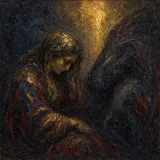
A suffering voice calls to God through day and night, near the edge of death. The speaker feels buried, overwhelmed, and cut off from friends. He questions what praise can remain when life ends, then continues praying into the morning. Unlike many laments, this psalm gives no final scene of rescue or turn to gladness. Darkness remains at the close, while the act of addressing God continues within it.
In this chapter
- A Life Feels Already Counted Among the Dead Psalms 88:1-5
The speaker addresses the Lord as the God of his rescue and asks that the cry be heard.
- The Waves and the Distance of Friends Psalms 88:6-9
The speaker tells God that he has placed him in a deep, dark pit.
- Questions Rise from the Edge of the Grave Psalms 88:10-12
The prayer asks whether wonders will be shown to the dead and whether they will rise to praise.
- Morning Brings Another Cry Psalms 88:13-18
The speaker turns again towards the Lord, promising prayer in the morning.
Central truth
The isolated sufferer keeps praying to God through fear of death and abandonment, even though the psalm ends without visible relief.


Scripture beside the summary
Psalms · King James Version · 18Psalms 88:1-5
A Life Feels Already Counted Among the Dead
The speaker addresses the Lord as the God of his rescue and asks that the cry be heard. Trouble has filled his life, and the grave feels close. He is counted among those descending to the pit, without strength and separated from ordinary living. The dead are described from his fearful viewpoint as forgotten and beyond God's helping hand. The opening therefore holds a painful tension: he still calls God his saviour while feeling nearly outside the reach of saving care. No answer is reported to resolve it.

In everyday life
A severely ill patient presses the call button from a dim room after visitors have gone. He tells the nurse that he feels as though life is already continuing without him. She listens rather than correcting the feeling with a quick cheerful line. The words need room to be heard. The psalm addresses God without recording an answering human presence.
Notice
Psalms 88:1 The title God of salvation remains in the first cry. Even this dark prayer begins by addressing the one from whom rescue is still being sought.
Psalms 88:1-5
King James Version1O LORD God of my salvation, I have cried day and night before thee:
2Let my prayer come before thee: incline thine ear unto my cry;
3For my soul is full of troubles: and my life draweth nigh unto the grave.
4I am counted with them that go down into the pit: I am as a man that hath no strength:
5Free among the dead, like the slain that lie in the grave, whom thou rememberest no more: and they are cut off from thy hand.
Psalms 88:6-9
The Waves and the Distance of Friends
The speaker tells God that he has placed him in a deep, dark pit. Divine anger feels heavy, and waves of distress pass over him. Friends have been moved far away and now recoil from him. He feels shut in with no way out. His eyes fail through grief, yet he calls daily and stretches out his hands towards the Lord. The prayer attributes the whole distress to God in anguished language. It also keeps reaching towards him as the one whose attention remains necessary.

In everyday life
A long-term hospital resident looks through the closed ward door after another cancelled visit. He stretches his hand towards the phone, then asks the nurse to help make a call. The room's limits and the distance of familiar people press together. He cannot solve either by pretending they do not hurt. The psalm directs the whole complaint towards God's action.
Notice
Psalms 88:9 Daily calling and outstretched hands persist amid failing sight. The speaker's inability to feel relief does not mean he has stopped making an appeal.
Psalms 88:6-9
King James Version6Thou hast laid me in the lowest pit, in darkness, in the deeps.
7Thy wrath lieth hard upon me, and thou hast afflicted me with all thy waves. Selah.
8Thou hast put away mine acquaintance far from me; thou hast made me an abomination unto them: I am shut up, and I cannot come forth.
9Mine eye mourneth by reason of affliction: LORD, I have called daily upon thee, I have stretched out my hands unto thee.
Psalms 88:10-12
Questions Rise from the Edge of the Grave
The prayer asks whether wonders will be shown to the dead and whether they will rise to praise. Can kindness be declared in the grave, faithfulness in destruction, or righteousness in a land of forgetting? These questions press for help before death. The speaker fears losing his place among those who give public praise. They are the language of lament, not a complete account of every belief about life after death. His present voice is slipping away. No rescue has been described.

In everyday life
A terminally ill choirmaster asks a visitor to record a message while his voice is still strong enough. He worries that the thanks he wants to give will remain unsaid if the visit is delayed. The recording cannot remove death, but the wish makes time feel urgent. The psalm asks God for life in which praise can continue.
Notice
Psalms 88:11 Kindness and faithfulness are placed against grave and destruction. The questions ask what becomes of declaring God's care when the speaker's living voice is lost.
Psalms 88:10-12
King James Version10Wilt thou shew wonders to the dead? shall the dead arise and praise thee? Selah.
11Shall thy lovingkindness be declared in the grave? or thy faithfulness in destruction?
12Shall thy wonders be known in the dark? and thy righteousness in the land of forgetfulness?
Psalms 88:13-18
Morning Brings Another Cry
The speaker turns again towards the Lord, promising prayer in the morning. He asks why his life is rejected and God's face hidden. Suffering has marked him since youth, and terrors leave him overwhelmed. Divine anger seems to pass over him like encircling water. The final complaint returns to friends and loved ones placed far away, with darkness surrounding his acquaintances. The psalm stops there. It does not report recovery, and its continued prayer should not be rewritten as a happy ending that the speaker has not been given.
In everyday life
A grieving night porter reaches morning without the relief he hoped sleep would bring. He sits beside the unopened curtains and leaves another message for the person he trusts to listen. The new day has not changed the room's loneliness. Still, he directs words towards someone beyond it. The psalm's unresolved address is to God.
Notice
Psalms 88:18 The last verse names distance from loved ones rather than a rescue. The unresolved ending gives suffering a place to be spoken without forcing a report of relief.
Psalms 88:13-18
King James Version13But unto thee have I cried, O LORD; and in the morning shall my prayer prevent thee.
14LORD, why castest thou off my soul? why hidest thou thy face from me?
15I am afflicted and ready to die from my youth up: while I suffer thy terrors I am distracted.
16Thy fierce wrath goeth over me; thy terrors have cut me off.
17They came round about me daily like water; they compassed me about together.
18Lover and friend hast thou put far from me, and mine acquaintance into darkness.
Details worth noticing
The opening image
Psalms 88:1 begins with “O LORD God of my salvation, I have cried day and night before thee:”
Where the chapter turns
Psalms 88:10 forms a natural hinge: “Wilt thou shew wonders to the dead? shall the dead arise and praise thee? Selah.”
The final note
Psalms 88:18 leaves the reader with “Lover and friend hast thou put far from me, and mine acquaintance into darkness.”
A word trail through the chapter
The words LORD, dead, grave, acquaintance, afflicted, cried help reveal the chapter’s repeated concerns.
KJV words made clear
- prevent
- Come before or meet, here describing morning prayer reaching towards God.
Music and video connected to the passage
Related media appears when its Scripture reference overlaps this study. Music and video can illuminate a theme while the biblical text remains the foundation.