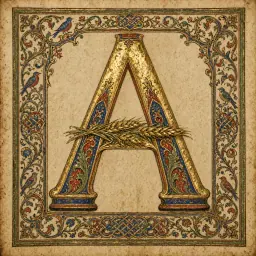
The big picture
The singer begins with God's enduring mercy and the promise made to David, the king chosen to lead Israel, God's people. Praise of divine power leads into a full account of that royal bond. Then the tone changes sharply: the crown lies in disgrace and enemies celebrate. The singer asks how this can fit the promise. The chapter ends in blessing, but it leaves the question of the fallen throne painfully open.
In this chapter
- Mercy Is Sung Across Generations Psalms 89:1-4
The singer promises to keep making the Lord's mercy and faithfulness known.
- The Incomparable Ruler Is Faithful Psalms 89:5-18
Heaven's gathering praises a God without equal.
- The Chosen King Receives a Lasting Bond Psalms 89:19-29
God recalls choosing a strong servant from the people and marking him with holy oil.
- Discipline Will Not Cancel the Oath Psalms 89:30-37
The promise allows for descendants who abandon God's law and break his commands.
- The Visible Crown Lies in Shame Psalms 89:38-45
The song turns from promise to what the speaker now sees.
- Remember the Short Life Waiting for Help Psalms 89:46-52
The singer asks how long God will remain hidden and whether anger will burn forever.
Central truth
The singer sets God's lasting promise to David beside the king's visible defeat and asks when remembered mercy will become clear again.
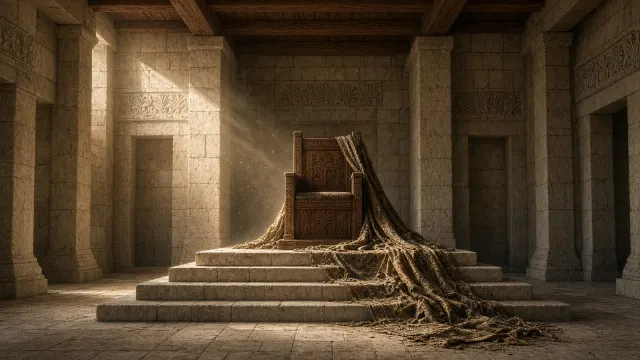

Scripture beside the summary
Psalms · King James Version · 52Psalms 89:1-4
Mercy Is Sung Across Generations
The singer promises to keep making the Lord's mercy and faithfulness known. He describes mercy as something built to last and divine reliability as firm in the heavens. God's own promise then speaks: a binding oath has been made to the chosen servant and his descendants. The throne will continue through generations. The opening gives the later lament its measure. The singer did not invent this hope during defeat. He recalls a lasting pledge from the God he praises.
In everyday life
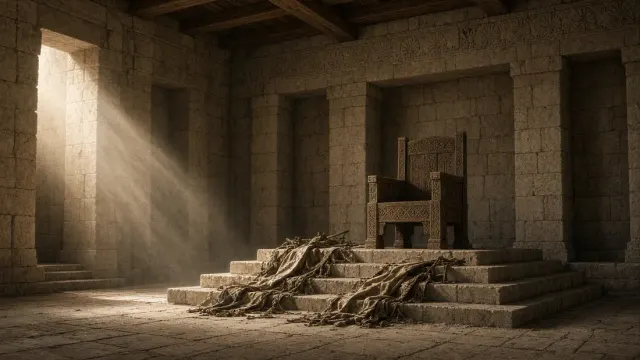
A family trustee reads an old signed promise aloud before younger relatives gathered around the table. She explains that the commitment was intended to outlast its first recipients. The paper matters because later decisions depend on what was pledged. She carefully preserves the exact responsibility it records. The psalm recalls an oath made by God about a royal line.
Notice
Psalms 89:4 The promise reaches descendants and successive generations. Its lasting reach is what makes the later collapse of royal honour such a serious question.
Psalms 89:1-4
King James Version1I will sing of the mercies of the LORD for ever: with my mouth will I make known thy faithfulness to all generations.
2For I have said, Mercy shall be built up for ever: thy faithfulness shalt thou establish in the very heavens.
3I have made a covenant with my chosen, I have sworn unto David my servant,
4Thy seed will I establish for ever, and build up thy throne to all generations. Selah.
Psalms 89:5-18
The Incomparable Ruler Is Faithful
Heaven's gathering praises a God without equal. He stills the sea and defeats Rahab, an image of hostile power. Sky and earth are his; Tabor and Hermon, prominent mountains, rejoice within his creation. Strength belongs with justice, while mercy and truth attend his throne. People who know his joyful worship live in the light of his favour. Their strength and honour come from him, and their king belongs under his protection. The praise presents no shortage of power that would prevent God from keeping what he has promised.
In everyday life
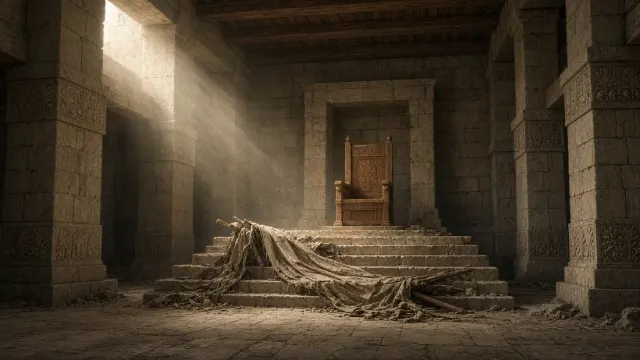
A lighthouse engineer walks through the control room and tests both the great lamp and the careful timing system. The equipment's power matters only with reliable operation for vessels depending on it. She records each result before the night watch begins. Strength and trustworthiness must be held together. The psalm describes the creator's power joined with justice and mercy.
Notice
Psalms 89:14 Justice and judgement support the throne, while mercy and truth go before God. His rule is described by moral faithfulness as well as overwhelming strength.
Psalms 89:5-18
King James Version5And the heavens shall praise thy wonders, O LORD: thy faithfulness also in the congregation of the saints.
6For who in the heaven can be compared unto the LORD? who among the sons of the mighty can be likened unto the LORD?
7God is greatly to be feared in the assembly of the saints, and to be had in reverence of all them that are about him.
8O LORD God of hosts, who is a strong LORD like unto thee? or to thy faithfulness round about thee?
9Thou rulest the raging of the sea: when the waves thereof arise, thou stillest them.
10Thou hast broken Rahab in pieces, as one that is slain; thou hast scattered thine enemies with thy strong arm.
11The heavens are thine, the earth also is thine: as for the world and the fulness thereof, thou hast founded them.
12The north and the south thou hast created them: Tabor and Hermon shall rejoice in thy name.
13Thou hast a mighty arm: strong is thy hand, and high is thy right hand.
14Justice and judgment are the habitation of thy throne: mercy and truth shall go before thy face.
15Blessed is the people that know the joyful sound: they shall walk, O LORD, in the light of thy countenance.
16In thy name shall they rejoice all the day: and in thy righteousness shall they be exalted.
17For thou art the glory of their strength: and in thy favour our horn shall be exalted.
18For the LORD is our defence; and the Holy One of Israel is our king.
Psalms 89:19-29
The Chosen King Receives a Lasting Bond
God recalls choosing a strong servant from the people and marking him with holy oil. Divine support will strengthen the king and defeat those seeking to oppress him. Mercy and faithfulness will raise his power, with his reach pictured across seas and rivers. He will call God father and the rock of rescue. God will give him the highest royal standing, described as firstborn, and preserve the pledged relationship. His descendants and throne are promised a duration like heaven itself. The king receives power but still depends on God.
In everyday life
A retiring craft master chooses a skilled worker from the workshop to inherit its leadership. She gives him the keys and promises support against unfair claims, while expecting him to keep consulting her. The honour lifts him above a former role. It does not make him the source of everything he receives. God's promise concerns a king and a line lasting through generations.
Notice
Psalms 89:27 Firstborn describes the rank God grants, explained by being higher than other kings. The verse concerns bestowed status rather than a new account of physical birth order.
Psalms 89:19-29
King James Version19Then thou spakest in vision to thy holy one, and saidst, I have laid help upon one that is mighty; I have exalted one chosen out of the people.
20I have found David my servant; with my holy oil have I anointed him:
21With whom my hand shall be established: mine arm also shall strengthen him.
22The enemy shall not exact upon him; nor the son of wickedness afflict him.
23And I will beat down his foes before his face, and plague them that hate him.
24But my faithfulness and my mercy shall be with him: and in my name shall his horn be exalted.
25I will set his hand also in the sea, and his right hand in the rivers.
26He shall cry unto me, Thou art my father, my God, and the rock of my salvation.
27Also I will make him my firstborn, higher than the kings of the earth.
28My mercy will I keep for him for evermore, and my covenant shall stand fast with him.
29His seed also will I make to endure for ever, and his throne as the days of heaven.
Psalms 89:30-37
Discipline Will Not Cancel the Oath
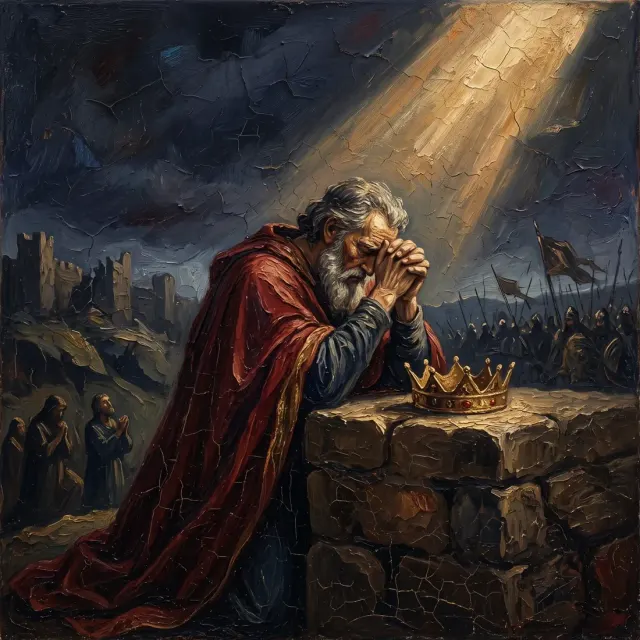
The promise allows for descendants who abandon God's law and break his commands. Such conduct will receive punishment, pictured as rod and blows. Yet God says he will not withdraw his kindness completely or let faithfulness fail. He will not break the bond or alter the spoken oath. Sun and moon picture the royal line's lasting place, with the moon as a witness in heaven. The distinction matters: correction for wrong is included, but complete abandonment of the promise is expressly denied within the words the singer recalls.
In everyday life
A training sponsor meets an apprentice who has repeatedly broken the agreed rules. She imposes a serious restriction but leaves the signed commitment to complete his training in place. He must face the consequence without mistaking it for the end of all support. The distinction is stated clearly before he leaves. God's royal oath extends beyond any training contract.
Notice
Psalms 89:33 Punishment is followed by a refusal to let faithfulness fail. The promise distinguishes discipline from total withdrawal, preparing the question raised by the following disaster.
Psalms 89:30-37
King James Version30If his children forsake my law, and walk not in my judgments;
31If they break my statutes, and keep not my commandments;
32Then will I visit their transgression with the rod, and their iniquity with stripes.
33Nevertheless my lovingkindness will I not utterly take from him, nor suffer my faithfulness to fail.
34My covenant will I not break, nor alter the thing that is gone out of my lips.
35Once have I sworn by my holiness that I will not lie unto David.
36His seed shall endure for ever, and his throne as the sun before me.
37It shall be established for ever as the moon, and as a faithful witness in heaven. Selah.
Psalms 89:38-45
The Visible Crown Lies in Shame
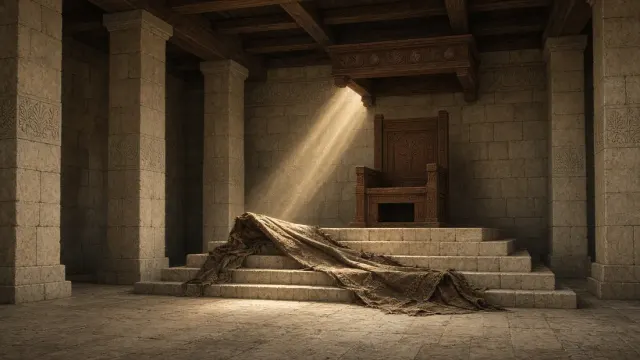
The song turns from promise to what the speaker now sees. He tells God that the chosen king has been rejected and the pledged bond treated as void. Crown and throne lie cast down, protective boundaries are broken, and strongholds are ruined. Passers-by plunder while neighbours mock. Enemies are strengthened, the king's sword fails, and his youth is cut short under shame. These are accusations voiced in lament about present experience. The singer sets the ruin directly before God because it seems to contradict the assurances recalled earlier.
In everyday life
A royal-collection conservator lifts a broken ceremonial crown from a box of objects saved after a palace's fall. She places it beside the old charter promising continuity and pauses over the difference. The fragments cannot answer the words, but neither can the words hide the fragments. She records both faithfully. The psalm addresses the apparent contradiction to God himself.
Notice
Psalms 89:39 God had said he would not break the bond. Now the speaker says it has been made void. The tension is the point of the lament, not something quietly resolved.
Psalms 89:38-45
King James Version38But thou hast cast off and abhorred, thou hast been wroth with thine anointed.
39Thou hast made void the covenant of thy servant: thou hast profaned his crown by casting it to the ground.
40Thou hast broken down all his hedges; thou hast brought his strong holds to ruin.
41All that pass by the way spoil him: he is a reproach to his neighbours.
42Thou hast set up the right hand of his adversaries; thou hast made all his enemies to rejoice.
43Thou hast also turned the edge of his sword, and hast not made him to stand in the battle.
44Thou hast made his glory to cease, and cast his throne down to the ground.
45The days of his youth hast thou shortened: thou hast covered him with shame. Selah.
Psalms 89:46-52
Remember the Short Life Waiting for Help
The singer asks how long God will remain hidden and whether anger will burn forever. Human life is short, and no person escapes the grave by personal power. He asks where the earlier kindness sworn to the king has gone. The servants carry insults, and enemies mock the chosen ruler's every step. The final line blesses the Lord forever, but no restored crown is described. Praise remains beside the unresolved appeal, with the brevity of human life making the wait for a visible answer especially urgent.
In everyday life
An ageing archivist checks the date on a long-pending restitution claim and asks whether the promised hearing will occur within her lifetime. She still preserves the pledge carefully, but years of waiting give the question weight. The record and the delay both remain before her. She cannot supply the answer by filing another page. The psalm seeks God's remembered mercy.
Notice
Psalms 89:48 The question about escaping the grave places a limit on waiting. The singer's appeal concerns people whose brief lives cannot stretch to match an unexplained delay.
Psalms 89:46-52
King James Version46How long, LORD? wilt thou hide thyself for ever? shall thy wrath burn like fire?
47Remember how short my time is: wherefore hast thou made all men in vain?
48What man is he that liveth, and shall not see death? shall he deliver his soul from the hand of the grave? Selah.
49Lord, where are thy former lovingkindnesses, which thou swarest unto David in thy truth?
50Remember, Lord, the reproach of thy servants; how I do bear in my bosom the reproach of all the mighty people;
51Wherewith thine enemies have reproached, O LORD; wherewith they have reproached the footsteps of thine anointed.
52Blessed be the LORD for evermore. Amen, and Amen.
Details worth noticing
The opening image
Psalms 89:1 begins with “I will sing of the mercies of the LORD for ever: with my mouth will I make known thy faithfulness to all generations.”
Where the chapter turns
Psalms 89:24 forms a natural hinge: “But my faithfulness and my mercy shall be with him: and in my name shall his horn be exalted.”
The final note
Psalms 89:52 leaves the reader with “Blessed be the LORD for evermore. Amen, and Amen.”
A word trail through the chapter
The words LORD, hand, faithfulness, throne, covenant, David help reveal the chapter’s repeated concerns.
KJV words made clear
- covenant
- A pledged relationship carrying lasting promises and duties.
- anointed
- Chosen and marked with oil for a special office.
- horn
- A picture of strength or royal power, drawn from the horn of an animal.
Music and video connected to the passage
Related media appears when its Scripture reference overlaps this study. Music and video can illuminate a theme while the biblical text remains the foundation.