
The big picture
A community addresses God as its home across generations. Mountains and the whole earth are younger than he is, while human lives pass like grass. The prayer brings sin and divine anger into that awareness of time. It asks for wisdom about numbered days, then for mercy, renewed joy, and work that lasts. The ending does not seek endless human strength. It asks the everlasting God to give value to brief lives and their labour.
In this chapter
- Generations Pass but God Remains Psalms 90:1-6
The people call the Lord their dwelling place through every generation.
- Hidden Sin and Numbered Days Psalms 90:7-12
The people describe their lives under God's anger.
- Mercy Can Give Brief Work Weight Psalms 90:13-17
The people ask the Lord to return and show compassion to his servants.
Central truth
Human life is brief before the everlasting God, so the people ask for wisdom, mercy, joy, and work that will endure.

Scripture beside the summary
Psalms · King James Version · 17Psalms 90:1-6
Generations Pass but God Remains
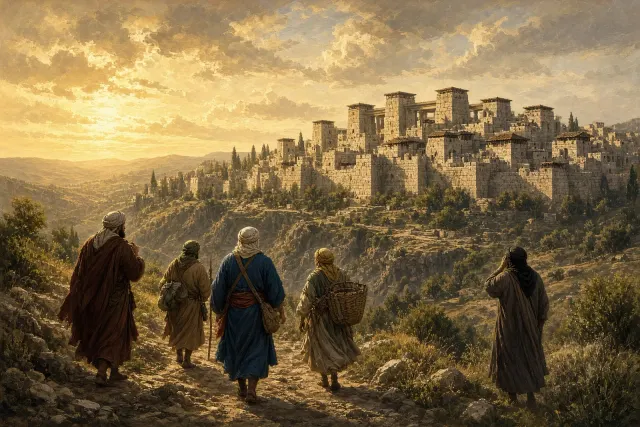
The people call the Lord their dwelling place through every generation. He was God before mountains or earth took shape and remains so without beginning or end. Humans return to dust at his command. A thousand years before him are like yesterday or a short watch in the night. Human lives are then compared with a flood, sleep, and grass that grows in the morning and withers by evening. The images reduce the apparent length of a life while locating its only lasting home in God.
In everyday life
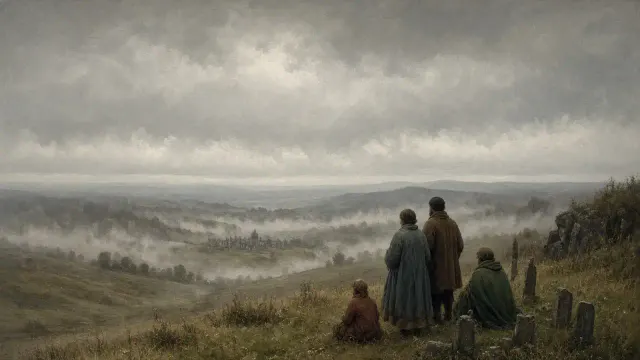
A cemetery groundskeeper plants fresh grass beside stones whose dates span several generations. The new shoots rise around names once spoken every day in nearby homes. She pauses over the small space holding so many years, then continues watering. The ground makes human time visible without making it permanent. The psalm contrasts that brevity with God's eternal existence.
Notice
Psalms 90:4 The thousand years are compared with both a passed day and a night watch. The scale changes according to God's sight, not the human feeling of a long wait.
Psalms 90:1-6
King James Version1Lord, thou hast been our dwelling place in all generations.
2Before the mountains were brought forth, or ever thou hadst formed the earth and the world, even from everlasting to everlasting, thou art God.
3Thou turnest man to destruction; and sayest, Return, ye children of men.
4For a thousand years in thy sight are but as yesterday when it is past, and as a watch in the night.
5Thou carriest them away as with a flood; they are as a sleep: in the morning they are like grass which groweth up.
6In the morning it flourisheth, and groweth up; in the evening it is cut down, and withereth.
Psalms 90:7-12
Hidden Sin and Numbered Days
The people describe their lives under God's anger. Even secret wrongs lie in the light of his face, so nothing hidden from others is hidden from him. Years pass with sorrow and labour, commonly reaching seventy or eighty before ending. These figures describe the span being considered, not a promise of exact length for every person. The prayer asks who fully grasps divine anger, then seeks instruction in counting days wisely. Awareness of limited time is meant to shape the heart, not merely produce an arithmetic total.
In everyday life
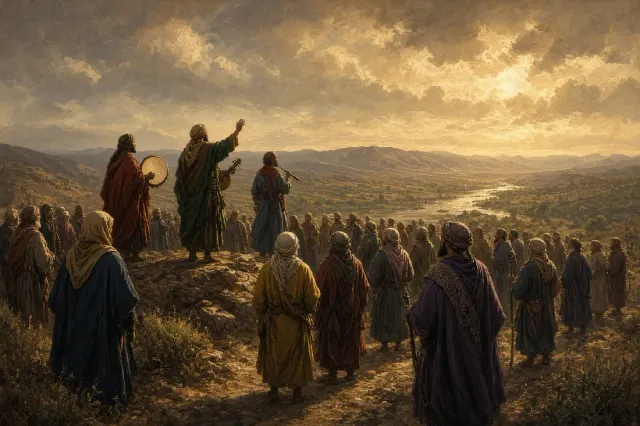
The retiring surgeon clears a drawer of appointment books and finds a note about an apology never made. The dates show how many years have passed while he kept putting it off. He sets the note beside the day's work instead of returning it to the drawer. Counting time exposes a moral need. The psalm places hidden wrongs before God's light.
Notice
Psalms 90:12 Numbering days is linked with a heart of wisdom. The request concerns how limited life is understood and lived, rather than predicting the date of death.
Psalms 90:7-12
King James Version7For we are consumed by thine anger, and by thy wrath are we troubled.
8Thou hast set our iniquities before thee, our secret sins in the light of thy countenance.
9For all our days are passed away in thy wrath: we spend our years as a tale that is told.
10The days of our years are threescore years and ten; and if by reason of strength they be fourscore years, yet is their strength labour and sorrow; for it is soon cut off, and we fly away.
11Who knoweth the power of thine anger? even according to thy fear, so is thy wrath.
12So teach us to number our days, that we may apply our hearts unto wisdom.
Psalms 90:13-17
Mercy Can Give Brief Work Weight
The people ask the Lord to return and show compassion to his servants. Morning mercy would give reason for gladness through their days. They seek joy answering the years of affliction, visible divine work for themselves, and glory for their children. The final plea asks God's favour upon them and repeats the desire that their work be made firm. Brief life need not mean pointless labour. The prayer places human hands and their unfinished efforts under the care of the God whose own life does not end.

In everyday life
A community carpenter fixes a bench for the school his grandchildren will attend. He knows he will not use it for as many years as they will. Another worker helps set the legs firmly, giving his short afternoon's labour a future beyond the day. He checks the joints before leaving. The psalm asks God's favour to make human work endure.
Notice
Psalms 90:17 The request about the work of human hands is repeated. After stressing life's brevity, the prayer seeks lasting worth for what people actually do within it.
Psalms 90:13-17
King James Version13Return, O LORD, how long? and let it repent thee concerning thy servants.
14O satisfy us early with thy mercy; that we may rejoice and be glad all our days.
15Make us glad according to the days wherein thou hast afflicted us, and the years wherein we have seen evil.
16Let thy work appear unto thy servants, and thy glory unto their children.
17And let the beauty of the LORD our God be upon us: and establish thou the work of our hands upon us; yea, the work of our hands establish thou it.
Details worth noticing
The opening image
Psalms 90:1 begins with “Lord, thou hast been our dwelling place in all generations.”
Where the chapter turns
Psalms 90:11 forms a natural hinge: “Who knoweth the power of thine anger? even according to thy fear, so is thy wrath.”
The final note
Psalms 90:17 leaves the reader with “And let the beauty of the LORD our God be upon us: and establish thou the work of our hands upon us; yea, the work of our hands establish thou it.”
A word trail through the chapter
The words years, days, LORD, work, wrath, anger help reveal the chapter’s repeated concerns.
KJV words made clear
- threescore
- Sixty, with a score meaning a group of twenty.
- fourscore
- Eighty, made up of four groups of twenty.
Music and video connected to the passage
Related media appears when its Scripture reference overlaps this study. Music and video can illuminate a theme while the biblical text remains the foundation.