
Revelation
22 Chapters
Revelation: The Whole Book, Chapter by Chapter
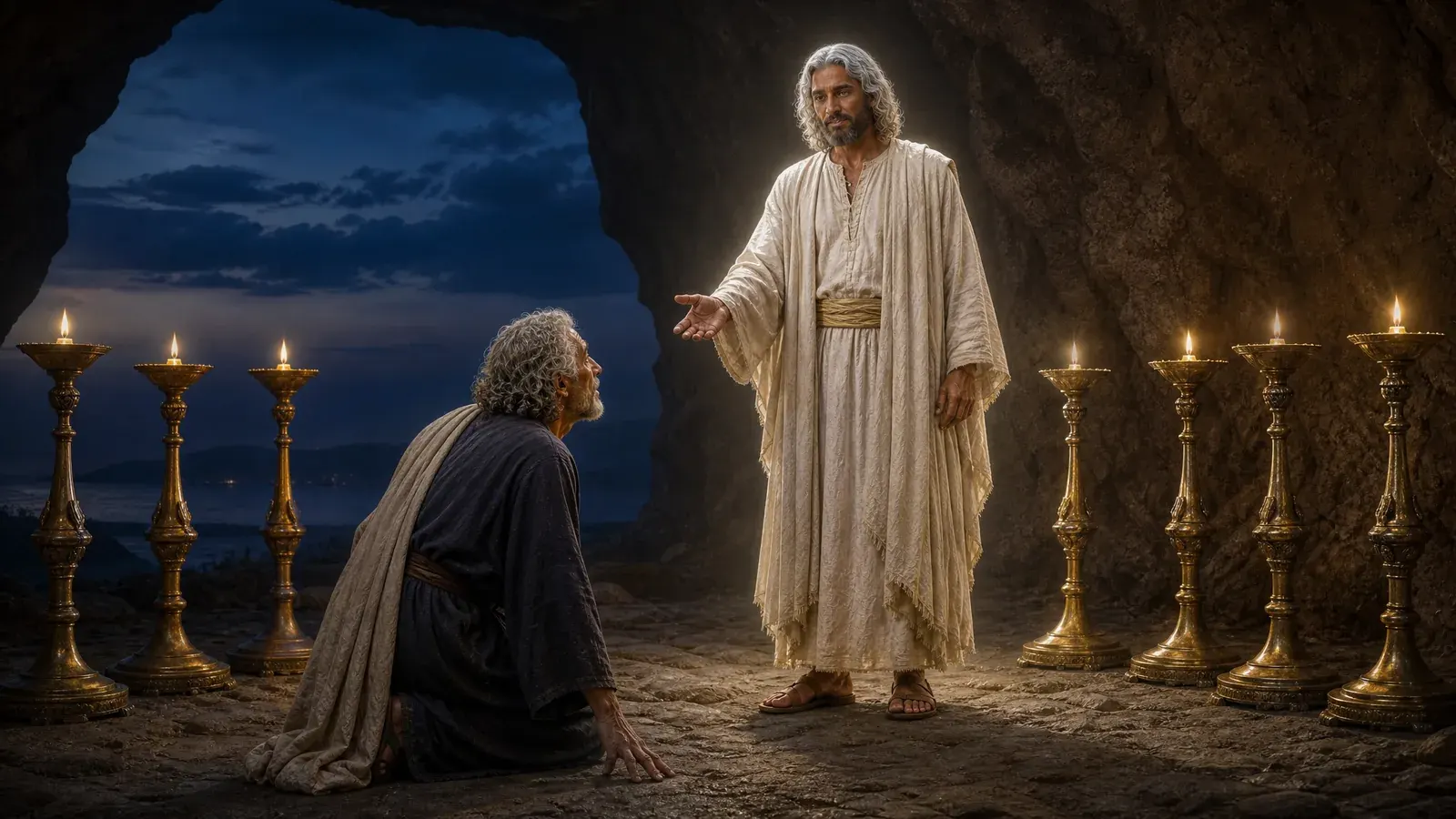
The Risen Christ Stands Among the Churches
The Book of Revelation opens with a blessing before it opens with a beast, trumpet, or judgment. Its message moves from God through Jesus Christ, an angel, and John toward servants who are expected to hear and keep it. John writes from Patmos as a brother sharing tribulation, kingdom, and patience with the churches. When he turns toward the trumpet-like voice, he sees the risen Christ among seven golden lampstands, radiant with imagery drawn from Daniel and holding seven stars in his right hand. John falls as dead, but that same hand touches him. Christ identifies himself as the one who was dead and now lives forever, possesses the keys of death and Hades, and explains that the lampstands are the churches. The chapter therefore begins Revelation with disclosure, presence, authority, and reassurance held together.
One complete chapter pageOpen chapter →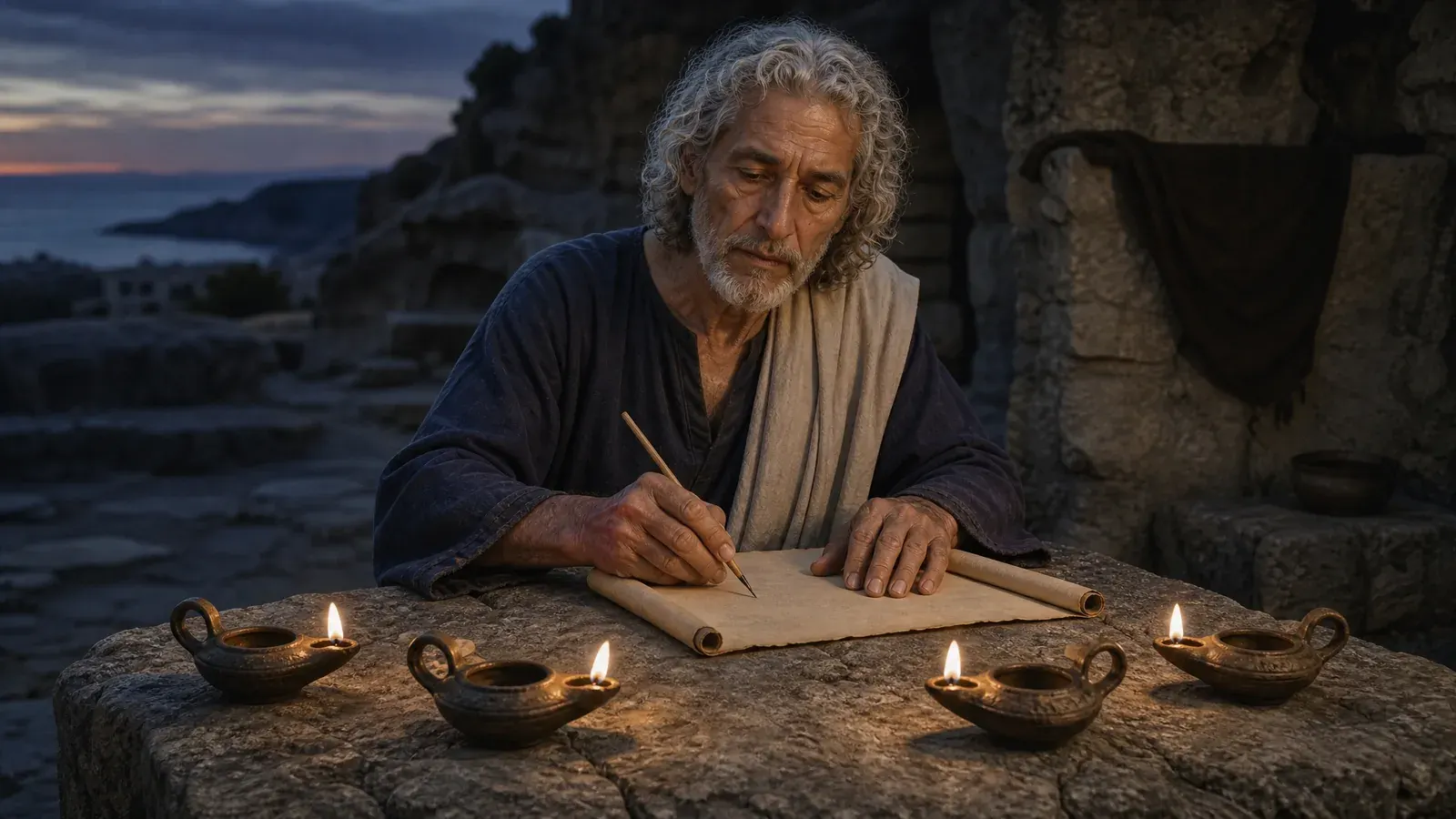
Four Churches Receive Four Unsparing Diagnoses
Four churches receive four sharply different messages, yet each is addressed by the same Christ introduced in chapter 1. Ephesus has endurance, labor, and doctrinal discernment but has abandoned its first love. Smyrna is poor in material terms while Christ declares it rich and gives no accusation against it, even as suffering approaches. Pergamos has held Christ's name under deadly pressure yet tolerates teachings associated with idolatry and sexual wrongdoing. Thyatira has growing works, love, service, faith, and patience, but also tolerates a self-proclaimed prophetess who leads servants into compromise. The Book of Revelation refuses simple reputational categories. Strong churches can contain dangerous failures, and suffering churches can receive unqualified praise. Each message ends by looking beyond the immediate congregation toward life, hidden manna, a new name, authority, and the morning star.
One complete chapter pageOpen chapter →
Reputation, Weakness, and Wealth Are Examined
The messages to Sardis, Philadelphia, and Laodicea dismantle three outward assessments. Sardis has a name for being alive while Christ calls its condition dead and its works unfinished, though a faithful few remain. Philadelphia has only a little strength, yet Christ places before it a door no one can shut and gives no rebuke. Laodicea calls itself rich and self-sufficient while Christ's inventory finds poverty, blindness, and nakedness. The Book of Revelation repeatedly separates public reputation, visible resources, and divine assessment. Its promises answer each condition precisely: true recognition instead of Sardis's empty name, permanent belonging instead of Philadelphia's weakness, and genuine wealth, clothing, sight, fellowship, and shared rule instead of Laodicea's imagined sufficiency. The final message ends at a throne, preparing the reader for the door that opens in heaven in the next chapter.
One complete chapter pageOpen chapter →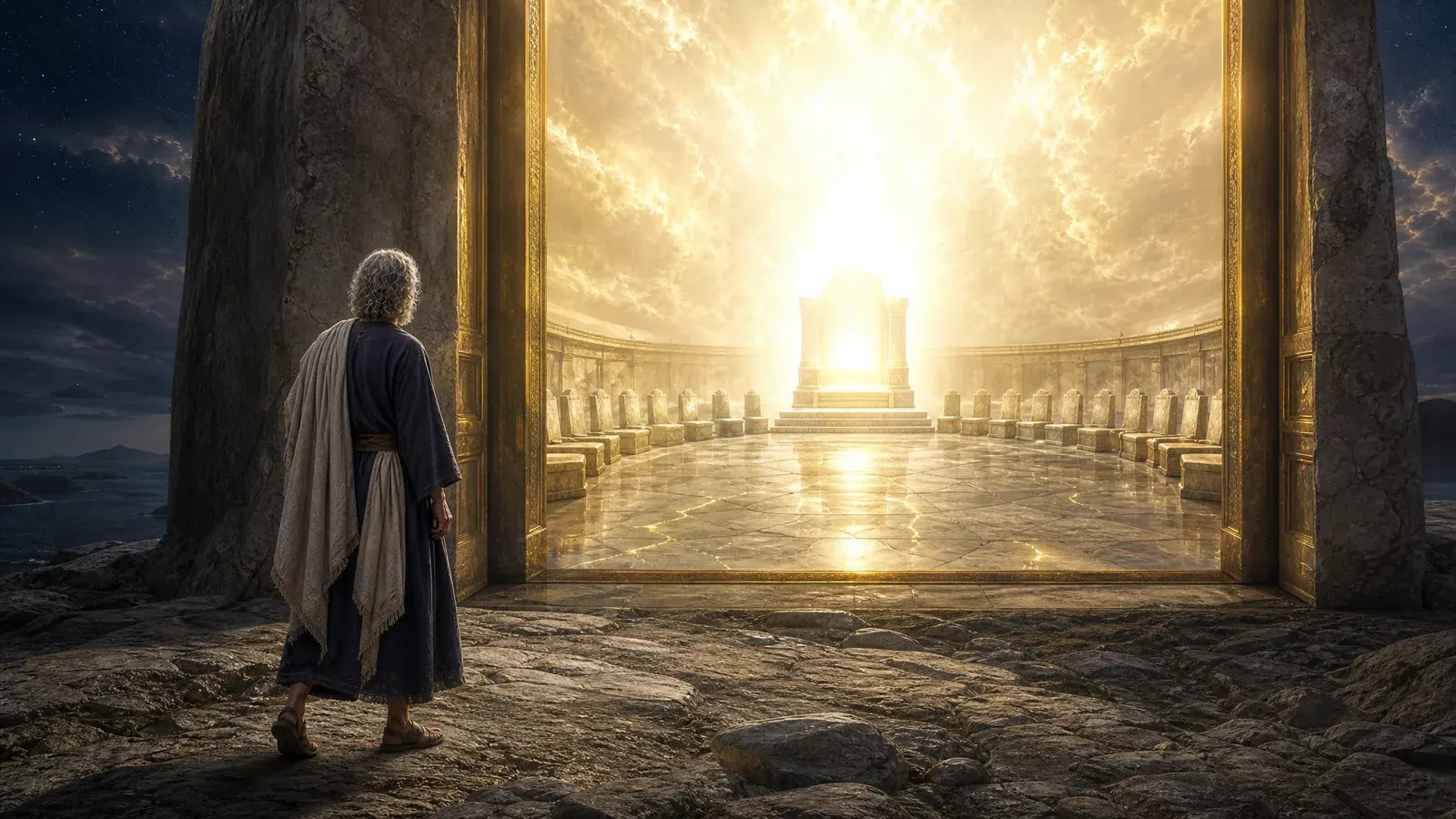
Before the Judgments, an Occupied Throne
After the messages to the churches, the Book of Revelation opens a door in heaven and immediately centers the vision on a throne that is already occupied. Before any new judgment is shown, government is established. The seated one is described through jewel-like radiance and an emerald-looking rainbow rather than a physical portrait. Around the throne sit twenty-four crowned elders, while four living creatures full of eyes answer divine holiness without rest. Lightning, thunder, seven burning lamps, and a glasslike sea make the scene immense without making it chaotic. The elders repeatedly leave their own seats of dignity to fall before the greater throne and cast down their crowns. Their song explains God's worthiness through creation: all things exist by his will. The chapter prepares the question of worthiness in chapter 5 by first showing that every lesser honor in heaven remains oriented toward the Creator.
One complete chapter pageOpen chapter →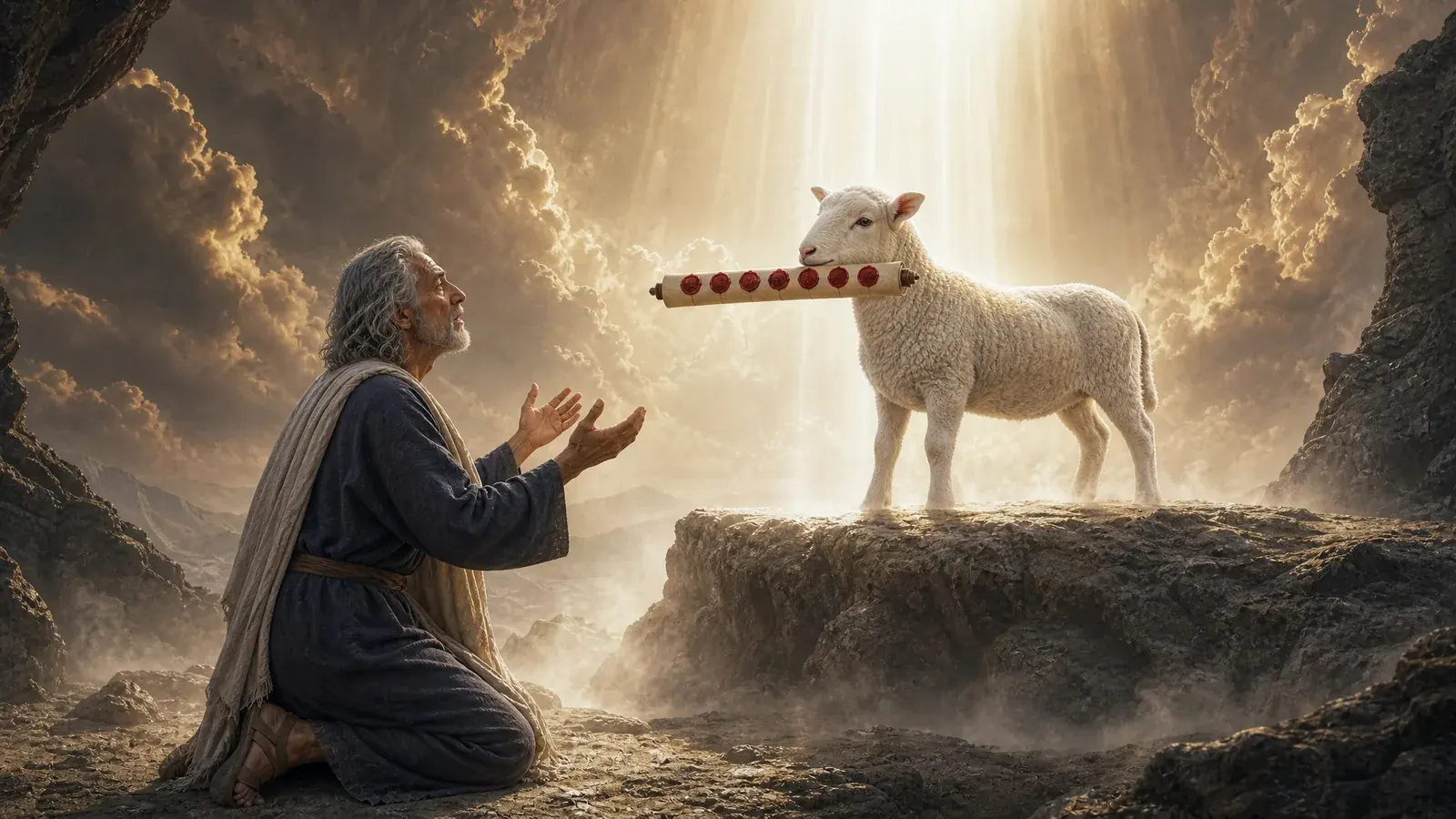
The Lion Is Revealed as a Slain Lamb
A book sealed with seven seals creates a crisis that heaven's entire created order cannot solve. No one in heaven, earth, or beneath the earth is found worthy to open it, and John weeps. An elder announces the answer as the Lion of Judah and Root of David, but when John looks he sees a Lamb standing as though slain. The Book of Revelation makes that change from hearing to seeing the chapter's hinge: royal victory is revealed through sacrificial death. The Lamb takes the sealed book without struggle, and the response widens in circles. Living creatures and elders sing a new song, angels join with an immense acclamation, and finally every creature gives blessing and honor to God on the throne and to the Lamb. Worthiness is not asserted abstractly. It is explained by the Lamb's death and redemption of people from every kindred, tongue, people, and nation.
One complete chapter pageOpen chapter →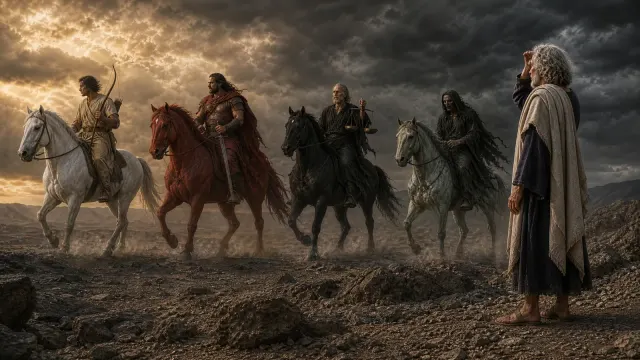
The Seals Expose Conquest, Suffering, and Judgment
The Lamb opens six seals and the Book of Revelation moves from the heavenly question of worthiness into the consequences disclosed on earth. Four riders bring conquest, violence, scarcity, and death, yet each operates within authority that is given rather than seized. The fifth seal turns from agents of death to murdered witnesses beneath the altar, whose cry for judgment receives both white robes and the difficult instruction to wait. The sixth seal shakes the apparently stable order of sun, moon, stars, sky, mountains, islands, and human rank. Kings and slaves alike seek concealment from the one on the throne and from "the wrath of the Lamb." The chapter ends not with an answer but with a question: who can stand? Revelation leaves that sentence open so the next vision can show a sealed and worshiping people who do.
One complete chapter pageOpen chapter →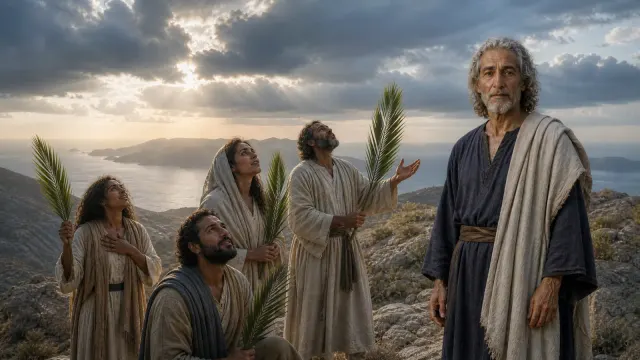
Those Who Can Stand Before the Throne
Chapter 7 answers the question that closed the sixth seal by showing people identified by God before further harm and people standing before the throne. Four angels restrain destructive winds until servants receive the living God's seal. John then hears the exact number 144,000 arranged by tribes of Israel, a list notable for its unusual order and omissions. After hearing that number, he sees a multitude no one can count from every nation, kindred, people, and tongue. The relationship between those two companies is interpreted differently, but both scenes make belonging to God the answer to exposed human vulnerability. The white-robed multitude has come through great tribulation, has washed its robes in the Lamb's blood, and now serves before God's throne. The chapter closes by turning the Lamb into shepherd: he leads them to living waters, and God himself wipes tears from their eyes.
One complete chapter pageOpen chapter →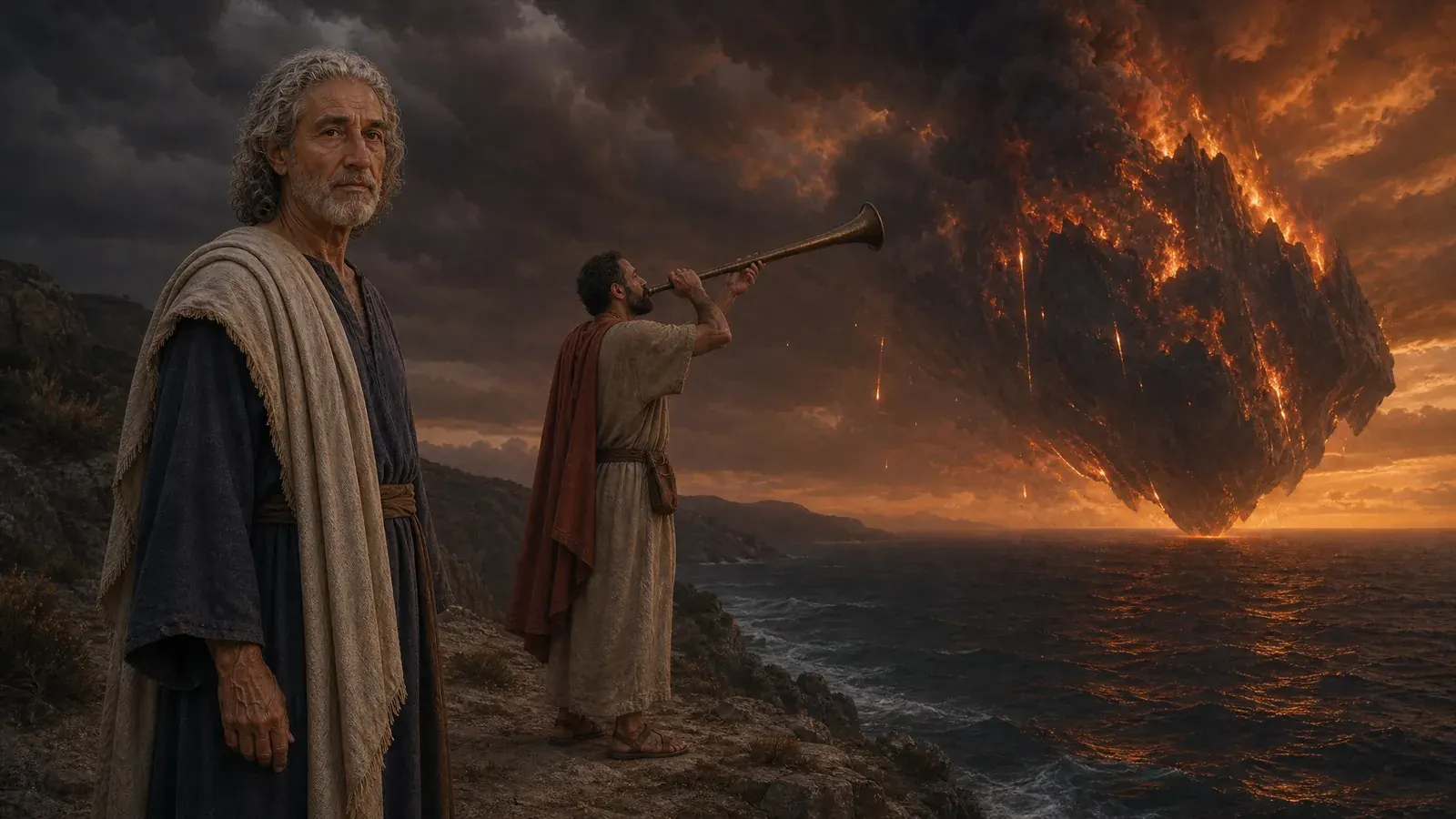
Silence, Prayer, and the First Four Trumpets
The seventh seal opens not with immediate noise but with about half an hour of silence in heaven. That quiet is followed by seven trumpets and by the prayers of the saints rising with incense from the golden altar. Fire from the same altar is cast to earth, linking the heavenly worship scene with the judgments that follow. The first four trumpets strike vegetation, sea, fresh water, and the lights of heaven. Their repeated thirds show severe but bounded devastation, while individual details resist careless generalization: all green grass burns even though only a third of trees do. The Book of Revelation uses plague imagery familiar from Exodus without reducing it to a coded list of modern disasters. At the end, a flying herald cries three woes for the remaining trumpets, signaling a shift from damaged conditions of life toward direct torment and death among the earth's inhabitants.
One complete chapter pageOpen chapter →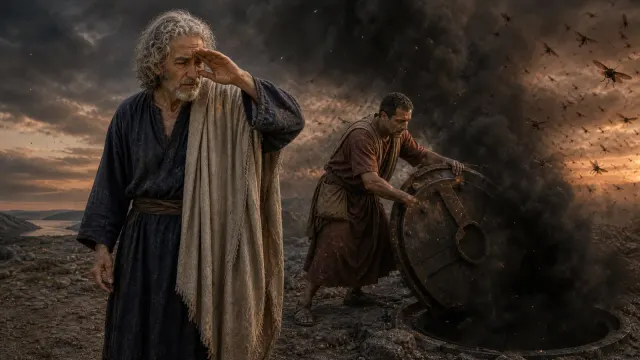
Torment Is Bounded, and Repentance Is Refused
The fifth and sixth trumpets intensify the woes, but the Book of Revelation keeps placing limits beside the terror. A star receives a key to the bottomless pit and releases locustlike creatures whose targets, duration, and power are restricted. They cannot harm vegetation, cannot touch those with God's seal, and cannot kill, though their five months of torment are dreadful. Their composite bodies borrow the language of locusts, scorpions, lions, armored cavalry, and rushing chariots. The sixth trumpet releases four bound angels at an appointed time and an immense mounted force that kills a third of humanity. Yet the chapter does not end by staring at the army. Its closing diagnosis concerns the survivors, who continue worshiping lifeless idols and refuse to repent of murder, sorcery, fornication, and theft. The final emphasis falls on persistent allegiance rather than spectacular destruction.
One complete chapter pageOpen chapter →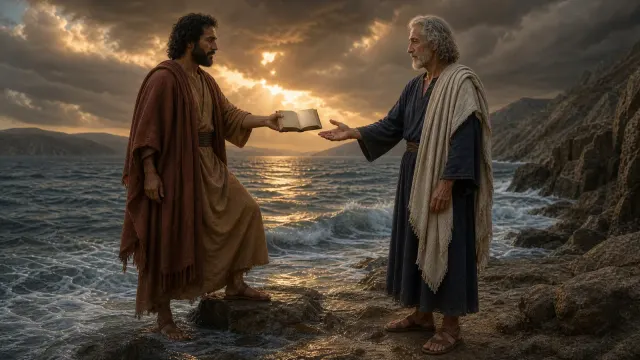
A Sealed Message and an Eaten Book
Between the sixth and seventh trumpets, a mighty angel descends with an open little book and stands across sea and land. Seven thunders speak, but John is explicitly forbidden to write their words. The Book of Revelation, whose very title means unveiling, therefore contains a deliberate act of withholding. The angel then swears by the Creator that delay will not continue indefinitely and that God's announced mystery will be finished in the days of the seventh trumpet. John is moved from watching to participating when he takes the little book and eats it. It tastes sweet and becomes bitter exactly as announced, echoing Ezekiel's prophetic sign while adding the bodily bitterness. The chapter ends by renewing John's commission before peoples, nations, tongues, and kings. Some things are sealed, some are received, and some must be proclaimed. Revelation itself distinguishes among all three.
One complete chapter pageOpen chapter →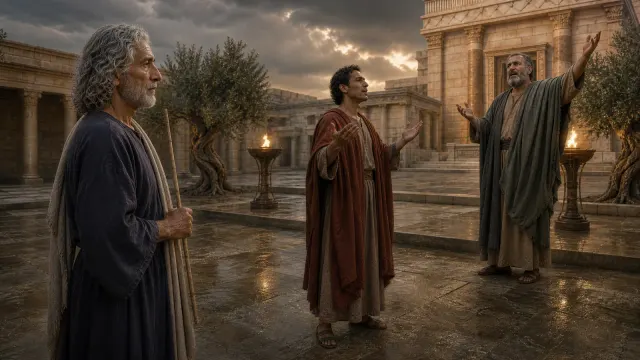
Witnesses Fall, Rise, and Are Publicly Vindicated
The Book of Revelation measures the sanctuary and its worshipers while leaving the outer court to a limited period of trampling, then introduces two witnesses whose testimony carries prophetic features associated with Moses, Elijah, and Zechariah. Their protection lasts until their work is complete. Only then does the beast kill them, and their exposed bodies become the focus of a public celebration. The reversal is equally public: life from God enters them, they stand, and their enemies watch them ascend. An earthquake follows, and the second woe ends. The seventh trumpet then announces that the kingdoms of the world belong to God and his Christ. The elders respond with worship that joins judgment, reward, and the destruction of those who destroy the earth. Finally the heavenly temple opens and the ark appears, placing covenant and judgment in the same closing scene.
One complete chapter pageOpen chapter →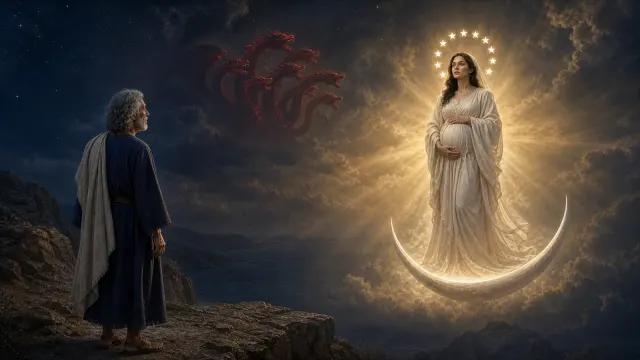
The Dragon Is Defeated and Turns Upon the Woman's Children
Chapter 12 pulls the conflict behind the churches into a vast symbolic scene. A radiant woman labors in birth while a red dragon waits to devour her child. The child destined to rule the nations is caught up to God and his throne, and the woman receives a prepared wilderness place. War in heaven then ends with the dragon's expulsion. The Book of Revelation finally names him plainly as the ancient serpent, the Devil, Satan, and the deceiver of the world. Heaven interprets his fall as the defeat of the accuser, while the saints overcome through the Lamb's blood and their testimony even when that faithfulness costs their lives. Cast down and furious because his time is short, the dragon pursues the woman, fails again, and turns his war toward her remaining offspring, defined by obedience to God and testimony to Jesus.
One complete chapter pageOpen chapter →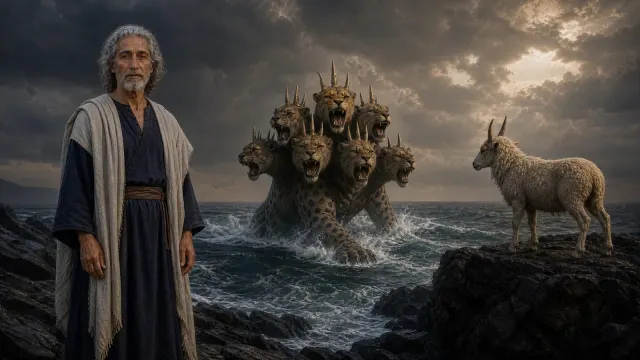
Worship Is Demanded, Displayed, and Enforced
The dragon's earthly war takes institutional form in two beasts. The first rises from the sea with features gathered from Daniel's empires and receives power, a throne, and authority from the dragon. A healed mortal wound produces amazement that becomes worship. The beast boasts, blasphemes, and wages war against the saints for a strictly limited forty-two months. A second beast looks lamb-like but speaks like the dragon, using signs, an animated image, threatened death, and economic exclusion to direct worship toward the first. The Book of Revelation makes allegiance the center of the chapter. The mark controls buying and selling, while the number 666 is tied to the beast's name and calls for wisdom rather than speculative certainty. The chapter presents counterfeit authority, counterfeit resurrection-like recovery, counterfeit signs, and coerced worship, all operating with power repeatedly described as given rather than ultimate.
One complete chapter pageOpen chapter →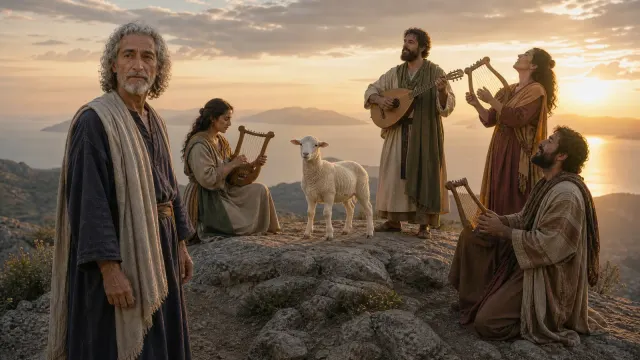
The Lamb's Company and the Earth's Harvest
Chapter 14 answers the beast's mark with the Father's name on the foreheads of a redeemed company standing with the Lamb on Sion. Their song, truthfulness, and following of the Lamb form a direct contrast with the deception and coerced worship of chapter 13. Three angels then announce a worldwide call to honor the Creator, Babylon's fall, and the severe judgment associated with worship of the beast and receipt of its mark. A blessing on those who die in the Lord interrupts the warnings with the promise of rest. The chapter closes with two harvest scenes. The first shows a crowned figure like the Son of man reaping a ripe earth without explicitly naming the crop's fate. The second is unmistakably judgment: ripe grapes are cast into the winepress of God's wrath. The Book of Revelation lets the two harvests stand with both their similarities and their important differences.
One complete chapter pageOpen chapter →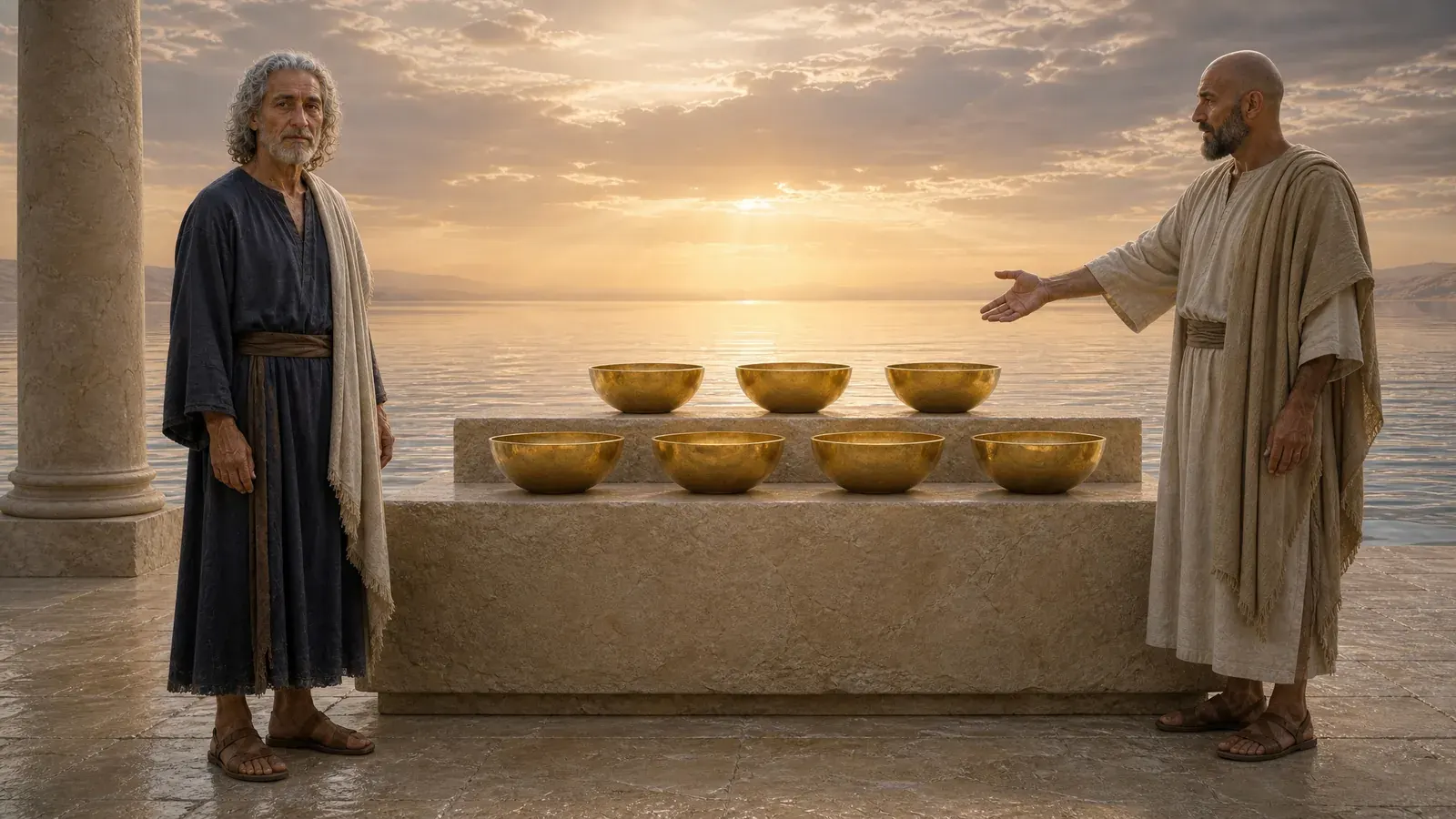
A Victory Song Stands Before the Final Plagues
The Book of Revelation introduces the seven last plagues as the completion of divine wrath, yet before any bowl is poured it shows those who have overcome the beast, its image, its mark, and the number of its name. They stand by a glasslike sea mingled with fire and sing a song called both the song of Moses and the song of the Lamb. Their victory is not described as military conquest but as faithful refusal of the beast's claims. Their song praises God's works, justice, truth, holiness, and the coming worship of the nations. Then the temple of the tabernacle of testimony opens in heaven. Seven angels emerge in pure linen, receive golden bowls from one of the living creatures, and stand while smoke from God's glory fills the sanctuary. No one can enter until the plagues are completed. Covenant language, worship, and judgment remain joined at the threshold of the final sequence.
One complete chapter pageOpen chapter →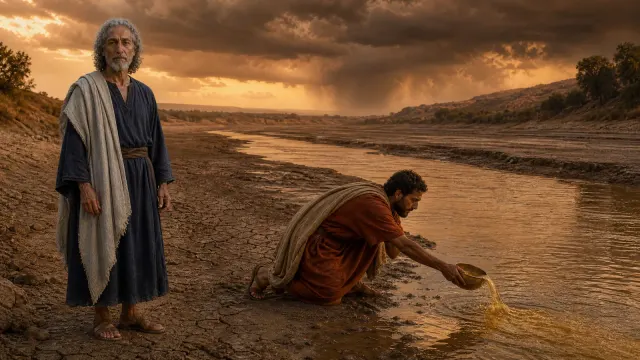
The Bowls Bring the Conflict to Its Appointed Gathering
Seven bowls pour judgment over the beast's worshipers and the world that supports them. The first three bring sores and turn sea, rivers, and springs to blood, while heavenly voices explicitly connect the blood judgment with the blood of saints and prophets. The fourth and fifth bowls bring scorching heat and darkness, yet pain does not produce repentance. The sixth dries the Euphrates and releases deceptive spirits from the dragon, beast, and false prophet to gather rulers for battle at Armageddon. In the middle of that gathering, Christ's warning about watchfulness reaches back to the church messages. The seventh bowl is poured into the air and receives the declaration, "It is done." The Book of Revelation then shows unparalleled earthquake, falling cities, Babylon remembered for judgment, vanished islands and mountains, and crushing hail, while the final human response remains blasphemy rather than repentance.
One complete chapter pageOpen chapter →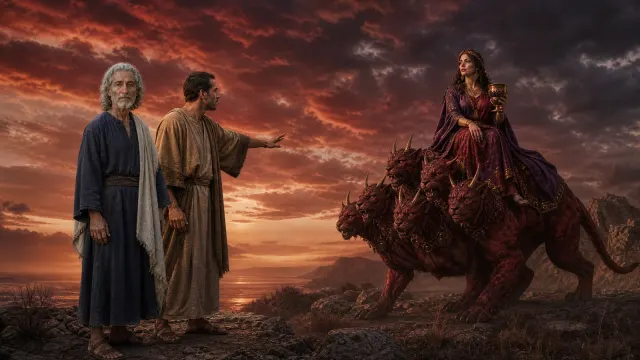
Babylon's Allies Become the Agents of Her Fall
One of the bowl angels shows John Babylon as a richly adorned woman riding a scarlet beast. Purple, scarlet, gold, jewels, and pearls create a dazzling exterior, while her cup contains abominations and her intoxication is the blood of saints and Jesus' witnesses. The angel then interprets the imagery through waters, mountains, kings, and the beast's strange pattern of appearing, disappearing, and returning. Some details remain disputed, but the beast's destination does not: perdition. Ten kings unite their authority with him and make war against the Lamb, only to be overcome by the one called Lord of lords and King of kings. Then the alliance turns inward. The same horns that support the beast hate Babylon and destroy her. The Book of Revelation reveals the instability beneath her glamour: the powers that carry the city become the agents of its collapse within the larger fulfillment of God's words.
One complete chapter pageOpen chapter →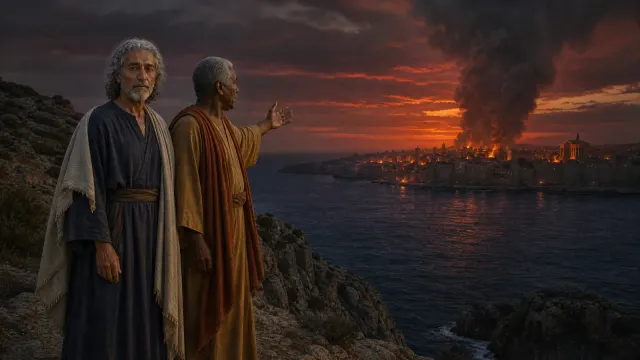
Babylon's Customers Mourn a City Heaven Judges
Babylon's fall is announced as settled before the chapter allows kings, merchants, and seafarers to describe what the city meant to them. A heavenly voice calls God's people out of complicity with her sins, and her claim to permanent queenly security is answered by sudden death, mourning, famine, and fire. The mourners stand at a distance. Kings grieve lost luxury, merchants grieve vanished buyers, and sailors grieve a trading center whose wealth enriched them. Revelation's detailed cargo list finally reaches slaves and "souls of men," exposing human beings inside the inventory. Heaven then tells a different account. Babylon's end is vindication for apostles, prophets, and saints, and the city's sounds disappear one by one until music, crafts, mills, lamps, and wedding voices are gone. The Book of Revelation closes the chapter by naming the blood found in her, a cost none of the commercial mourners included.
One complete chapter pageOpen chapter →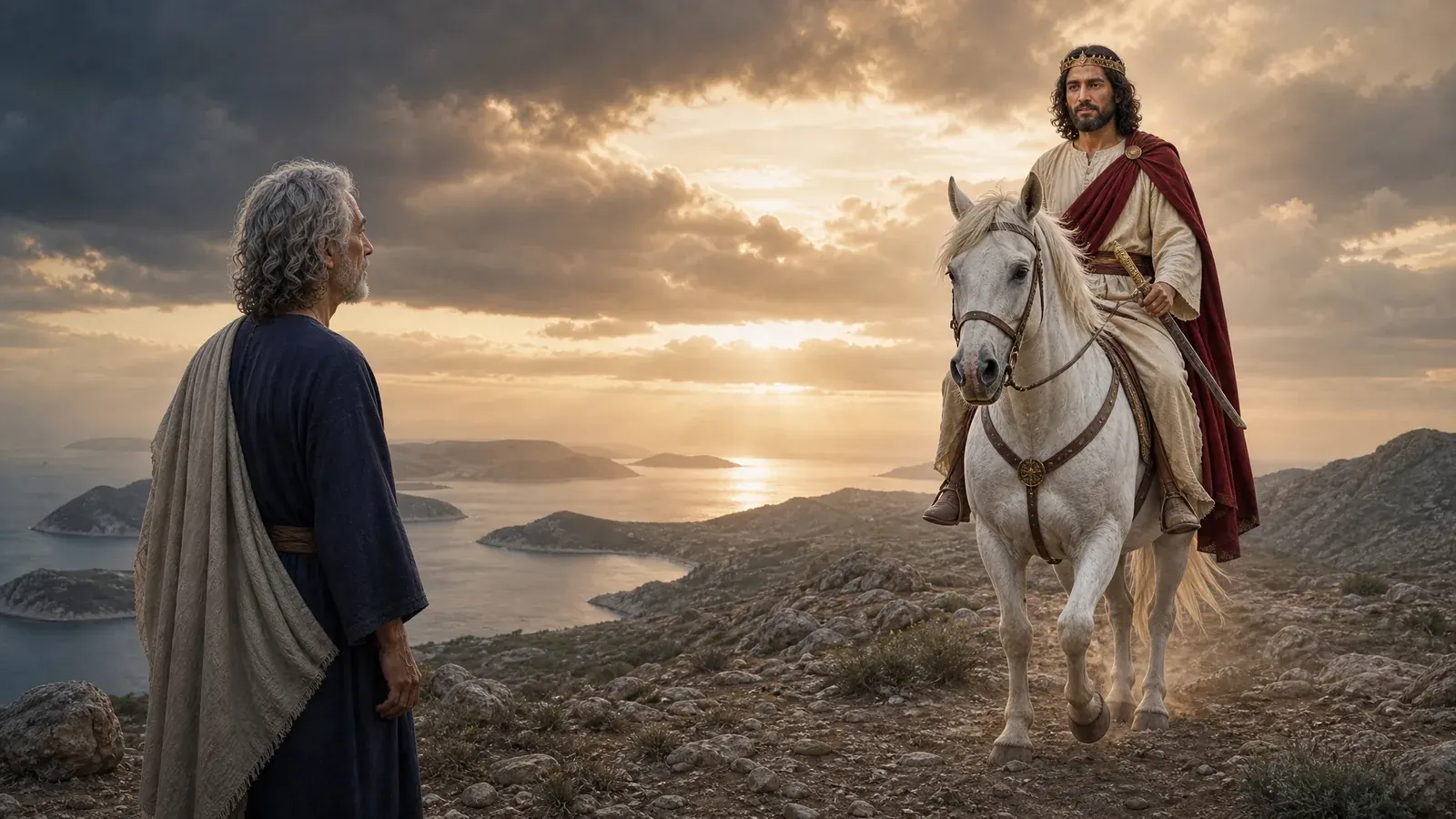
Two Suppers and the Rider Called the Word of God
Heaven answers Babylon's fall with repeated Alleluias whose reasons are stated: God's judgments are true and righteous, and the blood of his servants has been answered. The scene then turns from the fallen city to the marriage of the Lamb, where the bride receives clean fine linen and guests are blessed at the supper. John briefly misdirects worship toward the angel and is sharply corrected. Heaven opens again, this time upon a white horse and a rider called Faithful and True, the Word of God, King of kings and Lord of lords. His sword comes from his mouth, and his judgment is described as righteous. The chapter ends by placing two suppers against one another. The marriage feast celebrates union with the Lamb, while birds are summoned over the forces gathered against him. The Book of Revelation gives the hostile coalition much preparation but very little battle. The beast and false prophet are simply taken.
One complete chapter pageOpen chapter →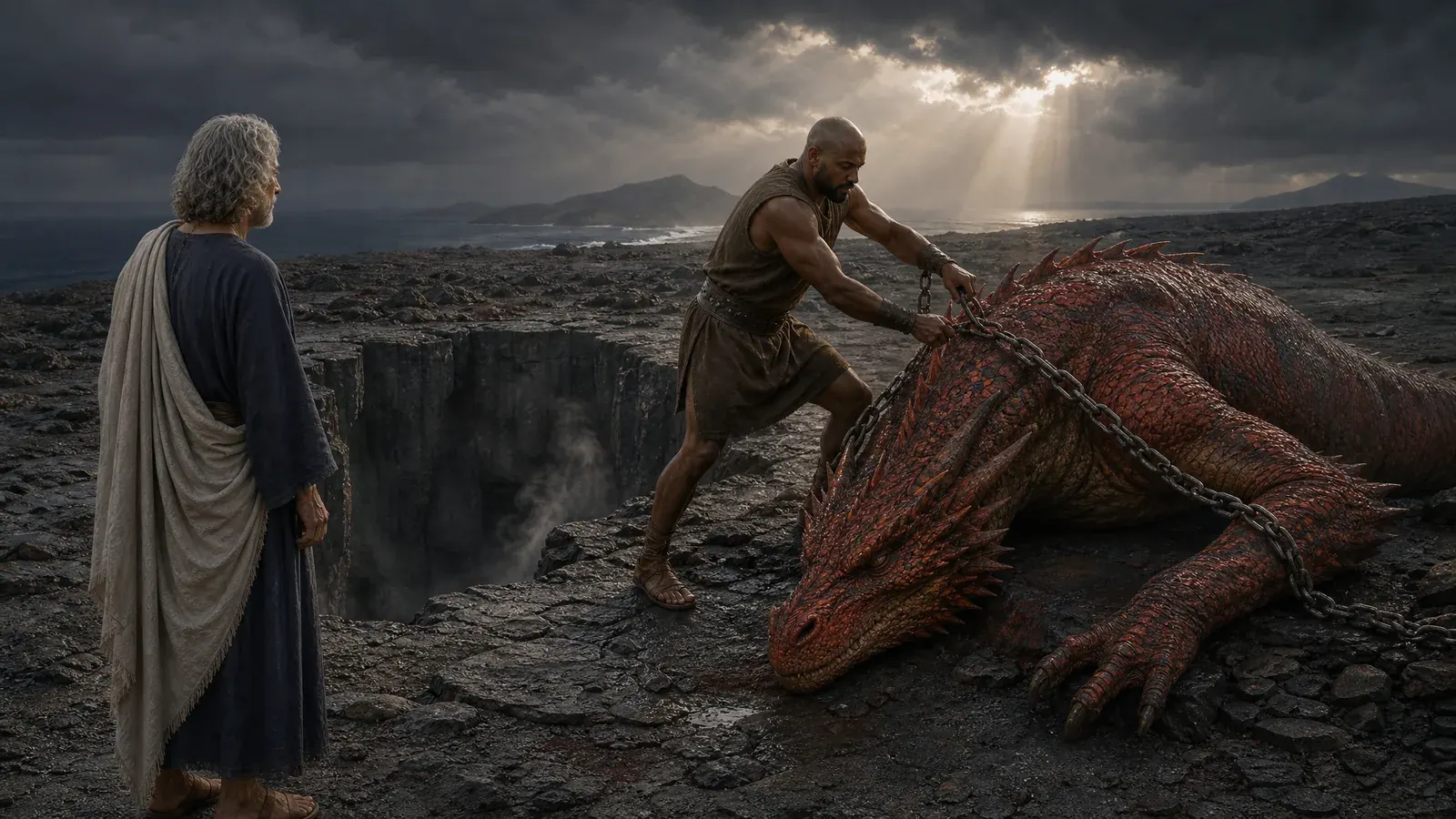
The Deceiver Is Restrained, Released, and Finally Judged
Revelation 20 keeps turning apparent finalities over. The dragon who had deceived nations is first handled like a prisoner whose limits are set by another authority. People killed for refusing the beast are then seen not as defeated remnants but as participants in Christ's reign, with the "second death" unable to claim them. Even Satan's last release does not restore the old balance. His gathering fills the breadth of the earth, yet its defeat requires no drawn-out contest. The chapter's sharpest reversal comes at the great white throne, where every place that held the dead must give them up. Books are opened, judgment is rendered, and death itself is cast into the lake of fire. By the end, the power that seemed to finish human lives has become something judged and removed.
One complete chapter pageOpen chapter →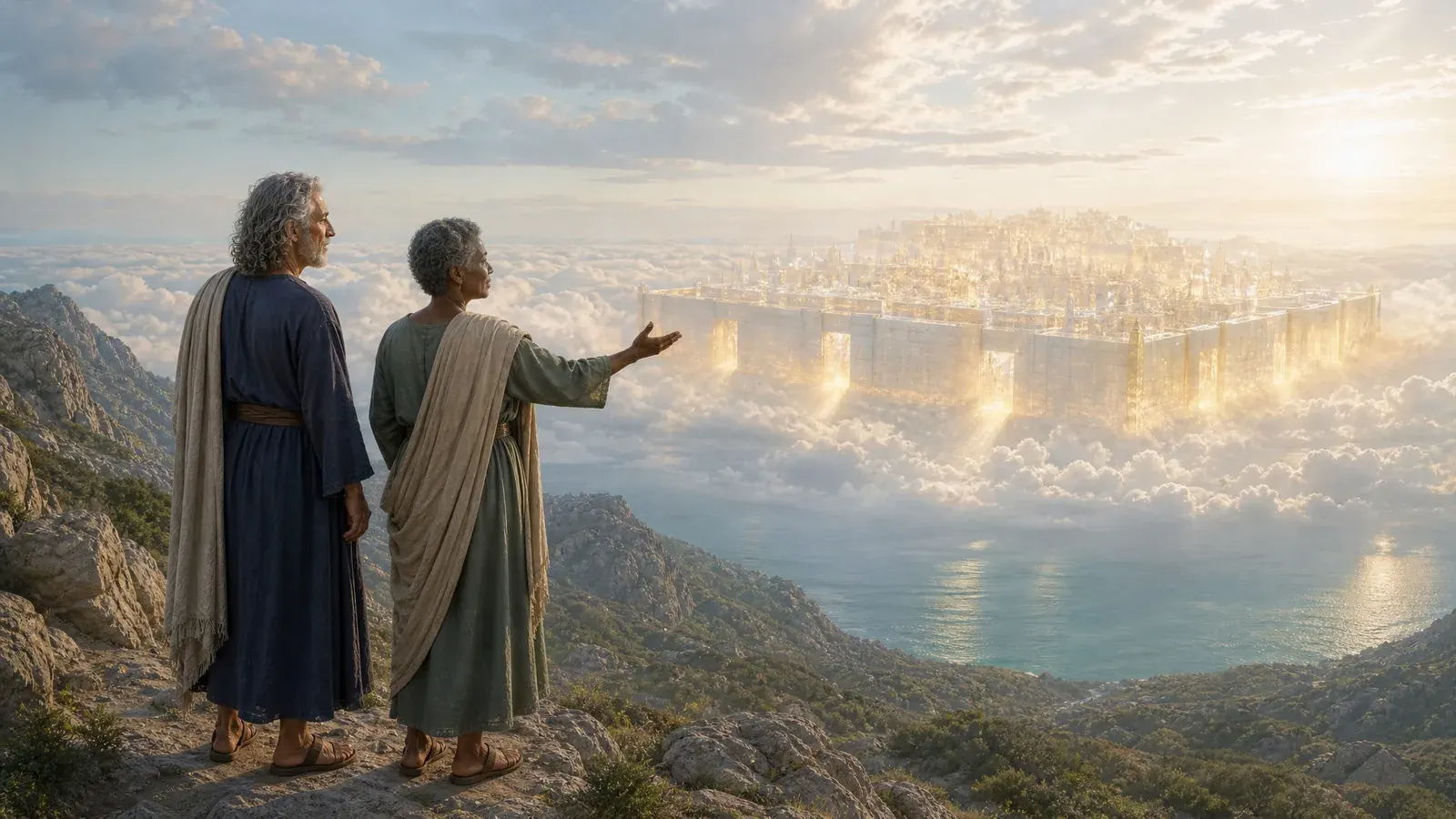
God Makes His Dwelling with Humanity
Revelation 21 does not end with humanity escaping upward. The decisive movement is Jerusalem coming down from God into a new heaven and new earth, and the repeated promise is that God will dwell "with" his people. The chapter then lets that presence reshape everything else. Tears, death, sorrow, crying, and pain belong to the former order. The city is both bride and place, carrying the names of Israel's tribes and the Lamb's apostles, and its cubic dimensions turn the whole settlement into sanctuary space. Its gold, jewels, and pearls recall Babylon's luxury while removing Babylon's merchants and prices. Most startlingly, Jerusalem has no separate temple and no need of ordinary lights because God and the Lamb fill those functions. Its gates stand open, nations bring their honor, and yet nothing defiling crosses the threshold. Welcome and holiness are held together rather than traded against each other.
One complete chapter pageOpen chapter →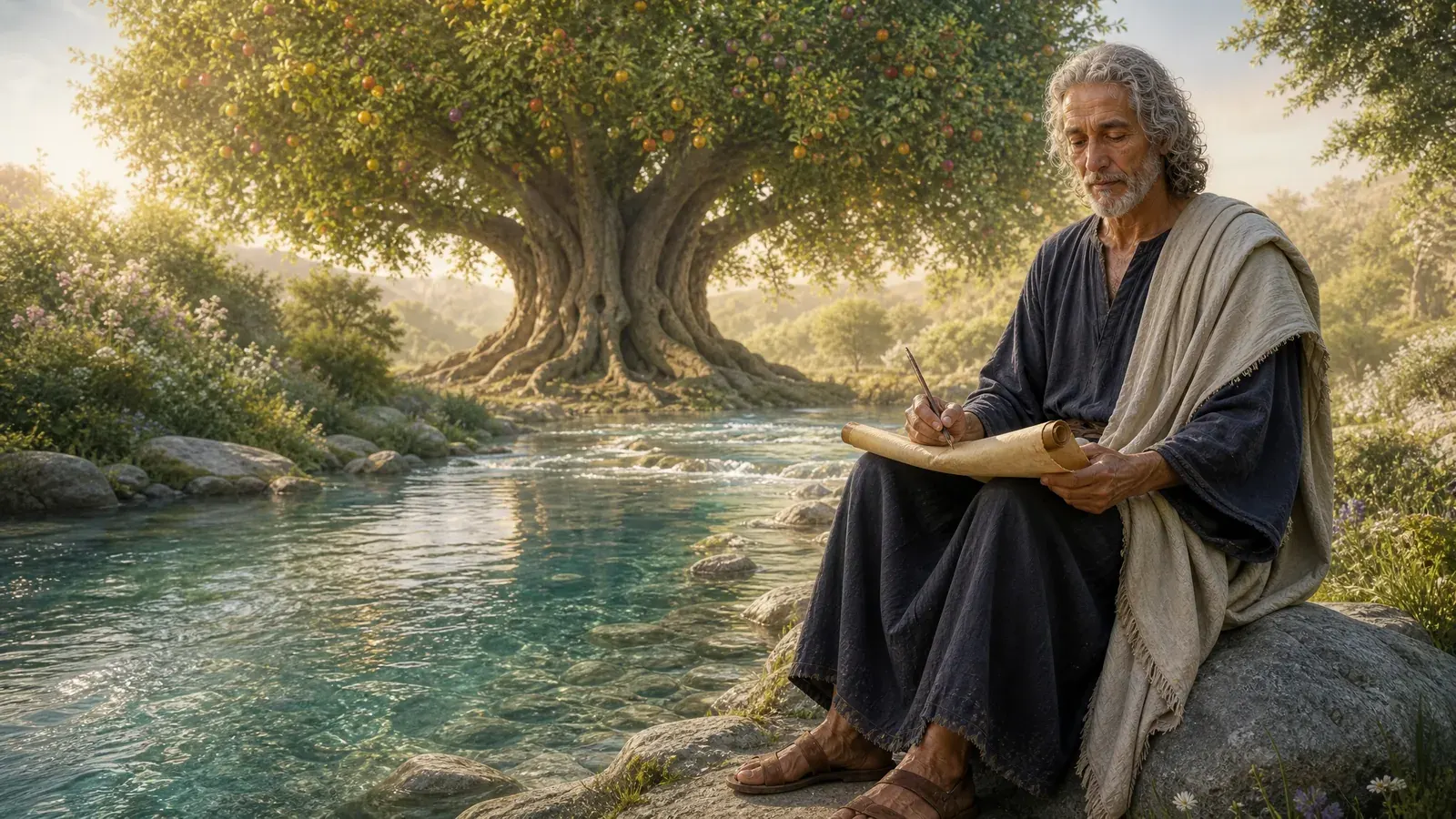
Life Flows from the Throne, and the Prophecy Returns to Its Hearers
Revelation 22 lets the final city breathe before turning the prophecy back toward the people hearing it. Life flows from the throne as a river, the tree bears fruit continually, the curse is gone, and God's servants see his face, bear his name, serve him, and reign without an announced end. The chapter then moves from vision to testimony. The sayings are again called "faithful and true," John is corrected once more for worshipping an angel, and the prophecy is deliberately left unsealed because "the time is at hand." Jesus identifies himself as the source of the testimony sent to the churches. The repeated invitation "Come" reaches both toward his coming and toward the thirsty who may take the water of life freely. A severe warning guards the book from addition or subtraction, but Revelation's last exchange is expectation answered by expectation, followed by grace. The final word after all the book's judgments is not another plague but the grace of the Lord Jesus Christ.
One complete chapter pageOpen chapter →Source: eBible.org · eng-kjv2006