
Zechariah

14 Chapters
Zechariah: The Whole Book, Chapter by Chapter

A Quiet World and an Unanswered Jerusalem
Zechariah opens by making return a matter of allegiance before it becomes a matter of construction. The ancestors died, the prophets died, and the words they resisted still caught up with them. Then the night visions begin. Riders report an earth at rest, but Jerusalem remains afflicted, so global quiet is exposed as an incomplete peace. The answer to the angel’s “how long” arrives in rebuilding language: the house will rise, a measuring line will stretch over the city, and Zion will again be comforted. Finally, the powers that scattered Judah appear as horns and are met by corresponding craftsmen sent to cast them down. The chapter moves from remembered judgment to promised mercy without pretending the past did not happen, and it keeps asking what genuine restoration must include beyond simply returning to the land.
One complete chapter pageOpen chapter →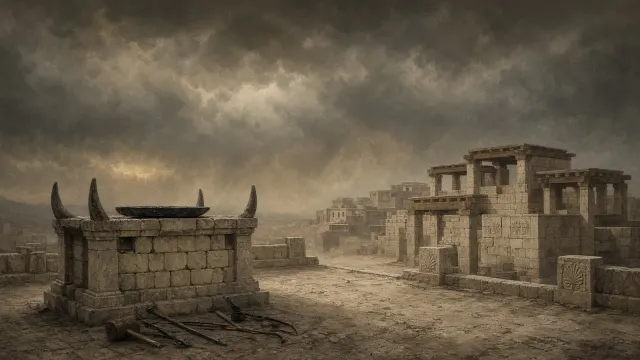
A City Too Full for the Measuring Line
A measuring line introduces the chapter, but Jerusalem’s promised future quickly outgrows the survey. The city will spread like unwalled settlements because people and livestock will multiply, while the LORD himself is pictured as fire around it and glory within it. The focus then shifts to exiles still living in Babylon, people addressed as Zion even while dwelling far from Zion. They are summoned out because the nations that plundered them will not keep their advantage forever. The final promise widens beyond Judah: many nations will join themselves to the LORD and become his people, even as Judah and Jerusalem retain their particular place in the promise. Zechariah closes the chapter by moving from song to silence. Zion rejoices because the LORD will dwell in her midst, and all flesh falls quiet because he is rising from his holy habitation.
One complete chapter pageOpen chapter →
The Accused Priest Receives Clean Garments
Joshua the high priest stands accused in filthy garments and offers no defense speech. The LORD rebukes the accuser, the garments are removed, and the vision interprets its own symbol by declaring that Joshua’s iniquity has passed from him. A clean mitre completes the restoration of his priestly office. Only then does the charge come: Joshua must walk faithfully and keep the LORD’s charge. His cleansing is not earned by that future conduct, but restored service is not freed from responsibility. The chapter then looks beyond Joshua. He and his companions become signs pointing toward the Branch, while a mysterious stone with seven eyes accompanies the promise that the land’s iniquity will be removed in one day. The closing image is quieter than the heavenly court: neighbors sit beneath vine and fig tree, and an account that began with accusation ends in settled peace.
One complete chapter pageOpen chapter →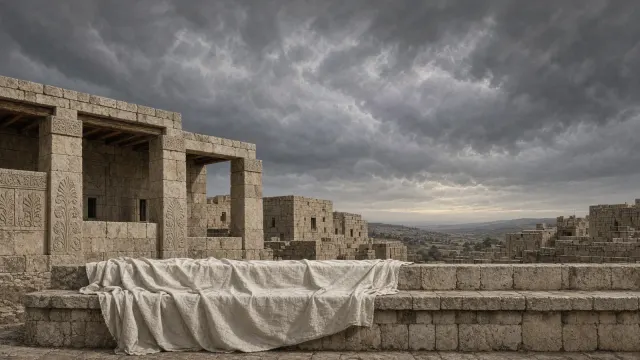
The Lampstand and the Hands That Will Finish
A golden lampstand, a bowl, seven lamps, and two olive trees form one of Zechariah’s most intricate visions, and the prophet’s first useful act is to admit that he does not understand it. The explanation turns toward Zerubbabel and the unfinished temple. “Not by might, nor by power, but by my spirit” does not remove human labor from the scene, because the same word promises that the hands which laid the foundation will also finish the house. The great mountain becomes a plain, the despised day of small things is vindicated, and the plummet remains in the builder’s hand while the LORD’s eyes range through the earth. Zechariah then returns to the olive trees until they are identified as two anointed attendants standing by the Lord of all the earth. The chapter holds divine supply and ordinary work together without reducing either one.
One complete chapter pageOpen chapter →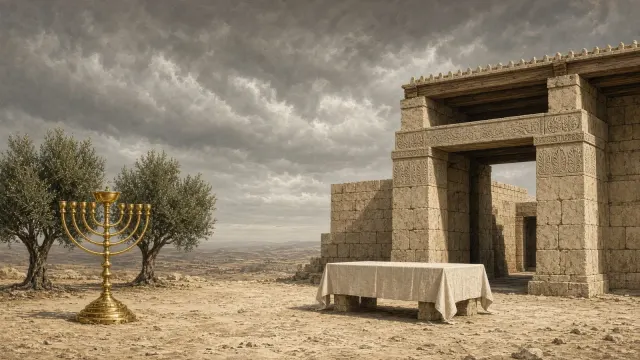
What Cannot Remain in the Restored Land
Restoration turns inward in Zechariah 5. A massive flying scroll carries judgment against theft and false swearing, entering the offender’s own house and consuming timber and stone. The vision refuses to let rebuilt public life hide private corruption. Then an ephah becomes a container for a woman explicitly identified as Wickedness. She is pressed beneath a heavy lead cover, not destroyed, and the next scene answers the question of destination. Two winged women carry the sealed vessel to Shinar, where a house will be built and the ephah established on its own base. The unsettling symmetry is hard to miss. While the LORD’s house is being restored in Jerusalem, another house is prepared elsewhere for what must be removed from the restored community. The chapter presents cleansing not as cosmetic improvement but as separation from practices that would reproduce the old ruin inside new walls.
One complete chapter pageOpen chapter →
A Crown on the High Priest’s Head
The night visions close with four chariots sent out from the presence of the Lord of all the earth. Their movement turns the earlier patrol into a deployment, and the northern mission ends with the LORD’s spirit quieted there. The chapter then moves from heavenly imagery to metal, visitors, and a named house. Gifts from people who have come from Babylon are used to make crowns, and the surprising recipient is Joshua the high priest. The symbolic act points beyond him to the Branch, who will build the temple, bear glory, rule, and be associated with priesthood and peace. The crowns do not become Joshua’s permanent royal insignia. They remain in the temple as a memorial, while people from far away are promised a share in the building. The chapter ends with announced fulfillment still placed beside the demand for diligent obedience.
One complete chapter pageOpen chapter →
A Question About Fasting Uncovers a Refusal to Listen
A delegation asks whether a long-established fast should continue, and Zechariah answers by reopening the reason the fast existed at all. Seventy years of mourning do not prove that the practice was directed toward the LORD. The people are reminded instead of the earlier prophetic call for truthful judgment, mercy, compassion, and protection of the widow, fatherless, stranger, and poor. Those instructions were not obscure. The ancestors deliberately resisted them, pulling away the shoulder, stopping their ears, and hardening their hearts. Then the direction of the cry reversed: the LORD had called and they would not hear; later they called and he would not hear. Scattering and desolation followed. The chapter therefore leaves the original calendar question unanswered for the moment. Before fasting can be discussed as a ritual, the book insists on remembering the history of refusal that made the mourning necessary.
One complete chapter pageOpen chapter →
Walking Sticks, Children’s Games, and Nations Coming to Pray
The answer to chapter 7 comes through a picture of restoration broad enough to change streets, fields, courts, calendars, and international movement. Jerusalem is filled with old people carrying staffs and children playing, ordinary details that make peace visible. Workers are told to strengthen their hands because the former conditions of failed wages, unsafe travel, and barren production will not continue. Truth and peaceful judgment are demanded from a city promised the name “city of truth.” Then the old fasts finally receive their answer: they will become cheerful feasts, but the announcement still ends with truth and peace rather than with food. The chapter closes by widening the horizon. People from many cities and strong nations will seek the LORD in Jerusalem, and men from many languages will grasp the garment of a Jewish man because they have heard that God is with his people.
One complete chapter pageOpen chapter →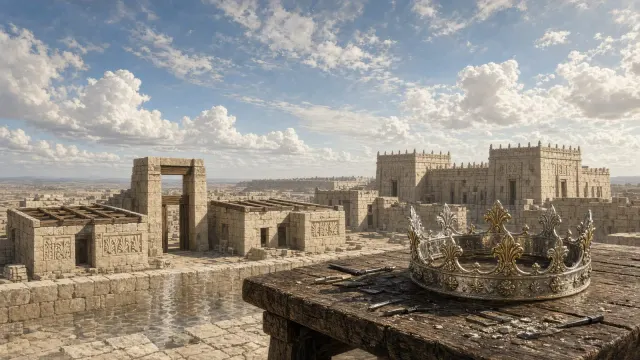
The King Arrives Without a Warhorse
Zechariah 9 moves from the fall of confident cities to the arrival of a king whose strength does not look like theirs. Tyre’s wealth and fortifications cannot secure her, yet judgment on Philistine power still leaves room for a remnant to belong to God. Then Zion’s king comes lowly on a donkey. The next line explains the significance of the vehicle by removing chariots, warhorses, and battle bows and extending peace to the nations. The chapter does not become simple pacifist imagery, however. Prisoners are released by covenant blood, Judah and Ephraim are pictured as weapons, and conflict with Greece appears. Divine warfare follows with trumpet, lightning, and whirlwind. Yet the chapter refuses to end there. The rescued people become a flock and crown stones, while grain and new wine return the final scene to beauty, produce, and ordinary life in the land.
One complete chapter pageOpen chapter →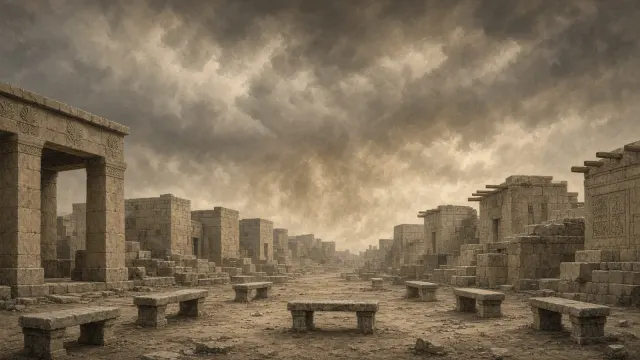
The Scattered Flock Is Called Home
The chapter begins by contrasting the LORD’s rain with the emptiness of idols, diviners, and deceptive dreams. Their failure has left the people like a flock without a shepherd. The LORD confronts failed leaders and transforms Judah’s flock into a battle horse, supplying strength and leadership where helplessness had prevailed. Then the old names of division are gathered into one promise: Judah, Joseph, and Ephraim receive mercy, restoration, and a summons home. Children share in the joy, so renewal reaches beyond one surviving generation. The final movement turns scattering into sowing. People remember the LORD in far countries and return through imagery shaped by the exodus, with Egypt, Assyria, sea, and river all unable to block the way. The chapter ends not merely with arrival in territory, but with a people strengthened to walk in the LORD’s name.
One complete chapter pageOpen chapter →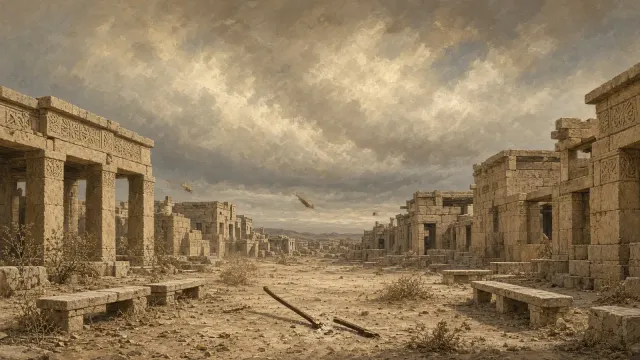
A Shepherd Is Valued at Thirty Pieces of Silver
Zechariah 11 is an account of failed and rejected shepherding. The chapter opens with great trees falling and shepherds howling, a landscape already signaling that impressive strength will not hold. A flock destined for slaughter is exploited by buyers, sellers, and shepherds who profit without pity, even using the LORD’s name to bless their gain. The appointed shepherd then serves with two named staves, Beauty and Bands, but the relationship collapses. Beauty is broken, thirty pieces of silver are weighed as the shepherd’s price and cast to the potter in the temple, and Bands is broken to mark fractured brotherhood between Judah and Israel. The replacement is worse: a foolish shepherd neglects the vulnerable and consumes the flock. The chapter ends by disabling the arm and eye that should have been used to protect and watch. A title remains, but the office has been emptied of care.
One complete chapter pageOpen chapter →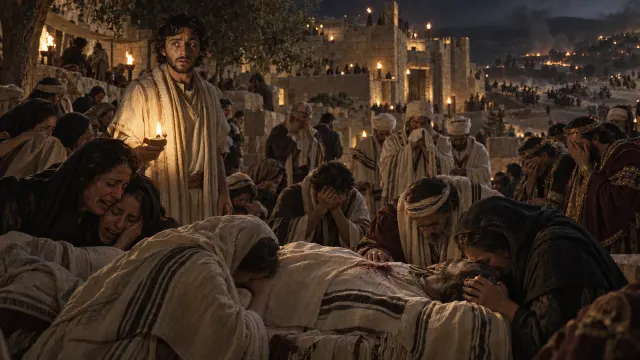
Deliverance Gives Way to Mourning
Jerusalem’s deliverance dominates the first half of the chapter, but Zechariah carefully prevents victory from becoming a reason for pride. The creator of heaven, earth, and the human spirit makes the city a staggering cup and an injuring stone to its attackers. Enemy cavalry loses sight and control while the LORD opens his eyes upon Judah. Even the order of rescue matters: the tents of Judah are saved first so that Jerusalem and David’s house cannot magnify themselves over the surrounding people. Then the chapter turns sharply from strength to grief. A spirit of grace and supplication is poured out, and the people look upon the pierced one, with the difficult movement from “me” to “him” left intact. The mourning that follows is national but not anonymous. Families and spouses grieve apart, so no royal, priestly, or household identity can substitute for personal response.
One complete chapter pageOpen chapter →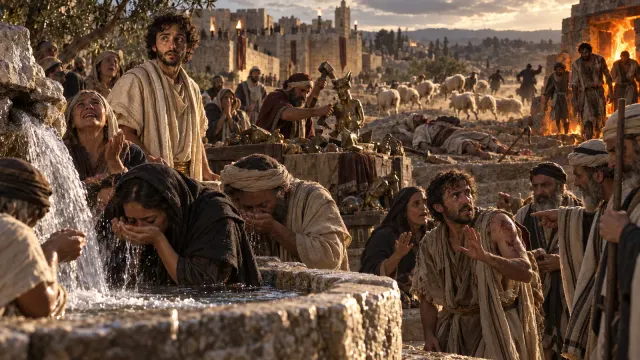
A Fountain Opens, and the Shepherd Is Struck
The mourning of the previous chapter is followed by an opened fountain for sin and uncleanness. Cleansing is supplied to David’s house and Jerusalem, and the same renewal extends into the removal of idols, false prophecy, and the unclean spirit. The treatment of deceptive prophecy is severe enough to override even family loyalty, and the following scene shows a discredited prophetic identity being denied while unexplained wounds remain. Zechariah does not settle every detail of that exchange. The clearest New Testament connection comes in the final oracle, where the sword is commanded against the LORD’s own shepherd and the sheep scatter. Jesus applies that line to his arrest and disciples. Zechariah continues into devastation, survival, and refining. The remaining third passes through fire rather than avoiding it, and the chapter ends with restored mutual recognition: the people call, the LORD hears, and each names the other in covenant language.
One complete chapter pageOpen chapter →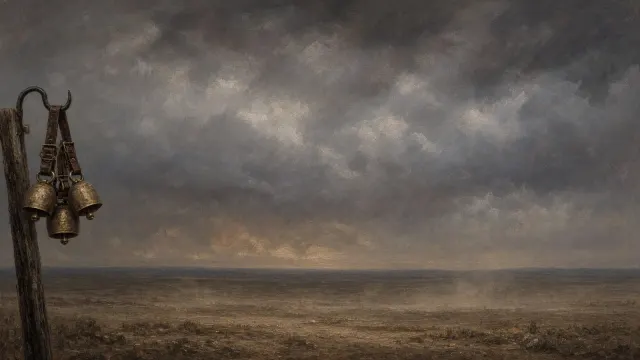
The King’s Day Reaches the Cooking Pots
Zechariah’s final chapter begins with Jerusalem wounded before it is rescued. The city is taken, homes are violated, people are carried away, and only then does the LORD intervene against the nations. The Mount of Olives splits, the expected darkness gives way to light at evening, and living waters flow from Jerusalem in every season. The LORD’s kingship is announced over all the earth, yet the vision remains grounded in a city with gates, towers, households, and secure habitation. The attacking camp is undone by plague and internal violence, but not every nation disappears. Survivors return year by year to worship the King and keep the feast of tabernacles, while refusal still carries consequences. The book’s final movement is from cosmic transformation to common objects. Holiness reaches horses’ bells, temple pots, and every cooking vessel in Jerusalem and Judah. Zechariah ends by bringing consecration all the way into ordinary life.
One complete chapter pageOpen chapter →Source: eBible.org · eng-kjv2006