The big picture
Paul turns to spiritual gifts by refusing two opposite mistakes at once. Variety does not mean rival divine sources, and unity does not require identical gifts. The same Spirit, Lord, and God stand behind different manifestations, all given for common benefit rather than private rank. The body then becomes Paul's controlling image. Jews and Gentiles, enslaved and free, are brought into one body by one Spirit, and no member can cancel its belonging because it envies another role. Paul then reverses the pressure: prominent members cannot declare weaker ones unnecessary. God gives particular honor where human ranking withholds it so that the body may share both suffering and honor. The final list of ministries and gifts ends with questions expecting a simple no. Not everyone is an apostle, prophet, teacher, healer, tongue-speaker, or interpreter. Difference is not a defect in the body. It is how the body works.
Central truth
The one Spirit distributes different gifts for the church's common good, making members who seem weaker necessary rather than disposable within Christ's body.
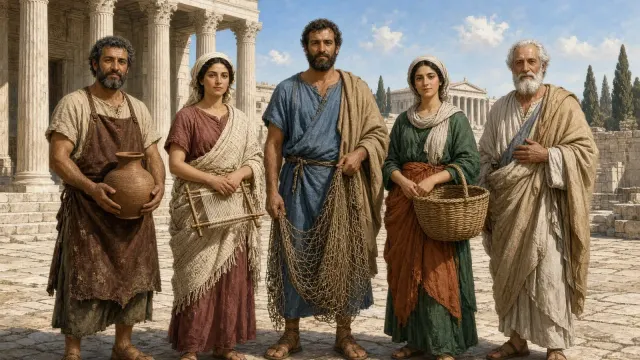

The study notes have a page of their own
The movement by movement analysis, the words to trace, the verse by verse notes and where readers differ are written for someone studying alone. They are on the Deep Personal Reflections page for this chapter. This page is the lesson.
A chapter-specific teaching brief
These anchors come from this chapter itself. They help a teacher use the Level 1 overview, the Level 2 study, and the Scripture text as one lesson.
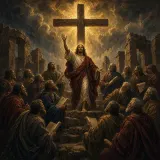
Open with the chapter’s first image
1 Corinthians 12:1: “Now concerning spiritual gifts, brethren, I would not have you ignorant.”
Slow down at the turning point
1 Corinthians 12:16: “And if the ear shall say, Because I am not the eye, I am not of the body; is it therefore not of the body?”
Keep this word trail visible
body, members, Spirit, gifts, member, tongues
What to explain, in order
Teach the passage in this order. Each step names the verses it rests on, so every point can be shown in the text before it is applied.
1 Corinthians 12:1-3
Concerning spiritual gifts
Mark the heading, "Now concerning spiritual gifts" (12:1), another answer to the Corinthians' letter, and say that chapters 12 to 14 are one argument. Explain 12:2: in their pagan past they were "carried away unto these dumb idols", led by forces they did not understand. Then 12:3 gives the first test of the Spirit's work: confessing "that Jesus is the Lord". Teach this first because the Corinthians prized dramatic experiences, and Paul begins not with intensity but with the content of what is said. Every believer who confesses Jesus as Lord already speaks by the Spirit.
1 Corinthians 12:4-11
One Spirit, many gifts
Read 12:4-6 and point out the three names, Spirit, Lord, God, each paired with a kind of variety. Explain "diversities" as differences and "administrations" as services or ministries. Then read 12:7, the purpose. Read the list in 12:8-10 without stopping to define each gift exhaustively; say that traditions understand some of them differently and differ on which continue today. Close on 12:11, with "severally" explained as to each individually. Teach this before the body image so the class knows the gifts come from one giver for one purpose.
1 Corinthians 12:12-20
One body, many members
Read 12:12-13 and explain the body as Paul's picture of Christ's people. Explain that readers understand "baptized into one body" (12:13) in different ways: as the Spirit's work joining every believer to Christ at conversion, or as linked to later experiences of the Spirit; whichever reading is taught must account for "we all". Then act out the absurd speeches of the foot and the ear in 12:15-16, and the body made of one eye in 12:17. Teach this step with some lightness, because Paul does, and because the humour makes the point land.
1 Corinthians 12:21-26
The members that seem weaker
Now turn the image the other way. The eye tells the hand it is not needed (12:21); Paul answers with 12:22-24. Explain "tempered" (12:24) as mixed or blended together, as a craftsman fits parts into one. Point out that "uncomely" parts receive more care, as we cover and protect parts of our own bodies. Then read 12:25-26 as the goal: no division, equal care, shared suffering and shared honour. Teach this after the foot's complaint so the class feels both directions of the error, and sees that God's design of the body is itself the argument.
1 Corinthians 12:27-31
Not everyone does everything
Read 12:27, "Now ye are the body of Christ, and members in particular", as the summary. Then read the second list in 12:28, noting that "helps" and "governments", explained as acts of help and gifts of guidance or administration, stand beside miracles and tongues. Ask the questions of 12:29-30 aloud and let the class answer them. Finish with 12:31 and its "more excellent way". Teach this last because it opens the door to chapter 13: Paul is about to show what must govern every gift.
Where learners get stuck
The misreadings this passage tends to produce, and how to answer each from the text.
"If I do not have a gift like tongues or prophecy, I am not truly spiritual."
Paul's first test of the Spirit's presence is confessing "that Jesus is the Lord" (12:3), and he says "by one Spirit are we all baptized into one body" (12:13). His questions in 12:29-30 expect the answer no: not all speak with tongues, not all prophesy. The Spirit gives "as he will" (12:11). Traditions differ on the continuation of some gifts, but this chapter leaves no room for ranking believers by which gift they have.
"Some people in the church are just not needed."
Paul answers this directly: "the eye cannot say unto the hand, I have no need of thee" (12:21), and the members "which seem to be more feeble, are necessary" (12:22). God himself has arranged the body and given "more abundant honour to that part which lacked" (12:24). The word "seem" matters: how a member appears is not what it is worth. A congregation that treats some members as optional has misread its own design.
"The body of Christ is a nice picture of teamwork."
Paul does not say the church is like a team; he says "Now ye are the body of Christ" (12:27), and "so also is Christ" (12:12). The members are joined by one Spirit, not by a shared project. When one suffers, all suffer (12:26), not because they choose to but because they are one body. The image is about belonging and life shared in Christ, and the demand is care, not only cooperation.
Learning objectives
- Identify the shared source and purpose of differing gifts.
- Explain the Spirit's role in forming one body.
- Distinguish the foot's self-exclusion from the eye's dismissal.
- Explain why apparently weaker members receive greater honour.
- Describe shared suffering and shared rejoicing.
- Answer Paul's closing questions without assigning everyone the same gift.
Teacher preparation
- Read 1 Corinthians 12:1–31 with 11:21–22 and 13:1–3; connect unequal treatment at the table with rivalry over gifts.
- Explain 'diversities' as differences, 'severally' as individually, and 'tempered' as composed or fitted together; do not import modern metalworking into 12:24.
- Prepare cards for the foot, hand, ear, eye, and head; keep the body's absurd conversations distinct from Paul's direct instructions.
- Review the two gift lists in 12:8–10,28; notice helps and governments alongside conspicuous gifts rather than supplying a definitive modern assessment chart.
- Make the activity accessible without physical demonstrations; do not use the body comparison to rank actual disabilities or demand disclosure of a learner's abilities.
Evidence and interpretation checks
Explicit
Mark 1 Corinthians 12:7,11,22: gifts benefit others, the Spirit distributes as he wills, and members that seem weaker are necessary.
Scripture-supported
Read Romans 12:4–8 beside 1 Corinthians 12:14–20; both passages place different functions within one body rather than requiring uniformity.
Strong inference
Infer from the paired speeches in 1 Corinthians 12:15–21 that Paul confronts both inferiority and superiority; neither feeling cancels another member's belonging.
Possible or traditional reading
Identify differing readings of Spirit baptism in 1 Corinthians 12:13, including incorporation at conversion and connections with distinct empowering experiences; require each to account for 'all'.
Limit
Do not use 1 Corinthians 12:29–30 to promise every believer the same gift, or 12:8–10,28 as an exhaustive inventory of every possible form of service.
Discussion with answer guidance
1. What remains the same while gifts, administrations, and operations differ?
What a good answer contains
The source and the purpose. Paul names three kinds of difference and one giver for each: "diversities of gifts, but the same Spirit", "differences of administrations, but the same Lord", "diversities of operations, but it is the same God which worketh all in all" (12:4-6). Then the purpose: "the manifestation of the Spirit is given to every man to profit withal" (12:7), for the good of all. A good answer notices Spirit, Lord and God named together, and that variety comes from one God, not from rival sources. A weak answer treats the more impressive gifts as proof of a higher spirituality or a different spirit.
Show teacher guidance
Trace 12:4–7: Spirit, Lord, God, and shared benefit. Correct an answer that treats impressive variety as proof of competing spiritual sources.
2. Who decides where members belong and how gifts are distributed?
What a good answer contains
God does, not the church's preferences. The gifts are given by "that one and the selfsame Spirit, dividing to every man severally as he will" (12:11). Membership comes the same way: "by one Spirit are we all baptized into one body" (12:13). And placement: "now hath God set the members every one of them in the body, as it hath pleased him" (12:18). A good answer gathers all three verses and sees that no member chose its gift or earned its place. A weak answer makes the gifts something a believer achieves, or lets popularity in the congregation decide who matters.
Show teacher guidance
Use 12:11,13,18. Expect the Spirit's will, incorporation into one body, and God's placing; do not substitute popularity or a congregation's status ladder.
3. How does the foot's complaint differ from the eye's claim?
What a good answer contains
The foot excludes itself; the eye excludes someone else. The foot says, "Because I am not the hand, I am not of the body" (12:15), and Paul replies that it still is. The eye says to the hand, "I have no need of thee" (12:21). One is the voice of inferiority, the other of superiority. A good answer insists on both, since a congregation usually has both voices in it, and since Paul gives each its own paragraph. A weak answer discusses only pride, and leaves the member who feels unnecessary still believing the lie that Paul denies.
Show teacher guidance
Compare 12:15–16 with 12:21. One discounts itself; the other dismisses someone else. Require both errors rather than discussing pride alone.
4. What would disappear if the whole body became an eye?
What a good answer contains
Every other sense. "If the whole body were an eye, where were the hearing? If the whole were hearing, where were the smelling?" (12:17). Paul is making a joke with a point: a body made only of eyes would see well and hear nothing. "And if they were all one member, where were the body?" (12:19). A good answer sees that uniformity destroys the body, however excellent the one gift is. Keep the humour on the picture Paul draws. Never use the image to say anything about people with disabilities, whose presence in the body Paul's argument honours rather than ranks.
Show teacher guidance
Use 12:17–20. Let the comic impossibility expose uniformity: excellent eyesight does not supply hearing. Keep the joke on the argument, never on disability.
5. Why does Paul call weaker-seeming members necessary rather than merely welcome?
What a good answer contains
Because God has built the body so that it cannot do without them. Paul says "those members of the body, which seem to be more feeble, are necessary" (12:22), and God has given "more abundant honour to that part which lacked" (12:24), "That there should be no schism in the body; but that the members should have the same care one for another" (12:25). A good answer notices the word "seem": weakness here is how members appear, not their worth. It connects the honour to the shared suffering and joy of 12:26. A weak answer pictures strong members kindly tolerating weak ones, which keeps the very ranking Paul is dismantling.
Show teacher guidance
Read 12:22–26. Connect greater honour, prevention of division, equal care, and shared suffering; reject a model where prominent members graciously tolerate everyone else.
6. What answer do the questions about apostles, healing, and tongues expect?
What a good answer contains
No, each time. "Are all apostles? are all prophets? are all teachers?" (12:29) and "do all speak with tongues? do all interpret?" (12:30) are questions in a form that expects a negative answer. God has set different members in the church with different gifts (12:28). A good answer says plainly that no single gift is given to every believer, and then adds the next verse: "covet earnestly the best gifts: and yet shew I unto you a more excellent way" (12:31). Traditions differ on which gifts continue today; the expected answer of these questions does not depend on that debate.
Show teacher guidance
Read 12:28–31. Expect 'No' to universal possession of each gift; retain earnest desire and the excellent way without inventing a universal gift requirement.
Responsible application
Heart and habits
Ask learners to rewrite the foot's complaint as a text-supported statement of belonging, without asking anyone to identify their own gift.
Relationships and community
Have the group redesign a fictional congregation's recognition programme so unnoticed service receives honour without creating a new competition.
Necessary, not decorative
Invite a practical response to an invented member's suffering and another's honour; require shared care in both cases, using 12:26.
Session plans
Two timings of the same lesson. The shorter keeps the reading, the central discussion and one response; the longer gives the confusions and the application their own time.
45 minutes
A body made of eyes
Read 12:14-20 aloud with some humour. Ask question four.
One giver, many gifts
Read 12:1-11. Take questions one and two and the confusion about being truly spiritual.
Two wrong speeches
Read 12:15-21. Take question three. Ask which voice the group hears more in church life.
Necessary members
Read 12:22-27. Take question five and the confusion about members not being needed.
Not everyone does everything
Read 12:28-31. Take question six and the teamwork confusion. Hand out the sheet and pray.
90 minutes
Body parts
Hand out cards naming body parts and ask each person what their part could not do alone. Then read 12:12-14.
Concerning spiritual gifts
Read 12:1-7. Take question one. Explain the three names and 12:3 as the first test.
As he will
Read 12:8-13. Take question two and the confusion about being truly spiritual. Present the readings of 12:13 fairly.
The foot and the eye
Read 12:15-21. Take questions three and four. Let two people read the foot's and the eye's speeches aloud.
The members that seem weaker
Read 12:22-26. Take question five and the confusion about members not being needed. Explain "tempered" and "uncomely".
Ye are the body
Read 12:27 and Romans 12:4-8. Take the teamwork confusion.
Not everyone does everything
Read 12:28-31. Take question six. Discuss the applications on recognising unnoticed service.
Handout and prayer
Read the key verse together, point to the take-home line, and pray for one member who is suffering and one who is honoured.
Adapting the lesson
Children
Use a simple outline of a body and let children name what each part does. Then ask what would happen if the whole body were an ear. Read 12:21 and let them say why the eye cannot tell the hand it is not needed. Say that in God's family everyone is needed. Never compare children's abilities or bodies, and avoid any activity that requires physical demonstration.
Youth
Youth often feel like the foot in 12:15: not talented enough, not visible enough. Let them read that verse and Paul's answer. Then ask who in their world plays the eye of 12:21. Talk about gifts that are not seen on a stage, such as helps and guidance in 12:28. Present the debate about which gifts continue fairly, without letting it take over the session.
Adults
Adults can examine how congregations rank members: by visibility, wealth, gifting or seniority. Read 12:22-25 and ask what honouring the members that seem weaker would look like in budget, leadership and attention. Present the differing traditions on spiritual gifts and on 12:13 fairly. Keep the session on what all can agree the text requires: care, honour and no division.
One to one
Ask the person where they feel they fit in the church, if at all. Listen for the voice of the foot or the eye. Read the verse that answers that voice, 12:15-18 or 12:21-22. Help them name one way they already serve, perhaps unseen. Do not press them to identify a spiritual gift; let 12:11 and 12:18 assure them that God placed them.
Song and video learning lab
A song or video may interpret, compress, or dramatize the text. Its value becomes clearer when its choices are compared with Scripture.
- Before the media: the exact passage and its central movement.
- During the media: the words, people, events, and emotions the artist emphasizes.
- After the media: what it clarifies, what it leaves out, and what belongs back in the biblical text.
Handout
One page for learners to take home. The print button prints this section alone.
1 Corinthians 12
The passage in brief
In 1 Corinthians 12 Paul teaches that the Holy Spirit gives different gifts to different believers, all for the good of the whole church. The church is like a body: one body with many parts. No part can say it does not belong, and no part can say it does not need another. The parts that seem weaker are necessary, and when one suffers, all suffer together. Not everyone has the same gift, and that is how God designed it.
A verse to keep
And whether one member suffer, all the members suffer with it; or one member be honoured, all the members rejoice with it. Now ye are the body of Christ, and members in particular.
1 Corinthians 12:26-27 · King James Version
Questions to take home
Who gives the gifts, and why are they given (12:4-11)?
What wrong things do the foot and the eye say in 12:15-21?
What should the church do when one member suffers (12:26)?
This week
This week, thank one person in your church whose service usually goes unnoticed, and name what they do.
Music and video connected to the passage
Related media appears when its Scripture reference overlaps this study. Music and video can illuminate a theme while the biblical text remains the foundation.