The big picture
Habakkuk 2 answers the prophet’s watchful waiting with a vision meant to be written plainly and preserved for its appointed time. The contrast at its center is between the lifted-up soul and the just person who lives by faith, trusting through delay rather than measuring truth by immediate appearance. Five woes then dismantle the conqueror’s apparent permanence. Plunder returns upon the plunderer, a fortified house finds witnesses in its own walls, and a blood-built city proves to have exhausted people for something combustible. Humiliation returns to the one who inflicted it, while the last woe strips manufactured idols of every claim to life or speech. The chapter closes by replacing imperial noise with a command for the whole earth to be silent before the living Lord.
Central truth
The Lord tells Habakkuk to publish the appointed vision and wait for its fulfillment, contrasting the proud person's insatiable grasping with the just person's life by faith. The Lord's five woes expose stolen security, blood-built greatness, humiliating power, and lifeless worship, announcing that the plunderer will be plundered while the earth acknowledges the Lord's glory.

The study notes have a page of their own
The movement by movement analysis, the words to trace, the verse by verse notes and where readers differ are written for someone studying alone. They are on the Deep Personal Reflections page for this chapter. This page is the lesson.
A chapter-specific teaching brief
These anchors come from this chapter itself. They help a teacher use the Level 1 overview, the Level 2 study, and the Scripture text as one lesson.
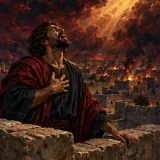
Open with the chapter’s first image
Habakkuk 2:1: “I will stand upon my watch, and set me upon the tower, and will watch to see what he will say unto me, and what I shall answer when I am reproved.”
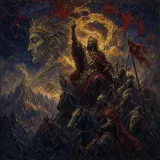
Slow down at the turning point
Habakkuk 2:7: “Shall they not rise up suddenly that shall bite thee, and awake that shall vex thee, and thou shalt be for booties unto them?”
Keep this word trail visible
people, LORD, blood, city, glory, violence
What to explain, in order
Teach the passage in this order. Each step names the verses it rests on, so every point can be shown in the text before it is applied.
Habakkuk 2:1–5
Habakkuk 2:1
The watchman takes his post
Begin with Habakkuk's resolve: "I will stand upon my watch, and set me upon the tower". Explain the picture of a watchman on a city wall, scanning the horizon for a messenger; Ezekiel 3:17 uses the same office for a prophet. Point out what he expects to see: what God "will say unto me". Then note the humility at the end of the verse, ready to answer "when I am reproved". Teach this first because it shows the right posture after a hard question: not walking away, but standing still to listen.
Habakkuk 2:2
Write it plain
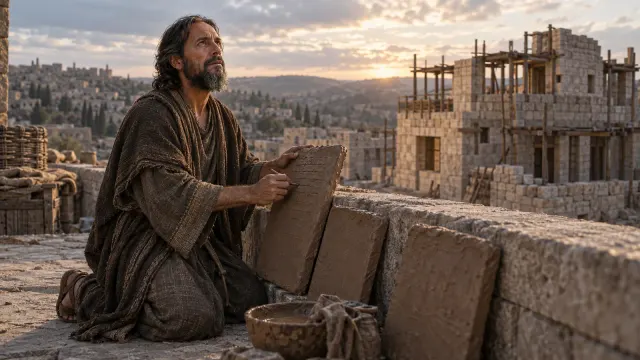
"And the LORD answered me". Pause on that line after the silence of chapter 1. Explain tables as writing tablets of clay or stone, and "that he may run that readeth it" as writing so clear that a reader can take it in at once and run to pass it on. The answer is meant to be public, durable and understood. Teach this before the content of the vision because the command to write tells the group that the answer will take time, and a written word can be checked when it comes to pass.
Habakkuk 2:3
The appointed time
Read the verse twice and let the group find the apparent contradiction: it may tarry, yet it will not tarry. Resolve it with the opening words, "the vision is yet for an appointed time". Delay is how it feels to the one waiting; lateness is impossible by the appointment of God. Explain "shall speak, and not lie" as the promise that the vision will prove true. Mention that Hebrews 10:37 picks up this waiting language. This step comes before 2:4 because the just person's faith is precisely how one lives in the meantime.
Habakkuk 2:4
Two ways to live
Now the centre of the book. The words "his soul which is lifted up is not upright in him" describe the proud man, inflated and crooked inside. The words "but the just shall live by his faith" describe the other way: trust in God that holds steady and keeps a person upright. Explain that the Hebrew word carries both trust and faithfulness, so faith here is a way of life, not a moment. Then show how the New Testament quotes the line in Romans 1:17, Galatians 3:11 and Hebrews 10:38. Teach Habakkuk's own contrast first so the later uses rest on solid ground.
Habakkuk 2:5
The appetite that is never full
Finish with the proud man drawn in detail. He "transgresseth by wine", he is "a proud man" who "neither keepeth at home", restless and grasping. His desire is enlarged "as hell", meaning the grave, and like death he "cannot be satisfied". So he gathers nations and heaps up peoples. Connect this with the net of 1:15-17 and point ahead to 2:6, where those he has gathered will speak against him. End the exposition on the contrast with 2:4: the proud swallow everything and are never full; the just live.
Habakkuk 2:6–20
Habakkuk 2:6-8
The plunderer plundered
Begin by noticing who speaks: "Shall not all these take up a parable against him, and a taunting proverb against him". The nations that were caught in the net now find their voice. The first woe is on "him that increaseth that which is not his" and "ladeth himself with thick clay", which may picture a heap of pledges taken from debtors. Those he exploited will "rise up suddenly" (2:7). Read 2:8 aloud with its refrain about blood and violence. Teach this woe first because it states the principle that runs through all five: what was done will be returned.
Habakkuk 2:9-11
The nest on high
The second woe concerns security bought with others' lives. He sets "his nest on high, that he may be delivered from the power of evil", but he does it "by cutting off many people" (2:10). Point out that in trying to protect his house he has "consulted shame" to it and "sinned against thy soul". Then let the building speak: the stone cries from the wall and the beam answers. Explain this as personification; the house itself becomes the witness against its builder. Teach it next because it moves from what is taken to what is built with it.
Habakkuk 2:12-14
Two kinds of glory
The third woe: "Woe to him that buildeth a town with blood". Then the LORD of hosts gives the verdict on all such work: the people labour "in the very fire" and weary themselves "for very vanity" (2:13). It will all burn. Against that, verse 14 opens the widest view in the book: "the earth shall be filled with the knowledge of the glory of the LORD, as the waters cover the sea". Compare Isaiah 11:9. Stay here a while. Babylon's glory is built on blood and ends in smoke; the LORD's glory fills the whole earth.
Habakkuk 2:15-17
The cup returned
Handle the fourth woe soberly. It condemns making a neighbour drunk "that thou mayest look on their nakedness": deliberate exposure and shame. Prophets elsewhere picture a conquering nation forcing others to drink the cup of humiliation (Jeremiah 25:15-16). The sentence is a mirror: "Thou art filled with shame for glory", and "the cup of the LORD's right hand shall be turned unto thee" (2:16). Verse 17 adds "the violence of Lebanon", the stripping of forests and slaughter of beasts, and repeats the refrain about blood. Do not act out this woe; name it and move on.
Habakkuk 2:18-19
The god with no breath
The fifth woe comes in reverse order, a question first: "What profiteth the graven image". Explain graven and molten as carved and cast. The idol is "a teacher of lies" because it promises what it cannot give, and the maker "trusteth therein", trusting his own hands. Read 2:19 with its picture of a man telling wood to wake up. Then the last line: overlaid with gold and silver, "and there is no breath at all in the midst of it". Link back to 1:16, where the net received incense. The same instinct makes a god of whatever we produce.
Habakkuk 2:20
The living God and a silent earth
End the chapter where it ends. "But the LORD is in his holy temple: let all the earth keep silence before him." After five woes full of noise, taunts, cries from walls, and men shouting at idols, the scene goes still. Explain the contrast: idols are silent and people talk to them; the LORD speaks and the earth falls silent. Teach this last because it is the hinge into chapter 3, where Habakkuk's next words will be a prayer. The silence is not a gag on honest questions; it is awe before the God who has answered.
Where learners get stuck
The misreadings this passage tends to produce, and how to answer each from the text.
Habakkuk 2:1–5
"Write the vision means writing down my goals so God will make them happen."
The vision in 2:2 is the LORD's answer to a prophet, given in reply to his complaint about Babylon, and it concerns judgment on the proud and life for the just. It is God's word, written plainly so that others can carry it. The verse can encourage clear communication of what God has truly said, but it gives no promise that our own plans will come true because we wrote them down.
"If it hasn't happened yet, God's word has failed."
Verse 3 expects exactly this temptation and answers it: "though it tarry, wait for it; because it will surely come". The vision is "for an appointed time", and "at the end it shall speak, and not lie". Waiting is not evidence of failure; it is the condition the promise describes. Hebrews 10:36-37 uses the same language to call believers to endurance. Teach patience without pretending the waiting is easy.
"'The just shall live by his faith' means believing once and then living however I like."
In Habakkuk the line stands against the proud soul that "is not upright in him". Faith keeps a person upright; it is trust that goes on trusting while the vision tarries. Paul quotes it in Romans 1:17 and Galatians 3:11 to show that righteousness comes by faith, and Hebrews 10:38-39 quotes it against those who draw back. Both uses expect a faith that lasts. None of them separates faith from the life it produces.
"Verse 5 is only a warning about drinking."
Wine is part of the portrait, and it is not a small matter, but the subject of the verse is the proud man's appetite. He "enlargeth his desire as hell", "cannot be satisfied", and "gathereth unto him all nations". The wine shows his excess and false confidence; the gathering of nations shows where it leads. Teach the whole verse so learners see the root, which is pride, and not only one of its fruits.
Habakkuk 2:6–20
"The woes are Habakkuk's revenge fantasy against his enemies."
The woes belong to the vision the LORD told Habakkuk to write (2:2-3), and they are spoken by the nations Babylon had wronged (2:6). The judgment comes from "the cup of the LORD's right hand" (2:16), not from Judah's own hand. Scripture keeps vengeance with God, as Romans 12:19 says. Teach the woes as God's justice announced, which frees his people from taking it into their own hands.
"These woes are only about Babylon, so they don't apply to anyone else."
The woes are written in general form: woe to him that increases what is not his, builds by bloodshed, shames his neighbour, trusts what he made. Babylon was the first to hear them, but the practices are found everywhere and in every age. Apply them first to ourselves and our own communities, and do not use them to label present nations as Babylon.
"Verse 14 is a slogan about how successful our ministry will be."
In context, 2:14 answers 2:13. Empires labour "in the very fire" and come to nothing; it is the LORD who will fill the earth with the knowledge of his glory, as surely as water fills the sea. Isaiah 11:9 sets the same promise in the reign of the coming King. Christians rightly see that promise moving forward through the gospel, but it is God's work and God's glory, not a target for our achievements.
"Keeping silence before the LORD means we must never question him."
Habakkuk questioned God openly in 1:2-4 and 1:12-17, and God answered him rather than rebuking him for asking. The silence of 2:20 follows the idol scene: it is the hush of awe before the living God, set against people shouting at dead wood. It is not a tool for leaders to silence reports of injustice. Chapter 3 shows what Habakkuk does with that silence: he prays.
Learning objectives
- Describe Habakkuk's readiness to receive correction.
- Identify whose vision must be written plainly.
- Explain the distinction between apparent delay and the appointed time.
- Contrast the lifted-up soul with the just person.
- Trace the imagery of unsatisfied desire in verse 5.
- Distinguish faithful waiting from announcing a personal timetable.
- Locate the five announcements of woe.
- Explain how the plunderer's gain becomes his vulnerability.
- Interpret the high nest and accusing building materials.
- Distinguish glory built on blood from knowledge of the Lord's glory.
- Identify the abuse condemned in the fourth woe.
- Explain the contrast between breathless idols and the Lord's holy presence.
Teacher preparation
- Read 1:12–17 before 2:1–5; the watch follows a difficult question, not a retreat from thinking.
- Explain 'tables' as writing tablets, not furniture or a modern spreadsheet, in 2:2.
- Gloss 'tarry' as delay and 'hell' in 2:5 as the realm of the dead in its devouring comparison.
- Compare Romans 1:17, Galatians 3:11, and Hebrews 10:37–39 before connecting their use of 2:4 with this passage.
- Prepare two columns for grasping and trusting; do not turn the vision into a guarantee for learners' private ambitions.
- Mark five woes: 2:6, 9, 12, 15, 19; include 2:18 as the fifth introduction.
- Retain 2:6's difficult 'thick clay' wording without building an economic theory upon it.
- Explain 2:11's crying stone and answering beam as personification: the building testifies against its owner.
- Treat 2:15–16's drunken humiliation soberly; avoid reenactment and personal disclosure.
- Read Psalm 115:4–8 for lifeless idols and distinguish the critique of trusted gods from a ban on every artistic object.
Evidence and interpretation checks
Explicit
Read 2:1–3: Habakkuk takes his watch, the Lord answers, and the vision must be written plainly and awaited. Read 2:8, 10–12, 15: the charges concern plunder, destructive acquisition, bloodshed, and a neighbor's deliberate humiliation, not merely unattractive attitudes.
Scripture-supported
Connect 2:3–4 with Hebrews 10:37–39: faithful endurance amid apparent delay belongs to the later biblical use of this passage. Compare 2:8 with 1:9–11: the earlier violence and captivity receive a stated answer in the plunderer's own coming loss.
Strong inference
Infer from 2:4–5 that the proud person's posture produces grasping rather than satisfaction; nations cannot fill the appetite compared with death. Infer from 2:9–11 that the effort to build an unreachable refuge creates evidence against its builder; the materials themselves become imagined witnesses.
Possible or traditional reading
Present the reader running in 2:2 as possibly a messenger carrying the clearly written vision; distinguish this proposal from the explicit requirement of plain communication. Read 2:20 alongside Psalm 11:4 for a possible emphasis on the Lord's heavenly throne; Habakkuk does not describe a particular temple building or ceremony here.
Limit
State that 2:3 supplies no calendar date, 2:1 locates no identifiable tower, and 2:2 does not promise fulfillment of every personally written goal. State that the silence in 2:20 does not cancel the prophet's permitted questions in 1:2–4, or authorize leaders to silence reports of injustice.
Discussion with answer guidance
1. What is Habakkuk prepared to do besides receive an explanation?
What a good answer contains
He expects to have to answer for himself. Verse 2:1 ends "and what I shall answer when I am reproved". Habakkuk climbs to his post ready to hear that his complaint needs correcting, not only to hear that he was right. A good answer notices that humility sits inside his boldness: he has argued with God in 1:12-17 and now waits to be taught. A weak answer pictures him on the tower waiting for God to admit the prophet had a point.
Show teacher guidance
Read 2:1: he also anticipates answering when reproved. His watch includes openness to correction, not merely waiting to be proved right.
2. Whose message belongs on the tablets?
What a good answer contains
The LORD's. The verse begins "And the LORD answered me, and said, Write the vision". Habakkuk did not invent the vision; he is told to record it "plain upon tables", writing tablets, "that he may run that readeth it", so that a reader or a herald can take it in at once and carry it on. A good answer ties the plainness to the source: because God spoke, the message must be kept clear and public. A weak answer treats the tablets as a place for our own plans dressed in God's name.
Show teacher guidance
Use 2:2: the Lord gives the vision and the writing command. The tablets are not a wish list wearing religious language.
3. How can the vision seem to tarry yet not tarry?
What a good answer contains
From the side of the one waiting, it lingers: "though it tarry, wait for it". From the side of the God who appointed it, it is never late: "it will surely come, it will not tarry" (2:3). The same verse says the vision is "for an appointed time" and that "at the end it shall speak, and not lie". A good answer holds both viewpoints and lands on trust in the appointment. A weak answer either sets a date the text never gives or decides that delay proves the word unreliable.
Show teacher guidance
Follow 2:3's appointed time: delay as experienced by the waiting person does not make the promised fulfillment late by God's appointment.
4. What two kinds of person stand opposite each other in verse 4?
What a good answer contains
The proud and the just. "Behold, his soul which is lifted up is not upright in him: but the just shall live by his faith" (2:4). The first is swollen with himself and crooked inside, the portrait of the Chaldean and of anyone who lives like him. The second lives by steady trust in God. A good answer notices that living here means both coming through the judgment and living rightly while waiting. A weak answer turns the contrast into personality types or makes faith a passing feeling.
Show teacher guidance
Identify the lifted-up, inwardly crooked person and the just person living by faith; avoid replacing the contrast with extroverts and introverts.
5. What does the comparison with death explain about the proud man's desire?
What a good answer contains
That his hunger has no floor. He "enlargeth his desire as hell, and is as death, and cannot be satisfied" (2:5); explain hell here as the grave, which never says enough. So he "gathereth unto him all nations, and heapeth unto him all people". A good answer links this to the net emptied again and again in 1:17: conquest feeds the appetite and never fills it. A weak answer admires how much he achieves, missing that the verse is a diagnosis, not a compliment.
Show teacher guidance
Read 2:5: accumulating nations never satisfies him. Correct the assumption that the passage praises ambition because it achieves large results.
6. What should be done while the appointed vision is awaited?
What a good answer contains
Gather the actions from the unit itself. Watch and listen (2:1). Receive God's answer and write it plainly so that others can carry it (2:2). Wait, because the vision has its appointed time and will not lie (2:3). Live by faith, upright rather than puffed up (2:4). A strong answer keeps all four together. A weak answer chooses one, either frantic date setting or doing nothing at all, when the passage asks for watchful, faithful living.
Show teacher guidance
Join 2:1–4: attend, receive, communicate clearly, and live by faith. Do not substitute either frantic prediction or passive moral indifference.
7. What reverses for the one who has spoiled many nations?
What a good answer contains
The taker becomes the taken. "Because thou hast spoiled many nations, all the remnant of the people shall spoil thee" (2:8), and those he wronged will "rise up suddenly" and he will "be for booties unto them" (2:7). The reason is named twice: "because of men's blood, and for the violence of the land". A good answer ties the reversal to bloodshed and violence, which answers the complaint of 1:2-4 and the net of 1:15-17. A weak answer turns the woe into resentment of wealth as such, which the verse never condemns.
Show teacher guidance
Read 2:6–8: those plundered will plunder him. Keep the announced reversal tied to bloodshed and violence rather than envy of wealth itself.
8. Why does the high nest fail to provide safety?
What a good answer contains
Because of how it was built. He "coveteth an evil covetousness to his house, that he may set his nest on high" so as to be safe "from the power of evil" (2:9), but the building rests on "cutting off many people", and so he has "consulted shame to thy house" and "sinned against thy soul" (2:10). Then "the stone shall cry out of the wall, and the beam out of the timber shall answer it" (2:11). A good answer sees that the very materials testify. A weak answer condemns wanting safety at all, which is not the charge.
Show teacher guidance
Use 2:9–11: gain secured by cutting off others brings shame, and even the building's materials testify against the owner.
9. What contrast interrupts the woe against a blood-built city?
What a good answer contains
The LORD's verdict on the empire's labour, and then a vision of the whole earth. Babylon builds "a town with blood" (2:12), but the people "labour in the very fire" and "weary themselves for very vanity" (2:13): all of it will burn. Then, "For the earth shall be filled with the knowledge of the glory of the LORD, as the waters cover the sea" (2:14). A strong answer sets the two glories side by side, one built on blood and doomed, one filling everything. A weak answer reads verse 14 as one empire simply replacing another.
Show teacher guidance
Read 2:12–14: labor for vanity contrasts with knowledge of the Lord's glory, not merely one empire replacing another.
10. What is the purpose of giving the neighbor drink?
What a good answer contains
To shame him. The woe falls on the one "that giveth his neighbour drink" and "makest him drunken also, that thou mayest look on their nakedness" (2:15). The drink is a tool for exposure and humiliation. The verdict mirrors the crime: "drink thou also", and "the cup of the LORD's right hand shall be turned unto thee" (2:16). A good answer names the abuse of someone made vulnerable on purpose. A weak answer turns the verse into a discussion of drinking habits and misses the cruelty it condemns.
Show teacher guidance
Identify the stated aim in 2:15: exposure and humiliation. Name abuse of vulnerability rather than making this merely a discussion of beverage preferences.
11. Why can an expensive idol still teach nothing?
What a good answer contains
Because there is nothing inside it. "What profiteth the graven image", asks 2:18; it is "a teacher of lies", and its maker trusts his own handiwork "to make dumb idols". Verse 19 adds the final detail: "it is laid over with gold and silver, and there is no breath at all in the midst of it". A good answer sees the irony aimed at worship: precious metal on the outside, no life within, and a maker who trusts what he made. A weak answer treats the woe as a ban on all art, or as something only ancient people needed to hear.
Show teacher guidance
Follow 2:18–19: its maker trusts a breathless object. Gold improves the surface, not its ability to answer; keep the irony aimed at false worship.
12. What changes when the passage moves from the idol to the Lord?
What a good answer contains
The direction of speech reverses. Before the idol, people do all the talking: "Woe unto him that saith to the wood, Awake; to the dumb stone, Arise" (2:19). Before the LORD, the earth goes quiet: "But the LORD is in his holy temple: let all the earth keep silence before him" (2:20). The idol is silent and must be spoken to; the LORD is alive and has spoken, so the world falls still. A good answer sees reverent awe. A weak answer uses the verse to silence people's honest questions, though Habakkuk himself was heard.
Show teacher guidance
Compare 2:19–20: humans command the object to wake, but the earth falls silent before the living Lord. Do not confuse reverence with protection for injustice.
Responsible application
Heart and habits
Compare two fictional responses to uncertainty: manipulating an outcome at others' expense and continuing an entrusted responsibility without a guaranteed timetable.
Relationships and community
Rewrite an invented announcement so its actual message is clear; use 2:2 without claiming divine authority for ordinary communications.
A message, not a wish list
Ask a fictional planning committee to distinguish responsible goals from promises God has actually made; let the source of the vision decide the difference.
Audit impressive results
Ask what a fictional monument's materials would testify about wages, treatment, and harm; distinguish magnificent appearance from morally sound achievement.
Session plans
Two timings of the same lesson. The shorter keeps the reading, the central discussion and one response; the longer gives the confusions and the application their own time.
Habakkuk 2:1–5
45 minutes
Up on the wall
Recall the open question of 1:17, then read 2:1. Ask question one.
Write it plain
Read 2:2 and explain tablets and the runner. Take question two and confusion one.
Waiting for the appointed time
Read 2:3 twice. Take question three and work through confusion two.
Two ways to live
Read 2:4-5. Draw two columns, proud and just, and fill them from the verses. Take questions four and five, then confusion three.
Living while waiting
Ask question six. Hand out the sheet, read 2:4 together and pray for faithful patience.
90 minutes
The question left hanging
Read 1:12-17 quickly and ask the group to restate Habakkuk's question in one sentence.
The watchman
Read 2:1 and Ezekiel 3:17. Take question one and talk about what it means to wait expecting to be corrected.
The tablets
Read 2:2. Explain tablets and the runner, take question two and deal with confusion one.
Tarry and not tarry
Read 2:3 and Hebrews 10:36-37. Take question three and confusion two, and let learners name what waiting for God feels like without asking for private details.
The just shall live
Read 2:4 and then Romans 1:17, Galatians 3:11 and Hebrews 10:38-39. Take question four and confusion three, keeping Habakkuk's own contrast in view.
Never full
Read 2:5. Take question five and confusion four, and connect the appetite to the net of 1:15-17.
What to do while waiting
Ask question six, then work the first application in pairs.
Handout and prayer
Read the key verse together, point to the take-home line, and pray for those waiting on God's appointed time.
Habakkuk 2:6–20
45 minutes
Five woes
Mark the five woes on the board: 2:6, 9, 12, 15 and 19. Explain woe as a cry of grief and judgment.
Taken and built
Read 2:6-11. Take questions one and two, letting the wall and beam speak.
Two glories
Read 2:12-14. Ask question three and deal with confusion three.
The cup
Read 2:15-17 soberly. Ask question four without any acting out.
Idol and temple
Read 2:18-20. Ask questions five and six, then confusion four.
Silence and the handout
Touch confusion one briefly. Keep a minute of silence, then read 2:14 together and hand out the sheet.
90 minutes
Who speaks now
Read 2:5-6 and ask who takes up the taunt. Mark the five woes on the board.
The plunderer plundered
Read 2:6-8. Take question one, explain thick clay as a heap of pledges, and draw a line back to 1:15-17.
The nest on high
Read 2:9-11. Take question two and work the first application: what would the walls of a building made by exploitation say.
Two glories
Read 2:12-14 and Isaiah 11:9. Take question three and confusion three.
The cup returned
Read 2:15-17 and Jeremiah 25:15-16. Take question four, keeping the discussion sober.
The god with no breath
Read 2:18-19 and Psalm 115:4-8. Take question five and ask what modern things people trust because they made them.
The living God
Read 2:20. Ask question six, then take confusions one, two and four.
Silence and prayer
Keep two minutes of silence, read the key verse together, give out the handout and close in prayer.
Adapting the lesson
Habakkuk 2:1–5
Children
Build a lookout tower from chairs or blocks and let a child stand up to watch for a messenger. Read 2:1-2 and write a short, clear message on a card so big that someone running past could read it. Talk about waiting for something promised, like a birthday that always comes on its day. Teach the just shall live by his faith as trusting God while we wait, and leave the proud man's wine out.
Youth
Ask how long they will wait for a reply before deciding no one cares. Then read 2:1-3 and look at a God who says wait, it will not be late. Spend time on 2:4 as two ways to live, puffed up or trusting, and let them describe each in modern terms. Take care with goal-setting culture; distinguish what God promised from what we want.
Adults
Give time to 2:4 and its use in Romans, Galatians and Hebrews, and to the meaning of faith as trust that endures. Discuss how adults handle long waiting: illness, prodigal children, injustice not yet righted, without asking anyone to share. Look at 2:5 as a portrait of appetite in public and private life, and let the group test themselves against it honestly.
One to one
Read 2:1-4 together and ask which verse speaks most to where they are. If they are waiting on God for something, spend time on 2:3 and let them say aloud that waiting is not the same as being forgotten. Write 2:4 on a card for them. Ask what living by faith would look like this week in one specific way, and pray that with them.
Habakkuk 2:6–20
Children
Build a tower of blocks and label some blocks with unfair things, like taken toys or broken promises. Then read 2:11 and let the blocks speak: what would they say about how the tower was built. Read 2:14 and pour water into a bowl until it is full, to show how God's glory will fill the earth. Leave out the drunkenness of 2:15 and summarise it as shaming someone on purpose.
Youth
Ask what people build their status on, then read the five woes and let them match each woe to a modern version: gain at others' expense, image built on exploitation, humiliation for entertainment, trust in what we make. Online humiliation fits 2:15 closely; discuss it without naming anyone or showing images. End with 2:20 and practise a minute of real silence.
Adults
Treat each woe on its own: unjust gain and debt, security built on others' loss, glory built on bloodshed, humiliation of the vulnerable, and idolatry. Ask where these show up in economic and institutional life, using invented examples rather than accusations. Spend time on 2:14 as the hope that frames the woes, and on 2:20 as reverence that does not silence the wronged.
One to one
Read 2:6-20 together and ask which woe they find hardest to read. If they have been hurt by someone powerful, let them hear that God sees and will answer, and that the wronged are given a voice in 2:6. If the passage convicts them instead, read 2:20 together and give room for quiet confession. Close with 2:14 as a promise to hold.
Song and video learning lab
A song or video may interpret, compress, or dramatize the text. Its value becomes clearer when its choices are compared with Scripture.
- Before the media: the exact passage and its central movement.
- During the media: the words, people, events, and emotions the artist emphasizes.
- After the media: what it clarifies, what it leaves out, and what belongs back in the biblical text.
Handout
One page for learners to take home. The print button prints this section alone.
Habakkuk 2:1–5
The passage in brief
After his questions, Habakkuk climbs to his lookout post to wait for God's answer, ready even to be corrected. The LORD tells him to write the vision plainly on tablets, because it will come at its appointed time; even if it seems slow, it will not be late. Then comes the heart of the answer: the proud person is not upright inside, but the righteous person will live by faith. The proud conqueror is like death itself, always hungry and never satisfied.
A verse to keep
Behold, his soul which is lifted up is not upright in him: but the just shall live by his faith.
Habakkuk 2:4 · King James Version
Questions to take home
What does Habakkuk do in 2:1 after asking his hard questions?
Why does God tell him to write the vision plainly in 2:2-3?
What two kinds of people are set side by side in 2:4?
This week
Choose one thing you are waiting on God for, and this week practise living faithfully while you wait instead of forcing an outcome.
Habakkuk 2:6–20
The passage in brief
In Habakkuk 2:6-20 the nations Babylon conquered speak five woes against it. Woe to the one who takes what is not his, for he will be plundered. Woe to the one who builds a safe house by destroying others, for the very walls will cry out. Woe to the one who builds a city with blood, for it will burn, while the earth will be filled with the knowledge of the LORD's glory. Woe to the one who shames his neighbour, and to the one who trusts a lifeless idol. But the LORD is in his holy temple, and all the earth must be silent before him.
A verse to keep
For the earth shall be filled with the knowledge of the glory of the LORD, as the waters cover the sea.
Habakkuk 2:14 · King James Version
Questions to take home
What happens to the one who has plundered many nations in 2:8?
What do the stone and the beam do in 2:11, and why?
How is the idol of 2:19 different from the LORD of 2:20?
This week
Look honestly at one thing you trust for security this week, and ask whether it was built in a way the walls would testify against.
Music and video connected to the passage
Related media appears when its Scripture reference overlaps this study. Music and video can illuminate a theme while the biblical text remains the foundation.