The big picture
Psalm 86 is intensely personal without becoming narrow. The speaker repeatedly calls himself poor, needy, servant, and one who trusts God, grounding every appeal in dependence rather than self-sufficiency. Yet the prayer quickly widens until all nations are envisioned coming to worship the God who made them. At the center stands one of the psalm’s most revealing petitions: “unite my heart to fear thy name.” The request for mercy is therefore matched by a request for inner coherence and instruction. Praise “with all my heart” answers the desire for an undivided heart. When proud and violent opponents appear, the speaker does not answer them merely with his own strength, but with God’s compassion, graciousness, patience, mercy, and truth. The final request is for help visible enough that enemies can see whose servant has been upheld.
Central truth
Psalm 86 turns need into worship without leaving trouble behind, asking the God who alone is God to unite David’s heart around his name.


The study notes have a page of their own
The movement by movement analysis, the words to trace, the verse by verse notes and where readers differ are written for someone studying alone. They are on the Deep Personal Reflections page for this chapter. This page is the lesson.
A chapter-specific teaching brief
These anchors come from this chapter itself. They help a teacher use the Level 1 overview, the Level 2 study, and the Scripture text as one lesson.
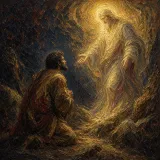
Open with the chapter’s first image
Psalms 86:1: “Bow down thine ear, O LORD, hear me: for I am poor and needy.”
Slow down at the turning point
Psalms 86:15: “But thou, O Lord, art a God full of compassion, and gracious, longsuffering, and plenteous in mercy and truth.”
Keep this word trail visible
LORD, soul, mercy, name, servant, call
What to explain, in order
Teach the passage in this order. Each step names the verses it rests on, so every point can be shown in the text before it is applied.
Psalm 86:1-7
Reasons to be heard
Read 86:1-7 and mark every for: for I am poor and needy, for I am holy, for I cry daily, for unto thee do I lift up my soul, for thou art good. Explain holy here as devoted, belonging to God, not sinless. Then the centre: God is "good, and ready to forgive; and plenteous in mercy". Teach this first so the class learns that prayer may give reasons, and that the strongest reason is always God's character.
Psalm 86:8-10
None like thee
Read 86:8-10. "Among the gods there is none like unto thee", "All nations whom thou hast made shall come and worship before thee", "thou art God alone". Explain that the psalm is not saying other gods are real rivals; it says no one compares, and ends with "God alone". Teach this step to widen the room's view: the God who hears one needy servant is the maker of every nation, and their worship is coming.
Psalm 86:11-13
Unite my heart
Read verse 11 slowly: "Teach me thy way, O LORD; I will walk in thy truth: unite my heart to fear thy name." Explain a divided heart with a simple example of split loyalties. Then 86:12-13: praise with all my heart, because God's mercy is great and has "delivered my soul from the lowest hell", the depths of death. Teach this as the centre of the psalm: the answer to trouble includes being made wholehearted.
Psalm 86:14-15
Two portraits
Read 86:14-15 side by side. The proud and violent have "not set thee before them"; the Lord is "full of compassion, and gracious, longsuffering, and plenteous in mercy and truth". Read Exodus 34:6 and show that David is praying God's own self-description back to him. Teach this step so the class learns to answer fear of people with knowledge of God, and sees that verse 15 is one of the Bible's great summaries of his character.
Psalm 86:16-17
A token for good
Read 86:16-17. "O turn unto me", "give thy strength unto thy servant", "save the son of thine handmaid", and "Shew me a token for good". Explain the son of a handmaid as a servant born into the household, belonging to God from birth. Teach this last and keep to what the text says: David asks for a visible sign of God's favour so that his enemies are ashamed, and he ends confident that the LORD has helped and comforted him.
Where learners get stuck
The misreadings this passage tends to produce, and how to answer each from the text.
"When David says 'I am holy' he is claiming to be sinless."
The same psalm appeals to a God who is "ready to forgive" (86:5) and plenteous in mercy (86:15), which a sinless man would not need. Holy here means set apart for God, devoted to him, as the next line explains: "save thy servant that trusteth in thee" (86:2). David is claiming to belong to God, not to be perfect.
"Giving God reasons to answer is trying to manipulate him."
David's reasons are his need and God's own character: "I am poor and needy" (86:1) and "thou, Lord, art good, and ready to forgive" (86:5). He is not offering a deal but standing on what God has said about himself (86:15, Exodus 34:6). Moses prayed the same way in Numbers 14:17-19. Reasoned prayer is trust, not manipulation.
"Verse 8 means the Bible believes other gods really exist and compete with the LORD."
Verse 8 says "there is none like unto thee", and verse 10 finishes the thought: "thou art God alone". The psalm speaks the language of its world, where nations had many gods, in order to say that none of them compares. 1 Corinthians 8:4-6 says the same: there is none other God but one.
"An undivided heart is something I have to produce by willpower."
David asks God to do it: "unite my heart to fear thy name" (86:11). He commits himself, "I will walk in thy truth", but he knows his heart needs God's work to be whole. Ezekiel 11:19 promises that God will give his people one heart. Wholeheartedness is something to pray for as well as pursue.
Learning objectives
- Trace the prayer from need to worship and back to danger.
- Explain how God’s character supports David’s petitions.
- Interpret “unite my heart” in verse 11.
- Contrast violent men with the God of verse 15.
- Show why all nations appear in this personal prayer.
- Explain the purpose of the token requested in verse 17.
Teacher preparation
- Read Psalm 86 twice and mark every direct request to the Lord.
- Circle the reasons David gives for expecting God to hear him.
- Explain “holy” in verse 2 as devoted to God, not sinless perfection.
- Compare verse 15 with Exodus 34:6 before class.
- Mark verse 11 as the hinge from rescue to an undivided heart.
Evidence and interpretation checks
Explicit
Verses 1–7 explicitly present David as needy, trusting, persistent in prayer, and dependent on God’s mercy.
Scripture-supported
Verses 8–10 support God’s uniqueness: no rival works compare, and all nations will worship him.
Strong inference
Verse 11 strongly implies divided allegiance is a problem because David asks God to unite his heart.
Possible or traditional reading
Some connect “lowest hell” in verse 13 to a particular event, but the psalm does not identify one.
Limit
Psalm 86 does not promise immediate removal of enemies; it asks for mercy, strength, help, and comfort.
Discussion with answer guidance
1. Why does David give reasons for hearing him in verses 1–7?
What a good answer contains
Because prayer can rest on reasons, and the reasons are about his need and God's character. "Bow down thine ear, O LORD, hear me: for I am poor and needy" (86:1). "save thy servant that trusteth in thee" (86:2). "I cry unto thee daily" (86:3). And the deepest reason: "For thou, Lord, art good, and ready to forgive; and plenteous in mercy unto all them that call upon thee" (86:5). A good answer notices the many uses of for, and that the strongest ground is not David's goodness but God's. A weak answer treats the reasons as bargaining.
Show teacher guidance
Keep answers textual: he is needy, trusts God, cries daily, and knows the Lord as good and merciful.
2. What changes in verses 8–10?
What a good answer contains
The view lifts from David's trouble to God's greatness over all. "Among the gods there is none like unto thee, O Lord; neither are there any works like unto thy works. All nations whom thou hast made shall come and worship before thee, O Lord; and shall glorify thy name. For thou art great, and doest wondrous things: thou art God alone" (86:8-10). A good answer sees that the person praying in need is praying to the only God, who made every nation. His problem is placed inside a much larger picture of worship.
Show teacher guidance
The horizon widens from one servant’s trouble to the incomparable God whom all nations will worship.
3. What does verse 11 ask God to do inside David?
What a good answer contains
To teach him, and to make his heart whole. "Teach me thy way, O LORD; I will walk in thy truth: unite my heart to fear thy name" (86:11). A divided heart wants God and something else; a united heart is gathered around one loyalty. A good answer notes the order: learn God's way, walk in his truth, and ask him to hold the heart together in reverent fear. James 1:8 warns against the double minded man. A weak answer treats the verse as a request for knowledge only.
Show teacher guidance
Hold the group on “unite my heart,” linking inward unity with truth and fear of God’s name.
4. How do verses 14 and 15 oppose two kinds of character?
What a good answer contains
Proud violent men set against the merciful God. "O God, the proud are risen against me, and the assemblies of violent men have sought after my soul; and have not set thee before them" (86:14). "But thou, O Lord, art a God full of compassion, and gracious, longsuffering, and plenteous in mercy and truth" (86:15). The enemies leave God out of their thinking; God is described in the words he used of himself to Moses (Exodus 34:6). A good answer sees that David answers violence by remembering who God is.
Show teacher guidance
The violent men ignore God; the Lord is compassionate, gracious, patient, merciful, and true.
5. Why is verse 9 not a distraction from David’s crisis?
What a good answer contains
Because it shows how big the God is to whom David prays. "All nations whom thou hast made shall come and worship before thee, O Lord; and shall glorify thy name" (86:9). The God who will receive the worship of every nation can surely hear one poor servant. A good answer sees that worship and need are not two separate topics: the hope of world-wide worship steadies personal prayer. It connects the verse with Revelation 15:4, where all nations come and worship. A weak answer skips verse 9 as off the subject.
Show teacher guidance
It places his need under the rule of the God who made every nation and will receive their worship.
6. What would the token in verse 17 accomplish?
What a good answer contains
It would make God's help visible. "Shew me a token for good; that they which hate me may see it, and be ashamed: because thou, LORD, hast holpen me, and comforted me" (86:17). David does not say what the sign should be, and we should not invent one. The purpose is clear: the enemies who ignored God (86:14) should see that he has helped and comforted his servant. A good answer notes that the last words are past tense: hast holpen, comforted. Even while asking, David speaks as one already helped.
Show teacher guidance
Do not invent its form. The verse gives its purpose: enemies see that the Lord helped and comforted David.
Responsible application
Ask for a united heart
Use verse 11 to distinguish competing loyalties from the single direction David asks God to create.
Let character answer hostility
Set verses 14–15 together and name which qualities should govern a community facing proud opposition.
Give prayer reasons
Turn one generic petition into a text-shaped prayer using God’s character from verses 5, 10, or 15.
Session plans
Two timings of the same lesson. The shorter keeps the reading, the central discussion and one response; the longer gives the confusions and the application their own time.
45 minutes
Poor and needy
Read 86:1-7. Ask question one and take confusions one and two.
None like thee
Read 86:8-10. Ask questions two and five and take confusion three.
Unite my heart
Read 86:11-13. Ask question three and take confusion four.
Two portraits
Read 86:14-15 and Exodus 34:6. Ask question four.
A token for good
Read 86:16-17 and ask question six.
Handout and prayer
Hand out the sheet and pray verse 11 together.
90 minutes
Divided loyalties
Ask the group what pulls a heart in two directions. Take a few answers.
For I am poor and needy
Read 86:1-7 and Numbers 14:17-19. Ask question one and take confusions one and two.
All nations shall come
Read 86:8-10, Revelation 15:4 and 1 Corinthians 8:4-6. Ask questions two and five and take confusion three.
Teach me thy way
Read 86:11-13, James 1:5-8 and Ezekiel 11:19. Ask question three and take confusion four.
Full of compassion
Read 86:14-15 and Exodus 34:5-7. Ask question four.
The son of thine handmaid
Read 86:16-17 and ask question six. Explain the phrase and keep to what the text says about the sign.
Write a prayer
Ask each person to write a short prayer that gives God reasons from his own character, following 86:1-7 and 86:15.
Handout and prayer
Read the key verse together, point to the take-home line, and close by praying verse 11.
Adapting the lesson
Children
Take two paper arrows pointing in different directions and tape them into one as you read verse 11. Explain that sometimes our hearts want God and also want other things, and David asked God to make his heart one, loving God most. Teach verse 15 in simple words: God is kind, gentle, patient and full of love.
Youth
Circle every reason David gives for praying with confidence in 86:1-7. Ask whether their prayers ever give reasons, and what reasons from God's character they could use. Spend time on verse 11 and talk about what pulls their hearts in two directions. Pray for undivided hearts together.
Adults
Adults can study the reasons in 86:1-7, the echo of Exodus 34:6 in verse 15 and the request for a united heart in verse 11. Discuss how a settled view of God's character steadies prayer under pressure. Talk about the connection between teachability, "Teach me thy way", and wholeheartedness.
One to one
If the person feels poor and needy before God, read 86:1-5 and assure them that need is a reason to pray, and that God is ready to forgive. If they feel torn between God and something else, pray verse 11 with them and ask God to unite their heart. Read verse 15 aloud and let it sink in.
Song and video learning lab
A song or video may interpret, compress, or dramatize the text. Its value becomes clearer when its choices are compared with Scripture.
- Before the media: the exact passage and its central movement.
- During the media: the words, people, events, and emotions the artist emphasizes.
- After the media: what it clarifies, what it leaves out, and what belongs back in the biblical text.
Handout
One page for learners to take home. The print button prints this section alone.
Psalms 86:1–17
The passage in brief
In Psalm 86 David prays as someone poor and needy. He asks God to hear him, because God is good, ready to forgive and full of mercy to all who call on him. He remembers that there is no God like the LORD, and that all nations will come and worship him. He asks God to teach him his way and to unite his heart to fear his name. When proud and violent men attack, he remembers that God is full of compassion, patient and faithful.
A verse to keep
Teach me thy way, O LORD; I will walk in thy truth: unite my heart to fear thy name.
Psalms 86:11 · King James Version
Questions to take home
What reasons does David give in 86:1-5 for God to hear him?
How is God described in 86:15?
What pulls your heart in two directions, and how would you pray verse 11 about it?
This week
Pray verse 11 each morning this week before you begin your day.
Music and video connected to the passage
Related media appears when its Scripture reference overlaps this study. Music and video can illuminate a theme while the biblical text remains the foundation.