The big picture
Romans 8 answers the captivity of chapter 7 with "no condemnation" and the life-giving rule of the Spirit, but it does not pretend mortality or suffering has vanished. God's Son enters the sphere sin dominated, sin is condemned in the flesh, and the Spirit's indwelling points toward the future resurrection of mortal bodies. Adoption brings the cry "Abba, Father," yet heirs with Christ also suffer with Christ. The frame then widens until creation itself is groaning in labor, believers groan while awaiting bodily redemption, and the Spirit intercedes in groanings beyond speech. God's purpose is defined as conformity to the Son and moves toward glory. The chapter's final courtroom and battlefield language returns to assurance: charges cannot overturn God's justification, and tribulation cannot cut believers loose from Christ's love. Victory does not mean the sword never falls. It means the sword cannot accomplish separation.
Central truth
Romans 8 answers Romans 7 with life in the Spirit, adoption, suffering held inside hope, divine intercession and purpose, and the assurance that nothing can separate God's children from his love in Christ.


The study notes have a page of their own
The movement by movement analysis, the words to trace, the verse by verse notes and where readers differ are written for someone studying alone. They are on the Deep Personal Reflections page for this chapter. This page is the lesson.
A chapter-specific teaching brief
These anchors come from this chapter itself. They help a teacher use the Level 1 overview, the Level 2 study, and the Scripture text as one lesson.
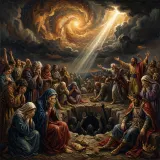
Open with the chapter’s first image
Romans 8:1: “There is therefore now no condemnation to them which are in Christ Jesus, who walk not after the flesh, but after the Spirit.”
Slow down at the turning point
Romans 8:22: “For we know that the whole creation groaneth and travaileth in pain together until now.”
Keep this word trail visible
Spirit, flesh, Christ, hope, creature, Jesus
What to explain, in order
Teach the passage in this order. Each step names the verses it rests on, so every point can be shown in the text before it is applied.
Romans 8:1-4
No condemnation
Read 7:24-25 and then 8:1 without a break, so that the class hears the answer to the cry. Explain “condemnation” as a judicial sentence and stress “now”. Then show the reason in verses 2 to 4. The law was weak, not because it was bad but because it worked on sinful flesh. God sent his own Son, who shared our human nature without sin, and condemned sin in his flesh. The result is that the law's righteous requirement is fulfilled in those who walk by the Spirit. Teach this first: the whole chapter rests on this verdict.
Romans 8:5-13
The mind of the flesh and the mind of the Spirit
Draw two columns from verses 5 to 8: what each mind is set on, where it leads, how it stands toward God. Explain that “flesh” here means human life turned away from God, not the physical body, for verse 11 says God will quicken our mortal bodies. Show that verses 9 to 11 speak of the Spirit of God, the Spirit of Christ and Christ in you in one breath. Then explain “mortify” in verse 13 as put to death. The believer's effort is real, but it is done through the Spirit.
Romans 8:14-17
Adoption: Abba, Father
Explain adoption as a legal act that gave a son full rights in a new family and a new inheritance. Then let the warmth of “Abba” come through, an Aramaic word for father used by Jesus himself in Gethsemane (Mark 14:36). Read Galatians 4:4-7 alongside, where the same cry appears. Contrast “the spirit of bondage again to fear” with the Spirit of adoption. Close on verse 17 and note that heirs share both the sufferings and the glory; this prepares for verse 18.
Romans 8:18-25
Creation groaning, hope waiting
Explain that “the creature” in these verses means the whole created order. Read Genesis 3:17-19 so the class hears why creation was “made subject to vanity”, that is futility. Paul pictures creation leaning forward for the revealing of God's children and groaning as a woman in labour, not in death. Then believers groan too, though they have “the firstfruits of the Spirit”, the first part of a coming harvest. Explain that hope by definition waits for what is not yet seen, and that patience is how hope behaves.
Romans 8:26-30
The Spirit's prayer and God's purpose
Begin with weakness: we do not know how to pray as we ought, and the Spirit intercedes. This comforts those who cannot find words. Then read verse 28 with verse 29 every time. The good God works toward is conformity to the image of his Son. Show the chain of verse 30 and its past tenses, even glorified, as though already done. Name that traditions understand foreknowledge and predestination differently, and that Paul gives these verses as assurance to sufferers. Every reading must keep verse 29's goal in view.
Romans 8:31-39
Nothing shall separate us
Treat these verses as a courtroom with no accuser left standing. Read each question and let the class supply the answer from the verses: God is for us, God gave his Son, God justifies, Christ died, rose, and intercedes. Then read the list of dangers in verse 35 and Psalm 44:22 in verse 36, and stress that Paul does not pretend they are absent. End on verses 38 and 39 read slowly, perhaps by the whole group together. This is the summit of the letter's first eight chapters.
Where learners get stuck
The misreadings this passage tends to produce, and how to answer each from the text.
“No condemnation means sin no longer matters for a Christian.”
The chapter that begins with no condemnation goes on to say that the righteousness of the law is fulfilled in those “who walk not after the flesh, but after the Spirit” (8:4), and that “if ye live after the flesh, ye shall die” (8:13). God “condemned sin in the flesh” (8:3); he did not approve of it. Freedom from condemnation is freedom to live by the Spirit, not freedom to ignore sin.
“The flesh means my body, so my body is bad.”
Paul says God “shall also quicken your mortal bodies by his Spirit” (8:11), and believers wait for “the redemption of our body” (8:23). The body is not the enemy. “Flesh” in 8:5-8 describes a mind set against God, “enmity against God” and not subject to his law. The deeds of the body to be put to death (8:13) are sinful acts, not the body itself, which Romans 12:1 calls us to present to God.
“Romans 8:28 means everything that happens to me will turn out pleasant.”
Verse 28 does not say all things are good; it says God works all things together for good for those who love him. Verse 29 defines that good as being “conformed to the image of his Son”. The same chapter speaks of “the sufferings of this present time” (8:18) and lists tribulation, persecution, famine and sword (8:35). The promise is that nothing is wasted in God's purpose, not that nothing will hurt.
“Romans 8:29-30 settles every question about predestination, so the rest is detail.”
Christians have long read “foreknow” and “predestinate” in different ways, and this lesson should not pretend that discussion is closed. What the text does say is plain: God's purpose runs from before to glory without a break, its goal is likeness to his Son so that he might be “the firstborn among many brethren” (8:29), and Paul gives it to comfort sufferers (8:28, 31). Teach the assurance the passage was written to give.
Learning objectives
- Explain no condemnation through Romans 8:1–4.
- Contrast the mind of flesh and Spirit in verses 5 to 13.
- Describe adoption through the signs named in verses 14 to 17.
- Trace creation, believers, and the Spirit groaning in verses 18 to 27.
- Define the 'good' of verse 28 through verses 29 and 30.
- Follow verses 31 to 39 from accusation to inseparable love.
Teacher preparation
- Read Romans 7:24–25 immediately before Romans 8:1.
- Mark Spirit, flesh, life, death, children, suffering, glory, groaning, hope, purpose, and love.
- Prepare three rows for creation, believers, and the Spirit in verses 22 to 26.
- Explain KJV 'mortify' as put to death and 'firstfruits' as an initial harvest portion.
- Protect time for verses 28 to 39, which lose force when quoted as detached fragments.
Evidence and interpretation checks
Explicit
Romans 8:1 announces no condemnation; verse 15 names adoption; verses 38–39 deny that creation can separate believers from God's love.
Scripture-supported
Romans 8:36 quotes Psalm 44:22, showing that suffering does not by itself disprove God's faithfulness.
Strong inference
Creation, believers, and the Spirit all groan, strongly presenting hope as patient expectation within real brokenness.
Possible or traditional reading
Romans 8:29–30 is debated regarding foreknowledge and predestination. Keep verse 29's stated goal visible: conformity to God's Son.
Limit
Romans 8 promises no exemption from suffering, weakness, persecution, danger, or bodily death. Its assurance is stronger precisely because those threats remain present inside the chapter.
Discussion with answer guidance
1. What does Romans 8:1 answer, and why is there no condemnation?
What a good answer contains
It answers the cry of 7:24, “who shall deliver me”. “There is therefore now no condemnation to them which are in Christ Jesus” (8:1), because “the law of the Spirit of life in Christ Jesus hath made me free from the law of sin and death” (8:2). God did “what the law could not do”: “sending his own Son in the likeness of sinful flesh, and for sin, condemned sin in the flesh” (8:3), so that “the righteousness of the law might be fulfilled in us” (8:4). A strong answer notices who is condemned: sin, not the believer.
Show teacher guidance
Read 7:24–25, then trace Spirit, flesh, God's Son, condemned sin, and righteous requirement.
2. What contrasts appear between flesh and Spirit in verses 5 to 13?
What a good answer contains
Paul sets two minds side by side: “to be carnally minded is death; but to be spiritually minded is life and peace” (8:6), and “the carnal mind is enmity against God” (8:7). Then he speaks to the readers: “ye are not in the flesh, but in the Spirit, if so be that the Spirit of God dwell in you” (8:9). Finally, “if ye through the Spirit do mortify the deeds of the body, ye shall live” (8:13). A good answer defines flesh as life turned away from God, not the body itself, since verse 11 promises the body life.
Show teacher guidance
List mind, death or life, hostility or peace, indwelling, and mortifying bodily deeds by the Spirit.
3. What makes adoption substantial in verses 14 to 17?
What a good answer contains
Adoption is a real status with real evidence: “as many as are led by the Spirit of God, they are the sons of God” (8:14). They have “received the Spirit of adoption, whereby we cry, Abba, Father” (8:15), and “The Spirit itself beareth witness with our spirit, that we are the children of God” (8:16). They are “heirs of God, and joint-heirs with Christ” (8:17). A good answer keeps the last clause, “if so be that we suffer with him”: the heirs share the Son's sufferings before his glory.
Show teacher guidance
Use leading, Abba, witness, children, heirs, suffering with Christ, and future glory.
4. Who groans in verses 18 to 27, and what is awaited?
What a good answer contains
Three groan. Paul says “the whole creation groaneth and travaileth in pain together until now” (8:22). We ourselves “groan within ourselves, waiting for the adoption, to wit, the redemption of our body” (8:23). And “the Spirit itself maketh intercession for us with groanings which cannot be uttered” (8:26). What is awaited is the revealing of God's children, creation's release from “the bondage of corruption” (8:21), and the body's redemption. A good answer notices the picture of childbirth: these are pains that lead to new life, and hope waits for what is not yet seen (8:24-25).
Show teacher guidance
Creation, believers, and the Spirit groan; hope waits for unseen redemption and the Spirit helps weakness.
5. What defines the 'good' in Romans 8:28–30?
What a good answer contains
Verse 28 promises that “all things work together for good to them that love God, to them who are the called according to his purpose”. Verse 29 defines the good: “to be conformed to the image of his Son”. A good answer reads the two verses together. The good is likeness to Christ, not comfort or success, and the chain of verse 30 carries God's purpose from foreknowing to glory. A weak answer quotes verse 28 on its own and promises that every event will turn out pleasantly.
Show teacher guidance
Do not isolate verse 28; verse 29 names conformity to the image of God's Son.
6. How do verses 31 to 39 answer accusation and suffering?
What a good answer contains
Paul answers with questions. “If God be for us, who can be against us?” (8:31). God “spared not his own Son” (8:32). Against accusation, “It is God that justifieth” and “It is Christ that died, yea rather, that is risen again” (8:33-34). Against suffering, “Who shall separate us from the love of Christ?” (8:35), with Psalm 44:22 quoted in verse 36. A good answer notices that Paul lists the dangers rather than denying them, and says “we are more than conquerors through him that loved us” (8:37).
Show teacher guidance
Trace God's gift of the Son, justification, Christ's intercession, Psalm 44, and the final separation list.
Responsible application
Do not use hope as anesthesia
Keep verses 18–30 together so Romans 8:28 includes groaning, weakness, waiting, intercession, and conformity to Christ.
Make adoption concrete
Build adoption from verses 14–17 rather than from sentiment: Spirit, Abba, witness, inheritance, suffering, and glory.
Answer accusation with the chain
Use verses 31–39 in sequence from God's gift of the Son through justification to inseparable love.
Session plans
Two timings of the same lesson. The shorter keeps the reading, the central discussion and one response; the longer gives the confusions and the application their own time.
45 minutes
No condemnation
Read 7:24-8:4 as one passage. Take question one and confusion one.
Two minds
Read 8:5-13 and draw the two columns. Take question two and confusion two.
Abba, Father
Read 8:14-17. Take question three.
Three groanings
Read 8:18-27 with three rows on the board. Take question four.
The good God works
Read 8:28-30 together. Take question five and confusions three and four.
Nothing shall separate
Read 8:31-39, the last two verses together. Take question six, read the key verse, and pray.
90 minutes
The cry and the answer
Read 7:21-8:2 without a break and ask what has changed between 7:24 and 8:1.
What the law could not do
Read 8:1-4. Take question one and confusion one.
Minding the Spirit
Read 8:5-13. Take question two and confusion two, and explain mortify.
Abba
Read Galatians 4:4-7 and Mark 14:36, then Romans 8:14-17. Take question three.
Creation groans
Read Genesis 3:17-19, then Romans 8:18-25. Take the first two rows of question four.
Groanings which cannot be uttered
Read 8:26-27 and finish question four. Invite anyone who finds prayer hard to hear this as for them.
For good
Read 8:28-30. Take question five and confusions three and four.
Who shall separate us
Read Psalm 44:17-22, then Romans 8:31-39. Take question six, read the key verse together, and pray.
Adapting the lesson
Children
Tell them Abba is a word a child uses for a loving dad, and that God's Spirit helps his children call God Father (8:15). Then play a list game from 8:38-39: name scary things, the dark, being lost, a bad dream, and after each ask together whether it can separate us from God's love. The answer every time is no. Leave predestination and the groaning of creation for older learners.
Youth
Start with identity: adopted, children, heirs, joint heirs with Christ (8:15-17). Then take 8:28, which they may have seen on posters, and read it with 8:29 so they know what good means. Be honest that the list in verse 35 includes real hurt, and that Paul does not promise escape. Ask what they would add to the list in verses 38 and 39.
Adults
Give time to the structure of the chapter, from no condemnation to no separation. Present the main readings of 8:29-30 fairly and keep their pastoral purpose in view. Discuss how creation's groaning shapes the way believers look at a broken world, without turning it into a policy debate. Let 8:26 speak to those who have stopped praying because they do not know what to say.
One to one
Ask which of the questions in 8:31-35 they most need answered. If their conscience accuses them, read 8:1 and 8:33-34 slowly. If they are grieving or afraid, read 8:26 and 8:35-39 and do not rush. If they cannot pray, tell them the Spirit intercedes with groanings, and sit in silence with them before praying aloud.
Song and video learning lab
A song or video may interpret, compress, or dramatize the text. Its value becomes clearer when its choices are compared with Scripture.
- Before the media: the exact passage and its central movement.
- During the media: the words, people, events, and emotions the artist emphasizes.
- After the media: what it clarifies, what it leaves out, and what belongs back in the biblical text.
Handout
One page for learners to take home. The print button prints this section alone.
Romans 8
The passage in brief
For those who belong to Christ Jesus there is now no condemnation. God sent his Son to deal with sin, and his Spirit lives in believers, giving new life and leading them as God's children, who can call him Father. Creation and believers groan as they wait for the coming glory, and the Spirit prays for us when we do not know how. God works in all things for the good of those who love him, making them like his Son, and nothing in all creation can separate us from his love in Christ Jesus.
A verse to keep
For I am persuaded, that neither death, nor life, nor angels, nor principalities, nor powers, nor things present, nor things to come, Nor height, nor depth, nor any other creature, shall be able to separate us from the love of God, which is in Christ Jesus our Lord.
Romans 8:38-39 · King James Version
Questions to take home
Why is there no condemnation for those in Christ Jesus, according to 8:1-4?
What does the Spirit help us to cry in 8:15?
What good is God working toward in 8:28-29?
This week
Write Romans 8:38-39 on a card, add the thing you fear most to Paul's list, and read it each day.
Music and video connected to the passage
Related media appears when its Scripture reference overlaps this study. Music and video can illuminate a theme while the biblical text remains the foundation.