

Lyrics · 1 Chronicles
The Crown of Rabbah
1 Chronicles 18:1-20:8
Lyrics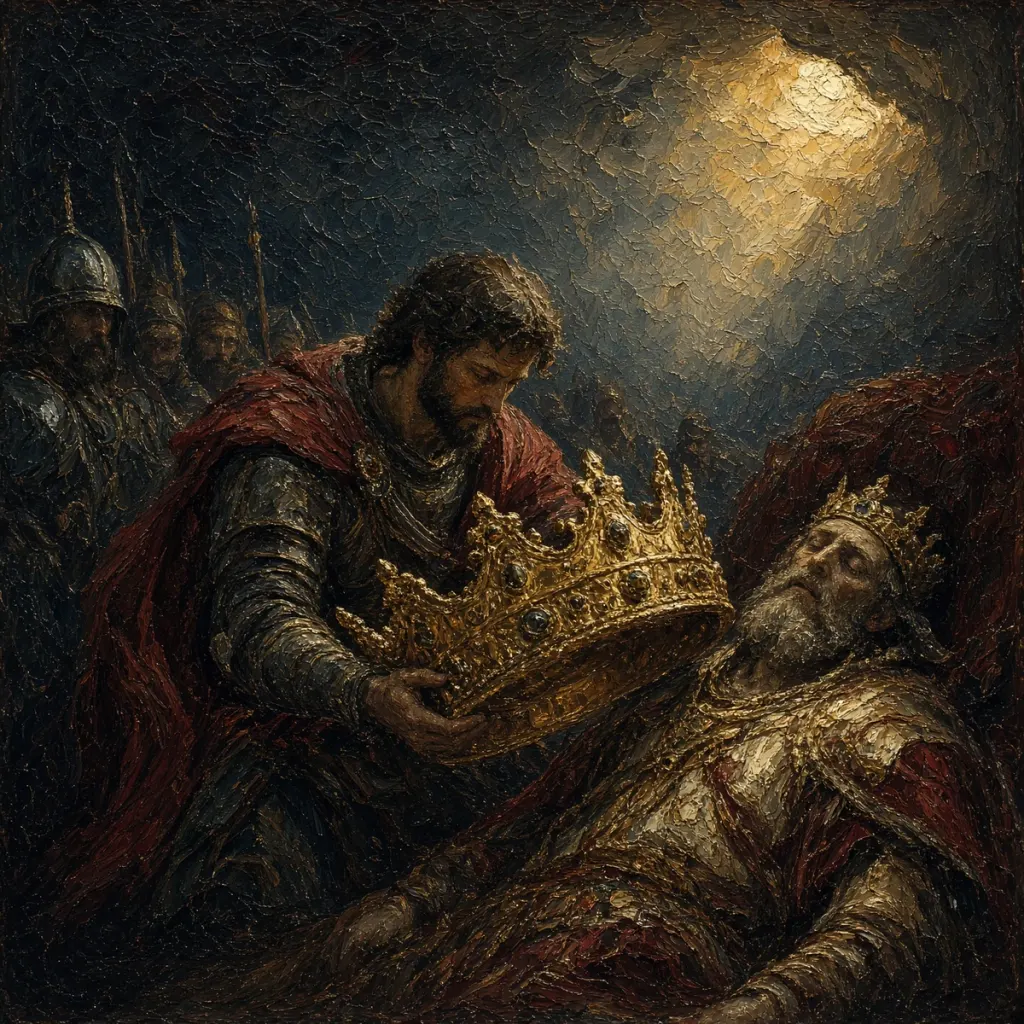
Playing next
About this song
About this song
This song belongs to the 1 Chronicles collection. One recording is available to play here, with the complete lyrics below.
- Bible book
- 1 Chronicles
- Collection
- 1 Chronicles
- Musical styles
- Uncategorized
About the passage
1 Chronicles 18: Victories become resources for an unbuilt house
1 Chronicles 18 moves rapidly across campaigns, tributaries, garrisons, captured metals, diplomatic gifts, and officers of state, but one line keeps returning: “the LORD preserved David whithersoever he went.” The book’s theological explanation never erases the human machinery of the victories. Armies fight, horses are disabled, rulers become servants, and tribute follows defeat. At the same time, the spoils do not remain trophies with no future. Gold, silver, and especially bronze are dedicated, and the book reaches ahead to tell the reader that Solomon will use some of it for temple furnishings. Then the chapter changes scale again. Successful kingship is not finished when enemies are beaten. Judgment, justice, military command, priestly service, recordkeeping, scribal work, guards, and household offices still require named people. Conquest produces a realm that must be governed.
Study 1 Chronicles 18 in depth1 Chronicles 19: A suspicion turns sympathy into war
A condolence mission opens 1 Chronicles 19, and suspicion turns it into an international war. The account is careful about the first cause: David says he intends kindness toward Hanun, while Hanun’s advisers allege espionage and overthrow. Their charge is recorded as suspicion, not revealed as David’s hidden motive. The humiliation of the envoys then creates the hostility the advisers thought they were detecting. Ammon spends heavily on foreign military support, Joab and Abishai coordinate against two fronts, and Syrian reinforcements widen the conflict again until David takes command. The ending is political as much as military. Hadarezer’s servants make peace, the Syrians refuse further help to Ammon, and Hanun is left more isolated than before. The chapter’s irony is severe: fear of an enemy helps manufacture the very crisis it feared.
Study 1 Chronicles 19 in depth1 Chronicles 20: Rabbah falls, and the warriors remain in view
1 Chronicles 20 finishes the Ammonite conflict and then turns to a cluster of victories over formidable Philistine opponents. The chapter is compact, but its selectivity matters. The opening recalls the season in which 2 Samuel gives a much fuller account involving David, Bathsheba, and Uriah; Chronicles instead moves directly to Rabbah’s capture. That difference is a choice of material, not a denial that the other events occurred. The account also preserves a difficult description of the defeated population whose wording can be read as brutal violence or, in a disputed alternative, forced labor. Then the focus shifts from David to his servants. Sibbechai, Elhanan, and Jonathan each receive named victories over men associated with Gath. The famous king remains in view, but the actual fighters are not swallowed by his reputation.
Study 1 Chronicles 20 in depth