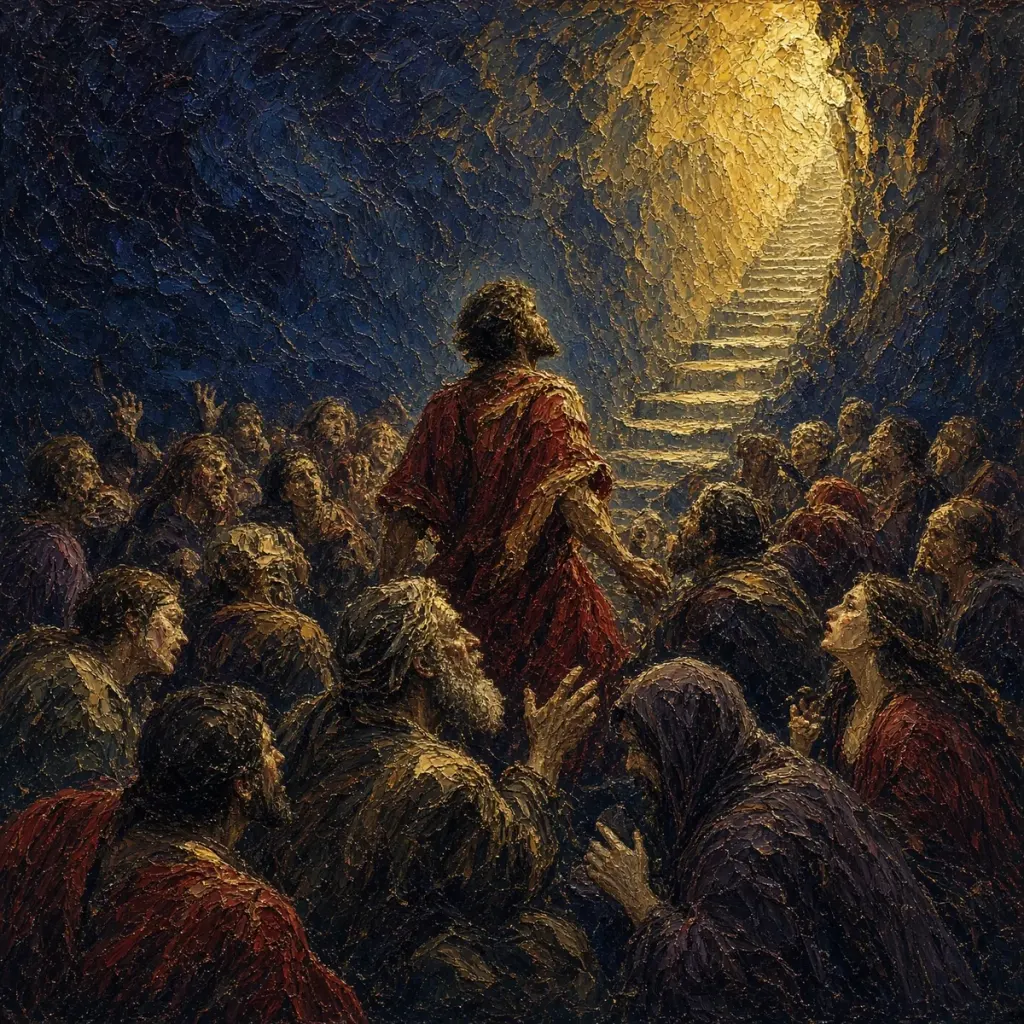
[Intro]
Eleven days from Horeb.
It should have been eleven days.
[Verse 1]
We crossed that wide and dreadful sand
and came up to the hill.
You asked to send some men ahead.
I said, all right. I will.
They came back up from Eshcol
and set the fruit down, sweet and good.
Then someone said the walls go up
as high as heaven would,
and someone said, we've seen the Anakim,
and something in you sat right down
and wouldn't stand for Him.
[Pre-Chorus]
I said, the LORD goes on ahead.
He'll fight for you out there.
You've seen Him carry you through the waste
the way a father bears
a tired boy. But in your tents
you muttered, and I heard.
He hates us. He brought us here to die.
You wouldn't take His word.
[Chorus]
You would not go up.
The fruit was sweet, the road was plain.
You would not go up.
You sat in your tents and blamed His name.
And the hill stood there all morning,
and it never asked again.
[Verse 2]
And He heard you, and He swore it.
Not one of you would see
the good land, only Caleb.
Then His anger turned on me.
And the little ones you said
would be taken for a prey,
they're the ones who'll walk in there.
You'll walk away.
[Chorus]
You would not go up.
The fruit was sweet, the road was plain.
You would not go up.
You sat in your tents and blamed His name.
And the hill stood there all morning,
and it never asked again.
[Bridge]
Next morning you took up swords
and said, we've sinned, we'll climb.
He said, don't. I'm not with you.
You went up anyway that time.
The Amorites came down on you
the way the bees come out,
and chased you back through Seir
to Hormah in a rout.
You sat and wept before the LORD.
He wouldn't hear the sound.
[Final Chorus]
You would not go up.
The fruit was sweet, the road was plain.
You would not go up.
You sat in your tents and blamed His name.
And the hill stood there all morning,
and it never asked again.
You wouldn't go when He said go.
You went when He said no.
[Outro]
We stayed at Kadesh many days.
Eleven days from Horeb.
Deuteronomy 1: Eleven days away, forty years later
Deuteronomy opens with a geography lesson that is really a reckoning with delay. Horeb and Kadesh-barnea were only eleven days apart, yet Moses speaks in the fortieth year. He remembers the growth that required delegated judges, the scouts who returned with fruit and called the land good, and the people who transformed deliverance from Egypt into an accusation that God hated them. The judgment falls with a bitter reversal: the children feared as prey will inherit what their parents refused. Israel then tries to obey the old command after a new prohibition has been given, marching without the LORD's presence and being routed. The chapter makes distance moral as well as geographical. Israel reached the border quickly; unbelief kept it there.