New · FreePlay The Witnesses The in-depth puzzle battle quest through Bible history

People of the Bible

Caleb

Waited forty-five years to collect on one sentence, and asked for the hardest piece of ground on the map.

Caleb is one of twelve men sent to look at the land, and one of two who came back saying the same land could be taken. He is the one who quiets the crowd and says let us go up at once, and for that he spends the next four decades walking in circles with a generation that decided otherwise. He is eighty-five when the allotment comes. Instead of choosing something level and already cleared, he asks for the hill country where the giants and the fortified cities are, and says he is as strong now as the day Moses sent him.

Where he appearsNumbers 13 to 14 · Numbers 32 · Deuteronomy 1 · Joshua 14 to 15

Scroll down to the account
Caleb

The movements, in the order the text gives them.

The Account of Caleb

  1. 01

    Numbers 13:25-33

    We are well able

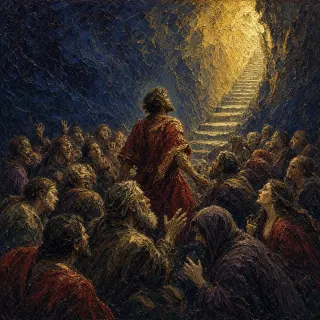
    The report is forty days old and the cluster of grapes takes two men to carry. Caleb quiets the people and says go up at once. The other ten answer that the land eats its inhabitants.

    The grapes have not changed while the report is getting worse. The spies begin by confirming the land's abundance and displaying its fruit. Then comes nevertheless. Strong inhabitants and fortified cities become reasons not to enter, and by the end the land that feeds people so richly has become a land that eateth up the inhabitants thereof. The evidence is still sitting in front of the congregation. Its interpretation is changing under their feet.

    Caleb does not deny the walls or pretend that the sons of Anak are small. He disputes the conclusion drawn from them. The commission began with God's description of Canaan as the land which I give unto the children of Israel. Caleb's insistence on taking possession belongs inside that sentence, not inside a theory that confidence makes armies unnecessary.

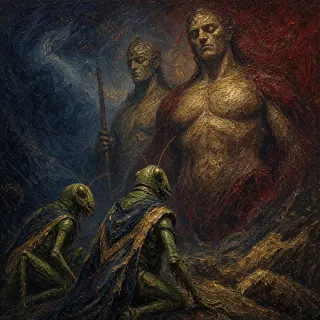
    The final comparison is especially revealing: the other spies describe themselves as grasshoppers in their own sight before claiming the same judgment for the inhabitants. Caleb has inspected the same country without accepting that measurement of Israel. Twelve men went out to examine the land. The report also exposes the men.

    Verse by verse

    1. 13:25

      The reconnaissance lasts forty days. Numbers 14:34 explicitly connects those days with the forty-year wilderness judgment.

    2. 13:28

      The sons of Anak are not Caleb's discovery to dismiss: Numbers 13:22 has already located them at Hebron. His disagreement concerns Israel's response to them.

    3. 13:30

      Caleb speaks alone here, but Joshua joins him openly in Numbers 14:6-9. Silence within this moment does not put Joshua among the ten dissenting spies.

    4. 13:33

      Both the grasshopper comparison and the claim about the inhabitants' opinion belong to the spies' speech. The passage provides no separate quotation from an inhabitant confirming that comparison.

    Numbers 13:25-33

    King James Version · 9 verses

    13:25And they returned from searching of the land after forty days.

    13:26And they went and came to Moses, and to Aaron, and to all the congregation of the children of Israel, unto the wilderness of Paran, to Kadesh; and brought back word unto them, and unto all the congregation, and shewed them the fruit of the land.

    13:27And they told him, and said, We came unto the land whither thou sentest us, and surely it floweth with milk and honey; and this is the fruit of it.

    13:28Nevertheless the people be strong that dwell in the land, and the cities are walled, and very great: and moreover we saw the children of Anak there.

    13:29The Amalekites dwell in the land of the south: and the Hittites, and the Jebusites, and the Amorites, dwell in the mountains: and the Canaanites dwell by the sea, and by the coast of Jordan.

    13:30And Caleb stilled the people before Moses, and said, Let us go up at once, and possess it; for we are well able to overcome it.

    13:31But the men that went up with him said, We be not able to go up against the people; for they are stronger than we.

    13:32And they brought up an evil report of the land which they had searched unto the children of Israel, saying, The land, through which we have gone to search it, is a land that eateth up the inhabitants thereof; and all the people that we saw in it are men of a great stature.

    13:33And there we saw the giants, the sons of Anak, which come of the giants: and we were in our own sight as grasshoppers, and so we were in their sight.

  2. 02

    Numbers 14:20-24

    Another spirit

    The sentence falls: nobody over twenty enters. Caleb is named as the exception, for a reason the text gives plainly, that he followed fully.

    I have pardoned is followed by they shall not see the land. The two statements are not an accidental collision. Moses has pleaded against the destruction of the people, and that destruction is withheld; the generation's refusal still has a consequence. Pardon keeps the nation from being wiped out at once. It does not turn refusal into entrance.

    Against that collective judgment comes a name: my servant Caleb. This is not Caleb awarding himself a distinction after losing an argument. God identifies him, and another spirit is immediately joined to followed me fully. The difference is not a taste for danger or a sunnier disposition. It is the allegiance that his earlier speech expressed when the congregation wanted a different direction.

    The promise also reaches beyond his own survival. His seed shall possess it. The land he entered as an investigator will become an inheritance, not merely a destination he is allowed to glimpse. Caleb receives a future for his family in the middle of a sentence shutting a generation out. The distinction is personal, and the ground is real.

    Verse by verse

    1. 14:20

      According to thy word answers Moses' intercession in 14:13-19. The pardon concerns the threatened destruction of the people, not a cancellation of every announced consequence.

    2. 14:22

      These ten times is a forceful count of repeated testing. The verse does not supply a numbered list, and proposed lists of ten episodes differ.

    3. 14:24

      The Hebrew expression for followed me fully uses a verb meaning fill or fulfill with after me. It describes complete allegiance, not a new rank in Israel's administration.

    4. 14:24

      Joshua is also explicitly exempted in Numbers 14:30. Hebrews 3:16-19 later discusses the wilderness generation's unbelief without naming Caleb individually.

    Numbers 14:20-24

    King James Version · 5 verses

    14:20And the LORD said, I have pardoned according to thy word:

    14:21But as truly as I live, all the earth shall be filled with the glory of the LORD.

    14:22Because all those men which have seen my glory, and my miracles, which I did in Egypt and in the wilderness, and have tempted me now these ten times, and have not hearkened to my voice;

    14:23Surely they shall not see the land which I sware unto their fathers, neither shall any of them that provoked me see it:

    14:24But my servant Caleb, because he had another spirit with him, and hath followed me fully, him will I bring into the land whereinto he went; and his seed shall possess it.

    Numbers 14:20-24: Another spirit
  3. 03

    Deuteronomy 1:34-36

    The one exception, repeated

    Forty years later Moses retells it to the children of the people who refused, and names Caleb again. The land he walked on will be his and his children’s.

    The land is still called good. The sentence of exclusion does not revise God's description of the gift; it judges the generation that refused it. Then one man's footsteps become the language of an inheritance. Caleb shall receive the land that he hath trodden upon. What had been the route of a reconnaissance mission is now attached to a promise for him and his children.

    The Book of Deuteronomy is revisiting the event, not announcing a second spying expedition. That makes the repeated commendation matter. Wholly followed has survived the years between the refusal and this address. The rejected report has not become less true because the congregation rejected it.

    The surrounding verses prevent an easy exaggeration. Joshua is also promised entrance in verse 38, and the children follow in verse 39. Caleb is singled out here, not declared the only human being who will cross the Jordan. More sharply still, Moses records his own exclusion immediately after Caleb's promise. The man delivering the speech names a destination that Caleb will enter and he will not.

    Verse by verse

    1. 1:34

      The LORD heard answers the people's recorded words. Deuteronomy 1:27-28 preserves their accusations and their description of the frightening inhabitants.

    2. 1:35

      The generation's exclusion does not cancel the oath to the fathers. The continuation in 1:39 explicitly gives the land to their children.

    3. 1:36

      The promise includes Caleb's children. First Chronicles 4:15 later names three sons of Caleb the son of Jephunneh: Iru, Elah, and Naam.

    4. 1:36

      The singled-out exception here is followed by Joshua's promised entrance in 1:38. Numbers 32:12 likewise names Caleb and Joshua together as those who wholly followed the LORD.

    Deuteronomy 1:34-36

    King James Version · 3 verses

    1:34And the LORD heard the voice of your words, and was wroth, and sware, saying,

    1:35Surely there shall not one of these men of this evil generation see that good land, which I sware to give unto your fathers,

    1:36Save Caleb the son of Jephunneh; he shall see it, and to him will I give the land that he hath trodden upon, and to his children, because he hath wholly followed the LORD.

    Deuteronomy 1:34-36: The one exception, repeated
  4. 04

    Joshua 14:6-15

    Give me this mountain

    At eighty-five he comes to Joshua with the promise and asks for the highlands with the Anakim in them. He drives them out, and the town that had been called the city of Arba becomes Hebron.

    Eighty-five, and he is asking for fortified cities. Caleb mentions his strength, but the striking part is what he wants to do with it. This mountain contains the Anakim and the great fenced cities that once helped frighten a nation away. He has not waited forty-five years to request easier ground.

    His appeal to Joshua is unusually well witnessed. Both men were there when the land was inspected, and Caleb begins with what Joshua already knows God said. The claim does not rest on an old man's private recollection alone. Three times the passage returns to wholly following the LORD: Caleb's own account, Moses' remembered oath, and the Book of Joshua's explanation of the inheritance. The commendation has become the stated reason for a place on the map.

    Yet his confidence is not detached from dependence. If so be the LORD will be with me comes after the declaration of undiminished strength. Eighty-five years of survival are not presented as sufficient military equipment. The request joins a named promise to named resistance. Joshua blesses him, and the promise receives its place-name: Hebron.

    Verse by verse

    1. 14:6

      Caleb is called a Kenezite here and in Numbers 32:12, while Numbers 13:6 explicitly places him in Judah. The precise ancestral implications of the designation remain debated.

    2. 14:7-10

      Caleb was forty at the reconnaissance and is eighty-five here. The forty-five years cover the interval between those events, not forty-five years spent entirely in the wilderness.

    3. 14:12

      Fenced means fortified, not merely surrounded by an agricultural fence. The LORD's presence, rather than Caleb's age or strength by itself, is the stated condition of success.

    4. 14:13

      Joshua 15:13-19 records Caleb's expulsion of Anak's three sons and his daughter Achsah's request for springs. The inheritance has both a military and a household dimension.

    5. 14:15

      Rest from war describes the state reached in this account. It does not mean every remaining local struggle has disappeared; Joshua 15:13-19 records further action in Caleb's territory.

    Joshua 14:6-15

    King James Version · 10 verses

    14:6Then the children of Judah came unto Joshua in Gilgal: and Caleb the son of Jephunneh the Kenezite said unto him, Thou knowest the thing that the LORD said unto Moses the man of God concerning me and thee in Kadesh-barnea.

    14:7Forty years old was I when Moses the servant of the LORD sent me from Kadesh-barnea to espy out the land; and I brought him word again as it was in mine heart.

    14:8Nevertheless my brethren that went up with me made the heart of the people melt: but I wholly followed the LORD my God.

    14:9And Moses sware on that day, saying, Surely the land whereon thy feet have trodden shall be thine inheritance, and thy children’s for ever, because thou hast wholly followed the LORD my God.

    14:10And now, behold, the LORD hath kept me alive, as he said, these forty and five years, even since the LORD spake this word unto Moses, while the children of Israel wandered in the wilderness: and now, lo, I am this day fourscore and five years old.

    14:11As yet I am as strong this day as I was in the day that Moses sent me: as my strength was then, even so is my strength now, for war, both to go out, and to come in.

    14:12Now therefore give me this mountain, whereof the LORD spake in that day; for thou heardest in that day how the Anakims were there, and that the cities were great and fenced: if so be the LORD will be with me, then I shall be able to drive them out, as the LORD said.

    14:13And Joshua blessed him, and gave unto Caleb the son of Jephunneh Hebron for an inheritance.

    14:14Hebron therefore became the inheritance of Caleb the son of Jephunneh the Kenezite unto this day, because that he wholly followed the LORD God of Israel.

    14:15And the name of Hebron before was Kirjath-arba; which Arba was a great man among the Anakims. And the land had rest from war.


Why it matters

Caleb is the answer the spy account needed. Ten reports were accurate about the walls and wrong about what the walls meant, and Scripture keeps saying that Caleb had another spirit and followed fully. He is not an Israelite by descent, he is called a Kenizzite, which makes the one man who fully believed the promise about the land an outsider by blood. Hebron becomes his, and it is where Abraham and Sarah are buried.

3 songs

The music

Every song in the catalogue whose passage falls inside these chapters.

  1. Numbers 13-14

    Giants in the Land

  2. Numbers 13:1-14:45

    We Were as Grasshoppers

  3. Deuteronomy 1:1-46

    You Would Not Go Up

Nearby

All the people

Report an error on this page