


Lyrics · Deuteronomy
No Prophet Like Moses (Official)
Deuteronomy 33:1-34:12
Lyrics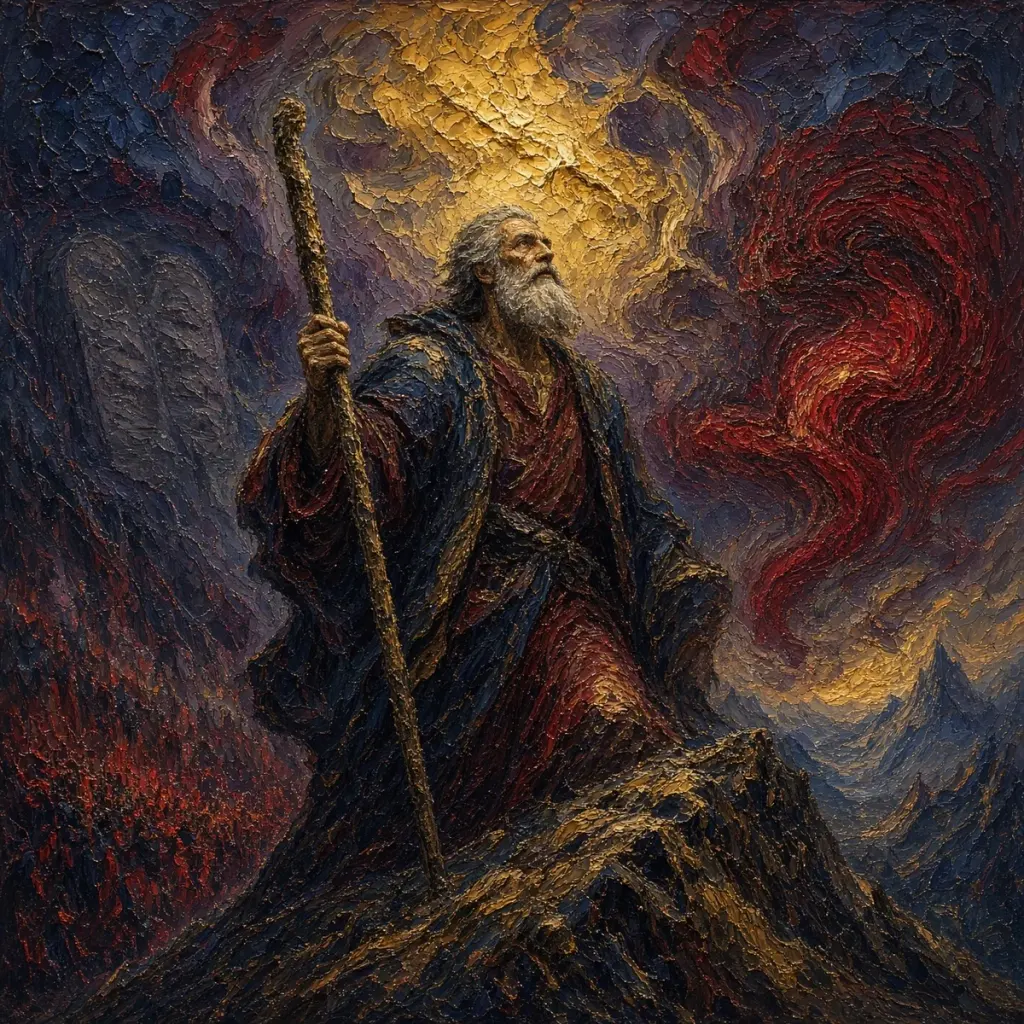
Playing next
About this song
About this song
This song belongs to the Deuteronomy collection. One recording is available to play here, with the complete lyrics below.
- Bible book
- Deuteronomy
- Collection
- Deuteronomy
- Musical styles
- Alternative Rock
Named in this songMosesJericho
About the passage
Deuteronomy 33: Moses blesses the people he will not lead across
Deuteronomy 33 follows the severe witness of the Song of Moses with blessing, not because the indictment has been withdrawn, but because Moses' final work includes speaking over the future of the people he will not lead across Jordan. The chapter moves from the LORD's radiant coming and the law as an inheritance into distinct tribal words about survival, help, priestly service, security, fruitfulness, strength, movement, dwelling, and abundance. Some blessings are expansive and some are only a line or two, and several compressed expressions resist confident reconstruction. The poetry is comfortable leaving some things dense. What holds the chapter together is not equal treatment of every tribe but the God who surrounds them all. By the end, the imagery moves from heaven to underneath: the God of Jeshurun rides the sky to help, yet “underneath are the everlasting arms.” Israel's happiness is finally grounded not in tribal strength by itself, but in being a people saved, sheltered, and sustained by the LORD.
Study Deuteronomy 33 in depthDeuteronomy 34: The land is shown, the servant is buried, and Israel must go on
Deuteronomy 34 closes Moses' life with a mixture of fulfillment, boundary, grief, and continuation. From Nebo he sees the land promised to Abraham, Isaac, and Jacob, but sight does not become entry. The ancestral oath remains certain even as Moses' own commission ends outside Canaan. His death is described “according to the word of the LORD,” his grave remains unknown, and the account immediately refuses to explain him as a man simply worn out by old age: his eye was not dim and his natural force had not abated. Israel mourns for thirty days, and then the days of mourning end because the people still have somewhere to go. Joshua stands ready with the spirit of wisdom and receives their obedience. Yet succession does not flatten distinction. The final assessment says no prophet had arisen in Israel like Moses, known by the LORD “face to face.” His grave cannot be located, but his public work before Egypt and Israel remains the book's closing memory.
Study Deuteronomy 34 in depth