

Lyrics · Exodus
Bricks Without Straw
Exodus 4:18-6:30
Lyrics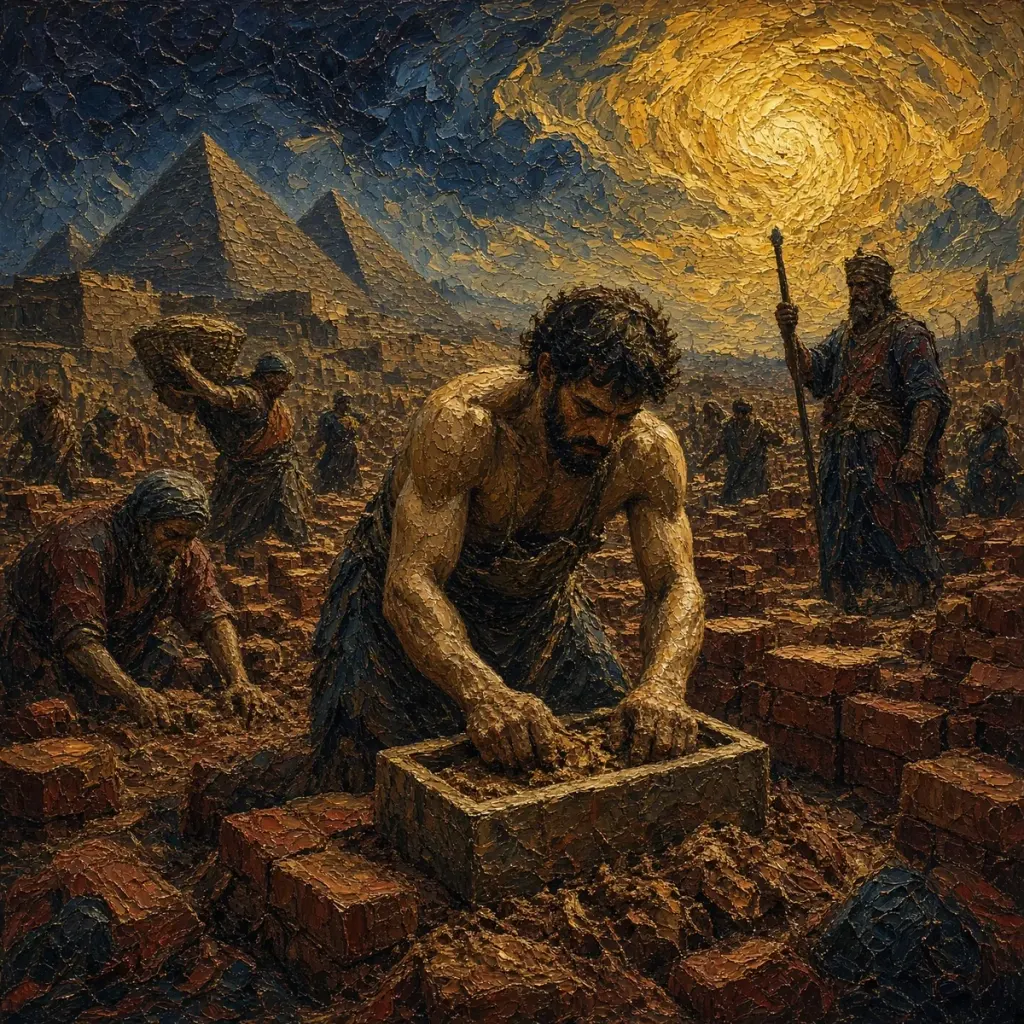
Playing next
About this song
About this song
This song belongs to the Exodus collection. One recording is available to play here, with the complete lyrics below.
- Bible book
- Exodus
- Collection
- Exodus
- Musical styles
- Electronic
Named in this songMosesAaronPharaoh
About the passage
Exodus 4: The reluctant messenger and the dangerous journey home
Moses keeps finding reasons the commission may fail, and Exodus keeps answering them without pretending the task is comfortable. Signs address his prediction that Israel will not believe. God's promised presence with his mouth answers his concern about speech. When Moses finally asks for someone else to be sent, the exchange turns sharper, yet Aaron is provided as spokesman without removing Moses from responsibility. The journey back to Egypt then becomes unexpectedly dangerous. A brief, difficult encounter involving circumcision and threatened death is resolved by Zipporah's action, but the chapter refuses to explain every pronoun and motive. At the mountain Aaron meets Moses, the brothers gather Israel's elders, and the audience Moses expected to lose does the opposite: the people believe that the LORD has seen their affliction, and they bow in worship.
Study Exodus 4 in depthExodus 5: The first demand makes the bondage worse
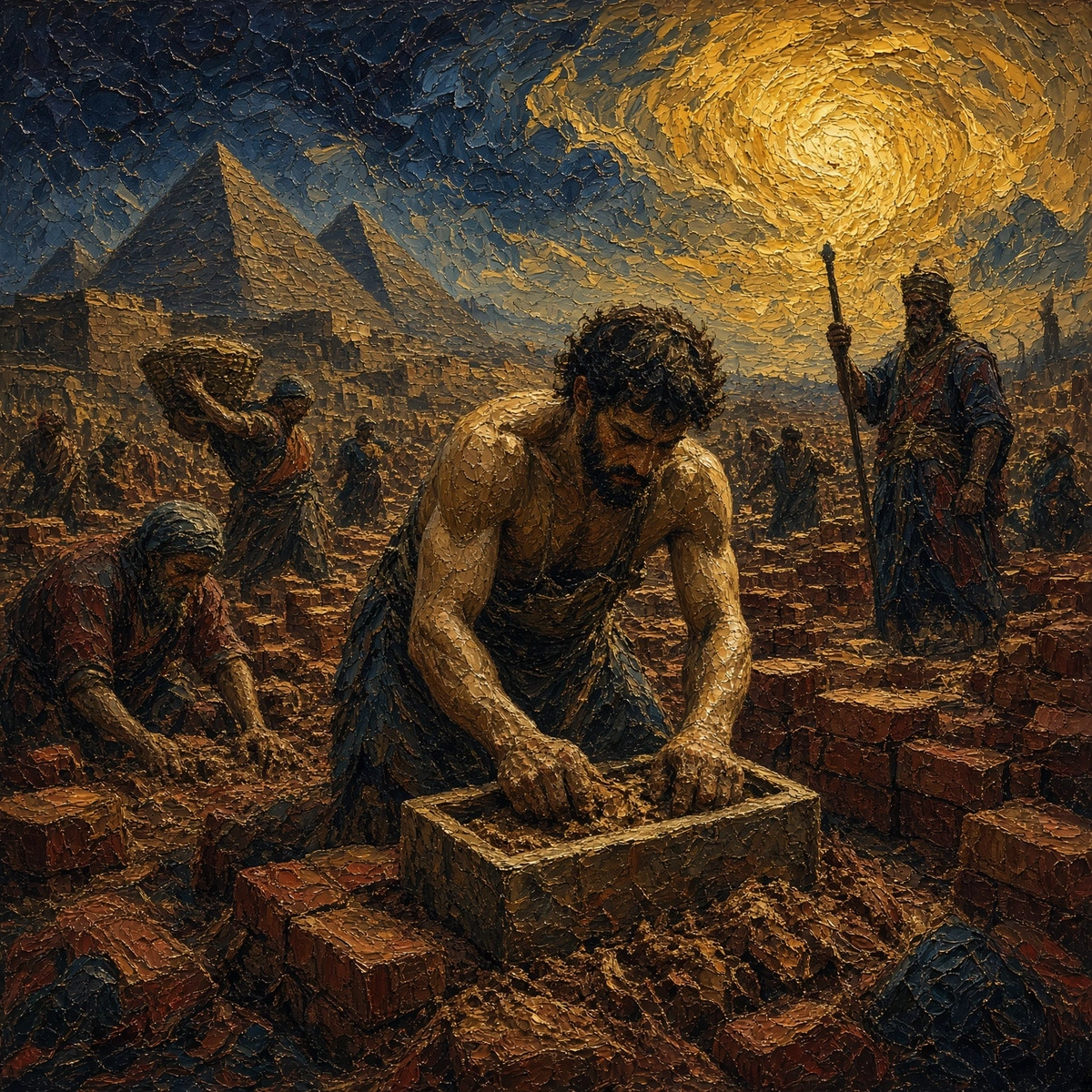
The first audience with Pharaoh makes almost everything visibly worse. Moses and Aaron bring the LORD's demand for Israel to hold a feast in the wilderness, and Pharaoh answers by denying the LORD's authority and reading worship as idleness. His countermeasure is exact and cruel: the brick quota stays, but the workers must now gather their own straw. Israelite officers are beaten for failing under conditions deliberately designed to make the quota harder to meet. When they appeal to Pharaoh, they discover that no lower official has distorted the policy. The king himself repeats it. They turn on Moses and Aaron, and Moses in turn carries the contradiction back to the LORD. Exodus lets the chapter end with his blunt complaint that since the commission began, Pharaoh has harmed the people and no deliverance has yet appeared.
Study Exodus 5 in depthExodus 6: The promise is repeated to people too crushed to hear
God answers Moses' complaint by returning to identity, covenant, and promises rather than by pretending the new suffering is insignificant. Israel will be brought out, redeemed, taken as God's people, and brought into the promised land. The people, however, are too crushed by anguish and cruel bondage to listen, and Exodus explicitly names those conditions before Moses turns their response into another objection about Pharaoh. The chapter then pauses for a genealogy, moving through Reuben and Simeon before narrowing to Levi and the household of Moses and Aaron. That interruption grounds the messengers in a real family and introduces relatives who will matter later. When the dialogue resumes, nothing about Moses' insecurity has magically vanished. The same man with "uncircumcised lips" still faces the same king, but now the covenant, the promise, and the identity of the messengers have been firmly restated.
Study Exodus 6 in depth