
Lyrics · Exodus
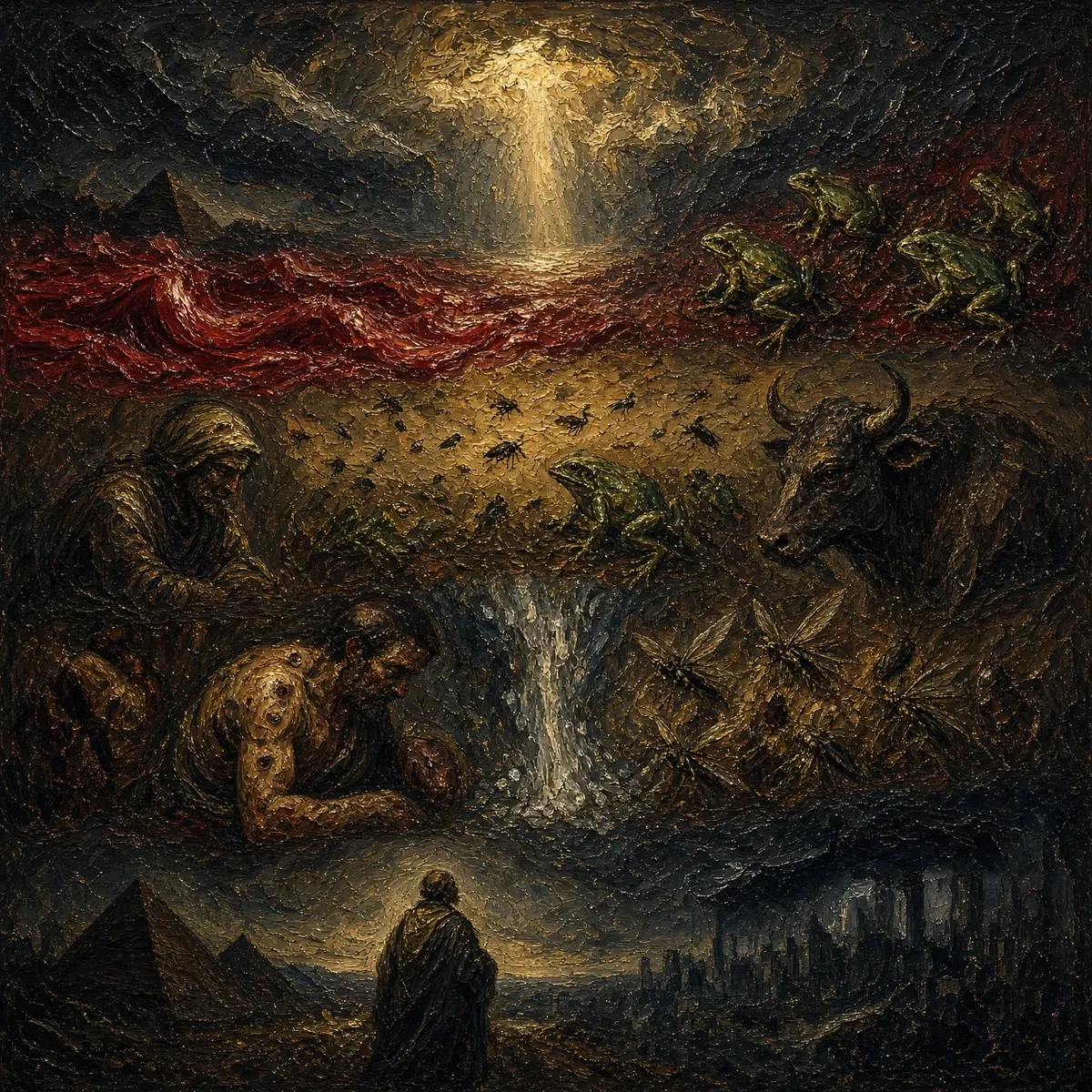
Signs Upon Egypt
Exodus 7:14-10:29
Lyrics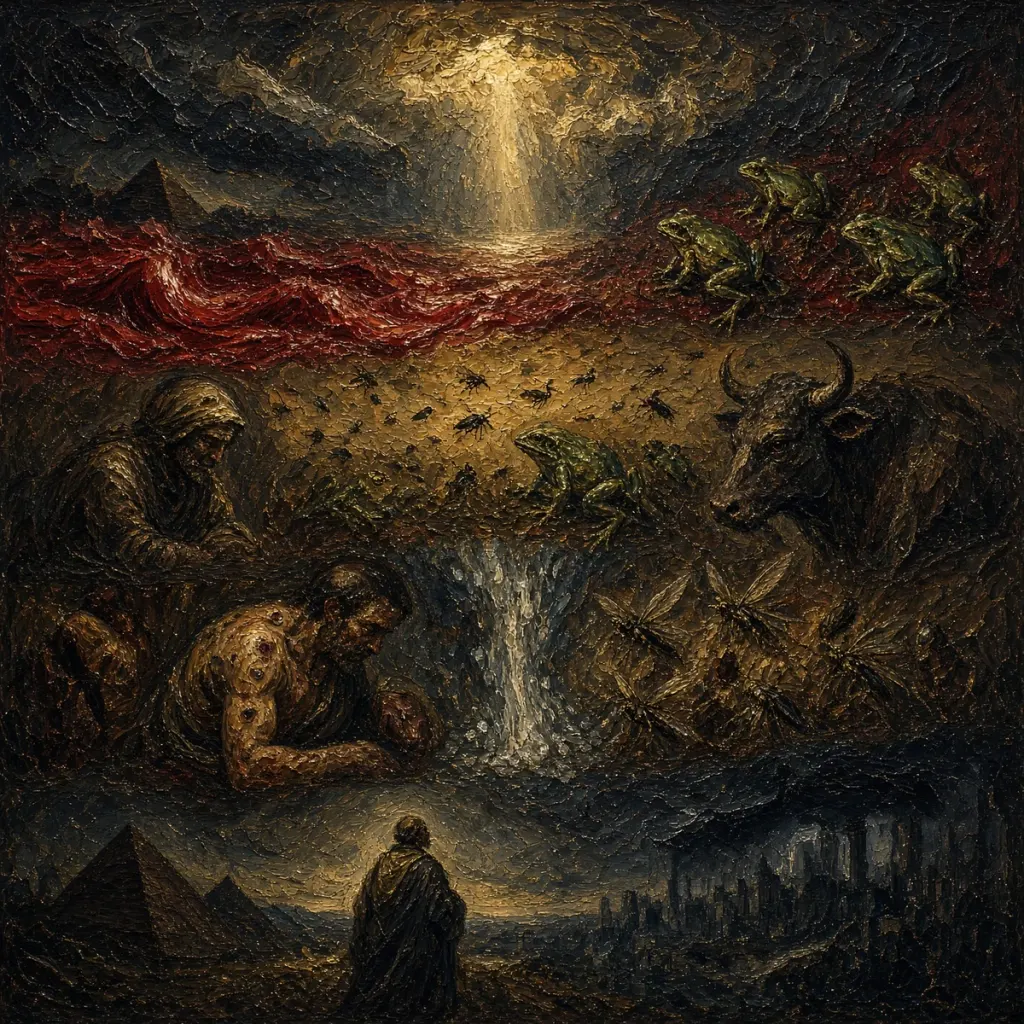
About this song
About this song
This song belongs to the Exodus collection. 8 recordings are available to play here, with the complete lyrics below.
- Bible book
- Exodus
- Collection
- Exodus
- Musical styles
- World Music, Cinematic Soundtrack, Alternative Pop, Rock, Country & Americana, Worship & Gospel, Metal
Named in this songGoshenPharaohEgypt
About the passage
Exodus 7: Egypt begins to learn the name it dismissed
The confrontation with Pharaoh resumes under a clarified arrangement: Moses represents God's authority, Aaron speaks as his prophet, and both are commanded rather than self-directed. Their ages, eighty and eighty-three, quietly remove any image of inexperienced young adventurers taking on Egypt. The first court sign is matched by Egyptian specialists, but the imitation does not settle the contest because Aaron's staff swallows theirs. Pharaoh still refuses. The first plague then moves from the palace floor to Egypt's water. Moses meets the king by the river, the place already tied to the death decree and Moses' survival, and announces that Egypt will know the LORD through what follows. Water turns to blood, fish die, the river stinks, and ordinary people dig for something to drink. The magicians reproduce the affliction, but neither they nor Pharaoh can remove it.
Study Exodus 7 in depthExodus 8: Frogs in the bedroom and limits at the palace
The plagues now invade domestic life and expose limits inside Pharaoh's own court. Frogs enter houses, beds, ovens, and kneading troughs, and the magicians' ability to produce more frogs becomes useless when Pharaoh needs them gone. He chooses the time for relief, receives it, and hardens his heart when respite comes. The next infestation rises from the dust and cannot be reproduced by the Egyptian specialists, who tell Pharaoh that they see "the finger of God." He still refuses. Swarms then strike Egypt while Goshen is deliberately spared, making geography part of the sign. Pharaoh begins bargaining over worship, first proposing sacrifice inside Egypt and then allowing only a short journey. Moses refuses terms that leave the king controlling where Israel may serve. The swarms are removed completely, and Pharaoh again reverses himself.
Study Exodus 8 in depthExodus 9: Judgment, warning, and the difference between hearing and heeding
Disease, boils, and hail carry the judgments across Egypt's animals, bodies, fields, and court. The livestock plague includes an announced distinction between Egyptian and Israelite animals, and Pharaoh actually sends to verify it. The evidence is confirmed without producing release. Ashes then become the occasion of boils so severe that the magicians cannot even stand before Moses. The hail warning creates another kind of division: some of Pharaoh's servants fear the word of the LORD and bring servants and livestock under shelter, while others leave them exposed. The storm strikes as announced, with Goshen spared. Pharaoh responds with his strongest confession yet, calling the LORD righteous and himself and his people wicked. Moses does not mistake those words for settled change. When the thunder, hail, and rain stop, Pharaoh hardens his heart again.
Study Exodus 9 in depth