About this song
About this song
This song belongs to the Ezra collection. One recording is available to play here, with the complete lyrics below.
- Collection
- Ezra
[Verse 1]
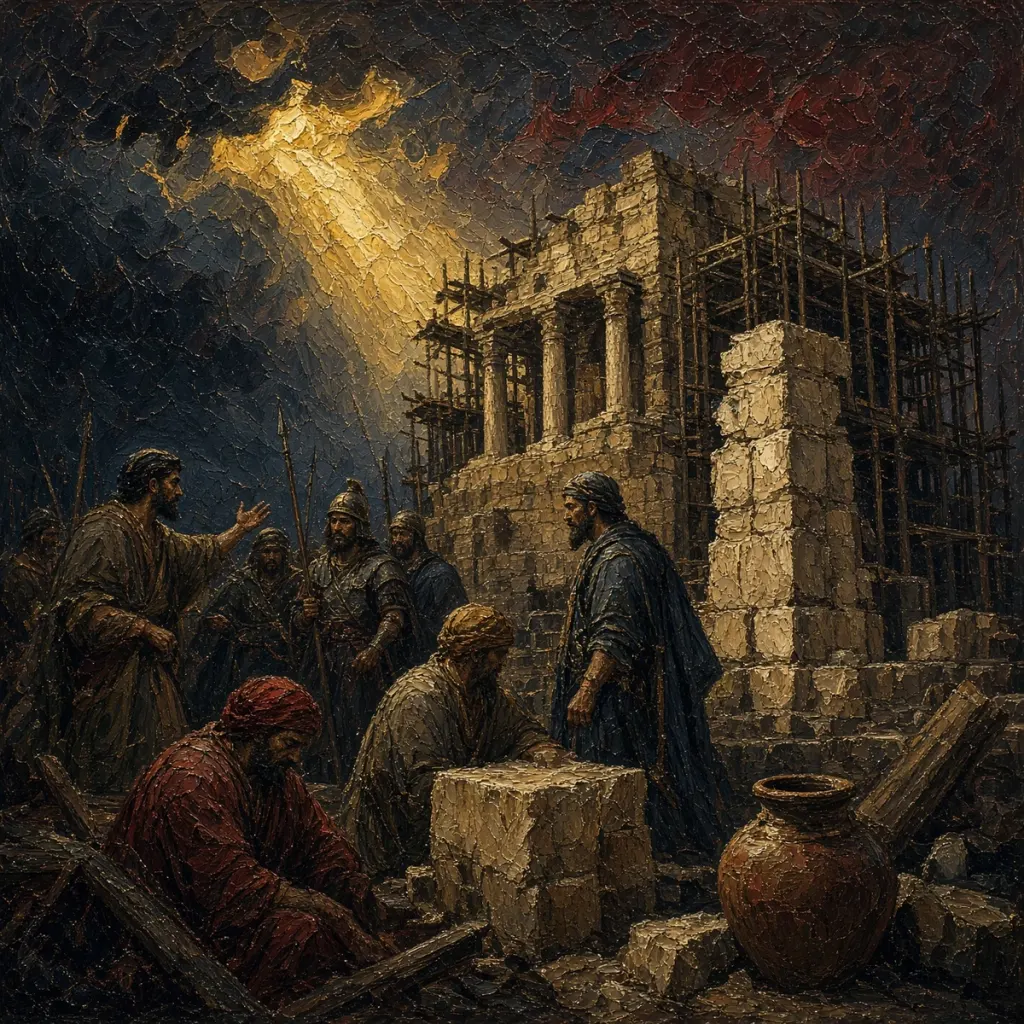
Judah's adversaries hear that the returned exiles are rebuilding the temple.
The claim is based on sacrifices offered since Esar-haddon's resettlement.
They appeal to Cyrus's specific command for Israel to build.
The builders are troubled and frightened away from progress.
[Pre-Chorus]
The warning stood where no one wished to see,
And every hidden root became a tree.
[Chorus]
The Work Ceased by Force, let the warning remain,
Hidden sin still flowers into pain.
The word of the LORD exposed what men concealed,
And judgment stood where every heart was revealed.
[Verse 2]
Another letter is prepared in Aramaic during Artaxerxes' reign.
Rehum and Shimshai lead the formal complaint.
Officials and transplanted peoples join the accusation.
The accusers warn that rebuilt walls will end tribute and revenue.
[Bridge]
Artaxerxes answers after records reveal earlier Jerusalem kings and rebellions.
The king commands the men to make the builders cease.
Rehum and his companions go quickly to Jerusalem with force and power.
Temple work stops until the second year of Darius king of Persia.
[Final Chorus]
The Work Ceased by Force, let the warning remain,
Hidden sin still flowers into pain.
The word of the LORD exposed what men concealed,
And judgment stood where every heart stood revealed.
[Outro]
The warning did not vanish with the dust.
The final line remembered judgment, fear, and trust.
Named in this songCyrusJerusalem
About the passage
Ezra 4: Opposition moves from the building site to the royal archive
Ezra 4 shows opposition changing forms. A proposed partnership in temple construction is refused, after which local resistance weakens the builders, hires counselors, and follows the work into royal correspondence. The chapter then preserves letters concerning Jerusalem's walls under Artaxerxes before returning in its final verse to the earlier interruption of temple construction. That arrangement creates a chronological question the Book of Ezra itself does not spell out, but it clearly distinguishes the city-and-wall dispute from the temple project surrounding it. In the letters, language becomes a weapon: Jerusalem is called rebellious, future tax refusal is predicted, and past records are used to justify a present halt. The chapter ends with work on the house of God stopped until Darius's second year.
Study Ezra 4 in depth →