


Isaiah 44:28-45:7
My shepherd, my anointed
Named before he exists, told that the gates will be opened before him and the crooked places made straight, and told twice that he has not known the God who is girding him.
Verse by verse
- 44:28
The chapter division falls between the titles shepherd and anointed. Reading across it preserves the continuous address concerning Cyrus and Jerusalem.
- 45:4-5
The statement that Cyrus has not known God appears twice. Divine commissioning is not presented here as proof of his prior personal devotion.
- 45:7
Evil translates Hebrew ra, which can mean calamity as well as moral evil. Its contrast here is with peace or well-being, so the line concerns disaster rather than a command to sin.

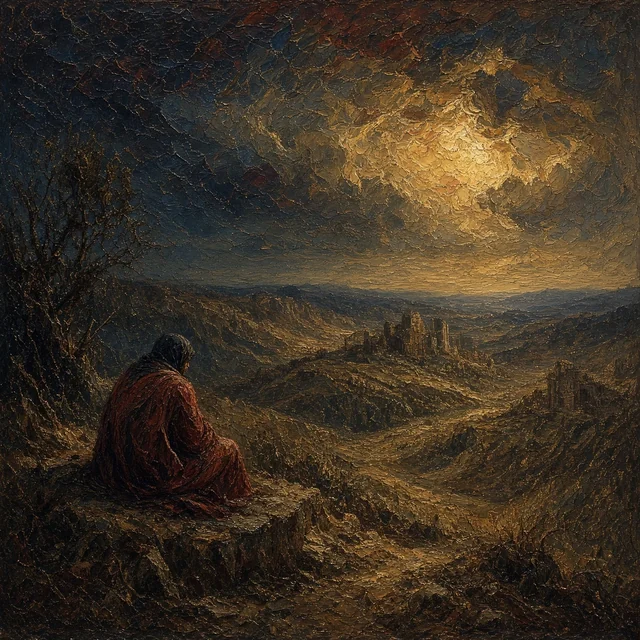
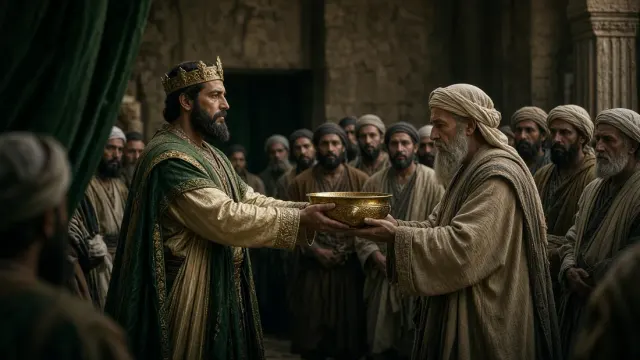

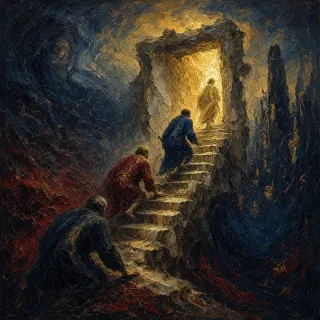
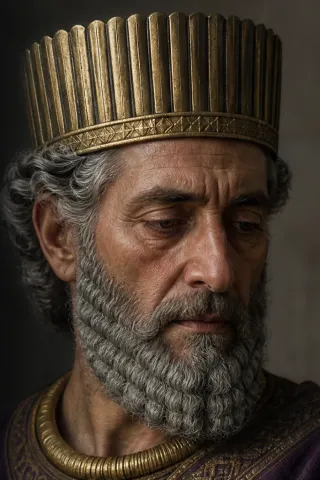

Cyrus receives two astonishing titles before the passage twice states what he lacks. My shepherd. His anointed. Then, though thou hast not known me. The Book of Isaiah does not resolve the tension by quietly making the Persian king an Israelite worshipper. His commission is real, and his lack of recognition is real. God knows the name of the man who does not yet know him.
The right hand of this conqueror is itself being held. Gates, iron bars, subdued nations, and hidden treasure might furnish a splendid royal account of personal achievement; here they are placed inside a repeated divine promise, I will. The reason is equally precise: for Jacob my servant's sake. Cyrus occupies the foreground, but Israel's restoration explains why he has been brought there.
The passage then widens beyond one campaign. East and west are to know that there is no rival god. Light and darkness, peace and calamity do not belong to competing sovereigns. The hard final pair must not be softened into a promise that conquest will be pleasant. Jerusalem's rebuilding involves the breaking of other powers. The shepherd's appointment is not a compliment detached from a task.