New · FreePlay The Witnesses The in-depth puzzle battle quest through Bible history

People of the Bible

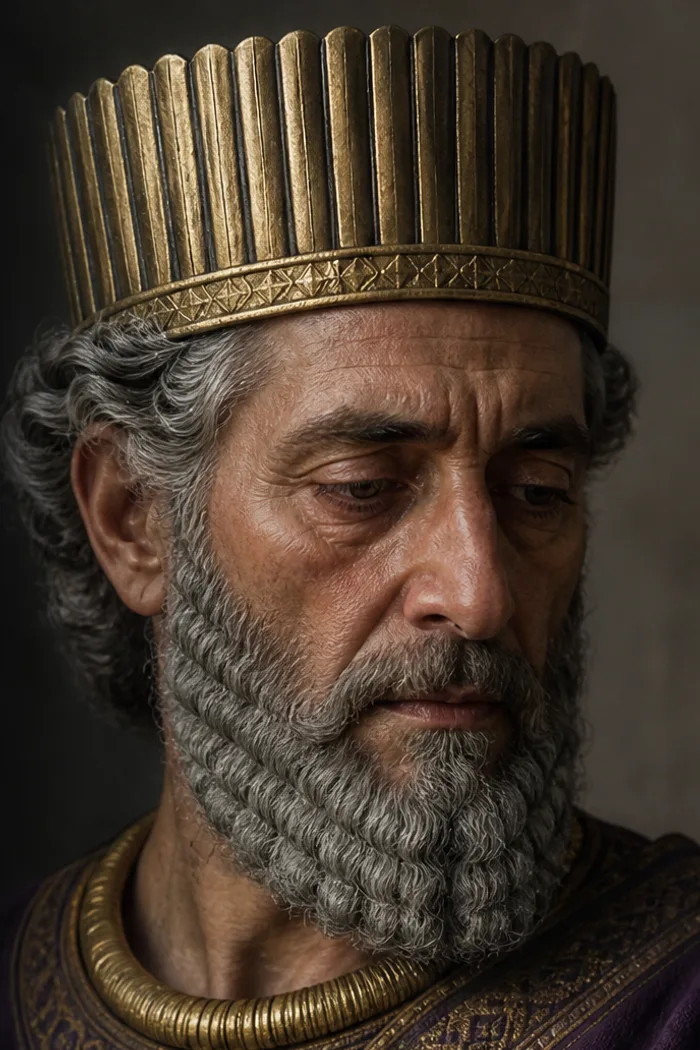
Darius

Signed a law he was flattered into, spent the night fasting because of it, and could not undo his own signature.

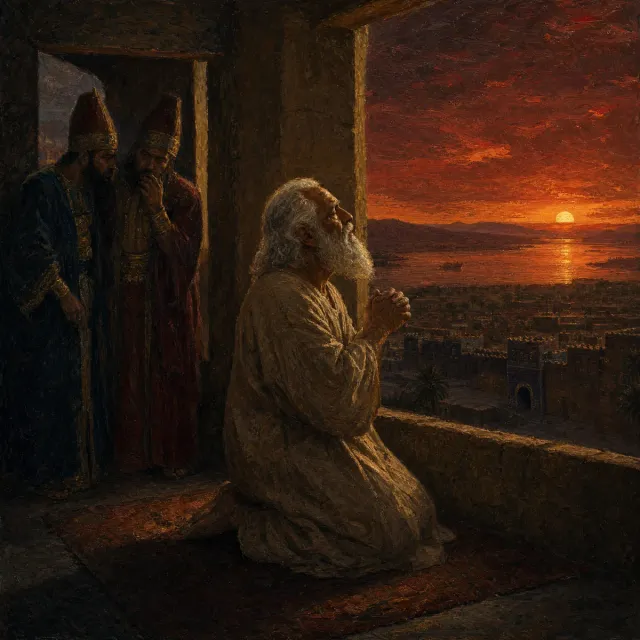
Darius takes the kingdom after Belshazzar and sets a hundred and twenty princes over it with three presidents above them, of whom Daniel is first. He is so pleased with Daniel that he thinks of setting him over the whole realm, which is what starts the trouble. The other officials can find no error or fault in him, so they build a charge out of his religion: a thirty day decree that any petition to any god or man except the king goes into the den of lions. They bring it to Darius as a unanimous proposal, and he signs it.

Where he appearsDaniel 6

Scroll down to the account
Darius

The movements, in the order the text gives them.

The Account of Darius

  1. 01

    Daniel 6:1-5

    They could find no fault

    An excellent spirit is in him and the king thinks of promoting him over the whole realm. The others look for grounds and conclude they will find none except concerning the law of his God.

    The first concern of this government is that the king should have no damage. Accounts are to be checked, losses prevented, and officials made answerable. Daniel's place in that machinery matters: the man being considered for promotion is not merely a private believer with an inconvenient religion. He is a servant whose work has survived inspection by people actively hoping to find something wrong with it. That is a rather more demanding reference than a friendly recommendation.

    The search becomes an unwilling testimony. Neither negligence nor corruption will provide a charge, so the officials move from the quality of Daniel's service to the constancy of his worship. They cannot make disloyalty stick. They will have to make loyalty illegal. The distinction is the hinge of the chapter, and Darius has not yet seen it.

    The king's proposed appointment and the officials' proposed accusation concern the same man for opposite reasons. Darius sees someone fit to oversee the realm; his colleagues see someone they cannot discredit on the realm's own terms. Before a lion appears, the dangerous gathering is already in the administration.

    Verse by verse

    1. 6:1

      Daniel 9:1 calls this Darius a Mede and the son of Ahasuerus. The passage does not identify him as the later Persian king Darius I.

    2. 6:2

      The three presidents supervise the princes and receive their accounts; the titles describe administrative offices, not modern elected presidencies.

    3. 6:3

      An excellent spirit describes the quality that distinguishes Daniel here. The phrase alone does not specify a separate office or rank within the court.

    Daniel 6:1-5

    King James Version · 5 verses

    6:1It pleased Darius to set over the kingdom an hundred and twenty princes, which should be over the whole kingdom;

    6:2And over these three presidents; of whom Daniel was first: that the princes might give accounts unto them, and the king should have no damage.

    6:3Then this Daniel was preferred above the presidents and princes, because an excellent spirit was in him; and the king thought to set him over the whole realm.

    6:4Then the presidents and princes sought to find occasion against Daniel concerning the kingdom; but they could find none occasion nor fault; forasmuch as he was faithful, neither was there any error or fault found in him.

    6:5Then said these men, We shall not find any occasion against this Daniel, except we find it against him concerning the law of his God.

    Daniel 6:1-5: They could find no fault
  2. 02

    Daniel 6:6-9

    All the presidents have consulted

    They come as a group and claim unanimity, which is a lie, since Daniel is first of the three. Flattered, the king signs, and the decree cannot afterwards be altered.

    All the presidents have consulted together. One of the three presidents is Daniel. The opening claim therefore presents the proposed victim as a partner in the arrangement designed to kill him. The speech arrives wrapped in unanimity, a long procession of official titles, and the customary wish that Darius live for ever. There is plenty of ceremony. There is no honest consultation.

    The proposal gives the king thirty days as the exclusive recipient of petitions, whether the alternative recipient is a god or a man. That sweeping language makes the restriction much larger than a rule about court procedure. The officials already know which act will bring Daniel within it. They do not need to name him while the document is being signed.

    Notice where their urgency falls: establish it, sign it, make it unchangeable. The permanence of the writing receives as much attention as the honor offered to Darius. A king apparently being raised above every other authority is being fastened to a decision he will not be allowed to withdraw. Verse 9 gives the signature without recording a question, an inquiry, or a qualification. The trap has become an official document.

    Verse by verse

    1. 6:7

      The word all belongs to the officials' claim. Daniel is one of the presidents in verse 2, but the text never says that he agreed to their proposal.

    2. 6:7

      The decree lasts thirty days, but its stated penalty is death in the lions' den, not a temporary restriction or a fine.

    3. 6:8

      The unchangeability of this decree is the legal premise presented in the chapter. It should not be expanded into an unsupported claim about every decision of every Persian ruler.

    Daniel 6:6-9

    King James Version · 4 verses

    6:6Then these presidents and princes assembled together to the king, and said thus unto him, King Darius, live for ever.

    6:7All the presidents of the kingdom, the governors, and the princes, the counsellors, and the captains, have consulted together to establish a royal statute, and to make a firm decree, that whosoever shall ask a petition of any God or man for thirty days, save of thee, O king, he shall be cast into the den of lions.

    6:8Now, O king, establish the decree, and sign the writing, that it be not changed, according to the law of the Medes and Persians, which altereth not.

    6:9Wherefore king Darius signed the writing and the decree.

    Daniel 6:6-9: All the presidents have consulted
  3. 03

    Daniel 6:14-18

    He laboured till the going down of the sun

    Displeased with himself, he works all day to find a way out. The stone is laid and sealed with his own signet, and he passes the night fasting, without instruments of music, and his sleep goes from him.

    Darius spends the remaining daylight trying to rescue a man from his own handwriting. The Book of Daniel gives the direction of his displeasure plainly: with himself. This is not Nebuchadnezzar demanding a hotter furnace. The king wants the condemned man alive, labours to release him, and discovers that wanting and ruling are not the same thing.

    The officials return with the very permanence they insisted on when they presented the decree. Their language turns the king's authority against his present intention. He commands the punishment, then speaks of deliverance by Daniel's God. The sentence is remarkable precisely because Darius cannot supply the deliverance himself. Continually also matters. What the accusers have called disobedience, the king describes as sustained service to God.

    The stone carries two sets of seals, the king's and his lords'. Both parties attach their authority to the barrier. The final scene then moves, not to Daniel's terror, which the passage does not describe, but to the palace where Darius refuses food and entertainment and loses sleep. The man above ground has a royal bed. The chapter gives him no rest.

    Verse by verse

    1. 6:14

      The king labours until sunset; no successful legal exemption or secret rescue is reported.

    2. 6:17

      The text names the signets of both the king and his lords. It explains their purpose as preventing a change in Daniel's case.

    3. 6:18

      The Aramaic term translated instruments of musick is disputed and can be rendered entertainments or diversions. The exact form of the withheld amusement is uncertain.

    Daniel 6:14-18

    King James Version · 5 verses

    6:14Then the king, when he heard these words, was sore displeased with himself, and set his heart on Daniel to deliver him: and he laboured till the going down of the sun to deliver him.

    6:15Then these men assembled unto the king, and said unto the king, Know, O king, that the law of the Medes and Persians is, That no decree nor statute which the king establisheth may be changed.

    6:16Then the king commanded, and they brought Daniel, and cast him into the den of lions. Now the king spake and said unto Daniel, Thy God whom thou servest continually, he will deliver thee.

    6:17And a stone was brought, and laid upon the mouth of the den; and the king sealed it with his own signet, and with the signet of his lords; that the purpose might not be changed concerning Daniel.

    6:18Then the king went to his palace, and passed the night fasting: neither were instruments of musick brought before him: and his sleep went from him.

  4. 04

    Daniel 6:19-27

    Is your God able to deliver you

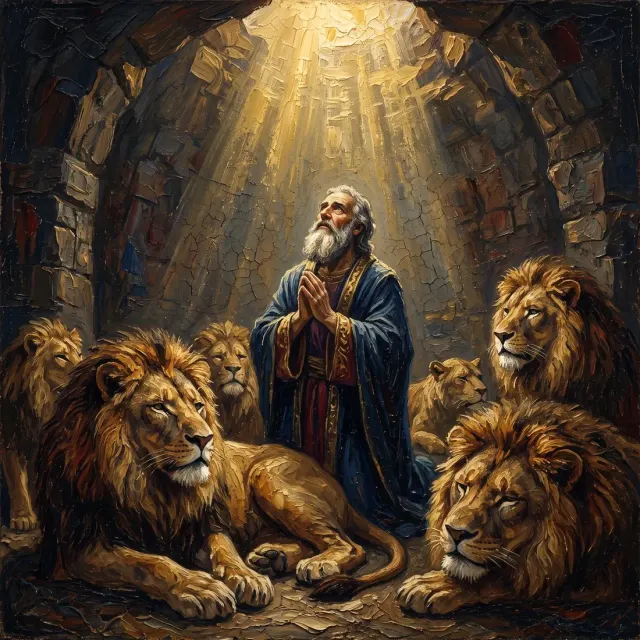
    He rises very early and goes in haste, and calls with a lamentable voice. Then he writes to all nations that men tremble before the God of Daniel, who delivers and rescues and works signs.

    The king who could not sleep now calls into a place appointed for death and receives the court's ordinary greeting. O king, live for ever. From Daniel, still alive among lions, the words have a force no flattering delegation could give them. Darius has asked whether God was able. Daniel answers with what God has done.

    His innocence is stated in two directions: before God and before the king. The decree has been broken, but no injury has been done to Darius. That distinction exposes the prosecution without requiring Daniel to deny the act for which he was condemned. The inspection now finds no hurt on his body, just as the earlier investigation found no fault in his service.

    The reversal is terrible as well as decisive. Darius sends the accusers, their wives, and their children into the den, and the lions kill them before they reach its floor. Their families' deaths are recorded; no wrongdoing by those families is supplied. This is the king's command, not a command attributed to God. His next decree acknowledges a kingdom that cannot be destroyed. The monarch whose own decree trapped him has encountered a dominion that does not depend on his signature.

    Verse by verse

    1. 6:20

      Darius again describes Daniel's service to God as continual. The same recognition appears in his words before the den was sealed, in verse 16.

    2. 6:24

      Or ever means before. The verse makes clear that the lions were capable of killing; Daniel's survival is not explained by harmless animals.

    3. 6:26

      The final proclamation praises the permanence of God's kingdom, not the permanence of Darius' rule. Daniel 6:28 names Cyrus immediately after Darius.

    Daniel 6:19-27

    King James Version · 9 verses

    6:19Then the king arose very early in the morning, and went in haste unto the den of lions.

    6:20And when he came to the den, he cried with a lamentable voice unto Daniel: and the king spake and said to Daniel, O Daniel, servant of the living God, is thy God, whom thou servest continually, able to deliver thee from the lions?

    6:21Then said Daniel unto the king, O king, live for ever.

    6:22My God hath sent his angel, and hath shut the lions’ mouths, that they have not hurt me: forasmuch as before him innocency was found in me; and also before thee, O king, have I done no hurt.

    6:23Then was the king exceeding glad for him, and commanded that they should take Daniel up out of the den. So Daniel was taken up out of the den, and no manner of hurt was found upon him, because he believed in his God.

    6:24And the king commanded, and they brought those men which had accused Daniel, and they cast them into the den of lions, them, their children, and their wives; and the lions had the mastery of them, and brake all their bones in pieces or ever they came at the bottom of the den.

    6:25Then king Darius wrote unto all people, nations, and languages, that dwell in all the earth; Peace be multiplied unto you.

    6:26I make a decree, That in every dominion of my kingdom men tremble and fear before the God of Daniel: for he is the living God, and stedfast for ever, and his kingdom that which shall not be destroyed, and his dominion shall be even unto the end.

    6:27He delivereth and rescueth, and he worketh signs and wonders in heaven and in earth, who hath delivered Daniel from the power of the lions.


Why it matters

Darius is the study of a decent man inside a system that will not bend. When he understands what he has done he labours till sunset to deliver Daniel, and the officials remind him that no decree of the Medes and Persians may be changed. He goes to bed without food or music, rises at dawn and cries with a lamentable voice at the den, and then writes to all people, nations and languages that the God of Daniel is the living God, steadfast forever.

2 songs

The music

Every song in the catalogue whose passage falls inside these chapters.

  1. Daniel 6:1-28

    His Windows Open toward Jerusalem

  2. Daniel 6

    The Lions Closed Their Mouths

Nearby

All the people

Report an error on this page