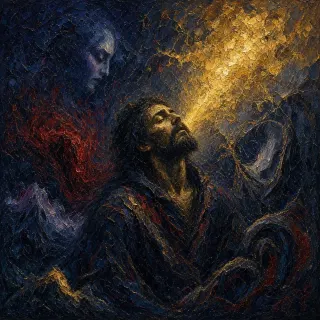
New · FreePlay The Witnesses The in-depth puzzle battle quest through Bible history

People of the Bible

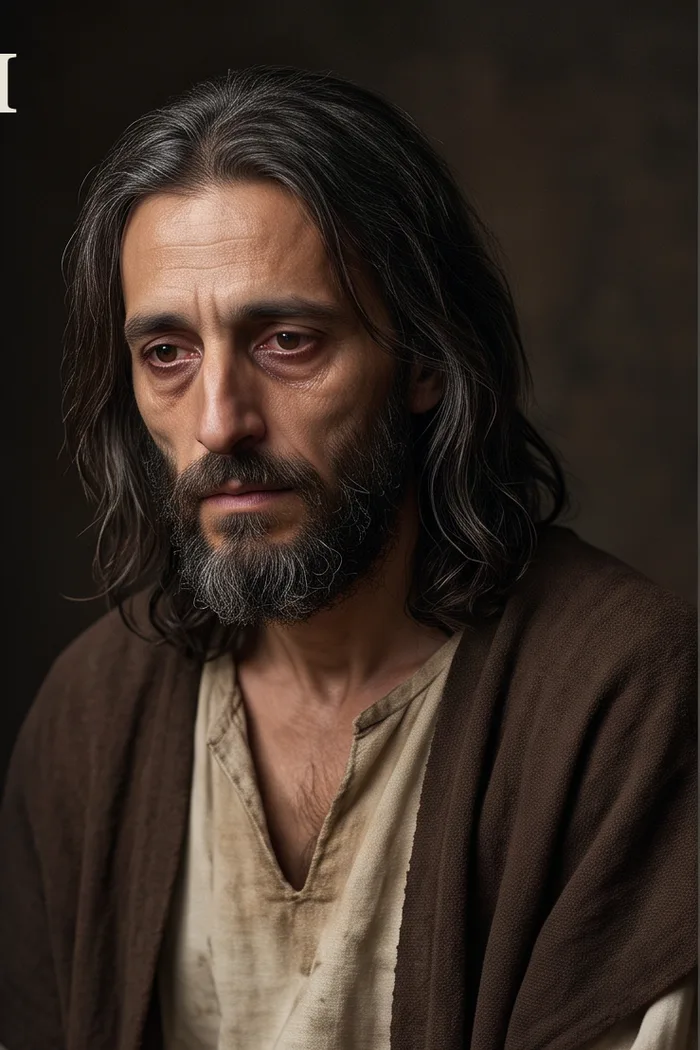
Jeremiah

Was told before he was born what he would do, objected that he was a child, and preached forty years to a city that did not change.

Jeremiah is given the job in Josiah’s thirteenth year and holds it through the reforms, the collapse and the siege. He is forbidden to marry, beaten and put in the stocks, thrown into a cistern with no water and sunk into the mud, and kept in a courtyard of the guard while the city starves. He also buys a field during the siege, at full price and with the deed sealed and witnessed, because houses and fields and vineyards shall be possessed again in this land. Both things are true of him at once.

Where he appearsJeremiah 1 to 52 · Lamentations 1 to 5

Scroll down to the account
Jeremiah

The movements, in the order the text gives them.

The Account of Jeremiah

  1. 01

    Jeremiah 1:4-10

    Before I formed you

    Known and ordained before birth. He objects that he cannot speak because he is a child, and is told not to say that, and a hand touches his mouth.

    The appointment is older than the applicant. Twice the sentence begins with before, placing God's knowledge and consecration ahead of Jeremiah's birth and well ahead of his objection. Jeremiah answers with the equipment he lacks: speech and seniority. God answers with the sender, the destination, and the words. The commission does not depend on Jeremiah discovering that he was secretly an accomplished public speaker all along.

    The hand touches precisely the place named in the objection. I cannot speak meets I have put my words in thy mouth. Then comes an extraordinary job description for someone claiming to be a child: authority concerning nations and kingdoms. Not a throne, not an army, but a mouth carrying judgment. Four verbs dismantle; two establish. Root out, pull down, destroy, throw down. Then build and plant. The proportions are severe, but the ending matters. Jeremiah has not been commissioned merely to stand beside the rubble and describe it.

    Verse by verse

    1. 1:5

      Sanctified means set apart for the commission. The verse does not state that Jeremiah existed consciously before birth.

    2. 1:6

      The Hebrew naar can describe a child or young person; it does not establish an exact age here.

    3. 1:8

      The promise is deliverance and divine presence, not the absence of opposition. Jeremiah 1:19 explicitly anticipates a fight.

    4. 1:10

      The language of uprooting, destruction, building, and planting returns in Jeremiah 31:28, where restoration receives the emphasis.

    Jeremiah 1:4-10

    King James Version · 7 verses

    1:4Then the word of the LORD came unto me, saying,

    1:5Before I formed thee in the belly I knew thee; and before thou camest forth out of the womb I sanctified thee, and I ordained thee a prophet unto the nations.

    1:6Then said I, Ah, Lord GOD! behold, I cannot speak: for I am a child.

    1:7But the LORD said unto me, Say not, I am a child: for thou shalt go to all that I shall send thee, and whatsoever I command thee thou shalt speak.

    1:8Be not afraid of their faces: for I am with thee to deliver thee, saith the LORD.

    1:9Then the LORD put forth his hand, and touched my mouth. And the LORD said unto me, Behold, I have put my words in thy mouth.

    1:10See, I have this day set thee over the nations and over the kingdoms, to root out, and to pull down, and to destroy, and to throw down, to build, and to plant.

    Jeremiah 1:4-10: Before I formed you
  2. 02

    Jeremiah 18:1-6

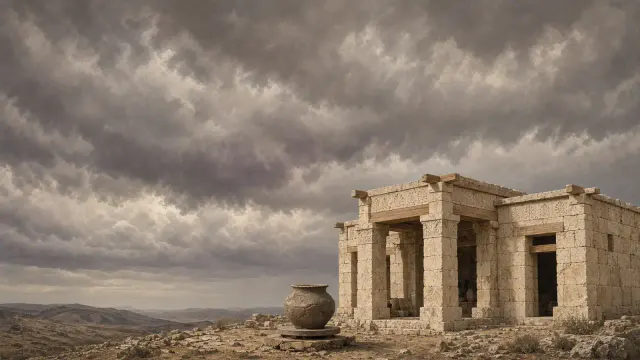
    The potter’s house

    Sent to watch a potter work. The vessel is marred in his hand and he makes it again into another vessel as it seemed good to him to make it.

    Jeremiah is sent somewhere to hear, and the first thing he is given is something to watch. No unusual vessel is waiting on a pedestal. A potter is working, the work goes wrong in his hands, and he works it again. The crucial detail is not simply that the clay is spoiled. It is that the spoiled clay has not left the hand.

    The address is to the house of Israel, not to an isolated person seeking reassurance about a difficult season. A nation has mistaken its present shape for a guarantee of permanence. The potter owes that shape no such guarantee. Yet the explanation immediately following, in verses 7-10, makes room for a threatened nation to turn and for announced judgment to be withheld. The image establishes God's authority without making the appeal to repentance meaningless. Jeremiah has not visited a showroom of finished objects. He has entered a workshop where another outcome is still possible.

    Verse by verse

    1. 18:2

      The command promises that Jeremiah will hear God's words at the workshop; observation precedes the explicit interpretation.

    2. 18:4

      The passage does not identify a physical cause for the defect or accuse the craftsman of incompetence.

    3. 18:6

      The house of Israel is the collective addressee. The following explanation speaks of nations and kingdoms, not merely individual destinies.

    4. 18:6

      Jeremiah 18:7-10 makes the threatened nation's response significant: turning from evil can avert announced disaster.

    Jeremiah 18:1-6

    King James Version · 6 verses

    18:1The word which came to Jeremiah from the LORD, saying,

    18:2Arise, and go down to the potter’s house, and there I will cause thee to hear my words.

    18:3Then I went down to the potter’s house, and, behold, he wrought a work on the wheels.

    18:4And the vessel that he made of clay was marred in the hand of the potter: so he made it again another vessel, as seemed good to the potter to make it.

    18:5Then the word of the LORD came to me, saying,

    18:6O house of Israel, cannot I do with you as this potter? saith the LORD. Behold, as the clay is in the potter’s hand, so are ye in mine hand, O house of Israel.

    Jeremiah 18:1-6: The potter’s house
  3. 03

    Jeremiah 20:7-9

    A fire shut up in my bones

    Beaten and put in the stocks overnight by a priest. He says he will not speak again in that name, and then that he could not, because the word burned.

    The fire in Jeremiah's bones is not the pleasure of finally finding a receptive audience. It follows a beating and a night in the stocks, and it burns inside a man who has tried to stop speaking. Public speech brings ridicule. Silence brings another kind of exhaustion. This is a calling with no comfortable exit, not an advertisement for the joys of public ministry.

    The opening complaint must retain its edge. Thou hast deceived me is Jeremiah speaking to God, not a detached statement explaining God's character. The Hebrew permits discussion of persuasion and enticement, but the language of being overpowered will not become gentle simply because a softer English word is available. His proposed silence is equally concrete: no more mention, no more speaking in that name. Then the body enters the argument. Heart. Bones. Weariness. The word he would remove from public hearing has become impossible to contain privately. Nor does the chapter offer a tidy emotional resolution: praise in verse 13 is followed by a curse upon his birth in verse 14. The Book of Jeremiah leaves the strain visible.

    Verse by verse

    1. 20:7

      This is the prophet's anguished address to God. Interpreters differ over whether patah is best understood here as deceiving, enticing, or persuading.

    2. 20:8

      Violence and spoil name the alarming content of his proclamation; the resulting reproach is directed at the speaker.

    3. 20:9

      I could not stay means that he could not keep holding back. It does not mean that he could not remain in a geographical place.

    Jeremiah 20:7-9

    King James Version · 3 verses

    20:7O LORD, thou hast deceived me, and I was deceived: thou art stronger than I, and hast prevailed: I am in derision daily, every one mocketh me.

    20:8For since I spake, I cried out, I cried violence and spoil; because the word of the LORD was made a reproach unto me, and a derision, daily.

    20:9Then I said, I will not make mention of him, nor speak any more in his name. But his word was in mine heart as a burning fire shut up in my bones, and I was weary with forbearing, and I could not stay.

    Jeremiah 20:7-9: A fire shut up in my bones
  4. 04

    Jeremiah 32:6-15

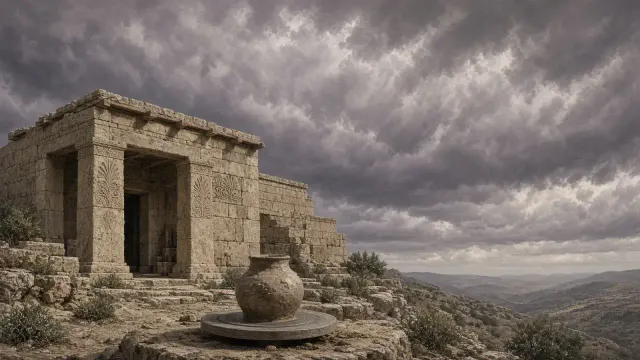
    Buy the field

    The Babylonians are building siege works around the city and he is under arrest in it. He weighs seventeen shekels of silver, signs the deed, and has it put in an earthen vessel to last.

    The buyer is in prison, and the city is under siege. Those details do not interrupt the property transaction; they make it the sign. Jeremiah has already announced that Babylon will take Jerusalem. Purchasing a field does not retract that announcement. It refuses to let conquest be the last sentence spoken about the land.

    The chapter insists on the unglamorous particulars. Silver is weighed, a deed is signed, witnesses attend, and both sealed and open evidence are handed over for storage. Hope has acquired paperwork. The earthen vessel is not a decorative prop: the documents must survive many days because restoration is not being promised for tomorrow. Nor is the transaction presented as Jeremiah having every difficulty settled. Only after delivering the deed does he pray the long prayer in verses 16-25, laying the siege and the purchase together before God. The act comes before that prayer's explanation is answered. What has been purchased is a real field; what the public transaction declares is a future in which fields will once again be worth possessing.

    Verse by verse

    1. 32:7

      The right of redemption is attached to Jeremiah's family relationship with Hanameel; the sale is not an anonymous market transaction.

    2. 32:9

      The seventeen shekels are weighed silver. The passage gives no field size or comparable price from which to calculate a bargain.

    3. 32:14

      The documents include sealed and open evidence of the purchase; their preservation is part of the public sign.

    4. 32:15

      The promise concerns restored life in the land, not a statement that Jeremiah will personally live to farm this property.

    5. 32:15

      Jeremiah 31:31-34 places the new covenant in the same broader restoration context; Hebrews 8:8-12 quotes that covenant promise in discussing Christ.

    Jeremiah 32:6-15

    King James Version · 10 verses

    32:6And Jeremiah said, The word of the LORD came unto me, saying,

    32:7Behold, Hanameel the son of Shallum thine uncle shall come unto thee, saying, Buy thee my field that is in Anathoth: for the right of redemption is thine to buy it.

    32:8So Hanameel mine uncle’s son came to me in the court of the prison according to the word of the LORD, and said unto me, Buy my field, I pray thee, that is in Anathoth, which is in the country of Benjamin: for the right of inheritance is thine, and the redemption is thine; buy it for thyself. Then I knew that this was the word of the LORD.

    32:9And I bought the field of Hanameel my uncle’s son, that was in Anathoth, and weighed him the money, even seventeen shekels of silver.

    32:10And I subscribed the evidence, and sealed it, and took witnesses, and weighed him the money in the balances.

    32:11So I took the evidence of the purchase, both that which was sealed according to the law and custom, and that which was open:

    32:12And I gave the evidence of the purchase unto Baruch the son of Neriah, the son of Maaseiah, in the sight of Hanameel mine uncle’s son, and in the presence of the witnesses that subscribed the book of the purchase, before all the Jews that sat in the court of the prison.

    32:13And I charged Baruch before them, saying,

    32:14Thus saith the LORD of hosts, the God of Israel; Take these evidences, this evidence of the purchase, both which is sealed, and this evidence which is open; and put them in an earthen vessel, that they may continue many days.

    32:15For thus saith the LORD of hosts, the God of Israel; Houses and fields and vineyards shall be possessed again in this land.

  5. 05

    Jeremiah 36:20-32

    The scroll in the fire

    The king cuts the scroll with a penknife three or four columns at a time and burns it in the brazier. Jeremiah dictates it again to Baruch, and many similar words are added.

    Something is torn in this room, but it is not the king's clothing. Verse 24 makes that absence explicit. Jehoiakim answers an alarming reading with a knife, cutting the scroll into sections and feeding them to the fire. The Hebrew even calls the implement a scribe's knife. An instrument belonging to the work of writing is turned against the writing itself.

    The scene is disturbingly domestic. Winter quarters, a hearth, a reader, a king seated comfortably while the record disappears a few columns at a time. Yet the response is not unanimous: three officials plead against the burning, and earlier the princes have shown fear. The Book of Jeremiah keeps those distinctions instead of turning the whole court into one undifferentiated enemy. The king's protected warmth also acquires an answering image in verse 30: his exposed body under heat by day and frost by night.

    The closing instruction is wonderfully unsentimental. Another roll. The same words. Baruch writes them again, and many like words are added. The destruction is real, but it has not revised the sentence about Babylon. The king's editing has produced a longer document.

    Verse by verse

    1. 36:22

      The winter setting explains the available fire; the threatened exposure to heat and frost in 36:30 reverses the king's present shelter.

    2. 36:23

      Leaves refers to sections or columns of a scroll, not pages in a modern bound book. The Hebrew specifies a scribe's knife.

    3. 36:26

      The LORD hid them states the protection without describing the hiding place or its mechanism.

    4. 36:30

      Second Kings 24:6-8 records that Jehoiakim's son Jehoiachin did reign for three months. The statement about the throne is often understood as denying an enduring succession; that brief reign must not be erased.

    5. 36:32

      The replacement contains all the former words plus further material. It is not described as an abridgment or a compromise.

    Jeremiah 36:20-32: The scroll in the fire

    Jeremiah 36:20-32

    King James Version · 13 verses

    36:20And they went in to the king into the court, but they laid up the roll in the chamber of Elishama the scribe, and told all the words in the ears of the king.

    36:21So the king sent Jehudi to fetch the roll: and he took it out of Elishama the scribe’s chamber. And Jehudi read it in the ears of the king, and in the ears of all the princes which stood beside the king.

    36:22Now the king sat in the winterhouse in the ninth month: and there was a fire on the hearth burning before him.

    36:23And it came to pass, that when Jehudi had read three or four leaves, he cut it with the penknife, and cast it into the fire that was on the hearth, until all the roll was consumed in the fire that was on the hearth.

    36:24Yet they were not afraid, nor rent their garments, neither the king, nor any of his servants that heard all these words.

    36:25Nevertheless Elnathan and Delaiah and Gemariah had made intercession to the king that he would not burn the roll: but he would not hear them.

    36:26But the king commanded Jerahmeel the son of Hammelech, and Seraiah the son of Azriel, and Shelemiah the son of Abdeel, to take Baruch the scribe and Jeremiah the prophet: but the LORD hid them.

    36:27Then the word of the LORD came to Jeremiah, after that the king had burned the roll, and the words which Baruch wrote at the mouth of Jeremiah, saying,

    36:28Take thee again another roll, and write in it all the former words that were in the first roll, which Jehoiakim the king of Judah hath burned.

    36:29And thou shalt say to Jehoiakim king of Judah, Thus saith the LORD; Thou hast burned this roll, saying, Why hast thou written therein, saying, The king of Babylon shall certainly come and destroy this land, and shall cause to cease from thence man and beast?

    36:30Therefore thus saith the LORD of Jehoiakim king of Judah; He shall have none to sit upon the throne of David: and his dead body shall be cast out in the day to the heat, and in the night to the frost.

    36:31And I will punish him and his seed and his servants for their iniquity; and I will bring upon them, and upon the inhabitants of Jerusalem, and upon the men of Judah, all the evil that I have pronounced against them; but they hearkened not.

    36:32Then took Jeremiah another roll, and gave it to Baruch the scribe, the son of Neriah; who wrote therein from the mouth of Jeremiah all the words of the book which Jehoiakim king of Judah had burned in the fire: and there were added besides unto them many like words.

  6. 06

    Jeremiah 38:1-13

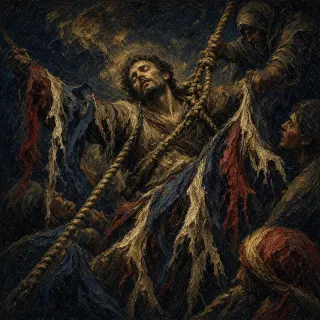
    Ropes and old rags

    Lowered into a cistern to sink in the mire. An Ethiopian court official goes to the king for him and is granted thirty men, and sends down worn clothes to put under his armpits so the ropes will not cut.

    The ropes are not enough. Ebedmelech first fetches discarded cloth and rotten rags, then tells Jeremiah exactly where to put them: under the arms, between skin and cords. The materials are poor; the attention is precise. The rescue includes not only getting a man out alive, but padding the means by which his body will be lifted.

    That care stands against the official argument in verse 4. Jeremiah is accused of seeking the people's hurt, although the words just quoted offer a way to preserve life. The princes' proposed answer is his death. Ebedmelech, an Ethiopian serving in the royal household, names their treatment evil and asks for the life they have endangered. The king who said he could do nothing against the princes now issues an order for thirty men. The chapter records both statements without supplying a convenient explanation for the reversal.

    Jeremiah's descent and ascent both use cords, but only the ascent includes the rags. That small difference carries a great deal. And the ending remains exact: he stays in the court of the prison. This is rescue from the pit, not release from every restriction. The mud is behind him; custody is not.

    Verse by verse

    1. 38:6

      No water does not mean a dry floor: the same verse specifies mire deep enough for Jeremiah to sink into.

    2. 38:9

      Ebedmelech explicitly calls the treatment evil. The moral assessment belongs to his recorded appeal, not to an invented speech.

    3. 38:12

      Clouts means pieces of cloth or rags, not blows. Their prescribed position makes them padding beneath the ropes.

    4. 38:13

      The final clause retains Jeremiah's confinement in the prison court; the rescue does not restore unrestricted freedom.

    Jeremiah 38:1-13: Ropes and old rags

    Jeremiah 38:1-13

    King James Version · 13 verses

    38:1Then Shephatiah the son of Mattan, and Gedaliah the son of Pashur, and Jucal the son of Shelemiah, and Pashur the son of Malchiah, heard the words that Jeremiah had spoken unto all the people, saying,

    38:2Thus saith the LORD, He that remaineth in this city shall die by the sword, by the famine, and by the pestilence: but he that goeth forth to the Chaldeans shall live; for he shall have his life for a prey, and shall live.

    38:3Thus saith the LORD, This city shall surely be given into the hand of the king of Babylon’s army, which shall take it.

    38:4Therefore the princes said unto the king, We beseech thee, let this man be put to death: for thus he weakeneth the hands of the men of war that remain in this city, and the hands of all the people, in speaking such words unto them: for this man seeketh not the welfare of this people, but the hurt.

    38:5Then Zedekiah the king said, Behold, he is in your hand: for the king is not he that can do any thing against you.

    38:6Then took they Jeremiah, and cast him into the dungeon of Malchiah the son of Hammelech, that was in the court of the prison: and they let down Jeremiah with cords. And in the dungeon there was no water, but mire: so Jeremiah sunk in the mire.

    38:7Now when Ebed-melech the Ethiopian, one of the eunuchs which was in the king’s house, heard that they had put Jeremiah in the dungeon; the king then sitting in the gate of Benjamin;

    38:8Ebed-melech went forth out of the king’s house, and spake to the king, saying,

    38:9My lord the king, these men have done evil in all that they have done to Jeremiah the prophet, whom they have cast into the dungeon; and he is like to die for hunger in the place where he is: for there is no more bread in the city.

    38:10Then the king commanded Ebed-melech the Ethiopian, saying, Take from hence thirty men with thee, and take up Jeremiah the prophet out of the dungeon, before he die.

    38:11So Ebed-melech took the men with him, and went into the house of the king under the treasury, and took thence old cast clouts and old rotten rags, and let them down by cords into the dungeon to Jeremiah.

    38:12And Ebed-melech the Ethiopian said unto Jeremiah, Put now these old cast clouts and rotten rags under thine armholes under the cords. And Jeremiah did so.

    38:13So they drew up Jeremiah with cords, and took him up out of the dungeon: and Jeremiah remained in the court of the prison.

Why it matters

Jeremiah is the prophet whose interior life is on the page. He argues with God, accuses him of deceiving him, curses the day he was born, and says the word is a burning fire shut up in his bones so that he cannot hold it in. He is right about everything and is believed by almost nobody. And in the middle of the worst of it he is given the new covenant: not like the covenant made when they were brought out of Egypt, but the law written on hearts, and every one shall know me.

28 songs

The music

Every song in the catalogue whose passage falls inside these chapters.

  1. Jeremiah 1:1-19

    Before I Formed Thee

  2. Jeremiah 1:1–52:34

    Jeremiah (Fire in My Bones)

  3. Jeremiah 2:1-3:5

    Broken Cisterns

  4. Jeremiah 6:13-15; 7:1-28; 20:7-13; 26:1-24; 37:11-38:13; 39:1-10

    The Prophet No One Heard

    Play here
    Open song pageRead lyrics
  5. Jeremiah 7:1-34

    Amend Your Ways at the Gate

  6. Jeremiah 8:18-9:9

    Is There No Balm in Gilead

  7. Jeremiah 13:1-27

    The Girdle Was Marred

  8. Jeremiah 18:1-23

    As Clay in the Potter’s Hand

  9. Jeremiah 19:1-20:18

    A Fire in My Bones

  10. Jeremiah 23:1-8

    A Righteous Branch, and a King Shall Reign

  11. Jeremiah 25:1-38

    Drink Ye of This Cup

  12. Jeremiah 27:1-28:17

    Yokes of Wood and Iron

  13. Jeremiah 29:1-32

    Build Houses in Babylon

  14. Jeremiah 31:31-40

    A New Covenant

  15. Jeremiah 32:1-44

    Buy the Field

  16. Jeremiah 35:1-19

    We Will Drink No Wine

  17. Jeremiah 36:1-32

    The Word Returned

  18. Jeremiah 37:1-38:28

    Ropes and Old Rags

  19. Jeremiah 39:1-18; 40:1-43:13; 52:1-34

    The City Fell as the Word Had Said

  20. Lamentations 1:1-11

    How Doth the City Sit Solitary

  21. Lamentations 1:12-22

    Is It Nothing to You?

  22. Lamentations 1:1–5:22

    Lamentations (How Lonely Sits the City)

  23. Lamentations 2:1-10

    Covered Zion with a Cloud

  24. Lamentations 2:11-22

    Pour Out Thine Heart Like Water

  25. Lamentations 3:22-66

    Great Is Thy Faithfulness

  26. Lamentations 3:1-21

    I Am the Man That Hath Seen Affliction

  27. Lamentations 4:1-22

    How Is the Gold Become Dim

    Play hereOpen song pageRead lyrics
  28. Lamentations 5:1-22

    Turn Thou Us unto Thee

Nearby

All the people

Report an error on this page