New · FreePlay The Witnesses The in-depth puzzle battle quest through Bible history

People of the Bible

Josiah

Was eight years old when he began to reign, and at twenty-six tore his clothes over a book nobody had read in his lifetime.

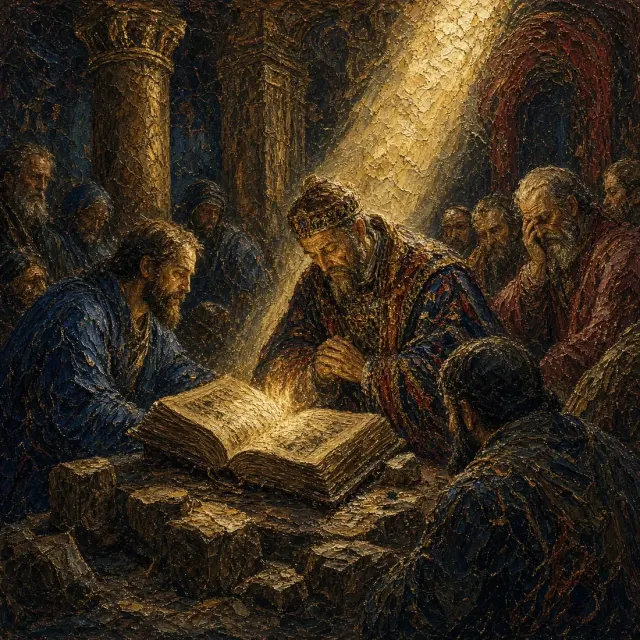
Josiah comes to the throne as a child after his father is murdered in the palace. In the eighteenth year of his reign he sends money to repair the house, and in the course of the repairs the high priest finds the book of the law. It is read aloud to him and he tears his clothes, because he understands immediately that generations have been living outside it without knowing. He sends to a prophetess, gets an answer that the disaster is coming but not in his days, and then spends the rest of his reign dismantling four centuries of shrines anyway.

Where he appears2 Kings 22 to 23 · 2 Chronicles 34 to 35

Scroll down to the account
Josiah

The movements, in the order the text gives them.

The Account of Josiah

  1. 01

    2 Kings 22:3-10

    I have found the book

    Money is being counted out for carpenters and masons when Hilkiah says he has found it in the house of the LORD. Shaphan reads it first, then reads it to the king.

    The workmen need no audit. The kingdom does. The report begins with silver, timber and stone, and the men handling the money are trusted because they deal faithfully. Nothing in the passage suggests a fraudulent building project. The disturbance comes from a different quarter: the house being repaired contains a book whose words require attention quite beyond the condition of its walls.

    Hilkiah calls it the book of the law. Shaphan reads it, delivers the financial report and then reads the book before the king. The plainness is striking. No description of a jeweled cover, a sealed chest or an inscription announcing a priceless discovery. The text supplies none of that furniture. What matters is that the words pass from the priest to the scribe and from the scribe into the king's hearing. The book is not merely found and admired. It is read. The temple repair has put something before Josiah that cannot be settled by hiring more masons.

    Verse by verse

    1. 22:3

      Second Chronicles 34:3 places the beginning of Josiah's purge in his twelfth year, before this eighteenth-year discovery. The books organize their accounts differently; the discovery must not be made the beginning of every reform.

    2. 22:7

      Reckoning means an accounting of the money entrusted to the workers. The stated reason for dispensing with it is their faithfulness, not indifference to the funds.

    3. 22:8

      The passage does not identify the scroll's exact extent, how long it had been missing or who had put it there. Those details should not be supplied as facts.

    4. 22:10

      Shaphan has already read the book in verse 8; now he reads it before the king. The repeated act of reading matters more here than the book's physical appearance.

    2 Kings 22:3-10

    King James Version · 8 verses

    22:3And it came to pass in the eighteenth year of king Josiah, that the king sent Shaphan the son of Azaliah, the son of Meshullam, the scribe, to the house of the LORD, saying,

    22:4Go up to Hilkiah the high priest, that he may sum the silver which is brought into the house of the LORD, which the keepers of the door have gathered of the people:

    22:5And let them deliver it into the hand of the doers of the work, that have the oversight of the house of the LORD: and let them give it to the doers of the work which is in the house of the LORD, to repair the breaches of the house,

    22:6Unto carpenters, and builders, and masons, and to buy timber and hewn stone to repair the house.

    22:7Howbeit there was no reckoning made with them of the money that was delivered into their hand, because they dealt faithfully.

    22:8And Hilkiah the high priest said unto Shaphan the scribe, I have found the book of the law in the house of the LORD. And Hilkiah gave the book to Shaphan, and he read it.

    22:9And Shaphan the scribe came to the king, and brought the king word again, and said, Thy servants have gathered the money that was found in the house, and have delivered it into the hand of them that do the work, that have the oversight of the house of the LORD.

    22:10And Shaphan the scribe shewed the king, saying, Hilkiah the priest hath delivered me a book. And Shaphan read it before the king.

    2 Kings 22:3-10: I have found the book
  2. 02

    2 Kings 22:11-20

    He tore his clothes

    His reaction is immediate and physical. He sends five men to inquire, saying great is the wrath kindled against us because our fathers have not listened to the words of this book.

    The high priest finds the book, but he does not supply its answer. He goes with the royal delegation to Huldah. The passage introduces her without apology or explanation as the prophetess, and the men sent by the king receive the word of the LORD through her. Their offices do not give them control of the reply.

    Huldah delivers two answers, not one softened answer. Judgment is coming upon the place because its people have forsaken the LORD. Josiah's response is also heard: his tender heart, torn clothes and tears are explicitly acknowledged. The balance of hearing is beautiful and exact. The king has heard the words of the book; God says, I also have heard thee. Personal humility does not make the national indictment disappear. Neither does the national indictment make that humility invisible.

    The promise of burial in peace is followed immediately by its stated assurance: Josiah will not see the calamity brought upon this place. His violent death remains a real tension in the accounts, not something to conceal behind a pleasant phrase. The promise concerns Jerusalem's approaching disaster; it cannot simply be paraphrased as a death without violence.

    Verse by verse

    1. 22:14

      Huldah is explicitly called a prophetess. The passage does not explain why the delegation consulted her rather than another prophet, so a reason should not be invented.

    2. 22:14

      The Hebrew mishneh here denotes a second quarter or district of Jerusalem. The KJV's college should not be understood as a modern university.

    3. 22:19

      The divine reply names Josiah's tears and humility. These are stated responses, not imagined feelings supplied to make the scene more emotional.

    4. 22:20

      The following clause connects the promised peace with not witnessing the city's coming calamity. Second Chronicles 35:23-24 nevertheless records a fatal battle wound, so the wording requires care rather than silent harmonization.

    2 Kings 22:11-20

    King James Version · 10 verses

    22:11And it came to pass, when the king had heard the words of the book of the law, that he rent his clothes.

    22:12And the king commanded Hilkiah the priest, and Ahikam the son of Shaphan, and Achbor the son of Michaiah, and Shaphan the scribe, and Asahiah a servant of the king’s, saying,

    22:13Go ye, enquire of the LORD for me, and for the people, and for all Judah, concerning the words of this book that is found: for great is the wrath of the LORD that is kindled against us, because our fathers have not hearkened unto the words of this book, to do according unto all that which is written concerning us.

    22:14So Hilkiah the priest, and Ahikam, and Achbor, and Shaphan, and Asahiah, went unto Huldah the prophetess, the wife of Shallum the son of Tikvah, the son of Harhas, keeper of the wardrobe; (now she dwelt in Jerusalem in the college;) and they communed with her.

    22:15And she said unto them, Thus saith the LORD God of Israel, Tell the man that sent you to me,

    22:16Thus saith the LORD, Behold, I will bring evil upon this place, and upon the inhabitants thereof, even all the words of the book which the king of Judah hath read:

    22:17Because they have forsaken me, and have burned incense unto other gods, that they might provoke me to anger with all the works of their hands; therefore my wrath shall be kindled against this place, and shall not be quenched.

    22:18But to the king of Judah which sent you to enquire of the LORD, thus shall ye say to him, Thus saith the LORD God of Israel, As touching the words which thou hast heard;

    22:19Because thine heart was tender, and thou hast humbled thyself before the LORD, when thou heardest what I spake against this place, and against the inhabitants thereof, that they should become a desolation and a curse, and hast rent thy clothes, and wept before me; I also have heard thee, saith the LORD.

    22:20Behold therefore, I will gather thee unto thy fathers, and thou shalt be gathered into thy grave in peace; and thine eyes shall not see all the evil which I will bring upon this place. And they brought the king word again.

  3. 03

    2 Kings 23:1-3

    He read it in their ears

    He gathers the elders, the priests, the prophets and all the people, small and great, and reads the whole book out loud himself, standing by a pillar, and makes a covenant.

    The king does the reading. He does not become the author. That distinction is the center of this assembly: Josiah gathers the people around words that bind his throne as surely as they bind everyone standing before it. The book found inside the temple is now heard there by priests, prophets and people, both small and great. A discovery in the building has become a public hearing.

    The covenant is not a promise to preserve a valuable manuscript. Its verbs insist on action: walk, keep, perform. Even the posture carries a commitment. Josiah stands by a pillar, and the people stand to the covenant, an expression of assent rather than a comment about tired legs. The royal position is visible, but the authority of the written words governs the occasion. Deuteronomy 17:18-20 had already placed Israel's king beneath the law he was to read, rather than above it. This is not Josiah announcing that his own words have become law. It is Josiah acknowledging that the law has a claim on him.

    Verse by verse

    1. 23:2

      The gathering in Second Kings includes priests and prophets. The parallel in Second Chronicles 34:30 says priests and Levites; the wording of one account should not replace the other.

    2. 23:3

      The pillar marks Josiah's position during the covenant ceremony. This verse does not name it as either Jachin or Boaz, the two pillars described in First Kings 7:21.

    3. 23:3

      Stood to the covenant means that the people assented or committed themselves to it. It is more than a description of bodily posture.

    2 Kings 23:1-3

    King James Version · 3 verses

    23:1And the king sent, and they gathered unto him all the elders of Judah and of Jerusalem.

    23:2And the king went up into the house of the LORD, and all the men of Judah and all the inhabitants of Jerusalem with him, and the priests, and the prophets, and all the people, both small and great: and he read in their ears all the words of the book of the covenant which was found in the house of the LORD.

    23:3And the king stood by a pillar, and made a covenant before the LORD, to walk after the LORD, and to keep his commandments and his testimonies and his statutes with all their heart and all their soul, to perform the words of this covenant that were written in this book. And all the people stood to the covenant.

    2 Kings 23:1-3: He read it in their ears
  4. 04

    2 Kings 23:4-20

    Down to Bethel

    Vessels burned in the fields of Kidron, the houses of the sodomites broken down, Topheth defiled so no one can pass a child through fire, the horses of the sun taken away, and finally the altar at Bethel that Jeroboam made.

    The dust has a royal pedigree. The passage names Solomon, Ahaz, Manasseh and Jeroboam as Josiah works through the accumulated worship of earlier reigns. Age does not protect an altar, and a royal founder does not make it untouchable. Even the temple itself must be emptied of objects made for other gods. The trouble is not safely confined to somebody else's hillside.

    Defiled is one of the decisive words. Josiah is not closing sanctuaries with an option to reopen. Burning, grinding and the use of human bones make the places unfit for their former worship. At Topheth the purpose is stated with dreadful specificity: no son or daughter is to be made to pass through the fire to Molech there. The treatment of priests also requires exactness. The Judean high-place priests lose access to Jerusalem's altar but still eat among their brethren. The priests of the northern shrines are killed upon their altars. The Book of Second Kings records both. Those are not interchangeable outcomes.

    Then, amid the destruction at Bethel, a grave is left alone. The king recognizes the earlier word against Jeroboam's altar and orders that its messenger's bones remain undisturbed. The contrast is physical: bones scattered and burned, two men's bones deliberately spared. The old prophetic word is not another relic being cleared away. It is the stated explanation of what Josiah is doing.

    Verse by verse

    1. 23:4

      Ashes from the objects removed from Jerusalem's temple are taken to Bethel. The geographical movement connects the cleansing of the southern sanctuary with the northern altar associated with Jeroboam.

    2. 23:9

      The Judean high-place priests are excluded from service at Jerusalem's altar, not from every form of fellowship or food. Their treatment differs from the killing of northern priests in verse 20.

    3. 23:10

      The verse expressly connects the defiling of Topheth with stopping the passage of sons and daughters through fire to Molech. The reform concerns people as well as religious objects.

    4. 23:13

      The passage attributes these high places to Solomon. It does not treat their royal origin or antiquity as grounds for preserving them.

    5. 23:17

      Title here means the identifying marker or inscription of the grave. First Kings 13:2 had named Josiah in the proclamation against Bethel's altar.

    6. 23:20

      Slew is literal killing, not merely dismissal from religious office. The account must not be softened into the removal of shrine employees.

    2 Kings 23:4-20: Down to Bethel

    2 Kings 23:4-20

    King James Version · 17 verses

    23:4And the king commanded Hilkiah the high priest, and the priests of the second order, and the keepers of the door, to bring forth out of the temple of the LORD all the vessels that were made for Baal, and for the grove, and for all the host of heaven: and he burned them without Jerusalem in the fields of Kidron, and carried the ashes of them unto Beth-el.

    23:5And he put down the idolatrous priests, whom the kings of Judah had ordained to burn incense in the high places in the cities of Judah, and in the places round about Jerusalem; them also that burned incense unto Baal, to the sun, and to the moon, and to the planets, and to all the host of heaven.

    23:6And he brought out the grove from the house of the LORD, without Jerusalem, unto the brook Kidron, and burned it at the brook Kidron, and stamped it small to powder, and cast the powder thereof upon the graves of the children of the people.

    23:7And he brake down the houses of the sodomites, that were by the house of the LORD, where the women wove hangings for the grove.

    23:8And he brought all the priests out of the cities of Judah, and defiled the high places where the priests had burned incense, from Geba to Beer-sheba, and brake down the high places of the gates that were in the entering in of the gate of Joshua the governor of the city, which were on a man’s left hand at the gate of the city.

    23:9Nevertheless the priests of the high places came not up to the altar of the LORD in Jerusalem, but they did eat of the unleavened bread among their brethren.

    23:10And he defiled Topheth, which is in the valley of the children of Hinnom, that no man might make his son or his daughter to pass through the fire to Molech.

    23:11And he took away the horses that the kings of Judah had given to the sun, at the entering in of the house of the LORD, by the chamber of Nathan-melech the chamberlain, which was in the suburbs, and burned the chariots of the sun with fire.

    23:12And the altars that were on the top of the upper chamber of Ahaz, which the kings of Judah had made, and the altars which Manasseh had made in the two courts of the house of the LORD, did the king beat down, and brake them down from thence, and cast the dust of them into the brook Kidron.

    23:13And the high places that were before Jerusalem, which were on the right hand of the mount of corruption, which Solomon the king of Israel had builded for Ashtoreth the abomination of the Zidonians, and for Chemosh the abomination of the Moabites, and for Milcom the abomination of the children of Ammon, did the king defile.

    23:14And he brake in pieces the images, and cut down the groves, and filled their places with the bones of men.

    23:15Moreover the altar that was at Beth-el, and the high place which Jeroboam the son of Nebat, who made Israel to sin, had made, both that altar and the high place he brake down, and burned the high place, and stamped it small to powder, and burned the grove.

    23:16And as Josiah turned himself, he spied the sepulchres that were there in the mount, and sent, and took the bones out of the sepulchres, and burned them upon the altar, and polluted it, according to the word of the LORD which the man of God proclaimed, who proclaimed these words.

    23:17Then he said, What title is that that I see? And the men of the city told him, It is the sepulchre of the man of God, which came from Judah, and proclaimed these things that thou hast done against the altar of Beth-el.

    23:18And he said, Let him alone; let no man move his bones. So they let his bones alone, with the bones of the prophet that came out of Samaria.

    23:19And all the houses also of the high places that were in the cities of Samaria, which the kings of Israel had made to provoke the LORD to anger, Josiah took away, and did to them according to all the acts that he had done in Beth-el.

    23:20And he slew all the priests of the high places that were there upon the altars, and burned men’s bones upon them, and returned to Jerusalem.

  5. 05

    2 Kings 23:21-25

    Such a Passover was not held

    Not from the days of the judges, nor in all the days of the kings of Israel or of Judah. Then the verdict: none like him before or after, with all his heart and all his soul and all his might.

    After the ashes comes a meal. Josiah's response to the book includes more than tearing down what it forbids. The Passover is kept as it is written in the book of this covenant. The same written words that direct destruction also order a gathering, a sacrifice and the remembrance of deliverance. Reform has a table as well as a demolition site.

    The account keeps returning to the book found by Hilkiah. It explains the removal of forbidden practices and supplies the measure of Josiah's turning: all his heart, all his soul, all his might, according to the law of Moses. The praise is not vague enthusiasm for a busy reign. Its terms are the terms of the law itself.

    Then the next verse begins Notwithstanding. The LORD's anger over Manasseh's provocations remains, even after this account of Josiah's wholehearted response. Both statements belong to the passage's setting. The Book of Second Kings neither dismisses Josiah's obedience as theater nor presents it as an eraser for everything that preceded him. The covenant has been taken seriously. The consequences of its long violation have not vanished.

    Verse by verse

    1. 23:22

      Such a passover is a comparison, not a claim that no Passover at all had been observed before Josiah. Second Chronicles 35:18 makes a corresponding comparison reaching back to Samuel.

    2. 23:23

      The Passover belongs to Josiah's eighteenth year, the same regnal year as the book's discovery in Second Kings 22:3. The text connects the recovered law with an actual observance.

    3. 23:25

      Verses 26-27 immediately retain the announcement of judgment against Judah. The commendation of Josiah should be read without deleting that qualification from the surrounding account.

    4. 23:25

      Matthew 1:10-11 names Josiah, written Josias in the KJV, in the genealogy of Jesus. The Gospel's compressed genealogy should not be used as a complete list of every intervening generation.

    2 Kings 23:21-25

    King James Version · 5 verses

    23:21And the king commanded all the people, saying, Keep the passover unto the LORD your God, as it is written in the book of this covenant.

    23:22Surely there was not holden such a passover from the days of the judges that judged Israel, nor in all the days of the kings of Israel, nor of the kings of Judah;

    23:23But in the eighteenth year of king Josiah, wherein this passover was holden to the LORD in Jerusalem.

    23:24Moreover the workers with familiar spirits, and the wizards, and the images, and the idols, and all the abominations that were spied in the land of Judah and in Jerusalem, did Josiah put away, that he might perform the words of the law which were written in the book that Hilkiah the priest found in the house of the LORD.

    23:25And like unto him was there no king before him, that turned to the LORD with all his heart, and with all his soul, and with all his might, according to all the law of Moses; neither after him arose there any like him.

    2 Kings 23:21-25: Such a Passover was not held
  6. 06

    2 Chronicles 35:20-25

    Megiddo

    Neco is going to fight at Carchemish and sends word that his quarrel is not with Judah. Josiah disguises himself and goes out to the valley anyway, and is shot by archers, and Jeremiah laments for him.

    The warning comes from the wrong mouth for an easy ending. Necho is an Egyptian king speaking about his own campaign, but the Book of Second Chronicles goes beyond reporting his claim. It expressly calls his words from the mouth of God. The man who heard the recovered book and responded now fails to hear a word delivered through a foreign ruler. The passage itself makes that painful distinction.

    The disguise does not remove the king from the reach of the archers. His last recorded speech here is a request to be taken away because he is sore wounded, and the account gives the practical, terrible detail of a transfer from one chariot to another. It does not provide Josiah's private reasoning for entering the fight, and no confident reconstruction of his thoughts belongs in the silence.

    Yet the account does not end with the wound. Judah and Jerusalem mourn; Jeremiah laments; male and female singers preserve the lament in an established observance. The warning was disregarded, and the grief is real. Neither fact is edited out to make the other easier. His final act is not allowed to erase the public memory of his reign.

    Verse by verse

    1. 35:20

      After all this does not mean immediately after the Passover. That celebration occurred in the eighteenth year, while Second Kings 22:1 gives Josiah a reign of thirty-one years.

    2. 35:22

      From the mouth of God is the Book of Second Chronicles' own description, not merely a claim left inside Necho's quoted message. That distinction is essential to the account's explanation of Josiah's death.

    3. 35:24

      Second Kings 23:29-30 places the killing at Megiddo and describes Josiah being carried away dead. Second Chronicles records his transfer between chariots, arrival in Jerusalem and then death; the sequences should not be silently merged.

    4. 35:25

      The lamentations mentioned here are not explicitly identified as the biblical Book of Lamentations. The verse does not provide Jeremiah's lament for Josiah as an identifiable quotation from that book.

    2 Chronicles 35:20-25

    King James Version · 6 verses

    35:20After all this, when Josiah had prepared the temple, Necho king of Egypt came up to fight against Carchemish by Euphrates: and Josiah went out against him.

    35:21But he sent ambassadors to him, saying, What have I to do with thee, thou king of Judah? I come not against thee this day, but against the house wherewith I have war: for God commanded me to make haste: forbear thee from meddling with God, who is with me, that he destroy thee not.

    35:22Nevertheless Josiah would not turn his face from him, but disguised himself, that he might fight with him, and hearkened not unto the words of Necho from the mouth of God, and came to fight in the valley of Megiddo.

    35:23And the archers shot at king Josiah; and the king said to his servants, Have me away; for I am sore wounded.

    35:24His servants therefore took him out of that chariot, and put him in the second chariot that he had; and they brought him to Jerusalem, and he died, and was buried in one of the sepulchres of his fathers. And all Judah and Jerusalem mourned for Josiah.

    35:25And Jeremiah lamented for Josiah: and all the singing men and the singing women spake of Josiah in their lamentations to this day, and made them an ordinance in Israel: and, behold, they are written in the lamentations.

    2 Chronicles 35:20-25: Megiddo

Why it matters

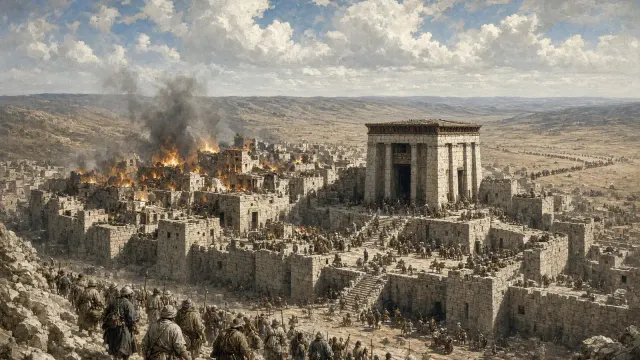
Josiah is the deepest reform in the history of Judah and it changes nothing about the outcome, which is the point the account is making. Kings says there was no king before or after him who turned to the LORD with all his heart and soul and might, according to all the law of Moses, and in the same breath that the LORD did not turn from the fierceness of his wrath because of Manasseh. He keeps the largest Passover since the days of the judges, and dies at Megiddo going out to meet Pharaoh Neco.

4 songs

The music

Every song in the catalogue whose passage falls inside these chapters.

  1. 2 Kings 21:1-23:30

    The Book Found in the House

  2. 2 Kings 22-23

    The Book Was Found

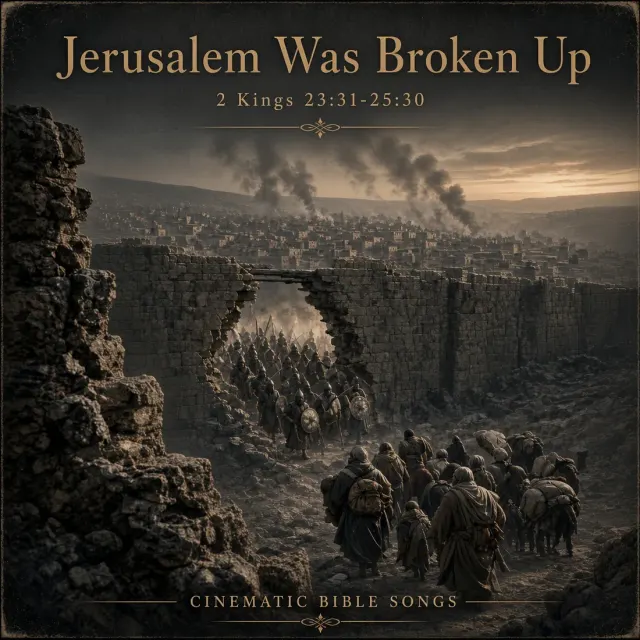
  3. 2 Kings 23:31-25:30

    Jerusalem Was Broken Up

  4. 2 Chronicles 33:1-36:23

    Until the Land Had Enjoyed Her Sabbaths

Nearby

All the people

Report an error on this page