
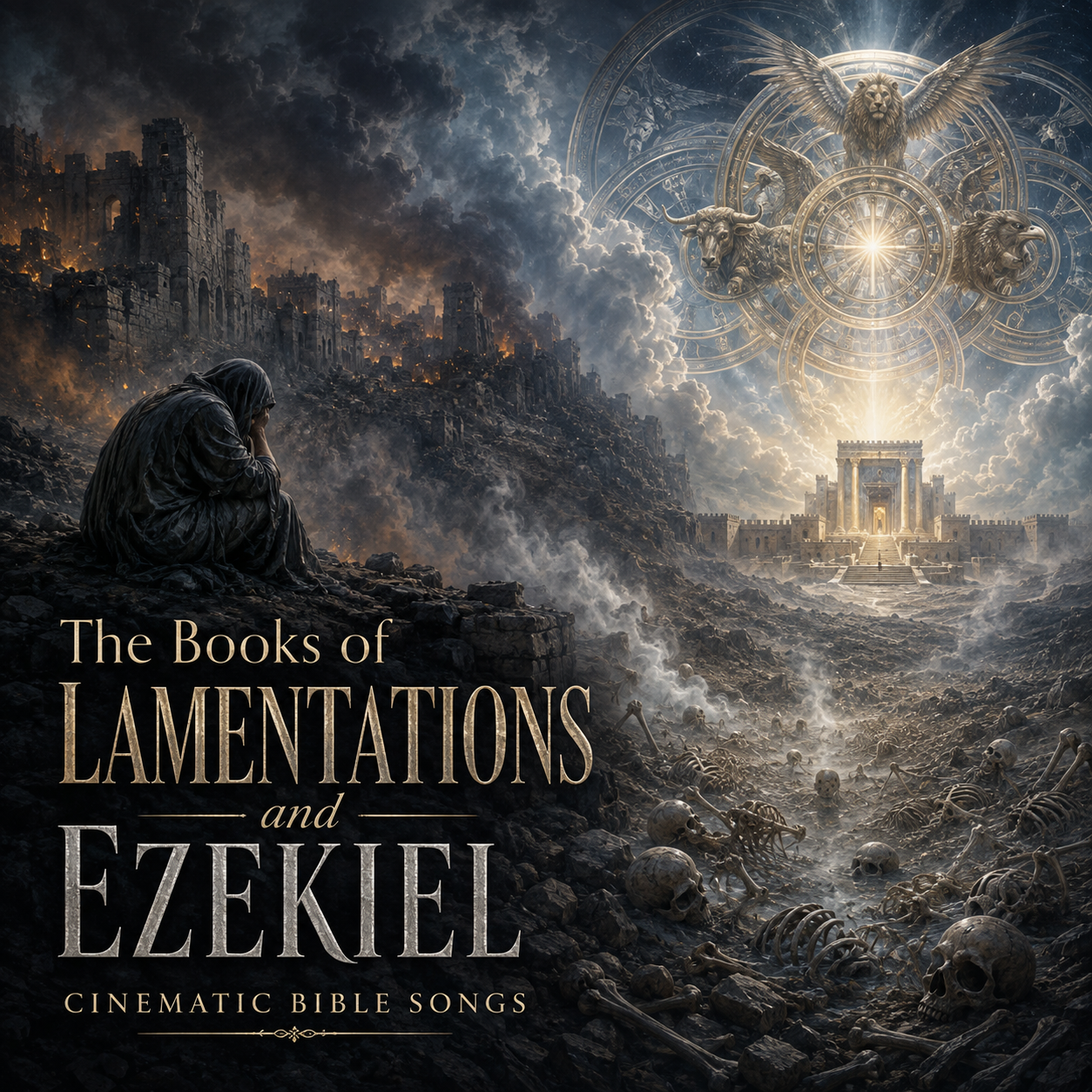

Lyrics · Lamentations
Lamentations (How Lonely Sits the City)
Lamentations 1:1–5:22
Lyrics
Playing next
About this song
About this song
This song belongs to the Lamentations collection. One recording is available to play here, with the complete lyrics below.
- Bible book
- Lamentations
- Collection
- Lamentations
- Musical styles
- Acoustic
Lyrics transcribed from this recording. Word-for-word review is pending.
Named in this songJerusalem
About the passage
Lamentations 1: The city that has no comforter
Lamentations 1 makes absence audible. Jerusalem is measured against what used to fill her: people, feasts, allies, children, leaders, food, and honor. Even the roads and gates seem to register what no longer arrives. Yet the city does not remain a distant object under inspection. Her own voice interrupts the description and repeatedly asks the Lord and the surrounding world to look. She acknowledges rebellion and the Lord's righteousness without treating that confession as a reason to minimize captivity, hunger, betrayal, or death. The chapter's controlling ache is the missing comforter. Former lovers fail, enemies rejoice, and no human relationship repairs what has collapsed. The final prayer therefore holds two claims together: Jerusalem's transgressions are real, and the wickedness of those who delight in her ruin is also brought before God.
Study Lamentations 1 in depthLamentations 2: The sanctuary is not spared
Lamentations 2 removes any easy refuge in sacred institutions. The Lord is described as acting against Zion, withdrawing protection, overturning strongholds, rejecting altar and sanctuary, and allowing enemy noise to occupy the house once associated with solemn gathering. The effect is not merely political defeat. Worship, kingship, law, prophetic vision, civic authority, and the city's own walls are drawn into the collapse. Then the chapter narrows from institutions to bodies. Children faint from hunger, mothers hold dying children, and the speaker admits that he cannot find a comparison large enough to make consolation adequate. False prophetic reassurance is exposed precisely because pleasant words did not confront what needed confronting. Passersby and enemies mock the fallen city, but their boasting is not allowed to become the final explanation. The chapter closes by turning Zion's anguish into direct prayer, where starvation, killing, and the destruction of refuge are named without polite religious substitutes.
Study Lamentations 2 in depthLamentations 3: Hope speaks from inside the affliction
Lamentations 3 refuses to separate hope from the voice that needs it. An unnamed afflicted man begins in darkness, enclosure, bodily pain, ridicule, and the conviction that even his prayer has been blocked. The imagery keeps changing while the helpless position does not: siege, chains, ambush, arrows, bitterness, gravel, ashes, and forgotten peace. Then memory itself turns. The sufferer recalls that the Lord's mercies have not failed and names faithfulness from the narrow fact that the people have not been consumed. Those famous lines do not report restored circumstances. They stand inside a chapter that will return to anger, tears, persecution, and another cloud over prayer. Waiting is grounded in the claim that rejection is not forever, while the denial of justice is still named as something the Lord does not approve. Communal confession follows, yet pardon is not immediately experienced. Later, remembered rescue from the pit becomes the basis for a legal appeal, and the chapter ends not with serenity but with severe petitions that God judge persistent enemies.
Study Lamentations 3 in depth