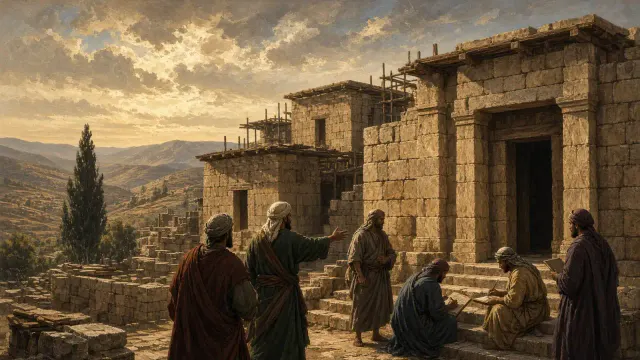
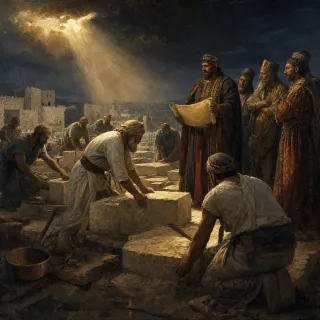
3:8Now in the second year of their coming unto the house of God at Jerusalem, in the second month, began Zerubbabel the son of Shealtiel, and Jeshua the son of Jozadak, and the remnant of their brethren the priests and the Levites, and all they that were come out of the captivity unto Jerusalem; and appointed the Levites, from twenty years old and upward, to set forward the work of the house of the LORD.
3:9Then stood Jeshua with his sons and his brethren, Kadmiel and his sons, the sons of Judah, together, to set forward the workmen in the house of God: the sons of Henadad, with their sons and their brethren the Levites.
3:10And when the builders laid the foundation of the temple of the LORD, they set the priests in their apparel with trumpets, and the Levites the sons of Asaph with cymbals, to praise the LORD, after the ordinance of David king of Israel.
3:11And they sang together by course in praising and giving thanks unto the LORD; because he is good, for his mercy endureth for ever toward Israel. And all the people shouted with a great shout, when they praised the LORD, because the foundation of the house of the LORD was laid.
3:12But many of the priests and Levites and chief of the fathers, who were ancient men, that had seen the first house, when the foundation of this house was laid before their eyes, wept with a loud voice; and many shouted aloud for joy:
3:13So that the people could not discern the noise of the shout of joy from the noise of the weeping of the people: for the people shouted with a loud shout, and the noise was heard afar off.



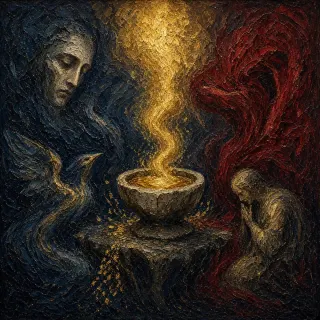





The foundation has a choir before it has a roof. Priests stand in their appointed clothing, trumpets sound, and the sons of Asaph bring the cymbals. The building is new; the ordinance belongs to David. Zerubbabel is not founding a religion to suit a smaller province. The returned community is taking up the worship that preceded its captivity.
The refrain has particular weight on this ground: his mercy endureth for ever toward Israel. These singers belong to a people who have known the destruction of the house whose foundation they are celebrating. Enduring mercy does not mean that destruction never happened. It means the destruction has not exhausted the relationship being confessed in the song.
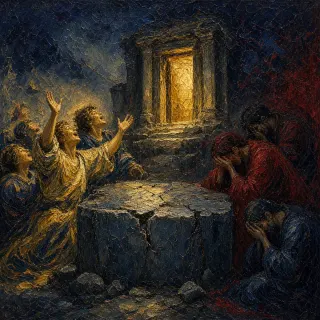
Then the sound refuses to stay simple. Many of the older witnesses weep, while many others shout for joy. The Book of Ezra neither scolds the tears nor edits them out of the ceremony. The first house has living witnesses, and a foundation cannot erase what their eyes remember. From a distance the two responses become one great noise. Up close, they remain different. The same stonework can mark a real beginning and make a real loss audible.