New · FreePlay The Witnesses The in-depth puzzle battle quest through Bible history

People of the Bible

Zechariah

Given eight visions in one night, and more lines about the Messiah than any prophet except Isaiah.

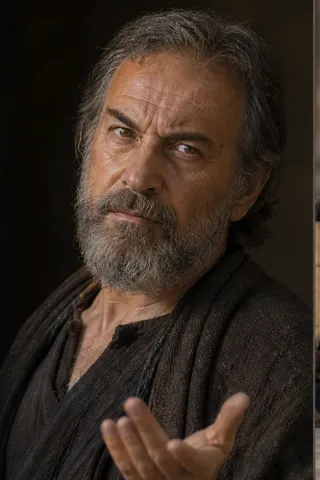
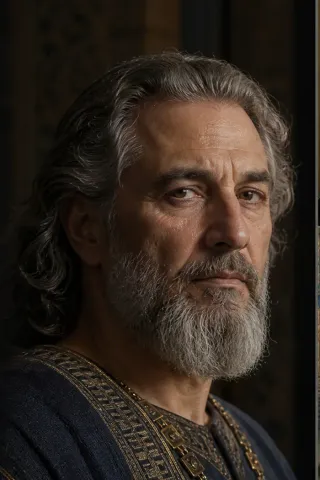
Zechariah begins two months after Haggai and works alongside him on the same building site, but the method could not be more different. Where Haggai gives dated sermons about timber and wages, Zechariah is shown eight visions in a single night and spends the rest of the book being asked what he sees. Horses among myrtle trees, a man with a measuring line, filthy garments taken off a high priest in a courtroom, a lampstand fed by two olive trees without human hands, a flying scroll, and four chariots.

Where he appearsZechariah 1 to 14

Scroll down to the account
Zechariah

The movements, in the order the text gives them.

The Account of Zechariah

  1. 01

    Zechariah 1:7-17

    Horses among the myrtle trees

    Riders sent to walk to and fro through the earth report that all is sitting still and at rest, which is the problem. The answer is jealousy for Jerusalem and comfortable words.

    The patrol reports peace, and the angel immediately asks for mercy. That is the unsettling turn. The earth's rest has not meant Jerusalem's restoration; the nations are comfortable while the damaged cities of Judah remain the subject of a seventy-year lament. A quiet world is not necessarily a world put right. The vision distinguishes the absence of disturbance from the presence of justice.

    The answer is more than reassurance that heaven has noticed. God declares his return with mercies, names his house, and promises a measuring line over Jerusalem. The scale moves from the whole earth to the practical dimensions of a city being rebuilt. Nor does the use of foreign nations in judgment excuse their cruelty: they helped forward the affliction. Their ease receives displeasure; Jerusalem receives comfort. The same report sounds different depending on whose ruins lie beneath it.

    Verse by verse

    1. 1:7

      Sebat is identified in the verse itself as the eleventh month. The dated vision belongs to the second year of Darius, as do Haggai's messages.

    2. 1:8

      The bottom is a low place or hollow. The passage identifies the horses' patrol function but does not assign a named historical empire to each color.

    3. 1:13

      Comfortable means consoling or comforting, not luxurious. The promised comfort reappears explicitly in 1:17.

    4. 1:16

      The measuring line here belongs to rebuilding. In 1:3 the people were called to return to God; in 1:16 God announces his return to Jerusalem.

    Zechariah 1:7-17

    King James Version · 11 verses

    1:7Upon the four and twentieth day of the eleventh month, which is the month Sebat, in the second year of Darius, came the word of the LORD unto Zechariah, the son of Berechiah, the son of Iddo the prophet, saying,

    1:8I saw by night, and behold a man riding upon a red horse, and he stood among the myrtle trees that were in the bottom; and behind him were there red horses, speckled, and white.

    1:9Then said I, O my lord, what are these? And the angel that talked with me said unto me, I will shew thee what these be.

    1:10And the man that stood among the myrtle trees answered and said, These are they whom the LORD hath sent to walk to and fro through the earth.

    1:11And they answered the angel of the LORD that stood among the myrtle trees, and said, We have walked to and fro through the earth, and, behold, all the earth sitteth still, and is at rest.

    1:12Then the angel of the LORD answered and said, O LORD of hosts, how long wilt thou not have mercy on Jerusalem and on the cities of Judah, against which thou hast had indignation these threescore and ten years?

    1:13And the LORD answered the angel that talked with me with good words and comfortable words.

    1:14So the angel that communed with me said unto me, Cry thou, saying, Thus saith the LORD of hosts; I am jealous for Jerusalem and for Zion with a great jealousy.

    1:15And I am very sore displeased with the heathen that are at ease: for I was but a little displeased, and they helped forward the affliction.

    1:16Therefore thus saith the LORD; I am returned to Jerusalem with mercies: my house shall be built in it, saith the LORD of hosts, and a line shall be stretched forth upon Jerusalem.

    1:17Cry yet, saying, Thus saith the LORD of hosts; My cities through prosperity shall yet be spread abroad; and the LORD shall yet comfort Zion, and shall yet choose Jerusalem.

  2. 02

    Zechariah 3:1-5

    Take away the filthy garments

    Joshua the high priest stands in filthy clothes with an accuser at his right hand. The garments are removed, iniquity passes, and a clean turban is set on his head while the angel stands by.

    Joshua's defense is not that the clothes are really quite clean. They are filthy, and the explanation given for their removal is the removal of iniquity. The vision refuses to confuse mercy with a favorable reassessment of the evidence. God rebukes the accuser by invoking his choice of Jerusalem and a piece of wood rescued from fire. A rescued brand is not a claim that there was never a blaze.

    Joshua says nothing in these verses. Others remove the garments, and Zechariah speaks up about a clean turban. The high priest receives what makes him fit to stand there. His restoration also reaches beyond one man's wardrobe: Jerusalem is named in his defense, and the following verses speak of the land's iniquity and the coming Branch. The priest's soiled clothing has become the place where the community's need is made visible.

    Verse by verse

    1. 3:1

      The Hebrew has has-satan, the accuser or adversary, followed by a verb from the same root describing his opposition. The wording gives the scene a sharply accusatory character.

    2. 3:2

      Jude 1:9 uses the same rebuke formula in Michael's dispute with the devil. The echo does not make the dispute over Moses' body the same event as Joshua's vision.

    3. 3:2

      Amos 4:11 also uses the image of a brand plucked from burning. It describes survival from destruction, not a person never exposed to judgment.

    4. 3:5

      A fair mitre is a clean turban. Iniquity is explicitly removed in 3:4, so the changed clothing is interpreted within the passage itself.

    Zechariah 3:1-5

    King James Version · 5 verses

    3:1And he shewed me Joshua the high priest standing before the angel of the LORD, and Satan standing at his right hand to resist him.

    3:2And the LORD said unto Satan, The LORD rebuke thee, O Satan; even the LORD that hath chosen Jerusalem rebuke thee: is not this a brand plucked out of the fire?

    3:3Now Joshua was clothed with filthy garments, and stood before the angel.

    3:4And he answered and spake unto those that stood before him, saying, Take away the filthy garments from him. And unto him he said, Behold, I have caused thine iniquity to pass from thee, and I will clothe thee with change of raiment.

    3:5And I said, Let them set a fair mitre upon his head. So they set a fair mitre upon his head, and clothed him with garments. And the angel of the LORD stood by.

    Zechariah 3:1-5: Take away the filthy garments
  3. 03

    Zechariah 4:1-14

    Not by might, nor by power

    A lampstand with a bowl and seven pipes, fed directly by two olive trees. The word to Zerubbabel is that the mountain becomes a plain and that small beginnings are not to be despised.

    Zechariah admits twice that he does not understand the equipment. Seeing a vision has not made him its instant expert. The repeated questions keep the interpretation where it belongs, with the explanation given rather than with an ingenious guess about every pipe. At the center stands a word addressed to an actual builder, Zerubbabel: the work will be accomplished by God's Spirit rather than by might or power.

    That promise does not remove Zerubbabel's hands. The same hands that laid the foundation will finish the house, and a plummet will still be in one of them. Divine agency is not an instruction to put down the tools. The mountain becomes a plain, the finishing stone is brought out, and the day of small things receives a verdict larger than appearances allowed. The little worksite belongs within the sight of the Lord of the whole earth.

    Verse by verse

    1. 4:2

      Candlestick here means an oil lampstand, not a holder for wax candles. The bowl, pipes, lamps, and olive supply belong to that image.

    2. 4:7

      The headstone is the finishing or top stone in the building image. The verse is not describing a gravestone.

    3. 4:10

      The seven are identified as the eyes of the LORD. The passage does not give permission to turn each eye into a named human official.

    4. 4:14

      The Hebrew expression for the two anointed ones is literally sons of oil. Joshua and Zerubbabel are a common contextual identification, but verse 14 does not name them.

    Zechariah 4:1-14: Not by might, nor by power

    Zechariah 4:1-14

    King James Version · 14 verses

    4:1And the angel that talked with me came again, and waked me, as a man that is wakened out of his sleep,

    4:2And said unto me, What seest thou? And I said, I have looked, and behold a candlestick all of gold, with a bowl upon the top of it, and his seven lamps thereon, and seven pipes to the seven lamps, which are upon the top thereof:

    4:3And two olive trees by it, one upon the right side of the bowl, and the other upon the left side thereof.

    4:4So I answered and spake to the angel that talked with me, saying, What are these, my lord?

    4:5Then the angel that talked with me answered and said unto me, Knowest thou not what these be? And I said, No, my lord.

    4:6Then he answered and spake unto me, saying, This is the word of the LORD unto Zerubbabel, saying, Not by might, nor by power, but by my spirit, saith the LORD of hosts.

    4:7Who art thou, O great mountain? before Zerubbabel thou shalt become a plain: and he shall bring forth the headstone thereof with shoutings, crying, Grace, grace unto it.

    4:8Moreover the word of the LORD came unto me, saying,

    4:9The hands of Zerubbabel have laid the foundation of this house; his hands shall also finish it; and thou shalt know that the LORD of hosts hath sent me unto you.

    4:10For who hath despised the day of small things? for they shall rejoice, and shall see the plummet in the hand of Zerubbabel with those seven; they are the eyes of the LORD, which run to and fro through the whole earth.

    4:11Then answered I, and said unto him, What are these two olive trees upon the right side of the candlestick and upon the left side thereof?

    4:12And I answered again, and said unto him, What be these two olive branches which through the two golden pipes empty the golden oil out of themselves?

    4:13And he answered me and said, Knowest thou not what these be? And I said, No, my lord.

    4:14Then said he, These are the two anointed ones, that stand by the Lord of the whole earth.

  4. 04

    Zechariah 9:9-10

    Lowly, and riding on a donkey

    Rejoice greatly, your king comes to you, just and having salvation, and he shall speak peace to the nations. The chariot and the battle bow are cut off in the same breath.

    The donkey does not cancel the kingship. The next verse gives this lowly rider a dominion reaching to the ends of the earth, which is rather more than a modest arrival might suggest. What disappears is the machinery of war. And the chariot and horse removed first belong to Ephraim and Jerusalem, not merely to foreign enemies. Peace is not announced while the king's own territory keeps every weapon conveniently out of sight.

    The movement runs from one arriving king to peace spoken among the nations. His small mount and his immense dominion belong in the same picture. Matthew 21 and John 12 identify the entry of Jesus into Jerusalem with this passage. John adds the wonderfully unpolished detail that the disciples did not understand the connection at first. The significance was larger than the recognition it received on the day.

    Verse by verse

    1. 9:9

      The donkey and its colt are commonly read as parallel descriptions of one mount. Matthew 21:2-7 brings both the mother and the colt into the account.

    2. 9:9

      The Hebrew form nosha is grammatically passive, literally saved or delivered. Renderings such as victorious express the resulting condition.

    3. 9:10

      Ephraim represents the northern kingdom, while Jerusalem belongs to Judah. The removal of military equipment therefore embraces both parts of the divided people.

    Zechariah 9:9-10

    King James Version · 2 verses

    9:9Rejoice greatly, O daughter of Zion; shout, O daughter of Jerusalem: behold, thy King cometh unto thee: he is just, and having salvation; lowly, and riding upon an ass, and upon a colt the foal of an ass.

    9:10And I will cut off the chariot from Ephraim, and the horse from Jerusalem, and the battle bow shall be cut off: and he shall speak peace unto the heathen: and his dominion shall be from sea even to sea, and from the river even to the ends of the earth.

    Zechariah 9:9-10: Lowly, and riding on a donkey
  5. 05

    Zechariah 11:12-13

    Thirty pieces of silver

    He asks for his wages and they weigh out thirty pieces of silver. He is told to cast it to the potter, a goodly price that I was prised at of them, and he casts it in the house of the LORD.

    A goodly price is not a compliment. The irony becomes sharper because God describes the payment to the shepherd as the value placed upon himself. The preceding verses have already shown a flock marked for slaughter and the breaking of the shepherd's staff. Now the relationship is reduced to a sum that can be weighed. The care has been rejected; the accounts can apparently be settled with silver.

    The money ends up in the house of the LORD, attached to the potter rather than retained as an honorable wage. Matthew 26:15 gives the same amount for Judas's betrayal, and Matthew 27 brings the silver, the temple, and a potter's field together again. The transactions are not identical: here the shepherd receives wages, while Judas receives money to betray another. The connection lies in the appalling valuation, not in pretending that every action is the same.

    Verse by verse

    1. 11:12

      The silver is weighed, as money was commonly assessed by weight. The verse does not specify a modern equivalent or identify thirty coins of a particular denomination.

    2. 11:13

      Goodly price is ironic in this setting. God identifies the valuation of the shepherd with the valuation placed upon himself.

    3. 11:13

      Matthew 27:9 names Jeremiah, although the wording about silver and the potter closely resembles Zechariah 11:12-13. The reason for that attribution remains disputed.

    Zechariah 11:12-13

    King James Version · 2 verses

    11:12And I said unto them, If ye think good, give me my price; and if not, forbear. So they weighed for my price thirty pieces of silver.

    11:13And the LORD said unto me, Cast it unto the potter: a goodly price that I was prised at of them. And I took the thirty pieces of silver, and cast them to the potter in the house of the LORD.

    Zechariah 11:12-13: Thirty pieces of silver
  6. 06

    Zechariah 12:10; 13:7

    They shall look upon me

    A spirit of grace and supplications poured out, and mourning as for an only son. And, awake O sword against my shepherd, smite the shepherd and the sheep shall be scattered.

    Grace arrives, and the mourning begins. The preceding verses describe Jerusalem's deliverance from attackers; verse 10 turns from the enemies outside to the wounded figure upon whom the city must look. The comparison is not with a regrettable military setback but with the loss of an only son. Victory has not made this grief unnecessary. John 19:37 applies the words about piercing to Jesus after the soldier has pierced his side.

    The second passage is a separate saying, not the next sentence of the first. Here the sword is summoned against God's own shepherd, the man called his fellow. The scattering belongs to the wound: striking the shepherd breaks the flock's cohesion. In Matthew 26:31 and Mark 14:27, Jesus applies this saying to his own approaching arrest and the disciples' abandonment. Neither passage treats the suffering as an incidental detail on the edge of a triumph. The piercing and the blow stand at the center.

    Verse by verse

    1. 12:10

      The Hebrew moves from the first person, me, to the third person, him. The identity and relationship of these figures are debated; John 19:37 identifies the pierced one with Jesus.

    2. 12:10

      The only son and firstborn are comparisons conveying the weight of bereavement. They do not supply a separate family biography for an otherwise unidentified historical victim.

    3. 13:7

      Fellow translates a Hebrew term for a companion or close associate. The expression marks the shepherd as belonging close to God, not as an unrelated enemy.

    4. 13:7

      The following verses, 13:8-9, describe severe loss and the refining of survivors. The reference to little ones should not erase that continuing context of judgment.

    Zechariah 12:10; 13:7

    King James Version · 2 verses

    12:10And I will pour upon the house of David, and upon the inhabitants of Jerusalem, the spirit of grace and of supplications: and they shall look upon me whom they have pierced, and they shall mourn for him, as one mourneth for his only son, and shall be in bitterness for him, as one that is in bitterness for his firstborn.

    13:7Awake, O sword, against my shepherd, and against the man that is my fellow, saith the LORD of hosts: smite the shepherd, and the sheep shall be scattered: and I will turn mine hand upon the little ones.

    Zechariah 12:10; 13:7: They shall look upon me

Why it matters

Zechariah holds the small and the enormous together. The lampstand vision produces the sentence given to a governor laying a modest foundation: not by might, nor by power, but by my spirit, and do not despise the day of small things. And then the book keeps handing the gospels their material: a king coming lowly and riding on a donkey, thirty pieces of silver cast to the potter, the shepherd struck and the sheep scattered, and they shall look upon me whom they have pierced.

17 songs

The music

Every song in the catalogue whose passage falls inside these chapters.

  1. Zechariah 1:18-21

    Four Horns and Four Carpenters

    Play hereOpen song pageRead lyrics
  2. Zechariah 1:1-17

    Return unto the LORD

    Play hereOpen song pageRead lyrics
  3. Zechariah 1:1-14:21

    Zechariah (The King Is Coming)

    Play here
    Open song pageRead lyrics
  4. Zechariah 1:1-14:21

    Zechariah, Definitive Edition

    Play here
    Open song pageRead lyrics
  5. Zechariah 2:1-13

    A Wall of Fire Round About

    Play hereOpen song pageRead lyrics
  6. Zechariah 3:1-10

    Take Away the Filthy Garments

    Play hereOpen song pageRead lyrics
  7. Zechariah 4:1-14

    Not by Might, nor by Power

    Play hereOpen song pageRead lyrics
  8. Zechariah 5:1-11

    The Flying Roll and the Ephah

    Play hereOpen song pageRead lyrics
  9. Zechariah 6:1-15

    Four Chariots and the Branch

    Play hereOpen song pageRead lyrics
  10. Zechariah 7:1-8:23

    The Fast Shall Be Joy and Gladness

    Play hereOpen song pageRead lyrics
  11. Zechariah 9:1-17

    Thy King Cometh unto Thee

    Play hereOpen song pageRead lyrics
  12. Zechariah 10:1-12

    Ask Ye of the LORD Rain

    Play hereOpen song pageRead lyrics
  13. Zechariah 11:1-17

    Thirty Pieces of Silver

    Play hereOpen song pageRead lyrics
  14. Zechariah 12:10-14

    The Spirit of Grace and Supplications

  15. Zechariah 12:1-13:1

    They Shall Look upon the One They Pierced

    Play hereOpen song pageRead lyrics
  16. Zechariah 13:2-9

    Awake, O Sword, against My Shepherd

    Play hereOpen song pageRead lyrics
  17. Zechariah 14:1-21

    The LORD Shall Be King over All the Earth

    Play hereOpen song pageRead lyrics

Nearby

All the people

Report an error on this page