New · FreePlay The Witnesses The in-depth puzzle battle quest through Bible history

People of the Bible

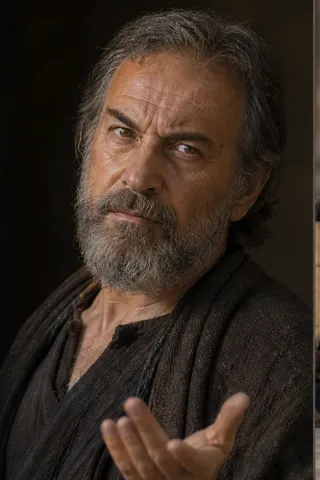
Haggai

Two chapters, four dated messages, and the only prophet in the Old Testament whose audience did exactly what he said.

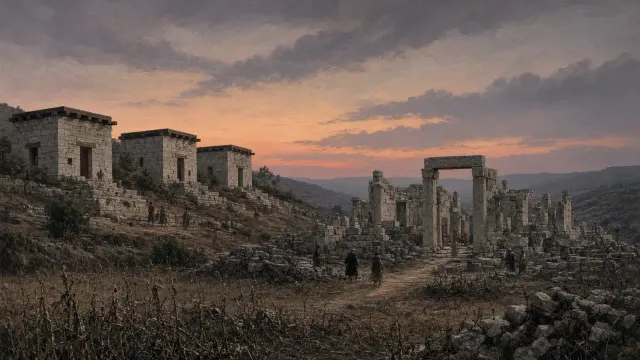
Haggai speaks in the second year of Darius to people who came back from exile sixteen years earlier, laid a foundation, met opposition, and stopped. His question is domestic rather than theological: is it time for you to dwell in your panelled houses and this house lie waste. He tells them to look at their own accounts, sowing much and bringing in little, earning wages to put into a bag with holes. Twenty-three days later the work restarts, and it is not interrupted again.

Where he appearsHaggai 1 to 2

Scroll down to the account
Haggai

The movements, in the order the text gives them.

The Account of Haggai

  1. 01

    Haggai 1:1-6

    Consider your ways

    You dwell in panelled houses and this house lies waste. You have sown much and bring in little, you clothe yourselves and none is warm, and he that earns wages puts them into a bag with holes.

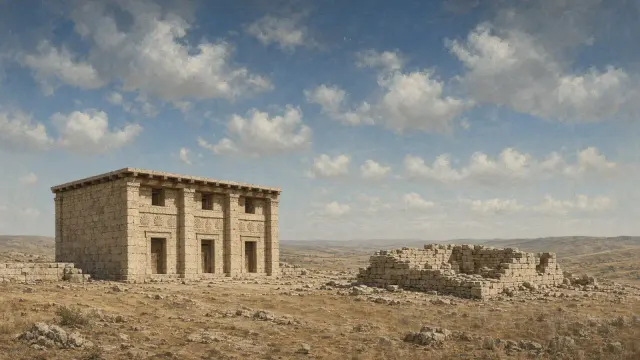
    The problem is not that nobody can build. The houses demonstrate otherwise. The people have found a suitable time for their own roofs, while the temple remains indefinitely assigned to some more suitable future. Haggai puts the two houses beside each other and lets the calendar excuse collapse between them. This is not a prohibition of comfortable homes. It is an exposure of selective urgency.

    Then the language moves from houses to bodies: eating without satisfaction, drinking without enough, dressing without warmth. These are working people, not people who have forgotten to sow or earn. Their labor produces less than it promises, and the final image gives the whole economy a hole in its pocket. In the surrounding verses God explicitly connects the drought with the neglected house. Haggai is diagnosing this covenant crisis, not supplying a universal explanation for every poor harvest.

    Verse by verse

    1. 1:1

      Zerubbabel is called governor, not king; the date is reckoned by the reign of Darius. The returned community has a temple project but no restored independent monarchy.

    2. 1:4

      Cieled means covered or paneled. The verse does not say that the paneling was stolen from supplies intended for the temple.

    3. 1:5

      The command to consider represents the Hebrew instruction to set the heart upon the course of conduct. It calls for sustained attention, not a passing thought.

    Haggai 1:1-6

    King James Version · 6 verses

    1:1In the second year of Darius the king, in the sixth month, in the first day of the month, came the word of the LORD by Haggai the prophet unto Zerubbabel the son of Shealtiel, governor of Judah, and to Joshua the son of Josedech, the high priest, saying,

    1:2Thus speaketh the LORD of hosts, saying, This people say, The time is not come, the time that the LORD’s house should be built.

    1:3Then came the word of the LORD by Haggai the prophet, saying,

    1:4Is it time for you, O ye, to dwell in your cieled houses, and this house lie waste?

    1:5Now therefore thus saith the LORD of hosts; Consider your ways.

    1:6Ye have sown much, and bring in little; ye eat, but ye have not enough; ye drink, but ye are not filled with drink; ye clothe you, but there is none warm; and he that earneth wages earneth wages to put it into a bag with holes.

    Haggai 1:1-6: Consider your ways
  2. 02

    Haggai 1:12-15

    I am with you

    The governor, the high priest and the remnant obey the voice, and the message that follows is four words long. Twenty-three days later they come and work on the house.

    The reply to Haggai is construction, not a counterargument. Governor, high priest, and people appear together in the response, just as all three appear when God stirs their spirits. The repetition prevents the work from becoming one energetic leader's achievement with everyone else reduced to scenery. The remnant is small enough to need that name, but not too small to act.

    Between their obedience and their work comes the shortest possible assurance of divine companionship. Nothing here promises that the materials will arrange themselves. God's presence and the people's labor belong in the same sentence of events. The Book of Ezra confirms the partnership: Haggai and Zechariah prophesied, the leaders began building, and the prophets helped them. The message did not end at the edge of the worksite. It stayed with the builders.

    Verse by verse

    1. 1:12

      The voice of the LORD and the words of Haggai are coordinated because the prophet was sent by God. The wording grounds the authority in the sender, not in Haggai as an independent source.

    2. 1:13

      Messenger translates malakh, the same Hebrew noun used for an angel. Here the messenger is explicitly the human prophet Haggai.

    3. 1:14

      Ezra 5:1-2 names Haggai and Zechariah as the prophets supporting the resumed construction; Ezra 6:14 connects their prophesying with its progress and completion.

    Haggai 1:12-15

    King James Version · 4 verses

    1:12Then Zerubbabel the son of Shealtiel, and Joshua the son of Josedech, the high priest, with all the remnant of the people, obeyed the voice of the LORD their God, and the words of Haggai the prophet, as the LORD their God had sent him, and the people did fear before the LORD.

    1:13Then spake Haggai the LORD’s messenger in the LORD’s message unto the people, saying, I am with you, saith the LORD.

    1:14And the LORD stirred up the spirit of Zerubbabel the son of Shealtiel, governor of Judah, and the spirit of Joshua the son of Josedech, the high priest, and the spirit of all the remnant of the people; and they came and did work in the house of the LORD of hosts, their God,

    1:15In the four and twentieth day of the sixth month, in the second year of Darius the king.

    Haggai 1:12-15: I am with you
  3. 03

    Haggai 2:1-9

    Who saw this house in her first glory

    Those who remember Solomon’s temple find this one as nothing. The reply is be strong, work, my spirit remains among you, and the glory of this latter house shall be greater.

    God raises the uncomfortable comparison himself. Some of these people remember the first temple, and the present work looks like nothing beside it. Haggai does not improve morale by pretending that the older witnesses have poor eyesight. The difference is acknowledged before the command to be strong. Their memory is not the enemy; treating the visible comparison as the whole verdict would be.

    The answer reaches farther back than Solomon's building, to the covenant at the exodus. The community's continuity rests on God's remaining Spirit, not on matching an earlier inventory of gold. Silver and gold already belong to him. The passage then widens from this unimpressive worksite to heavens, earth, and nations, before returning to this place and the promise of peace. The movement is enormous. The smallness of the building has not made its God small.

    Verse by verse

    1. 2:3

      Ezra 3:12 also records older priests and other witnesses weeping when they compared the new foundation with the former house. Neither passage gives Haggai himself an age.

    2. 2:7

      The desire of all nations has a long Christian messianic reading; Ellicott instead argues for the nations' precious things. The Hebrew verb is plural, and the following reference to silver and gold matters to that disagreement.

    3. 2:6

      Hebrews 12:26-28 quotes the shaking of heaven and earth and develops it into a contrast between what can be shaken and a kingdom that cannot.

    Haggai 2:1-9

    King James Version · 9 verses

    2:1In the seventh month, in the one and twentieth day of the month, came the word of the LORD by the prophet Haggai, saying,

    2:2Speak now to Zerubbabel the son of Shealtiel, governor of Judah, and to Joshua the son of Josedech, the high priest, and to the residue of the people, saying,

    2:3Who is left among you that saw this house in her first glory? and how do ye see it now? is it not in your eyes in comparison of it as nothing?

    2:4Yet now be strong, O Zerubbabel, saith the LORD; and be strong, O Joshua, son of Josedech, the high priest; and be strong, all ye people of the land, saith the LORD, and work: for I am with you, saith the LORD of hosts:

    2:5According to the word that I covenanted with you when ye came out of Egypt, so my spirit remaineth among you: fear ye not.

    2:6For thus saith the LORD of hosts; Yet once, it is a little while, and I will shake the heavens, and the earth, and the sea, and the dry land;

    2:7And I will shake all nations, and the desire of all nations shall come: and I will fill this house with glory, saith the LORD of hosts.

    2:8The silver is mine, and the gold is mine, saith the LORD of hosts.

    2:9The glory of this latter house shall be greater than of the former, saith the LORD of hosts: and in this place will I give peace, saith the LORD of hosts.

  4. 04

    Haggai 2:10-19

    Ask the priests concerning the law

    A ruling on whether holiness spreads by touch, and whether uncleanness does. The answer is that holiness does not and uncleanness does, which is the whole diagnosis in one legal question.

    The priests answer both questions correctly and discover that the examination concerns the nation. Sacred meat carried in a garment does not make every loaf the garment brushes holy. Contact with a corpse-unclean person does defile what is touched. Haggai applies that distinction to the people's work and offerings: proximity to sacred activity has not made their condition before God irrelevant. A temple project is not a device for laundering everything attached to it.

    Then comes an inventory of disappointments, with numbers attached. Twenty measures become ten; fifty become twenty. The repeated command to consider now gathers that failed past around a marked date and a new promise. The vine and trees have not yet supplied evidence of a reversal. The blessing is announced before the fruit can be counted. Haggai leaves the promise standing in a field that has not yet proved it.

    Verse by verse

    1. 2:12

      Meat here can mean food generally; pottage is a cooked dish or stew. The question concerns ritual status, not whether the food is physically dirty.

    2. 2:16

      Pressfat means the receiving vat associated with a winepress. The comparison gives the expected amount and the disappointing amount actually found.

    3. 2:18

      Ezra 3:10 records an earlier laying of the temple foundation. Whether Haggai here marks renewed foundation work or looks back to that earlier foundation is disputed; the two notices should not be silently collapsed.

    4. 2:19

      The promised blessing begins from the named day while the listed crops have not yet borne. The verse announces a change in God's dealings, not a report of produce already harvested.

    Haggai 2:10-19

    King James Version · 10 verses

    2:10In the four and twentieth day of the ninth month, in the second year of Darius, came the word of the LORD by Haggai the prophet, saying,

    2:11Thus saith the LORD of hosts; Ask now the priests concerning the law, saying,

    2:12If one bear holy flesh in the skirt of his garment, and with his skirt do touch bread, or pottage, or wine, or oil, or any meat, shall it be holy? And the priests answered and said, No.

    2:13Then said Haggai, If one that is unclean by a dead body touch any of these, shall it be unclean? And the priests answered and said, It shall be unclean.

    2:14Then answered Haggai, and said, So is this people, and so is this nation before me, saith the LORD; and so is every work of their hands; and that which they offer there is unclean.

    2:15And now, I pray you, consider from this day and upward, from before a stone was laid upon a stone in the temple of the LORD:

    2:16Since those days were, when one came to an heap of twenty measures, there were but ten: when one came to the pressfat for to draw out fifty vessels out of the press, there were but twenty.

    2:17I smote you with blasting and with mildew and with hail in all the labours of your hands; yet ye turned not to me, saith the LORD.

    2:18Consider now from this day and upward, from the four and twentieth day of the ninth month, even from the day that the foundation of the LORD’s temple was laid, consider it.

    2:19Is the seed yet in the barn? yea, as yet the vine, and the fig tree, and the pomegranate, and the olive tree, hath not brought forth: from this day will I bless you.


Why it matters

Haggai is the shortest distance between preaching and result anywhere in the prophets. The dates are given to the day, and the gap between the first sermon and the first shovel is three weeks. He also handles the grief honestly: the old men who had seen the first house wept at the size of this one, and the answer is not that it is as good, but that the glory of this latter house shall be greater than of the former, and in this place I will give peace.

6 songs

The music

Every song in the catalogue whose passage falls inside these chapters.

  1. Haggai 1:1-11

    Consider Your Ways

    Play hereOpen song pageRead lyrics
  2. Haggai 1:1-2:23

    Haggai (Consider Your Ways)

    Play here
    Open song pageRead lyrics
  3. Haggai 1:1-2:23

    Haggai, Definitive Edition

    Play here
    Open song pageRead lyrics
  4. Haggai 1:12-15

    The LORD Is with You

    Play hereOpen song pageRead lyrics
  5. Haggai 2:10-23

    From This Day the LORD Will Bless You

    Play hereOpen song pageRead lyrics
  6. Haggai 2:1-9

    The Glory of This Latter House

    Play hereOpen song pageRead lyrics

Nearby

All the people

Report an error on this page