8:1And all the people gathered themselves together as one man into the street that was before the water gate; and they spake unto Ezra the scribe to bring the book of the law of Moses, which the LORD had commanded to Israel.
8:2And Ezra the priest brought the law before the congregation both of men and women, and all that could hear with understanding, upon the first day of the seventh month.
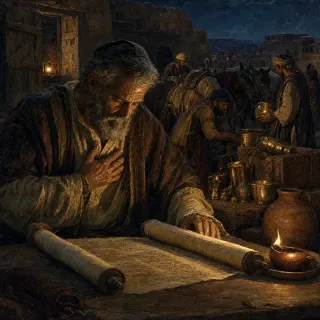
8:3And he read therein before the street that was before the water gate from the morning until midday, before the men and the women, and those that could understand; and the ears of all the people were attentive unto the book of the law.
8:4And Ezra the scribe stood upon a pulpit of wood, which they had made for the purpose; and beside him stood Mattithiah, and Shema, and Anaiah, and Urijah, and Hilkiah, and Maaseiah, on his right hand; and on his left hand, Pedaiah, and Mishael, and Malchiah, and Hashum, and Hashbadana, Zechariah, and Meshullam.
8:5And Ezra opened the book in the sight of all the people; (for he was above all the people;) and when he opened it, all the people stood up:
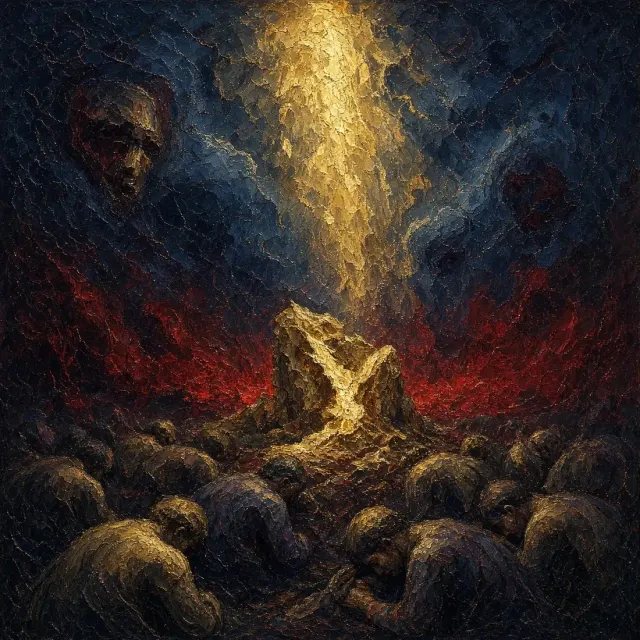
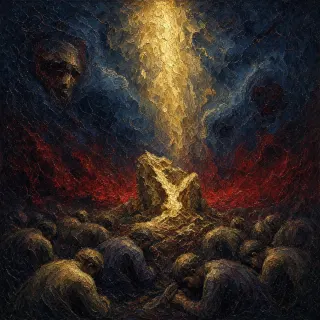
8:6And Ezra blessed the LORD, the great God. And all the people answered, Amen, Amen, with lifting up their hands: and they bowed their heads, and worshipped the LORD with their faces to the ground.
8:7Also Jeshua, and Bani, and Sherebiah, Jamin, Akkub, Shabbethai, Hodijah, Maaseiah, Kelita, Azariah, Jozabad, Hanan, Pelaiah, and the Levites, caused the people to understand the law: and the people stood in their place.
8:8So they read in the book in the law of God distinctly, and gave the sense, and caused them to understand the reading.






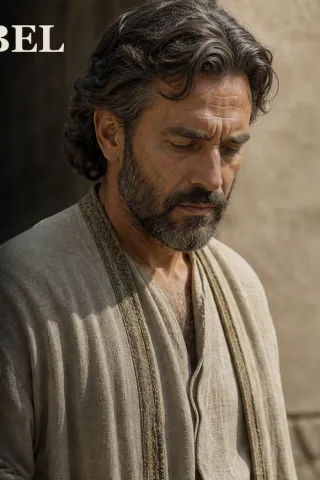

Teaching comes third. That is the quiet distinction in Ezra's introduction: he has set his heart to seek the law, to do it, and to teach it. The middle verb keeps the other two honest. This is not a man collecting religious information for eventual public display. The law claims his conduct before it becomes his subject.
The chapter has already traced his priestly ancestry back to Aaron, but descent is not the whole qualification. Ezra is a ready scribe, a practiced interpreter of the law of Moses. His preparation is personal as well as inherited. Nor does the royal permission stand alone. The king grants the request, and the Book of Ezra immediately places another hand over the transaction: the hand of the LORD his God. The same phrase accompanies his arrival four months after the journey begins. Court approval and miles of road both belong within that description.
The travelers include singers, gatekeepers, priests, and temple servants. This is more than a scholar changing his address. A worshipping community is being furnished with people who can serve, and with a teacher whose first assignment has been his own life.