
New · FreePlay The Witnesses The in-depth puzzle battle quest through Bible history

People of the Bible

Joshua the high priest

Stood in a courtroom in filthy garments with an accuser at his elbow, and was given a clean turban instead of a verdict.

Also called Jeshua son of Jozadak

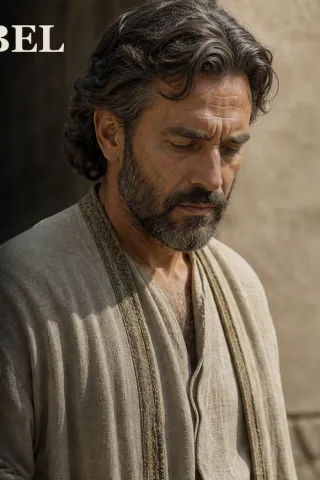
Joshua son of Jozadak returns with Zerubbabel and is the first high priest of the second temple. He is the practical partner in every stage of the rebuilding: he sets up the altar with Zerubbabel before a single stone of the house is laid, so that sacrifice resumes on the old foundation while the site is still rubble, and he obeys Haggai’s summons and works on the house. Then Zechariah is shown him standing before the angel of the LORD, in filthy garments, with Satan at his right hand to resist him.

Where he appearsEzra 3 · Haggai 1 to 2 · Zechariah 3

Scroll down to the account
Joshua the high priest

The movements, in the order the text gives them.

The Account of Joshua the high priest

  1. 01

    Ezra 3:1-6

    The altar before the foundation

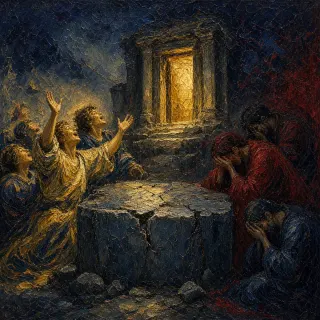
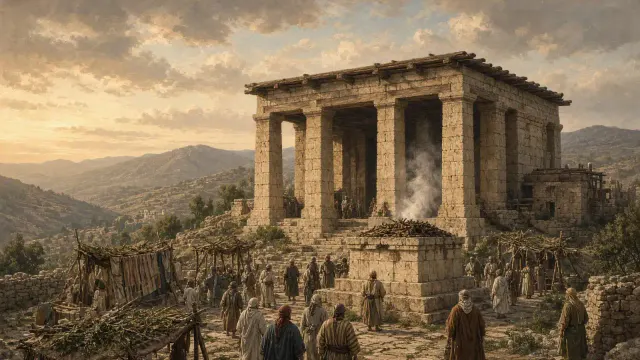
    He and Zerubbabel set the altar on its bases and offer burnt offerings morning and evening, though the foundation of the temple was not yet laid, because fear was upon them of the people around.

    The first functioning part of the restored sanctuary is not a building. It is an altar. Jeshua and his fellow priests begin the sacrifices while the temple still lacks a foundation. The closing sentence makes the order impossible to miss: worship has resumed before the house that will shelter it has even begun to rise.

    That order is not presented as fearless confidence. Fear was upon them because of the surrounding peoples. The Book of Ezra leaves the fear in place while recording the offerings morning and evening. The altar does not certify that the neighborhood has become safe. It marks the return of an appointed relationship with God in a place where the community still feels exposed.

    The repeated appeal to what is written keeps this from becoming improvised religion among the ruins. Moses supplies the pattern, the calendar supplies the occasions, and the offerings have their numbers and daily requirements. Even the freewill gifts have a place beside the regular service. Restoration is taking a recognizable shape. Jeshua's prominence is practical before it is visionary: he helps put the altar back into use. The Book of Ezra can describe a temple that is not yet built and a priesthood that is already at work.

    Verse by verse

    1. 3:2

      This Jeshua is the returned high priest, not Joshua son of Nun. The shared name does not place the two men in the same period.

    2. 3:3

      The passage explicitly mentions fear alongside the restored offerings. It does not say the surrounding danger has disappeared.

    3. 3:6

      The first-day date refers to the resumption of offerings. It should not be mistaken for the date on which the temple foundation was laid.
    Ezra 3:1-6

    King James Version · 6 verses

    3:1And when the seventh month was come, and the children of Israel were in the cities, the people gathered themselves together as one man to Jerusalem.

    3:2Then stood up Jeshua the son of Jozadak, and his brethren the priests, and Zerubbabel the son of Shealtiel, and his brethren, and builded the altar of the God of Israel, to offer burnt offerings thereon, as it is written in the law of Moses the man of God.

    3:3And they set the altar upon his bases; for fear was upon them because of the people of those countries: and they offered burnt offerings thereon unto the LORD, even burnt offerings morning and evening.

    3:4They kept also the feast of tabernacles, as it is written, and offered the daily burnt offerings by number, according to the custom, as the duty of every day required;

    3:5And afterward offered the continual burnt offering, both of the new moons, and of all the set feasts of the LORD that were consecrated, and of every one that willingly offered a freewill offering unto the LORD.

    3:6From the first day of the seventh month began they to offer burnt offerings unto the LORD. But the foundation of the temple of the LORD was not yet laid.

    Ezra 3:1-6: The altar before the foundation
  2. 02

    Haggai 1:12-14

    The high priest obeyed

    Named alongside the governor and the remnant as obeying the voice and fearing before the LORD. The spirit of all three is stirred up, and they come and work.

    The high priest has to listen. His office does not make Haggai's correction somebody else's business, and the title is carefully retained while Joshua obeys. The man responsible for the sanctuary belongs among those who must respond to God's word about its neglect.

    The chapter has already exposed the imbalance between finished private houses and the ruined house of God. Joshua is not singled out as the only offender, but neither is he allowed to disappear into an anonymous crowd. Zerubbabel, Joshua, and the remnant are named in their obedience, then named again when the LORD stirs their spirits. The same response reaches government, priesthood, and people without flattening their different responsibilities.

    Between those two lists stands the promise of God's presence. Haggai delivers it as a messenger, not as a contractor guaranteeing that the project will become easy. The following action is work in the house of the LORD of hosts. The title gives the scale of the one who speaks; the unfinished building gives the scale of the task immediately before them. Joshua's priesthood is not renewed by being admired from a distance. Here its renewal is visible in a high priest joining the people in obedience and labor.

    Verse by verse

    1. 1:12

      The high priest retains his title while receiving and obeying the prophetic word. Priestly office does not exempt him from the summons.

    2. 1:13

      The assurance of divine presence is addressed to the people. It is not reserved for the governor or the high priest alone.

    3. 1:14

      The spirit of Joshua is named separately from the spirits of Zerubbabel and the remnant. The repeated wording joins the response without making the people interchangeable.

    Haggai 1:12-14

    King James Version · 3 verses

    1:12Then Zerubbabel the son of Shealtiel, and Joshua the son of Josedech, the high priest, with all the remnant of the people, obeyed the voice of the LORD their God, and the words of Haggai the prophet, as the LORD their God had sent him, and the people did fear before the LORD.

    1:13Then spake Haggai the LORD’s messenger in the LORD’s message unto the people, saying, I am with you, saith the LORD.

    1:14And the LORD stirred up the spirit of Zerubbabel the son of Shealtiel, governor of Judah, and the spirit of Joshua the son of Josedech, the high priest, and the spirit of all the remnant of the people; and they came and did work in the house of the LORD of hosts, their God,

    Haggai 1:12-14: The high priest obeyed
  3. 03

    Zechariah 3:1-5

    Is not this a brand plucked out of the fire

    Standing in filthy garments with an accuser at his right hand. The LORD rebukes the accuser, the clothing is removed, and he is told his iniquity has passed and he will be clothed with change of raiment.

    The high priest does not win this hearing with a speech. He never makes one. Joshua stands in filthy garments while the accuser stands at his right hand, and the answer comes from the LORD. No account of Joshua's eloquence is needed because none is supplied.

    The defense begins with Jerusalem, the city God has chosen, and with a piece of wood already pulled from the fire. That image makes the priest's appearance larger than a private dispute. He belongs to a people brought out of destruction. A rescued brand has survived the burning; it has not proved that it was never in danger. Nor are the garments declared clean by pretending that the filth is imaginary. They are removed, and the act receives an explicit explanation: iniquity has been taken away.

    Then Zechariah asks for the mitre. The final detail restores more than respectable clothing; it belongs to the priest's recognizable office. The man who entered the vision unfitly dressed is clothed for service in the presence of the angel. Verse 7 will still require obedience, so restoration is not permission to disregard the charge. The scene holds both truths without confusing their order. Joshua is cleansed, then entrusted with responsibility. His standing is not secured by the speech he never gives.

    Verse by verse

    1. 3:1

      Psalm 109:6 also places an accuser at the right hand. The position here belongs to the scene of accusation, not companionship.

    2. 3:2

      The words The Lord rebuke thee recur in Jude 1:9, where Michael refuses to bring a railing accusation against the devil.

    3. 3:4

      The vision identifies the removal of the clothing with removal of iniquity. It does not name a specific personal offense committed by Joshua.

    4. 3:5

      Mitre here is priestly headwear, a turban. Exodus 28:36-39 connects the high priest's headwear with consecration and holiness.

    Zechariah 3:1-5

    King James Version · 5 verses

    3:1And he shewed me Joshua the high priest standing before the angel of the LORD, and Satan standing at his right hand to resist him.

    3:2And the LORD said unto Satan, The LORD rebuke thee, O Satan; even the LORD that hath chosen Jerusalem rebuke thee: is not this a brand plucked out of the fire?

    3:3Now Joshua was clothed with filthy garments, and stood before the angel.

    3:4And he answered and spake unto those that stood before him, saying, Take away the filthy garments from him. And unto him he said, Behold, I have caused thine iniquity to pass from thee, and I will clothe thee with change of raiment.

    3:5And I said, Let them set a fair mitre upon his head. So they set a fair mitre upon his head, and clothed him with garments. And the angel of the LORD stood by.

    Zechariah 3:1-5: Is not this a brand plucked out of the fire
  4. 04

    Zechariah 3:8-10

    Men wondered at

    He and his fellows are called men of sign. A stone is set with seven eyes and an engraving, and the iniquity of the land is to be removed in one day.

    Joshua and his companions are not simply people who attract astonished looks. They are men of a sign. The restored priesthood points beyond itself, and the next promise explains the direction: God will bring forth his servant the BRANCH. Joshua receives the announcement; he is not allowed to become the whole meaning of it.

    Jeremiah 23:5 already gives the Branch a royal setting in the house of David. Zechariah 6:11-13 will place crowns on Joshua while speaking of the Branch who builds and rules. Priesthood and kingship therefore meet in the imagery without making every feature of Joshua's ordinary office the fulfillment of the promise. Christian interpretation reads the Branch as Christ. That reading must still preserve the distinction visible here: Joshua needs cleansing, whereas Hebrews 7:26-27 describes the high priest who needs no offering for personal sins.

    The stone with seven eyes resists easy identification, but the declaration attached to it is plain: the iniquity of the land will be removed in one day. The movement is from this priest's cleansing to the land's cleansing. Then the vision comes down to the level of a neighbor's invitation, a vine, and a fig tree. It ends neither with an accusation nor with Joshua admiring new clothes. A restored priesthood stands within a promise of restored communal life.

    Verse by verse

    1. 3:8

      Men wondered at renders the Hebrew idea of men serving as a sign. The emphasis is their representative significance, not celebrity.

    2. 3:8

      The Branch has been interpreted in relation to Zerubbabel and to the Messiah. The Christian messianic reading draws on the Davidic promise in Jeremiah 23:5 and the priest-king language of Zechariah 6.

    3. 3:9

      The precise identification of the stone and its engraving is disputed. The verse explicitly promises the removal of the land's iniquity, whatever identification of the symbol is adopted.

    Zechariah 3:8-10

    King James Version · 3 verses

    3:8Hear now, O Joshua the high priest, thou, and thy fellows that sit before thee: for they are men wondered at: for, behold, I will bring forth my servant the BRANCH.

    3:9For behold the stone that I have laid before Joshua; upon one stone shall be seven eyes: behold, I will engrave the graving thereof, saith the LORD of hosts, and I will remove the iniquity of that land in one day.

    3:10In that day, saith the LORD of hosts, shall ye call every man his neighbour under the vine and under the fig tree.

    Zechariah 3:8-10: Men wondered at

Why it matters

The vision in Zechariah 3 is the clearest picture in the Old Testament of how an unworthy representative is made usable. Nothing is said in his defence and the accusation is not answered on its merits; the accuser is rebuked, the garments are taken away, and iniquity is declared to pass. Joshua then asks for a clean turban and gets it, and is told that he and his fellows are men wondered at, and that a servant called the Branch is coming.

9 songs

The music

Every song in the catalogue whose passage falls inside these chapters.

  1. Ezra 3:8-13

    Joy and Weeping at the Foundation

  2. Ezra 3:1-7

    The Altar upon Its Bases

  3. Haggai 1:1-11

    Consider Your Ways

    Play hereOpen song pageRead lyrics
  4. Haggai 1:1-2:23

    Haggai (Consider Your Ways)

    Play here
    Open song pageRead lyrics
  5. Haggai 1:1-2:23

    Haggai, Definitive Edition

    Play here
    Open song pageRead lyrics
  6. Haggai 1:12-15

    The LORD Is with You

    Play hereOpen song pageRead lyrics
  7. Haggai 2:10-23

    From This Day the LORD Will Bless You

    Play hereOpen song pageRead lyrics
  8. Haggai 2:1-9

    The Glory of This Latter House

    Play hereOpen song pageRead lyrics
  9. Zechariah 3:1-10

    Take Away the Filthy Garments

    Play hereOpen song pageRead lyrics

Nearby

All the people

Report an error on this page