
Lyrics · Hebrews
A Better Covenant through His Own Blood
Hebrews 8:1-9:28
Lyrics
Playing next
About this song
About this song
This song belongs to the Hebrews collection. One recording is available to play here, with the complete lyrics below.
- Bible book
- Hebrews
- Collection
- Hebrews
- Musical styles
- Alternative Pop
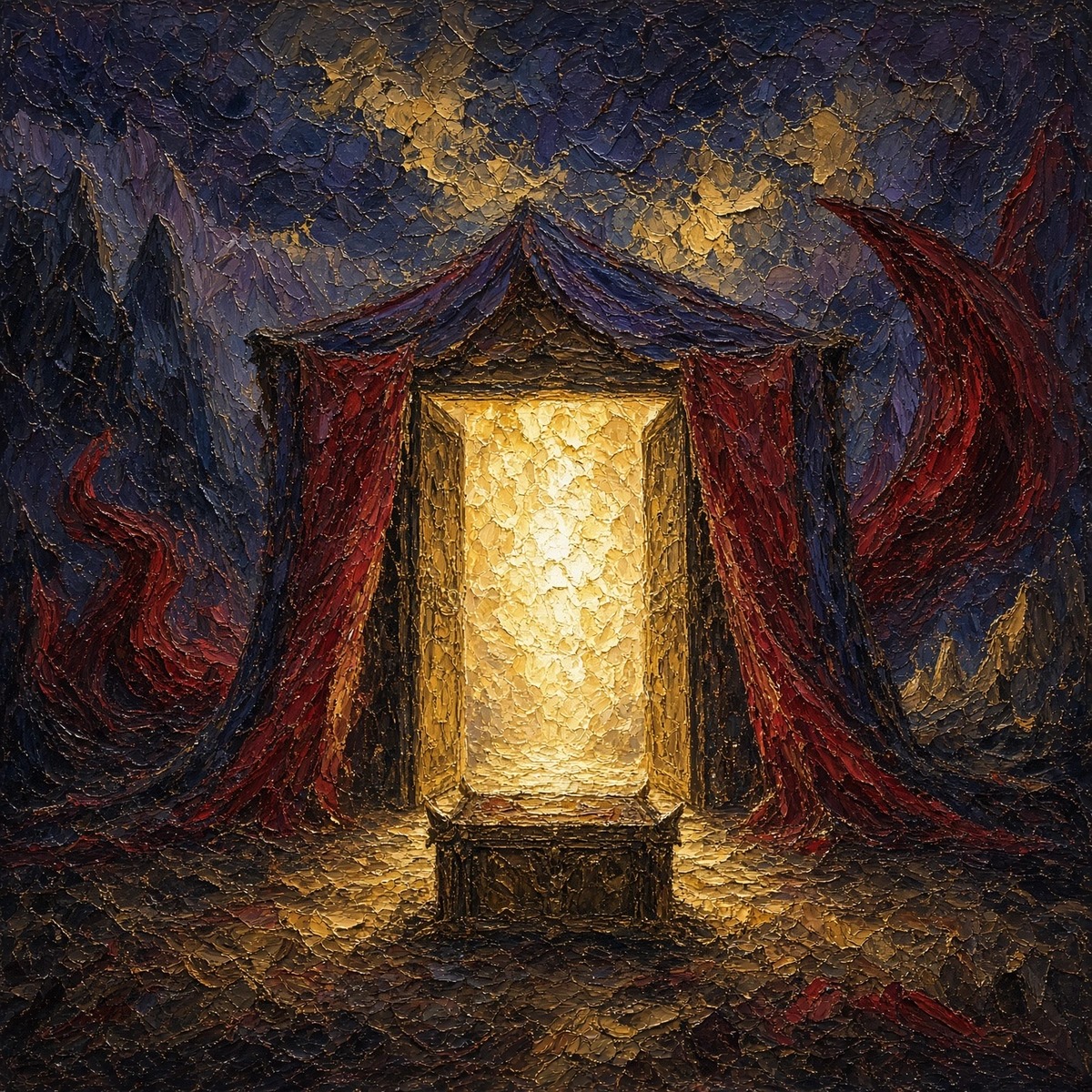
Named in this songTabernacle
About the passage
Hebrews 8: The sanctuary is heavenly, and the covenant reaches the heart
The Book of Hebrews finally states the controlling point of its long priesthood argument: the high priest it has described is already seated at God's right hand and ministers in the true sanctuary. The earthly tabernacle is not mocked as false. It was made according to a divine pattern, which is precisely why its status as copy and shadow can point beyond itself. Christ's ministry belongs to the heavenly reality and to a better covenant. Jeremiah then provides the chapter's central evidence. A new covenant is promised because the former arrangement does not reach the final goal, yet the failure is also located in the people who did not continue in it. The newness is not amnesia about Israel's history. It comes through a promise made to Israel and Judah. Its marks are inwardly written law, covenant-wide knowledge of God, and sins no longer remembered against the people. Hebrews then draws a conclusion from one adjective: if Jeremiah calls it "new," the first has become old.
Study Hebrews 8 in depthHebrews 9: The way into the holiest is opened by one offering
The Book of Hebrews walks through the tabernacle in order to show where the boundary is. Lamps, bread, ark, mercyseat, and sacred furnishings matter, but the second veil matters more because access beyond it is narrow, annual, and blood-marked. The earthly arrangement is real worship, yet its repetition and restriction expose what it cannot complete, especially at the level of conscience. Christ answers that limitation with his own blood, a once-for-all entrance, and eternal redemption. The chapter then layers covenant, testament, inheritance, death, and sacrificial blood until they converge in the necessity of Christ's self-offering. Even the first covenant was inaugurated with blood, so the argument is not importing sacrifice from nowhere. The final paragraph gives the chapter its temporal shape: Christ has appeared to put away sin, now appears in God's presence for his people, and will appear again for salvation. Those appearances are distinct, and none requires a second sacrifice. His future coming does not reopen work already completed.
Study Hebrews 9 in depth