


Lyrics · Hebrews
The City Which Is to Come
Hebrews 13:1-25
Lyrics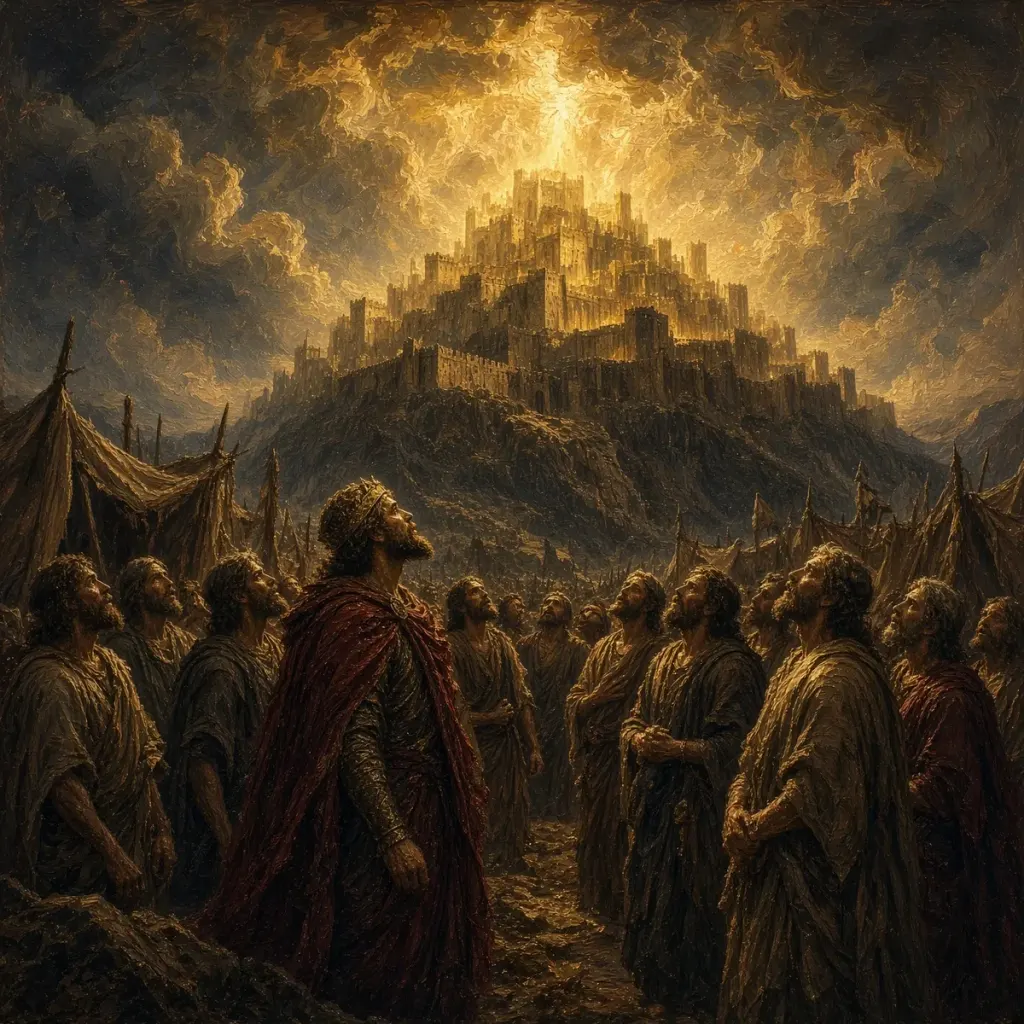
Playing next
About this song
About this song
This song belongs to the Hebrews collection. One recording is available to play here, with the complete lyrics below.
- Bible book
- Hebrews
- Collection
- Hebrews
- Musical styles
- Electronic
Named in this songJesus Christ
About the passage
Hebrews 13: The heavenly calling reaches the household, prison, and city gate
The Book of Hebrews ends by bringing its lofty priesthood into rooms, prisons, marriages, bank balances, leadership relationships, city gates, and ordinary greetings. Brotherly love becomes hospitality and solidarity with people in bonds. Contentment is linked to God's abiding presence. Leaders are remembered through the word they spoke and the course of their faith, while Jesus Christ remains the fixed point "yesterday, and to day, and for ever." The sacrificial argument then moves outside the gate, where Jesus suffered and where identification with him includes reproach rather than established security. Praise, doing good, and sharing are called sacrifices, not as replacements for his sin-bearing offering but as worship flowing from it. Leadership is paired with accountability, and the otherwise commanding voice asks the community for prayer. The closing benediction gathers resurrection, covenant blood, divine workmanship, and the great shepherd before Timothy, travel plans, Italy, greetings, and grace return the dense theological work to an unmistakably human correspondence.
Study Hebrews 13 in depth