About this song
About this song
This song belongs to the Nehemiah collection. One recording is available to play here, with the complete lyrics below.
- Collection
- Nehemiah
[Verse 1]
Nehemiah dates the account to Chisleu in Artaxerxes' twentieth year.
Hanani arrives from Judah with other men.
The survivors are described as living in great affliction and reproach.
The city gates have been burned with fire.
[Pre-Chorus]
No answer came to quiet every fear,
Only the weight of all that had drawn near.
[Chorus]
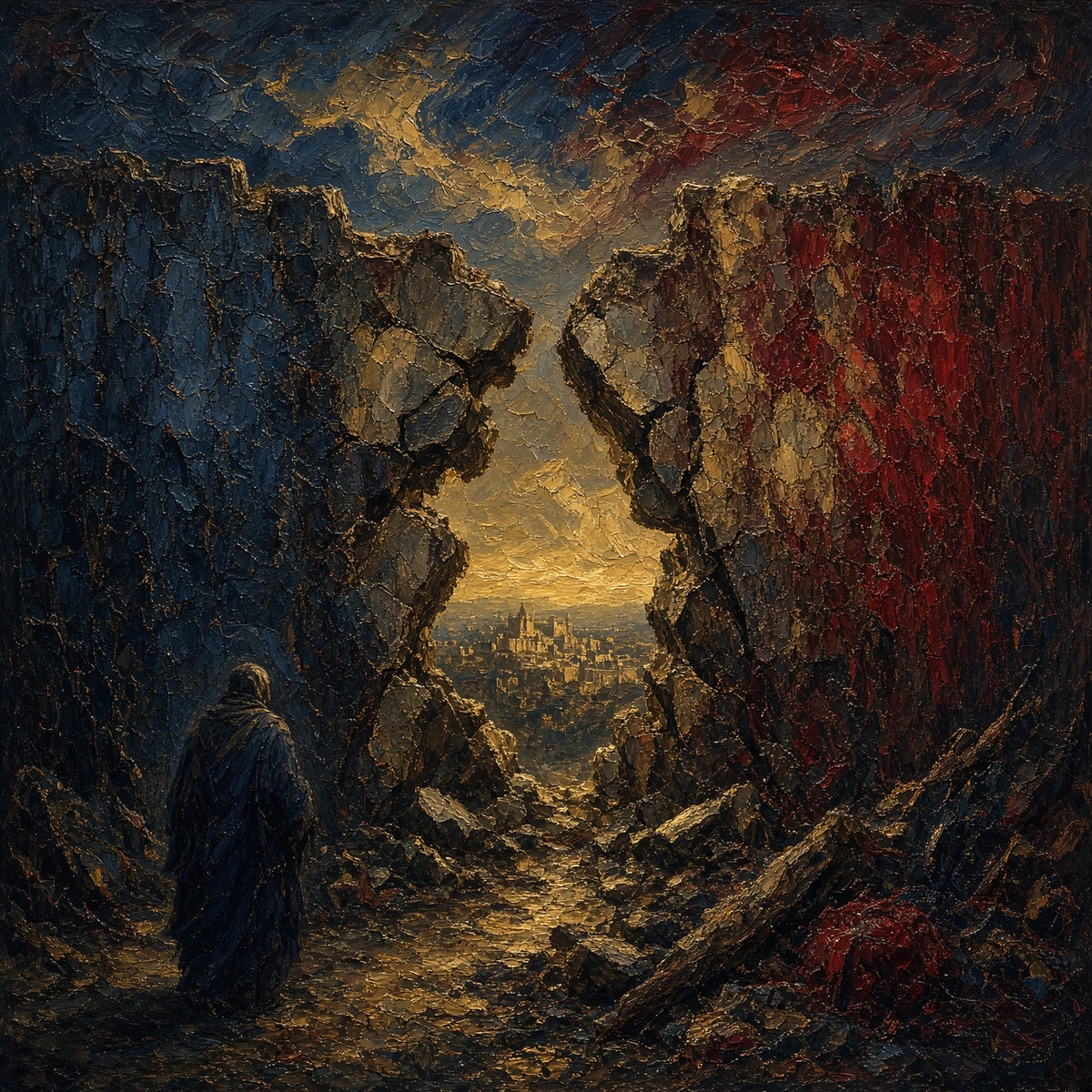
The Wall Is Broken Down, carry this grief through night,
Tears have weight beneath the fading light.
Truth still speaks when comfort has grown thin,
And faith keeps breathing where the wounds begin.
[Verse 2]
Nehemiah addresses the great and terrible covenant-keeping God.
He asks for attentive ears and open eyes toward his day-and-night prayer.
The sins of Israel are confessed without excuse.
The nation has acted corruptly and disobeyed commandments given through Moses.
[Bridge]
The promise to gather repentant exiles from the farthest place is also recalled.
The people are named as servants redeemed by great power.
Nehemiah asks that willing servants receive mercy and prosperity.
The prayer narrows toward favor before the king, where Nehemiah serves as cupbearer.
[Final Chorus]
The Wall Is Broken Down, carry this grief through night,
Tears have weight beneath the fading light.
Truth still speaks when comfort has grown thin,
And faith keeps breathing when the night grows thin.
[Outro]
The night remained, but truth remained as well.
Not every wound was given words to tell.
Named in this songNehemiahMoses
About the passage
Nehemiah 1: A ruined city reaches the royal table
Nehemiah begins in Shushan with news, not masonry. Hanani reports that the returned community remains in affliction and reproach and that Jerusalem's wall and gates are still ruined. Nehemiah's first response is deliberately slow: he sits, weeps, fasts, and prays for days. His confession refuses the comfort of blaming people at a distance, because he includes both himself and his father's house in Israel's disobedience. The prayer then reaches back to the same covenant that explains scattering and insists that gathering belongs to that remembered word as well. Only in the closing line does the political possibility appear. Nehemiah asks for mercy "in the sight of this man," then identifies his office. He is the king's cupbearer, standing close to the authority his mission will require.
Study Nehemiah 1 in depth →