

Lyrics · Nehemiah
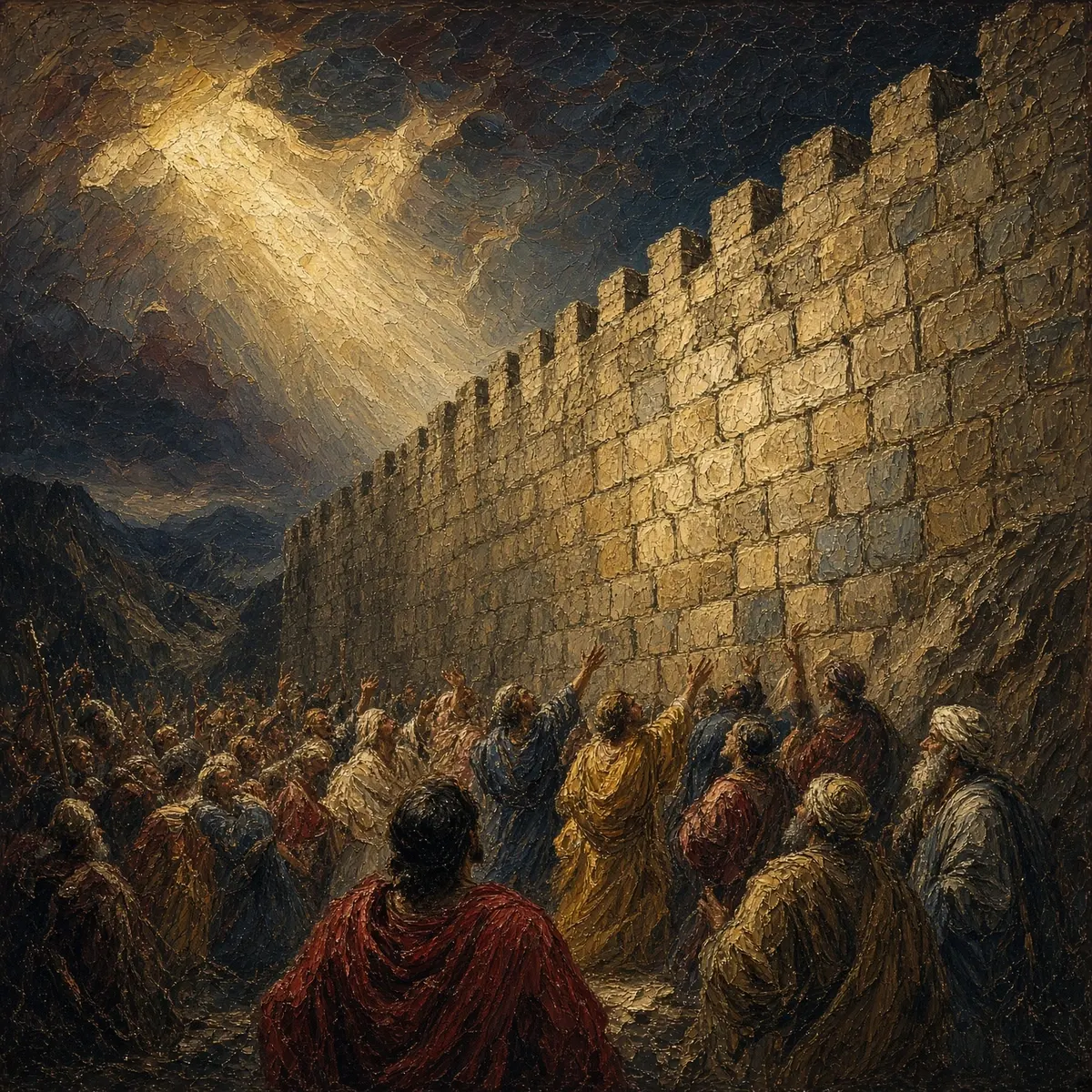
The Wall Was Finished
Nehemiah 1-12
Lyrics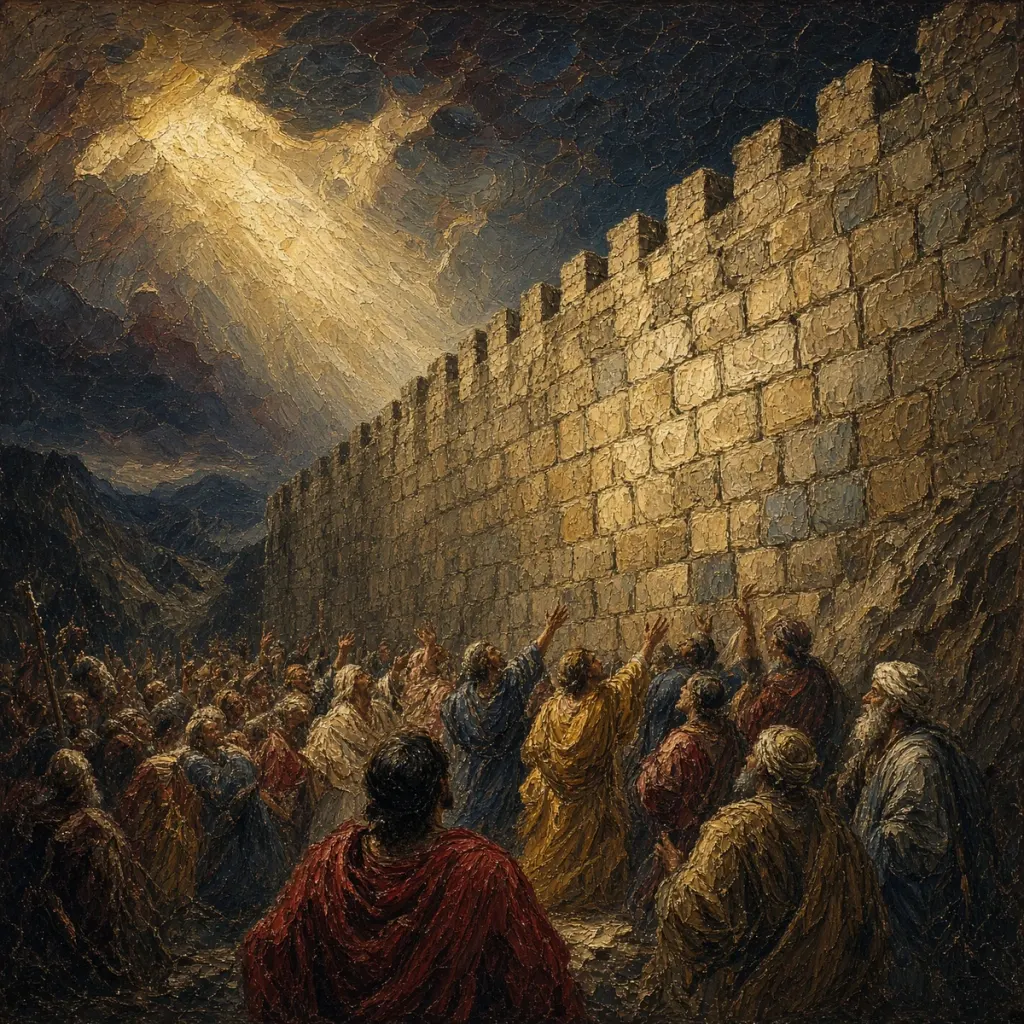
About this song
About this song
This song belongs to the Nehemiah collection. 8 recordings are available to play here, with the complete lyrics below.
- Bible book
- Nehemiah
- Collection
- Nehemiah
- Musical styles
- Acoustic, Pop, World Music, Cinematic Soundtrack, Alternative Pop, Country & Americana, Worship & Gospel, Alternative Rock
Named in this songNehemiahJerusalemEzra
About the passage
Nehemiah 1: A ruined city reaches the royal table
Nehemiah begins in Shushan with news, not masonry. Hanani reports that the returned community remains in affliction and reproach and that Jerusalem's wall and gates are still ruined. Nehemiah's first response is deliberately slow: he sits, weeps, fasts, and prays for days. His confession refuses the comfort of blaming people at a distance, because he includes both himself and his father's house in Israel's disobedience. The prayer then reaches back to the same covenant that explains scattering and insists that gathering belongs to that remembered word as well. Only in the closing line does the political possibility appear. Nehemiah asks for mercy "in the sight of this man," then identifies his office. He is the king's cupbearer, standing close to the authority his mission will require.
Study Nehemiah 1 in depthNehemiah 2: Permission in the palace, rubble in the dark
Months after Hanani's report, Nehemiah's grief becomes visible at the royal table. Artaxerxes asks what is wrong, and Nehemiah answers with both fear and preparation. A brief, unrecorded prayer sits inside the conversation, followed by precise requests for travel, letters, timber, and a return schedule. Jerusalem receives him quietly. After three days he inspects the ruined wall at night with only a few companions, and the rubble becomes so physical that his mount cannot pass. Only after seeing the damage does he call the leaders to build. They answer by strengthening their hands for the work. Sanballat, Tobiah, and Geshem answer differently, with ridicule and an accusation of rebellion. The chapter therefore ends before a single new course of stone is described, with royal permission secured and the lines of support and opposition clearly drawn.
Study Nehemiah 2 in depthNehemiah 3: The wall acquires names
Nehemiah 3 reads like a construction register, but its repetition is the point. The wall acquires names, occupations, households, gates, towers, pools, and adjoining stretches. Priests begin at the Sheep Gate, while goldsmiths, an apothecary, officials, merchants, families, and people from neighboring towns take their places around the circuit. "Next unto" becomes the chapter's working rhythm, because one repaired portion matters only when it meets another. The register also refuses to flatten everybody into the same kind of participant. Tekoite nobles decline the work while their people take on more, Shallum's daughters are named, Baruch is singled out for earnest labor, and several workers repair near their own houses. The circuit finally returns to the Sheep Gate, making the list itself resemble the connected wall it records.
Study Nehemiah 3 in depth