


Lyrics · Numbers
Speak to the Rock (Official)
Numbers 18:1-20:29
Lyrics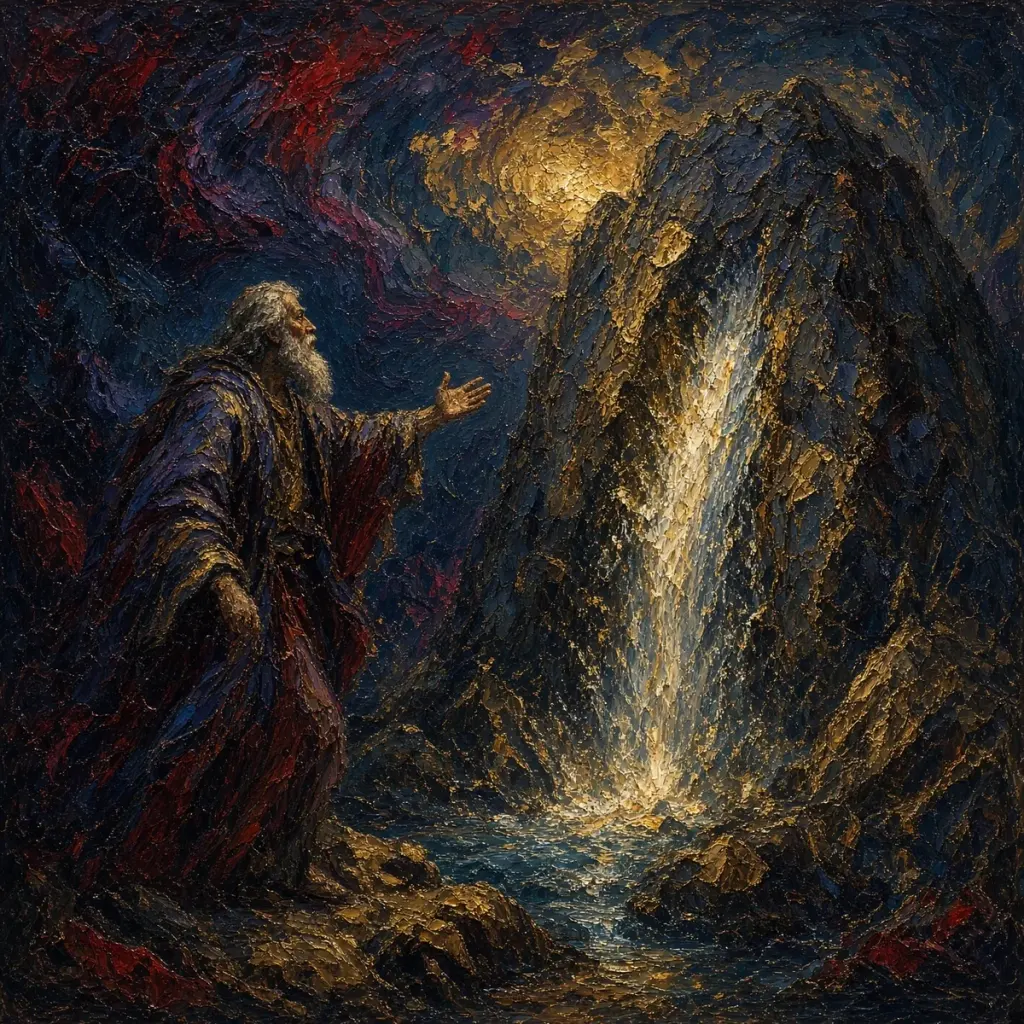
Playing next
Named in this songAaron
About the passage
Numbers 18: The sanctuary’s gifts come with a charge to keep
Numbers 18 answers the fear at the end of the previous chapter by defining who guards the sanctuary, who serves where, and how those servants are sustained. Aaron and his sons do not receive a confirmed priesthood as unrestricted privilege. They bear responsibility for the sanctuary and altar, while the Levites assist under boundaries that protect both them and the congregation from another outbreak of wrath. The chapter then becomes surprisingly practical. Priestly households receive carefully distinguished portions of offerings, firstfruits, and firstborn gifts; human firstborn and unclean animals are redeemed rather than sacrificed. Levites receive Israel's tithes because they do not share the ordinary tribal land inheritance, yet even those who receive a tithe must give the best tenth of it to the LORD through Aaron. Service, support, holiness, and accountability are kept together. The sanctuary can remain at the center of Israel because access is ordered, and the people appointed to guard that order are themselves bound by it.
Study Numbers 18 in depthNumbers 19: A way back from the uncleanness of death
Numbers 19 turns from sanctuary guardianship to the uncleanness created by death. A red heifer is prepared outside the camp, yet its blood is sprinkled toward the tabernacle, keeping the entire rite oriented toward the holy place whose purity is at stake. Its ashes are stored for future use, creating a remedy that can be ready when death enters a tent or is encountered in the open. The chapter's most striking reversal is that those who prepare and handle the means of cleansing themselves become temporarily unclean. Ritual uncleanness is therefore not another word for moral guilt. Corpse contact lasts seven days and requires purification on the third and seventh days; time alone is not enough. Running water, ashes, hyssop, washing, and a clean helper bring the unclean person back, while refusal to use the provided means has consequences for the sanctuary. Numbers treats mortality as a condition that spreads through ordinary life, but it also provides an appointed route of return.
Study Numbers 19 in depthNumbers 20: Water flows, but the leaders will not cross
Numbers 20 is framed by the deaths of Miriam and Aaron, and between those losses Moses learns that he too will not lead Israel into the land. The chapter begins with real thirst and a familiar public accusation. At Meribah, Moses takes the rod as commanded but strikes the rock instead of speaking to it, and the LORD identifies the deeper failure as unbelief and failure to sanctify him before the people. Water nevertheless comes abundantly for both people and cattle. Provision is not an acquittal. The route then closes again when Edom, addressed as Israel's brother, refuses peaceful passage and appears in force, causing Israel to turn away rather than fight. At Mount Hor the consequences of Meribah become visible in Aaron's death, but the priesthood does not die with him. His garments pass to Eleazar before he dies. Numbers places loss beside continuity: leaders are removed, roads are blocked, yet water is given, the congregation moves on, and priestly service continues.
Study Numbers 20 in depth