The big picture
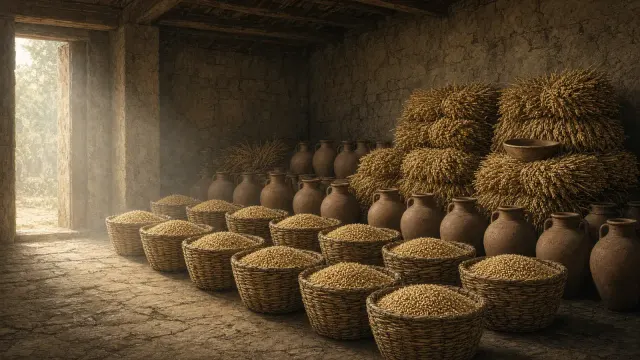
Numbers 18 answers the fear at the end of the previous chapter by defining who guards the sanctuary, who serves where, and how those servants are sustained. Aaron and his sons do not receive a confirmed priesthood as unrestricted privilege. They bear responsibility for the sanctuary and altar, while the Levites assist under boundaries that protect both them and the congregation from another outbreak of wrath. The chapter then becomes surprisingly practical. Priestly households receive carefully distinguished portions of offerings, firstfruits, and firstborn gifts; human firstborn and unclean animals are redeemed rather than sacrificed. Levites receive Israel's tithes because they do not share the ordinary tribal land inheritance, yet even those who receive a tithe must give the best tenth of it to the LORD through Aaron. Service, support, holiness, and accountability are kept together. The sanctuary can remain at the center of Israel because access is ordered, and the people appointed to guard that order are themselves bound by it.
In this chapter
- The Office Bears Responsibility for the Boundary Numbers 18:1-7
The LORD's first words to Aaron after the priesthood has been confirmed are about responsibility.
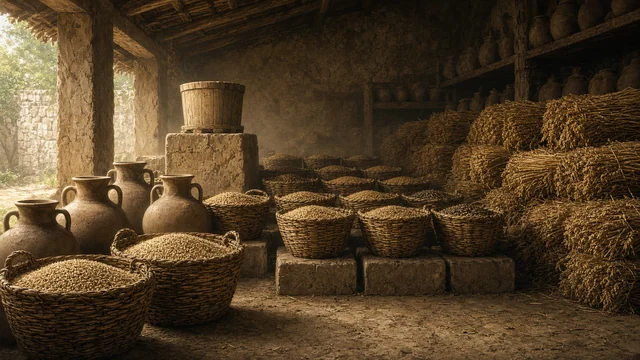
- The Priestly Household Receives More Than One Kind of Portion Numbers 18:8-13
Priestly support in Numbers 18 is not one undifferentiated pile of sacred food.
- A Claim on the Firstborn Does Not Make Every Firstborn a Sacrifice Numbers 18:14-19
The chapter's language about the firstborn begins broadly and then immediately makes distinctions that matter.
- The Inheritance Is a Provision Tied to Service Numbers 18:20-24
Aaron and the Levites do not receive the ordinary tribal inheritance in the land, but Numbers does not romanticize that lack as though sacred service makes food unnecessary.
- Those Who Receive the Tithe Still Have an Offering to Make Numbers 18:25-32
Receiving the tithe does not place the Levites outside the pattern of giving.
Scripture beside the summary
Numbers · King James Version · 32Numbers 18:1-7
The Office Bears Responsibility for the Boundary
The LORD's first words to Aaron after the priesthood has been confirmed are about responsibility. Aaron, his sons, and his father's house will "bear the iniquity of the sanctuary," while Aaron and his sons bear the iniquity connected with the priesthood. Confirmation has not produced a protected class free from consequence. It has placed a burden on the very people whose boundary was defended. The Levites are joined to them for tabernacle service, but they may not approach the sanctuary vessels and altar as priests do. The warning cuts both ways: crossing that line can bring death upon the Levites and the priests who fail in their charge. Verse 5 then names the larger purpose, "that there be no wrath any more upon the children of Israel." Numbers answers the congregation's fear not by removing the sanctuary or opening every task to everyone, but by appointing people to guard distinct forms of nearness so that worship can continue without repeating the previous disaster.
Deep dive
The answer to the people’s fear begins with the LORD addressing Aaron. The office confirmed in the preceding chapters is immediately described in terms of bearing responsibility for offenses connected with the sanctuary and priesthood. Confirmation has not turned the appointment into unqualified privilege. The priestly household must guard the very boundaries whose violation has just brought death.
The Levites are given to assist, but they must not approach the sanctuary vessels and altar in the manner reserved to the priests. Verse 3 attaches danger to both the assistants and the priests if that boundary is crossed. This makes oversight a serious responsibility, not merely a right to keep others away. The purpose in verse 5 is explicit: no further wrath is to come upon the children of Israel. The chapter answers the fear of chapter 17 with ordered access and accountable service, rather than by removing the sanctuary or permitting everyone to perform the same acts.
Words to trace: charge, tabernacle, keep, sons, altar, nigh
Verse-by-verse path
- Numbers 18:1
The LORD speaks to Aaron directly, without Moses between, as he does again in verses 8 and 20 and in Leviticus 10:8. “Bear the iniquity” is nasa avon, to carry guilt, the phrase used of the goat that “shall bear upon him all their iniquities” in Leviticus 16:22.
- Numbers 18:2
“Joined unto thee” is yillavu, a play on the name Levi, from lavah, to join. Leah named Levi with the same verb in Genesis 29:34: “Now this time will my husband be joined unto me.”
- Numbers 18:3
“Keep thy charge” is shamar mishmeret, to guard a guard post: the Levites’ work is sentry duty as much as carrying. They could carry the holy vessels wrapped (4:15) but not handle them bare or serve at them.
- Numbers 18:4
Here the outsider is any Israelite who is not a Levite, and the Levites are posted to keep him back. “Joined” plays on Levi’s name for the second time in three verses.
- Numbers 18:5
“Wrath” is qetsef, the word of 16:46, “there is wrath gone out from the LORD”. “Any more” looks straight back at the plague that Aaron had just stopped with his censer.
- Numbers 18:6
“I, behold, I have taken” doubles the pronoun: the Levites are God’s choice, not Aaron’s. “Given as a gift” is netunim, “given ones”, the word of 3:9 and 8:16; later temple servants were called Nethinim from the same root (Ezra 2:43).
- Numbers 18:7
“Within the vail” is the inner sanctuary, entered by the high priest alone on the Day of Atonement (Leviticus 16:2). “A service of gift” is avodat mattanah: the priesthood itself is described as a gift, using the same word as for gifts brought by the people.
Numbers 18:1-7
King James Version1And the LORD said unto Aaron, Thou and thy sons and thy father’s house with thee shall bear the iniquity of the sanctuary: and thou and thy sons with thee shall bear the iniquity of your priesthood.
2And thy brethren also of the tribe of Levi, the tribe of thy father, bring thou with thee, that they may be joined unto thee, and minister unto thee: but thou and thy sons with thee shall minister before the tabernacle of witness.
3And they shall keep thy charge, and the charge of all the tabernacle: only they shall not come nigh the vessels of the sanctuary and the altar, that neither they, nor ye also, die.
4And they shall be joined unto thee, and keep the charge of the tabernacle of the congregation, for all the service of the tabernacle: and a stranger shall not come nigh unto you.
5And ye shall keep the charge of the sanctuary, and the charge of the altar: that there be no wrath any more upon the children of Israel.
6And I, behold, I have taken your brethren the Levites from among the children of Israel: to you they are given as a gift for the LORD, to do the service of the tabernacle of the congregation.
7Therefore thou and thy sons with thee shall keep your priest’s office for every thing of the altar, and within the vail; and ye shall serve: I have given your priest’s office unto you as a service of gift: and the stranger that cometh nigh shall be put to death.
Numbers 18:8-13
The Priestly Household Receives More Than One Kind of Portion
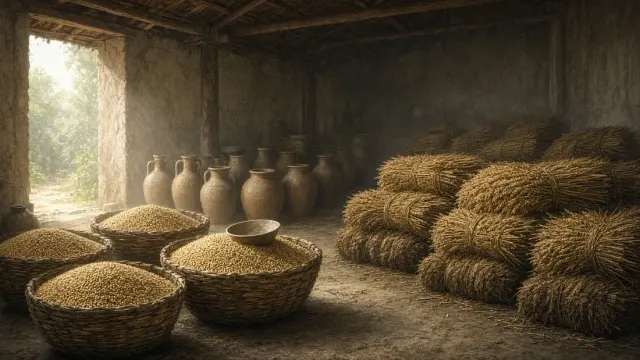
Priestly support in Numbers 18 is not one undifferentiated pile of sacred food. The chapter sorts the gifts according to both what they are and who may eat them. Most holy portions from grain, sin, and trespass offerings belong to Aaron and his sons under the tighter restrictions attached to those gifts. Other heave and wave offerings, along with firstfruits, may be shared by clean members of the household, including daughters. The distinctions keep a right to receive from becoming a right to use everything in any manner. Even the KJV's phrase "in the most holy place" must be read with the surrounding boundaries in view; it is not a license for family meals beyond the veil. Oil, wine, wheat, and the first ripe produce make the support concrete, and the repeated word "best" keeps it from sounding like leftovers assigned to the priesthood. Yet provision remains governed by holiness and cleanness. The household is sustained through the sanctuary, and precisely because the gifts are holy, their use is ordered.
Deep dive
The chapter distinguishes the portions instead of treating everything brought to the sanctuary as one common pantry. The most holy gifts from grain, sin, and trespass offerings are assigned to Aaron and the males of his household under their sacred restrictions. Other heave and wave offerings, together with firstfruits, may be eaten by clean members of the household, including daughters. The differences concern both the offering’s classification and the people authorized to share it.
The KJV’s reference to eating "in the most holy place" in verse 10 needs care. Commentators explain it either as sacred eating in the tabernacle court or as eating the gifts in their character as most holy things. They do not take it as permission for the family to dine inside the inner sanctuary beyond the veil. The distinction in the surrounding verses is between restricted sacred portions and those available more widely within the clean household.
The repeated mention of the best oil, wine, wheat, and first-ripe produce gives this support a concrete quality. The recipients are not instructed to survive on whatever is unusable elsewhere. Yet the assigned gifts remain governed by holiness and cleanness. A right to receive them is not unrestricted permission to use every portion in every place or share it with anyone at all.
Words to trace: holy, offering, theirs, LORD, sons, best
Verse-by-verse path
- Numbers 18:8
“The charge of mine heave offerings” uses mishmeret, the guard word of verse 3: the priests stand watch over the gifts as well. “By reason of the anointing” is lemoshchah, which can also mean “as a portion”, as in Leviticus 7:35.
- Numbers 18:9
“Reserved from the fire” means the parts of the most holy offerings not burned on the altar. “Oblation” is qorban, the general word for anything brought near, from qarav. “Trespass offering” is asham, the guilt offering that came with restitution (Leviticus 5:14–16).
- Numbers 18:10
“Every male shall eat it” limits these portions to the priests themselves. Leviticus 6:18 had said the same of the grain offering: “All the males among the children of Aaron shall eat of it.”
- Numbers 18:11
“Wave offerings” are tenufah, portions moved toward the altar and back in a gesture of presentation. Daughters are included here, a wider circle than the males of verse 10; Leviticus 22:12–13 adds that a daughter married outside the priesthood loses the right and regains it if widowed or divorced and childless.
- Numbers 18:12
“The best” is literally “the fat”, chelev, the word used for the fat burned on the altar: the fat of the oil, the fat of the wine and grain, their richest part. “Firstfruits” is reshit, “beginning”, the word that opens Genesis 1:1.
- Numbers 18:13
“First ripe” is bikkurim, fruit picked as it ripens, distinct from the reshit of verse 12, which the Mishnah takes as processed produce. Deuteronomy 26:1–11 gives the words to be said when bringing them in a basket.
Numbers 18:8-13
King James Version8And the LORD spake unto Aaron, Behold, I also have given thee the charge of mine heave offerings of all the hallowed things of the children of Israel; unto thee have I given them by reason of the anointing, and to thy sons, by an ordinance for ever.
9This shall be thine of the most holy things, reserved from the fire: every oblation of theirs, every meat offering of theirs, and every sin offering of theirs, and every trespass offering of theirs, which they shall render unto me, shall be most holy for thee and for thy sons.
10In the most holy place shalt thou eat it; every male shall eat it: it shall be holy unto thee.
11And this is thine; the heave offering of their gift, with all the wave offerings of the children of Israel: I have given them unto thee, and to thy sons and to thy daughters with thee, by a statute for ever: every one that is clean in thy house shall eat of it.
12All the best of the oil, and all the best of the wine, and of the wheat, the firstfruits of them which they shall offer unto the LORD, them have I given thee.
13And whatsoever is first ripe in the land, which they shall bring unto the LORD, shall be thine; every one that is clean in thine house shall eat of it.
Numbers 18:14-19
A Claim on the Firstborn Does Not Make Every Firstborn a Sacrifice
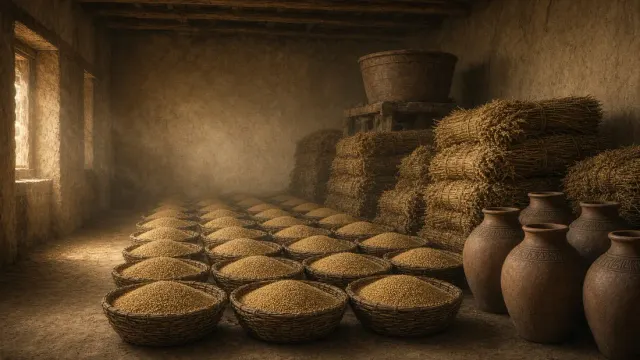
The chapter's language about the firstborn begins broadly and then immediately makes distinctions that matter. Human firstborn are to be redeemed, as are the firstlings of unclean animals. From a month old, the human redemption is valued at five sanctuary shekels, recalling the earlier redemption of surplus firstborn in Numbers 3. Cattle, sheep, and goats follow a different rule: their firstlings are not redeemed, and their blood, fat, and priestly portion receive the specified sacrificial treatment. The shared language of belonging to the LORD therefore does not mean identical treatment. In particular, the inclusion of human beings and animals in one opening statement cannot be turned into authorization for human sacrifice, because the very next command requires the human firstborn to be redeemed. The closing "covenant of salt" marks the enduring character of the priestly grant without giving a new salt ceremony to perform here. What endures is the provision as defined, including its distinctions, not a flattened version of them.

Deep dive
The general statement that the firstborn belong to the priestly provision is immediately qualified. Human firstborn must be redeemed, as must the firstlings of unclean animals. The redemption valuation from a month old is five sanctuary shekels, recalling the rate used for the surplus firstborn in chapter 3. The common language of a divine claim therefore does not erase the different ways that claim is met.
Cattle, sheep, and goats are treated differently: their firstlings are not redeemed, and the blood, fat, and priestly portion are assigned as described. The passage does not authorize human sacrifice by listing people and animals together before making these distinctions. Its redemption command expressly prevents that reading. The closing "covenant of salt" names the enduring character of the grant to Aaron and his descendants. The verse emphasizes its continuing force without explaining the precise custom behind the expression or supplying an additional salt ritual for this occasion.
Words to trace: firstling, LORD, redeem, beasts, flesh, holy
Verse-by-verse path
- Numbers 18:14
“Devoted” is cherem, anything given irrevocably to God, which could be neither sold nor redeemed (Leviticus 27:28). It is the root behind Hormah in 14:45; here a devoted field or object passes to the priests.
- Numbers 18:15
“Openeth the matrix” is petter rechem, the first to open the womb; “matrix” is the old English word for womb. The claim rests on the night of the Egyptian firstborn, as Exodus 13:2 and 13:15 explain it.
- Numbers 18:16
A gerah is a small weight, perhaps about half a gram, so five shekels comes to roughly two ounces of silver. “From a month old” is the age from which Levite boys were first counted in 3:15.
- Numbers 18:17
“They are holy” means these animals belong to the LORD from birth, so there is nothing to buy back. For the same reason Leviticus 27:26 forbids offering a firstling as a vow: it was never the owner’s to give.
- Numbers 18:18
The wave breast and right shoulder are the priest’s share of a peace offering (Leviticus 7:31–34). The firstling’s flesh goes wholly to the priest, as those portions do. “Shoulder” is shoq, which is more likely the thigh.
- Numbers 18:19
Salt preserves and does not decay. Leviticus 2:13 requires it on every grain offering as “the salt of the covenant of thy God”, and 2 Chronicles 13:5 calls David’s kingdom a gift “by a covenant of salt”.
Numbers 18:14-19
King James Version14Every thing devoted in Israel shall be thine.
15Every thing that openeth the matrix in all flesh, which they bring unto the LORD, whether it be of men or beasts, shall be thine: nevertheless the firstborn of man shalt thou surely redeem, and the firstling of unclean beasts shalt thou redeem.
16And those that are to be redeemed from a month old shalt thou redeem, according to thine estimation, for the money of five shekels, after the shekel of the sanctuary, which is twenty gerahs.
17But the firstling of a cow, or the firstling of a sheep, or the firstling of a goat, thou shalt not redeem; they are holy: thou shalt sprinkle their blood upon the altar, and shalt burn their fat for an offering made by fire, for a sweet savour unto the LORD.
18And the flesh of them shall be thine, as the wave breast and as the right shoulder are thine.
19All the heave offerings of the holy things, which the children of Israel offer unto the LORD, have I given thee, and thy sons and thy daughters with thee, by a statute for ever: it is a covenant of salt for ever before the LORD unto thee and to thy seed with thee.
Numbers 18:20-24
The Inheritance Is a Provision Tied to Service
Aaron and the Levites do not receive the ordinary tribal inheritance in the land, but Numbers does not romanticize that lack as though sacred service makes food unnecessary. The declaration "I am thy part and thine inheritance" sits inside a chapter full of actual provision. Priests receive appointed sacred portions, and Levites receive the tithe of Israel "for their service which they serve." Their different economic arrangement is tied directly to their different place in the congregation. They guard the tabernacle's service and bear responsibility so that unauthorized approach does not bring sin and death upon the people. In return, their support comes through what Israel offers rather than through a normal territorial allotment. The repeated statement that they have no inheritance among the other tribes makes the structure deliberate, not accidental. At the same time, the passage does not convert that support into a general claim on whatever possessions religious workers might desire. It defines a particular provision for particular service within Israel's ordered sanctuary life.
Deep dive
The LORD’s declaration that he is Aaron’s portion is surrounded by detailed provision for food and support. It is not presented as a beautiful phrase that makes actual sustenance unnecessary. The preceding gifts and the following tithes describe how the appointed households are supported within Israel. The land allotment denied to them is answered by another form of provision.
The tithe is given to the Levites for their tabernacle service. The language connects income with the work and responsibility they bear, including the duty that keeps unauthorized approach from bringing sin and death upon the congregation. Their lack of a tribal inheritance is repeated, so the support cannot be separated from that structural difference. The chapter is describing the arrangement of priestly and Levitical life within Israel. It does not turn those assigned portions into a general permission to make unlimited claims upon the people’s possessions.
Words to trace: children, Israel, inheritance, congregation, service, tabernacle
Verse-by-verse path
- Numbers 18:20
“Part” is chelek, a share, the lot of land given at the division; “inheritance” is nachalah. Psalm 16:5 turns the sentence into a prayer: “The LORD is the portion of mine inheritance and of my cup.”
- Numbers 18:21
Abram gave Melchizedek “tithes of all” in Genesis 14:20, and Jacob vowed a tenth at Bethel in Genesis 28:22. Here the tenth of Israel’s produce becomes a standing wage, given “for their service which they serve”.
- Numbers 18:22
“Henceforth” answers the cry of 17:13 directly: ordinary Israelites will no longer come near, and so will not die. “Bear sin” is the phrase of verse 1, now used of the people who would bear it if the Levites did not.
- Numbers 18:23
“They shall bear their iniquity” is ambiguous: the Levites carry the Israelites’ guilt for any approach, or their own for failing to guard. Either way they stand between. “A statute for ever” fixes their landless state as permanent.
- Numbers 18:24
The tithe is called their inheritance, nachalah, the word for the land they will not receive. Joshua 14:4 records that the Levites later received only towns with pasture land, as 35:1–8 will command.
Numbers 18:20-24
King James Version20And the LORD spake unto Aaron, Thou shalt have no inheritance in their land, neither shalt thou have any part among them: I am thy part and thine inheritance among the children of Israel.
21And, behold, I have given the children of Levi all the tenth in Israel for an inheritance, for their service which they serve, even the service of the tabernacle of the congregation.
22Neither must the children of Israel henceforth come nigh the tabernacle of the congregation, lest they bear sin, and die.
23But the Levites shall do the service of the tabernacle of the congregation, and they shall bear their iniquity: it shall be a statute for ever throughout your generations, that among the children of Israel they have no inheritance.
24But the tithes of the children of Israel, which they offer as an heave offering unto the LORD, I have given to the Levites to inherit: therefore I have said unto them, Among the children of Israel they shall have no inheritance.
Numbers 18:25-32
Those Who Receive the Tithe Still Have an Offering to Make
Receiving the tithe does not place the Levites outside the pattern of giving. From what Israel gives them, they must lift up a tenth as the LORD's heave offering and give it to Aaron the priest. More pointedly, that tenth is to come from "all the best thereof." Numbers treats the offering as though the Levites had harvested grain from a threshing floor or wine from a press of their own. A household without ordinary farmland can still bring a genuine first portion from the provision it receives. Once that holy share has been separated, the rest may be eaten with their households "in every place," and the chapter calls it their reward for tabernacle service. The practicality is almost refreshing after so much crisis: sanctuary workers and their families need ordinary sustenance. Yet the final warning refuses to detach support from accountability. If the best is not first set apart, the Levites profane what is holy. Numbers ends as it began, with a gift that comes carrying a charge to keep.
Deep dive
The instructions now come through Moses to the Levites. Receiving an assigned portion does not place them outside the pattern of giving. They are to present a tenth of the tithe, drawn from its best part, to Aaron the priest. Their offering is counted as though it were produce from their own threshing floor and winepress. A household without the ordinary land inheritance can still bring an offering from the provision it receives.
Once that holy portion has been separated, the remainder may be eaten with their households in any place. Verse 31 calls it their reward for service. The book is refreshingly concrete: people who keep the tabernacle’s charge also need to eat, and the arrangement explicitly provides for that ordinary life. Their support is not made less legitimate by the fact that they receive rather than cultivate the original produce.
The final warning returns to responsibility. Withholding or profaning the holy portion would bring sin and danger, so the gift and its boundary remain inseparable. Numbers 18 ends where it began, with a charge that must be kept. The confirmed priesthood and the appointed Levites receive real support, but both the service and the handling of its provisions remain accountable to the LORD.
Words to trace: heave, offering, LORD, best, children, Israel
Verse-by-verse path
- Numbers 18:25
The LORD now speaks to Moses rather than Aaron. The Levites’ own giving is laid down through Moses, perhaps so that Aaron is not made to demand his income from them himself.
- Numbers 18:26
“A tenth part of the tithe” is literally “a tithe from the tithe”, maaser min hamaaser, so one hundredth of Israel’s produce comes to the priests. Nehemiah 10:38 records the Levites bringing it “unto the house of our God”.
- Numbers 18:27
“Reckoned” is chashav, the verb of Genesis 15:6, where the LORD “counted it to him for righteousness”: the tithe is credited as though the Levites had grown it. “Fulness of the winepress” is melea, a word Exodus 22:29 also uses for the first of the vat.
- Numbers 18:28
“Thus ye also” is gam atem, “you too”: the Levites join the rest of Israel as givers. Jewish tradition calls this portion terumat maaser, the heave offering of the tithe, due to the priest.
- Numbers 18:29
“Out of all your gifts” includes everything the Levites receive, not grain and wine alone. The best tenth must be chosen before anything else is eaten: “the hallowed part thereof out of it”.
- Numbers 18:30
The comparison of verse 27 is repeated with a change: “the increase of the threshingfloor”, its yield, rather than its grain. What remains after the best is taken counts as the Levites’ own ordinary harvest.
- Numbers 18:31
Unlike the most holy portions of verse 10, eaten only by priests in a holy place, the Levites’ remainder is ordinary food for any household. “Reward” is sakhar, wages, the word Jacob used for his hire from Laban in Genesis 30:28.
- Numbers 18:32
“Pollute” is chillel, to profane, to make common. “Bear no sin” answers verse 22’s “lest they bear sin”, and “lest ye die” answers the fear of 17:13 for the last time in the chapter.
Numbers 18:25-32
King James Version25And the LORD spake unto Moses, saying,
26Thus speak unto the Levites, and say unto them, When ye take of the children of Israel the tithes which I have given you from them for your inheritance, then ye shall offer up an heave offering of it for the LORD, even a tenth part of the tithe.
27And this your heave offering shall be reckoned unto you, as though it were the corn of the threshingfloor, and as the fulness of the winepress.
28Thus ye also shall offer an heave offering unto the LORD of all your tithes, which ye receive of the children of Israel; and ye shall give thereof the LORD’s heave offering to Aaron the priest.
29Out of all your gifts ye shall offer every heave offering of the LORD, of all the best thereof, even the hallowed part thereof out of it.
30Therefore thou shalt say unto them, When ye have heaved the best thereof from it, then it shall be counted unto the Levites as the increase of the threshingfloor, and as the increase of the winepress.
31And ye shall eat it in every place, ye and your households: for it is your reward for your service in the tabernacle of the congregation.
32And ye shall bear no sin by reason of it, when ye have heaved from it the best of it: neither shall ye pollute the holy things of the children of Israel, lest ye die.
Questions to keep in mind while reading
- Identify the people addressed and the covenant setting.
- Distinguish rescue, worship, holiness, justice, and community responsibility.
- Read commands in their literary and covenant context before making a modern application.
Text first
Where readers differ
The chapter summary begins with what the passage says and how its parts fit together. It does not assume one denomination has already settled every question. Where a conclusion depends on a tradition, literary theory, or historical reconstruction, that dependence is named openly.
The KJV text is presented first. Interpretive conclusions are labeled, and differences are introduced only when they help a reader understand why serious communities do not always reach the same answer.
Comparative interpretive notes for this chapter are in preparation. Until reviewed notes are ready, this page separates the KJV text from summary and application without claiming that serious readers agree on every question.
Questions beneath the surface
- What account of God, human freedom, responsibility, and the good life emerges from Numbers 18?
- Which tension does the chapter refuse to resolve quickly?
- What changes when the chapter is read as part of the whole canon rather than as an isolated moral lesson?
- Where might a sincere reader confuse a familiar tradition with something the text states directly?
Questions for serious personal contemplation
These open-ended questions make room for tension, honest response, prayer, and conclusions that remain accountable to the chapter.
Observe without rushing
What part of Numbers 18 makes you stop, feel unsettled, or feel surprised, and why?
Which detail in the passage would be easiest to overlook? How does that detail change your understanding?
Where do you see tension between what happens and this focus: Numbers 18:1–32 completes a passage that was not covered by the original study-unit map. Its own wording and immediate context supply the focus.?
What important question does the passage leave open instead of resolving quickly?
Examine your inner life honestly
Which person, response, fear, or desire in the passage feels most like your own life right now?
What assumption about God, other people, or yourself does this text challenge?
Which part would you rather soften, avoid, or explain away too quickly? What might that reaction reveal?
If this Scripture could ask you one direct question, what do you think it would ask?
Respond with wisdom and courage
What do you need to remember, confess, grieve, thank God for, or trust after reading this passage?
How might another faithful person read this situation differently without ignoring the text?
What obedient response would be costly, uncomfortable, or slow, yet still faithful to Scripture?
What question will you carry into prayer this week, and which verses will you keep in front of you?
Music and video connected to the passage
Related media appears when its Scripture reference overlaps this study. Music and video can illuminate a theme while the biblical text remains the foundation.