31:4And Jacob sent and called Rachel and Leah to the field unto his flock,
31:5And said unto them, I see your father’s countenance, that it is not toward me as before; but the God of my father hath been with me.
31:6And ye know that with all my power I have served your father.
31:7And your father hath deceived me, and changed my wages ten times; but God suffered him not to hurt me.
31:8If he said thus, The speckled shall be thy wages; then all the cattle bare speckled: and if he said thus, The ringstraked shall be thy hire; then bare all the cattle ringstraked.
31:9Thus God hath taken away the cattle of your father, and given them to me.
31:10And it came to pass at the time that the cattle conceived, that I lifted up mine eyes, and saw in a dream, and, behold, the rams which leaped upon the cattle were ringstraked, speckled, and grisled.
31:11And the angel of God spake unto me in a dream, saying, Jacob: And I said, Here am I.
31:12And he said, Lift up now thine eyes, and see, all the rams which leap upon the cattle are ringstraked, speckled, and grisled: for I have seen all that Laban doeth unto thee.
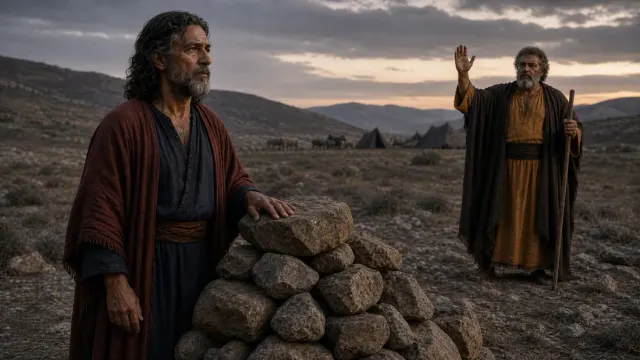
31:13I am the God of Beth-el, where thou anointedst the pillar, and where thou vowedst a vow unto me: now arise, get thee out from this land, and return unto the land of thy kindred.
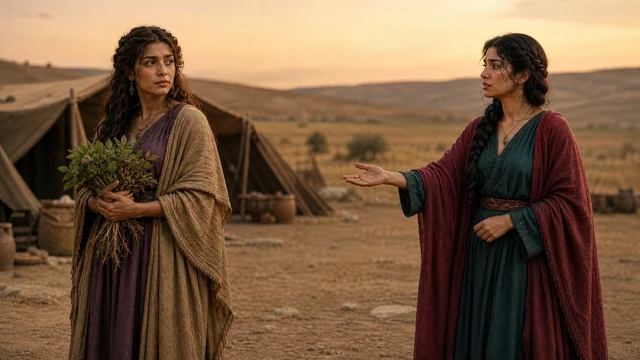
31:14And Rachel and Leah answered and said unto him, Is there yet any portion or inheritance for us in our father’s house?
31:15Are we not counted of him strangers? for he hath sold us, and hath quite devoured also our money.
31:16For all the riches which God hath taken from our father, that is ours, and our children’s: now then, whatsoever God hath said unto thee, do.


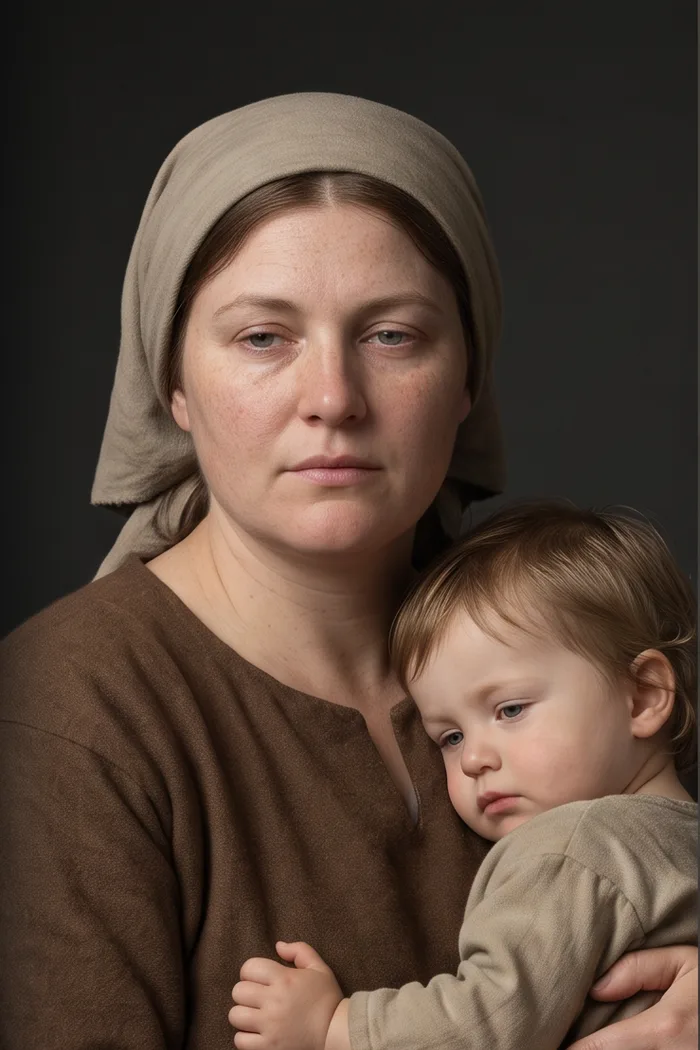















Leah enters the account in a comparison she did not arrange. Elder and younger, tender eyed and beautiful, then the decisive sentence: Jacob loved Rachel. The Book of Genesis does not call Leah ugly. The Hebrew description of her eyes is difficult enough without making it pronounce a verdict on her entire face. What is unmistakable is the preference. Jacob names the woman he wants, offers seven years, and finds the years light because of his love for her.
Nothing here records Leah's response. That silence matters. Her sister is the object of the bargain, her father conducts it, and Leah stands within the household but outside its stated plans. The passage gives Jacob a memorable measure of love, seven years that felt like days. It gives Leah no corresponding promise.