
Forgiving other people is the hard part, and Matthew 18 already knew it

The American Bible Society’s new chapter on forgiveness finds that Americans struggle most with forgiving others. Read beside a parable, the numbers say more than they seem to.
Published · Prepared by the Cinematic Bible Songs editorial team · 3 min read
Our view, argued from sources that are linked so you can check them.
What the survey found
In September 2026 the American Bible Society released the sixth chapter of its State of the Bible 2026 report, on forgiveness.1 It asked about three kinds: forgiving yourself, forgiving other people, and receiving forgiveness from God. Forgiving others came out hardest by a distance. 40 percent of Americans struggle with it, against 29 percent who find it hard to forgive themselves and 10 percent who struggle to receive God’s forgiveness.1
The 40 percent are people agreeing with one plain sentence: if others mistreat me, I continue to think badly of them.2 The survey was fielded for the Society by NORC at the University of Chicago, with 2,649 adults interviewed online and by phone between 8 and 27 January 2026.1
Three words from the report
One finding sounds as if it came straight out of the Gospel of Matthew. Of the people who believe God does not forgive them, 68 percent also report difficulty forgiving those who mistreat them.1 The report sums the chapter up in three words: forgiven people forgive.2
Peter’s arithmetic
Matthew 18 starts from the same place, with a man trying to put a number on it. Peter asks Jesus how often he should forgive a brother who sins against him, and offers seven times, which is generous by most people’s standards. The answer is not a bigger number to count to. It is a number built to make counting pointless:
Jesus saith unto him, I say not unto thee, Until seven times: but, Until seventy times seven.
Matthew 18:22
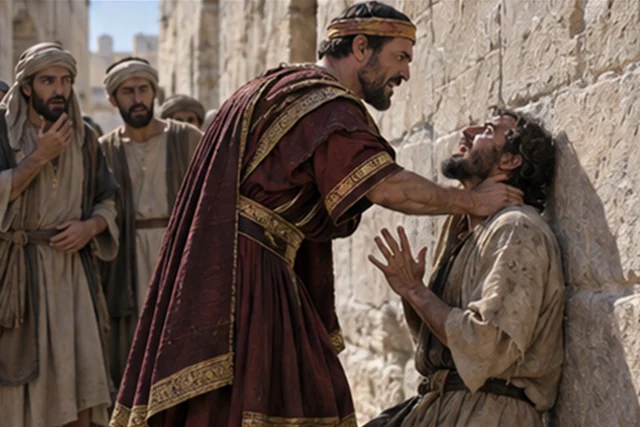
Then comes the parable. A servant is let off a debt of ten thousand talents, a sum he could never have repaid. He walks out, finds a fellow servant who owes him a hundred pence, and takes him by the throat. The king’s question afterwards is the point of the whole chapter:
Shouldest not thou also have had compassion on thy fellowservant, even as I had pity on thee?
Matthew 18:33
Where the numbers and the parable part company
The survey and the parable are not quite saying the same thing, and the gap between them is the interesting part. The survey finds a pattern: people who have not experienced God’s forgiveness tend to struggle to forgive others, and the report reads that as forgiveness received making forgiveness possible.2 The servant in Matthew 18 is the case a pattern cannot see. He has been forgiven everything, and he still goes for the throat. The Gospel of Matthew does not treat being forgiven as a vaccine. It treats it as an obligation, and the servant’s end, handed over until he pays it all, is what refusing it costs.
The report also finds that 48 percent of the people it classes as Bible Disengaged keep thinking badly of those who mistreated them, against 21 percent of the Scripture Engaged.1 That is a real gap. It is also self-reported, so it measures how people describe themselves, which is not always how they behave on a bad day. The parable is interested in the bad day.
Genesis got there first
The Book of Genesis closes on the same question. With Jacob dead, Joseph’s brothers are sure the revenge they have feared for years is finally coming, and they send word begging to be forgiven. Joseph weeps, and puts judgment where the report’s authors put it, out of his own hands:
And Joseph said unto them, Fear not: for am I in the place of God?
Genesis 50:19
Forgiving is hard, the survey says, and four in ten Americans would agree. The Bible never claimed otherwise. It keeps putting people in the room with the ones who hurt them and waiting to see what they do.