New · FreePlay The Witnesses The in-depth puzzle battle quest through Bible history

Objects of the Bible

The coat of many colours

A garment given to one son out of twelve, and returned to his father covered in the blood of a goat.

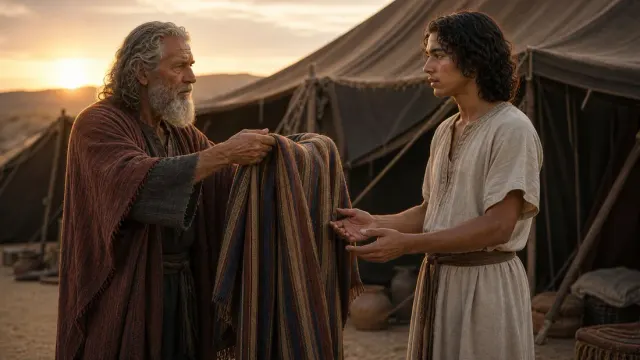
Israel loved Joseph more than all his children because he was the son of his old age, and he made him a coat of many colours. The Hebrew is uncertain and may describe sleeves reaching the wrists rather than dyes, which would make it a garment for someone who is not expected to work. Either way the brothers read it correctly. When they saw that their father loved him more than all his brethren, they hated him, and could not speak peaceably unto him.

Where it appearsGenesis 37

Scroll down to the account
The coat of many colours

The movements, in the order the text gives them.

The Account of The coat of many colours

  1. 01

    Genesis 37:3-4

    They could not speak peaceably unto him

    The coat is given and the hatred is recorded in the next verse. Nothing is said about the boy having earned it.

    The family problem has acquired a wardrobe. Israel's preference is not something the brothers have imagined: the Book of Genesis states it before reporting their reaction. He loved Joseph more. The coat makes that unequal affection visible, something Joseph can wear into the room without saying a word. Before the dreams sharpen the conflict, ordinary conversation has already failed. They could not speak peaceably unto him. Even a greeting has become difficult.

    The description of Joseph as the son of his old age is the father's stated reason, not a calculation proving that Joseph is the youngest. Benjamin is younger. Nor does the passage say that wearing the coat makes Joseph idle, vain, or responsible for the violence directed against him. Those are additions, not observations. What is present is a father displaying preference and brothers turning that preference into hatred of the favored son. The garment records a distinction that the household cannot discuss peacefully. It is affection made public, and peace made impossible.

    Verse by verse

    1. 37:3

      The Hebrew wording behind many colours is debated; the passage gives neither a list of colors nor a description of its manufacture.

    2. 37:4

      The brothers hate Joseph before the dreams are reported in verses 5-11. The dreams intensify an existing breach.

    Genesis 37:3-4

    King James Version · 2 verses

    37:3Now Israel loved Joseph more than all his children, because he was the son of his old age: and he made him a coat of many colours.

    37:4And when his brethren saw that their father loved him more than all his brethren, they hated him, and could not speak peaceably unto him.

    Genesis 37:3-4: They could not speak peaceably unto him
  2. 02

    Genesis 37:23

    They stript Joseph out of his coat

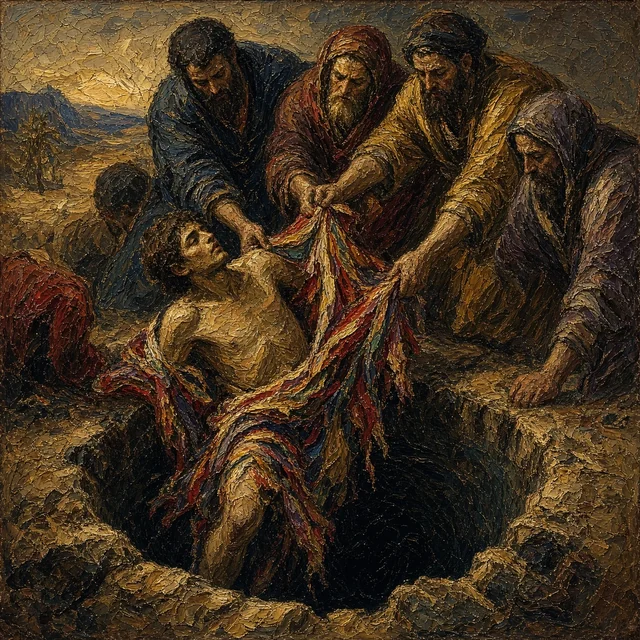
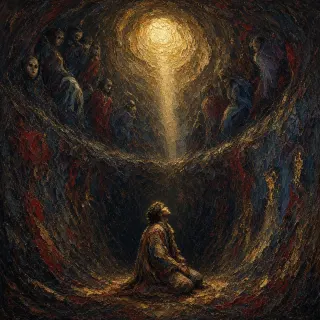
    Before the pit, before the sale, the garment comes off. The first thing they take back is the visible part of the favour.

    His coat, his coat of many colours that was on him. The sentence names the garment twice, as though the violence cannot be described without identifying precisely what has been taken. The brothers do not merely seize Joseph. They strip away the visible mark of the father's preference before throwing him into the pit. The gift that distinguished him offers no protection when the givers of the welcome are his enemies.

    There is no description of torn fabric here, and no permission to invent a struggle that the verse does not record. The action is blunt enough. Joseph loses control of the garment and, with it, control of what others will make it say. That pattern recurs in Genesis 39, where another garment left in someone else's hands becomes evidence in a false accusation. Clothing can establish identity while saying nothing reliable about what happened. The cloth belongs to Joseph. The explanation supplied with it will belong to somebody else.

    Verse by verse

    1. 37:23

      The verse repeats coat and specifies that it was on Joseph. The removal is personal and deliberate, not the recovery of abandoned clothing.

    2. 37:23

      Genesis 39:12-18 gives a second episode in which someone uses Joseph's actual clothing to support a false account.

    Genesis 37:23

    King James Version · 1 verse

    37:23And it came to pass, when Joseph was come unto his brethren, that they stript Joseph out of his coat, his coat of many colours that was on him;

    Genesis 37:23: They stript Joseph out of his coat
  3. 03

    Genesis 37:31-33

    Know now whether it be thy son’s coat

    The lie is never spoken. They ask a question and let their father answer it, and he does: an evil beast hath devoured him.

    The coat is genuine. The blood is genuine. The conclusion is manufactured. The brothers place two real things together and invite their father to supply the sentence they need. They do not announce Joseph's death in this exchange. Jacob does. His recognition of the garment is correct; his certainty about the animal attack is not. Without doubt is the terrible phrase, because the Book of Genesis has already removed every doubt about how this evidence was prepared.

    Thy son's coat also keeps a small, ugly distance. They identify Joseph through the father whose preference they resented, not through their own brotherhood. Another family echo runs underneath the scene: in Genesis 27, Jacob used a goat and a brother's clothing to deceive his father. Now a goat and a son's clothing deceive him. That correspondence does not make Joseph's suffering deserved or turn the brothers into innocent instruments. It makes the deception recognizable across generations. The materials have changed owners. The damage has not become smaller.

    Verse by verse

    1. 37:31

      The blood comes from a young goat. No blood of Joseph is placed on the coat in this account.

    2. 37:32-33

      The brothers ask for identification; Jacob supplies the claim that a wild animal killed Joseph. The distinction explains the deception's method.

    Genesis 37:31-33

    King James Version · 3 verses

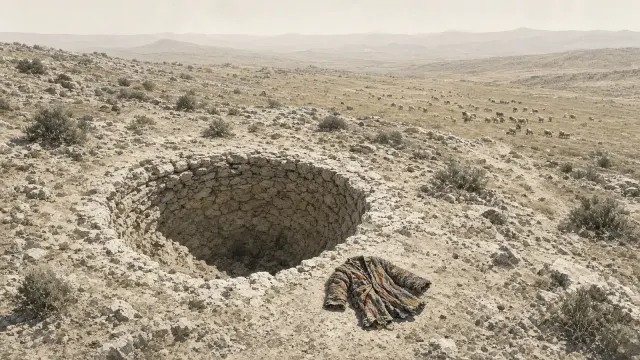
    37:31And they took Joseph’s coat, and killed a kid of the goats, and dipped the coat in the blood;

    37:32And they sent the coat of many colours, and they brought it to their father; and said, This have we found: know now whether it be thy son’s coat or no.

    37:33And he knew it, and said, It is my son’s coat; an evil beast hath devoured him; Joseph is without doubt rent in pieces.

    Genesis 37:31-33: Know now whether it be thy son’s coat
  4. 04

    Genesis 37:34-35

    I will go down into the grave unto my son mourning

    He refuses to be comforted. The mourning lasts twenty two years and every one of his sons knows why it need not.

    All his sons rise to comfort him. That is the sentence with the weight in it. The family gathering includes the men whose actions produced this grief, and nothing here says that they correct the false conclusion on which it rests. Comfort is offered while the truth is withheld. The Book of Genesis does not need to describe their expressions or invent the speeches they made. The arrangement is already devastating.

    Jacob tears his own clothes after receiving the coat that was taken from Joseph. Cloth has moved from favor to fabricated evidence to an outward sign of mourning. His refusal of comfort is not proof that he secretly knows Joseph is alive; the text gives no such knowledge. He expects grief to accompany him into death. Meanwhile, the next verse places the living Joseph in an Egyptian sale. The father and son occupy entirely different realities of knowledge. One is mourning an irreversible death. The other is enduring a life that has been taken out of his hands.

    Verse by verse

    1. 37:34

      Sackcloth and torn clothing express mourning here. The passage reports many days but gives no exact duration for this scene.

    2. 37:35

      All his sons are included among those offering comfort; the verse does not report any confession that Joseph was sold.

    Genesis 37:34-35

    King James Version · 2 verses

    37:34And Jacob rent his clothes, and put sackcloth upon his loins, and mourned for his son many days.

    37:35And all his sons and all his daughters rose up to comfort him; but he refused to be comforted; and he said, For I will go down into the grave unto my son mourning. Thus his father wept for him.

    Genesis 37:34-35: I will go down into the grave unto my son mourning

Why it matters

The coat does the work of the chapter twice. They strip it off him first, before the pit, which is the point at which the favouritism is physically undone. Then they kill a kid of the goats, dip the coat in the blood, and send it to their father with a question rather than a statement: this have we found, know now whether it be thy son’s coat or no. Jacob identifies it himself and supplies the account. The deceiver of a blind father is deceived by a garment and an animal, which is exactly how he did it.

2 songs

The music

Every song in the catalogue whose passage falls inside these chapters.

  1. Genesis 37

    Into the Pit

  2. Genesis 37:1-38:30

    The Dreamer in the Pit

Nearby

All the objects

Report an error on this page