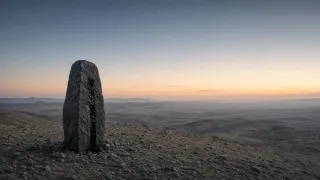
New · FreePlay The Witnesses The in-depth puzzle battle quest through Bible history

Objects of the Bible

The ladder at Bethel

Set up on the earth and reaching to heaven, with traffic going both ways.

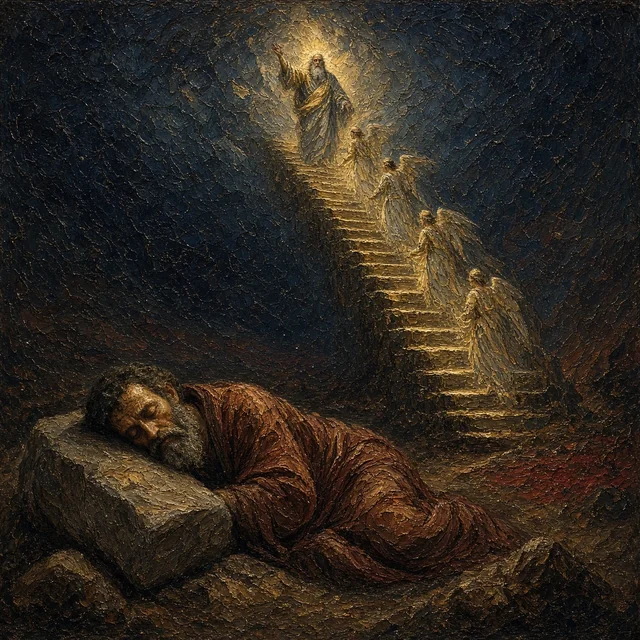
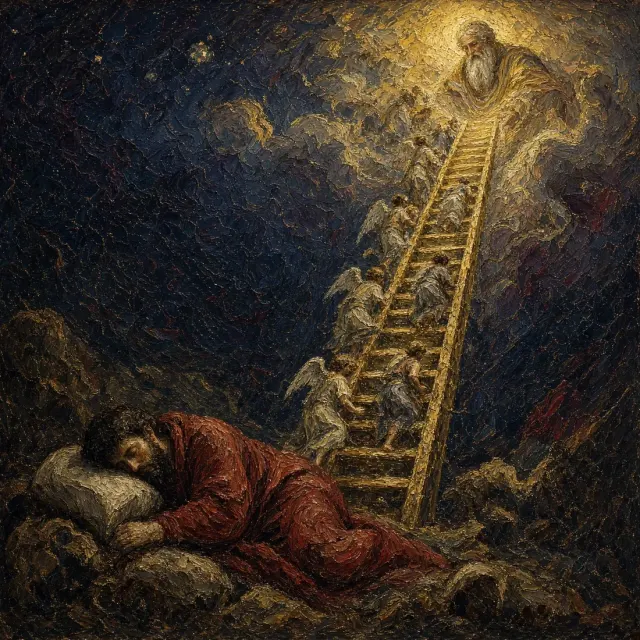
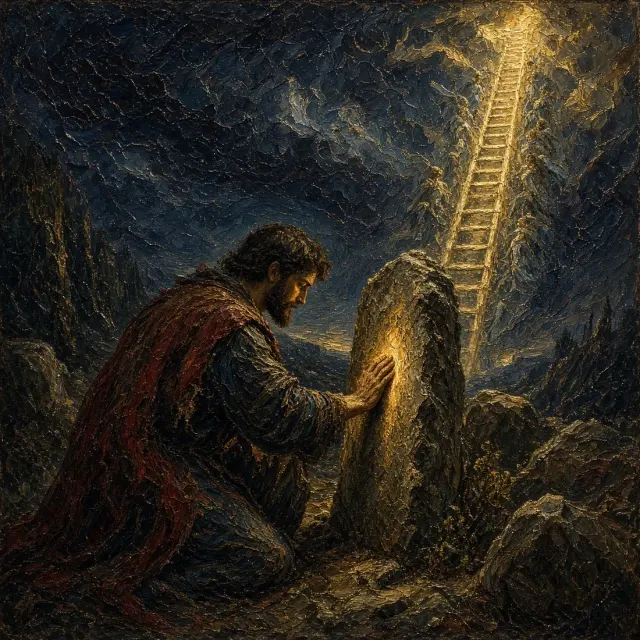
It is seen once, in a dream, by a man using a stone for a pillow. The description is exact and strange: a ladder set up on the earth, and the top of it reached to heaven, and behold the angels of God ascending and descending on it. The order of those two verbs is worth noticing. They go up first, which means they were already here before the dream started.

Where it appearsGenesis 28

Scroll down to the account
The ladder at Bethel

The movements, in the order the text gives them.

The Account of The ladder at Bethel

  1. 01

    Genesis 28:11

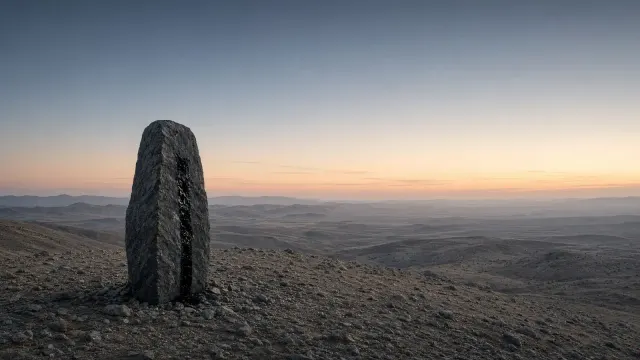
    He took of the stones of that place

    The only physical object in the scene is picked up for comfort, not for worship. Everything else in it is a dream.

    Sunset, not a search for a sanctuary, explains the stop. Jacob does not arrive announcing that he has found a holy place. He arrives because the day's light has run out, and the available bedding comes from the ground. The repeated place keeps the location before the eye while withholding the name it will receive. At this point, it is a night's lodging.

    That makes the promise in the surrounding passage wonderfully concrete. God will speak of the land whereon thou liest in 28:13. The ground supporting a sleeping traveler is the ground promised to his descendants. Inheritance is not introduced as an abstract possession somewhere beyond the horizon; it is already under his body. Jacob's own verdict in 28:16 is that the LORD was present and he did not know it. The experience does not reward his expertise at locating sacred ground. It overturns his estimate of an ordinary stopping place. He went to sleep before he knew where he was.

    Verse by verse

    1. 28:11

      Lighted upon means came upon or arrived at. No beam of light is being described.

    2. 28:11

      The reason given for spending the night is sunset. The recognition of divine presence comes after the dream in 28:16.

    Genesis 28:11

    King James Version · 1 verse

    28:11And he lighted upon a certain place, and tarried there all night, because the sun was set; and he took of the stones of that place, and put them for his pillows, and lay down in that place to sleep.

    Genesis 28:11: He took of the stones of that place
  2. 02

    Genesis 28:12

    Ascending and descending on it

    The angels go up before they come down. The commerce was already running through a place the man on the ground thought was empty.

    Jacob is not climbing. That is easy to lose when the ladder becomes an illustration of human spiritual progress, but the only figures moving on it are the angels of God. The sleeper receives the vision; he does not construct the route, operate it, or earn a place halfway up. Heaven is active while Jacob lies still.

    Even the order is worth hearing: ascending and descending, not the reverse. The verse shows movement in both directions without explaining the angels' previous assignments or dividing them into rival teams. The next words of God concern land, descendants, protection, and return, so the vision belongs to the covenant promise rather than to a detached tour of the unseen world. Its lowest point matters as much as its highest. The ladder is set on the earth, the very ground on which the traveler has stopped. The promised connection does not leave his actual location behind. It reaches it.

    Verse by verse

    1. 28:12

      The text names angels ascending and descending, but does not say that Jacob ascends.

    2. 28:12

      The divine speech in 28:13-15 explains the vision through the promises made to Abraham and Isaac.

    Genesis 28:12

    King James Version · 1 verse

    28:12And he dreamed, and behold a ladder set up on the earth, and the top of it reached to heaven: and behold the angels of God ascending and descending on it.

    Genesis 28:12: Ascending and descending on it
  3. 03

    Genesis 28:17

    The gate of heaven

    His reading of the object is architectural: a house and a gate. Fear, not comfort, is the recorded response.

    The night's accommodation has no roof, and Jacob calls it a house. His language is not a description of architecture. House of God and gate of heaven name what the encounter has disclosed about the place, although no temple walls or city gate have appeared in the account. The ordinary ground has not been mistaken for sacred furniture. It has become the setting of a divine address.

    Dreadful also needs its older weight. Jacob is afraid, but he is not declaring that the place is wicked, unpleasant, or cursed. His fear responds to the presence he now recognizes. The preceding admission, I knew it not, is essential: the failure lay in his awareness, not in God's absence. The grand language of house and gate therefore follows a confession of ignorance. This is a remarkably unpolished beginning for a sanctuary's name. No credentials are offered, no discovery is claimed. The man who slept there has learned how little he understood his lodging.

    Verse by verse

    1. 28:17

      Dreadful means fear-inspiring or awe-inspiring here, not morally bad.

    2. 28:17

      House of God gives the meaning of the name Bethel, which Jacob assigns in 28:19.

    Genesis 28:17

    King James Version · 1 verse

    28:17And he was afraid, and said, How dreadful is this place! this is none other but the house of God, and this is the gate of heaven.

    Genesis 28:17: The gate of heaven
  4. 04

    Genesis 28:18-19

    He poured oil upon the top of it

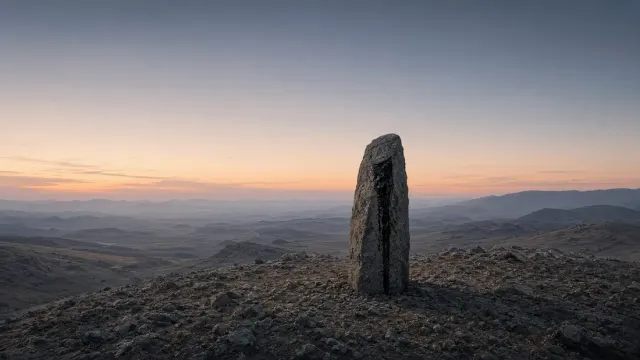
    The pillow becomes a pillar. It is the first stone in the Bible anointed to mark a place rather than to build with.

    The stone changes position before the place changes name. What served beside Jacob's head is raised upright, and oil is poured over it. The object has not been replaced by something grander. The same ordinary material now marks the encounter. The point is not that the stone spoke, dreamed, or opened heaven. God spoke; the stone remains as a witness to the place where that happened.

    The Book of Genesis also keeps Luz in view. Bethel does not appear as though the land had no earlier name or inhabitants. Jacob's naming gives the location a new significance while the older city name remains recorded. Later, in Genesis 31:13, God identifies himself through Bethel and explicitly recalls the anointed pillar and the vow. In Genesis 35, Jacob returns and again raises a stone pillar and pours oil. The memorial belongs to an ongoing relationship, not a souvenir with independent power. Its importance comes from the encounter it marks.

    Verse by verse

    1. 28:18

      The pillar is an upright stone. The verse does not describe a carved image of God.

    2. 28:19

      Bethel means house of God. Luz is preserved as the earlier name of the city.

    Genesis 28:18-19

    King James Version · 2 verses

    28:18And Jacob rose up early in the morning, and took the stone that he had put for his pillows, and set it up for a pillar, and poured oil upon the top of it.

    28:19And he called the name of that place Beth-el: but the name of that city was called Luz at the first.

    Genesis 28:18-19: He poured oil upon the top of it
  5. 05

    John 1:51

    Upon the Son of man

    The image returns unchanged except in one detail, and the change of that detail is the whole of the New Testament’s claim.

    Jesus removes the ladder from the picture without losing the traffic. The angels of God still ascend and descend, but the words that identify their point of connection are now upon the Son of man. The echo of Genesis 28:12 is unmistakable, and the change is the point. What Jacob saw associated with a place is now centered on a person.

    The saying follows Nathanael's confession that Jesus is the Son of God and King of Israel. Jesus answers with the title Son of man and an image larger than Nathanael's amazement at being seen beneath a fig tree. This is not simply another instance of knowing a hidden location. It concerns the meeting of heaven and earth. The verse does not describe Nathanael watching angels at that moment, nor does it provide a timetable for a single spectacle. It announces the significance of Jesus through the language of Jacob's vision. The old connection has acquired a personal center.

    Verse by verse

    1. 1:51

      Ascending and descending upon the Son of man deliberately recalls the wording of Genesis 28:12.

    2. 1:51

      The verse promises a revelation; it does not report that a visible ladder appeared during this conversation.

    John 1:51

    King James Version · 1 verse

    1:51And he saith unto him, Verily, verily, I say unto you, Hereafter ye shall see heaven open, and the angels of God ascending and descending upon the Son of man.

    John 1:51: Upon the Son of man

Why it matters

The object is not really a ladder, it is a statement about where the traffic runs, and Jacob reads it that way on waking: this is none other but the house of God, and this is the gate of heaven. What he does next is turn the pillow into a pillar and pour oil on it, which is the first anointed stone in Scripture. And the image is picked up once more at the end. Jesus tells Nathanael he will see heaven open and the angels of God ascending and descending upon the Son of man, which puts a person where the ladder stood.

3 songs

The music

Every song in the catalogue whose passage falls inside these chapters.

  1. Genesis 28:10-22

    A Ladder in the Night

  2. Genesis 28:10-22

    Jacob's Ladder

  3. Genesis 28:10-22

    The Gate of Heaven

Nearby

All the objects

Report an error on this page