
New · FreePlay The Witnesses The in-depth puzzle battle quest through Bible history

People of the Bible

Barnabas

Was nicknamed the son of consolation, and spent it on the two men nobody else would take.

Also called Joses, a Levite of Cyprus

His name is a nickname the apostles gave him, which the text translates: the son of consolation, or of encouragement. He earns it early by selling a field and laying the money at the apostles’ feet, and then again by doing the two things this sheet is really about. When Saul comes to Jerusalem after Damascus and the disciples are all afraid of him and do not believe he is a disciple, Barnabas takes him and brings him to the apostles himself.

Where he appearsActs 11 · Acts 13 to 15

Scroll down to the account
Barnabas

The movements, in the order the text gives them.

The Account of Barnabas

  1. 01

    Acts 4:36-37

    The son of consolation

    A Levite from Cyprus sells land and lays the price at the apostles’ feet. The nickname arrives with him and the text stops to translate it.

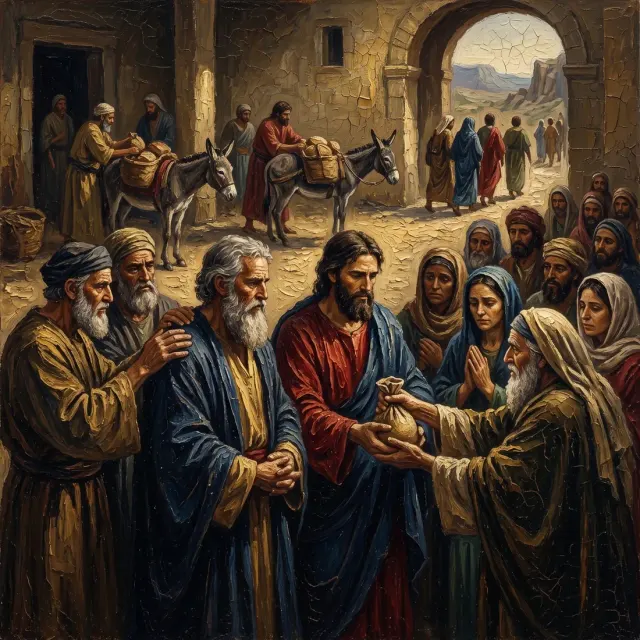
    Barnabas brings money before the Book of Acts gives him a speech. His first recorded contribution is something that can be distributed to people who need it. The preceding verses have joined the apostles' witness to the resurrection with a community in which need is being met. His sale supplies one particular face and one particular field to that larger description. Great grace has acquired a very practical form.

    The apostles' name for him matters before any later reputation is imported into it. Son of consolation is their description, not his advertisement. The Greek word includes encouragement as well as comfort, so the title suggests more than a pleasant manner beside a sickbed. Here the encouragement has a purchase price. The money is laid at the apostles' feet, entering the distribution described in verse 35 rather than remaining a fund that the donor visibly directs. The gesture places the gift at the service of the need.

    The next account begins with another sale and money at the same feet, but with part secretly held back. That contrast gives Barnabas' uncomplicated sentence additional force. Acts 5:4 makes clear that possession and sale did not remove the owner's freedom over the property and proceeds. The distinction is not between a compulsory gift and a larger compulsory gift. It is between an honest gift and a performed one.

    Verse by verse

    1. 4:36

      The KJV names him Joses and gives Barnabas as the name supplied by the apostles. Son of consolation is the explanation furnished by Acts itself.

    2. 4:37

      The passage does not locate the land or say that it was his only possession. Neither detail should be inferred simply from his Cypriot origin.

    Acts 4:36-37

    King James Version · 2 verses

    4:36And Joses, who by the apostles was surnamed Barnabas, (which is, being interpreted, The son of consolation,) a Levite, and of the country of Cyprus,

    4:37Having land, sold it, and brought the money, and laid it at the apostles’ feet.

    Acts 4:36-37: The son of consolation
  2. 02

    Acts 9:26-28

    They were all afraid of him

    Saul tries to join the disciples at Jerusalem and is not believed. Barnabas takes him, brings him in, and tells them what happened on the road.

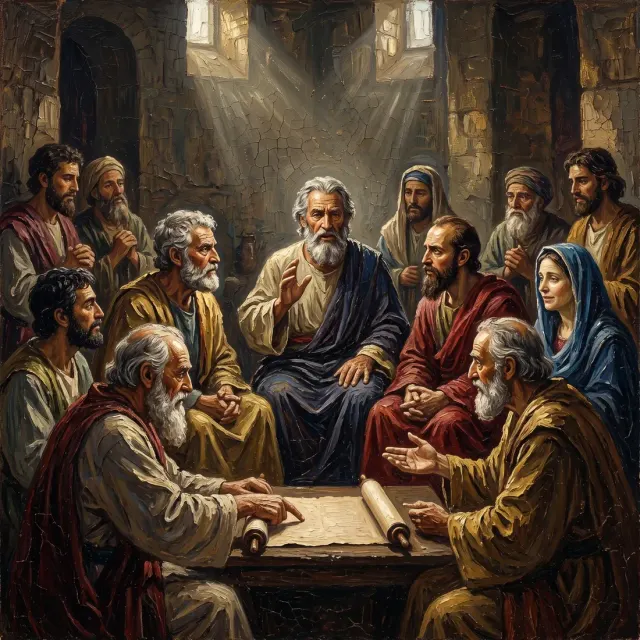
    The frightened disciples have a reason for their caution, and Barnabas brings reasons for a different conclusion. Their fear is not presented as a silly failure to appreciate a promising newcomer. Saul has been the enemy of precisely this community. An announcement that he has changed does not erase the arrests and violence already recorded. The striking thing is that Barnabas does not ask the apostles to pretend those things never happened.

    Instead, he supplies testimony: the encounter with the Lord and the bold preaching at Damascus. His recommendation has content. Barnabas takes Saul and brings him to the apostles, making the disputed claim of discipleship something they can consider in the presence of the man concerned. The passage does not explain how Barnabas obtained every detail, and it supplies no secret childhood friendship to make his intervention easy. What it does show is a respected disciple putting his own introduction behind someone whose name has become a warning.

    With them coming in and going out is the quiet result. It describes ordinary movement within a shared circle, exactly what suspicion had prevented. The following verses still contain opposition and danger, so this is no announcement that Saul's whole situation is now comfortable. Something more specific has changed. The former persecutor is no longer trying to join a community that will not receive him. Barnabas has helped turn a claim into a relationship.

    Verse by verse

    1. 9:26

      Assayed means attempted. The disciples' refusal follows the explicit statement that they did not believe Saul was a disciple.

    2. 9:27

      Barnabas reports both the encounter with the Lord and Saul's public preaching. The recommendation is not based on a stated guarantee that Saul will never make a mistake.

    3. 9:28

      Coming in and going out describes Saul's association with the apostles in Jerusalem. It does not supply the length of the visit.

    Acts 9:26-28

    King James Version · 3 verses

    9:26And when Saul was come to Jerusalem, he assayed to join himself to the disciples: but they were all afraid of him, and believed not that he was a disciple.

    9:27But Barnabas took him, and brought him to the apostles, and declared unto them how he had seen the Lord in the way, and that he had spoken to him, and how he had preached boldly at Damascus in the name of Jesus.

    9:28And he was with them coming in and going out at Jerusalem.

    Acts 9:26-28: They were all afraid of him
  3. 03

    Acts 11:22-26

    He was glad

    Sent to inspect an irregular church of Greeks, he approves it, fetches Saul from Tarsus, and the disciples are first called Christians there.

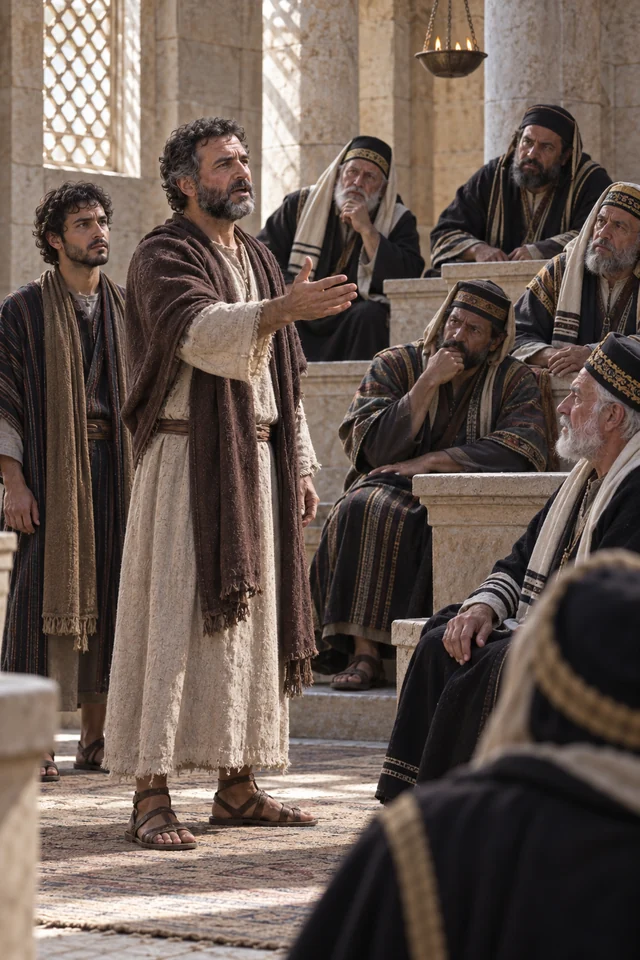
    Jerusalem sends a representative; Antioch receives a man who is glad. That response is the first thing recorded after Barnabas sees the grace of God. The people who began this work were scattered believers, not a delegation he had organized. He recognizes what is happening without needing to be its originator. His exhortation directs their loyalty to the Lord, not to the visiting representative who has come to assess the news.

    Then comes the journey to Tarsus. The growing congregation does not make Barnabas' next move obvious until the text names its purpose: to seek Saul. Acts 9:30 had left Saul there after danger in Jerusalem. Barnabas now brings him into a year of shared teaching. The man who helped Saul enter one community also helps him serve another. This is encouragement with travel, searching and sustained work attached. Much people is not left as an impressive crowd. There is a whole year of teaching behind the phrase.

    The Book of Acts explicitly calls Barnabas a good man, full of the Holy Ghost and of faith. That is a substantial judgment, not a claim that he never fails. Galatians 2:13 also records his participation in the withdrawal from Gentile table fellowship that Paul condemns as dissimulation. Both passages belong to his portrait. The genuine joy of this arrival does not need a flawless biography to make it genuine.

    Verse by verse

    1. 11:23

      Cleave unto means remain attached to or continue with. The object of that continuing allegiance is the Lord, not Barnabas.

    2. 11:24

      Good man is the direct assessment of Acts, not a reputation attributed only to Barnabas' friends. The verse also explicitly connects him with faith and the Holy Ghost.

    3. 11:26

      This is the first use of Christians reported in Acts. The verse locates the naming at Antioch but does not identify the individual who coined it or state the speaker's tone.

    Acts 11:22-26

    King James Version · 5 verses

    11:22Then tidings of these things came unto the ears of the church which was in Jerusalem: and they sent forth Barnabas, that he should go as far as Antioch.

    11:23Who, when he came, and had seen the grace of God, was glad, and exhorted them all, that with purpose of heart they would cleave unto the Lord.

    11:24For he was a good man, and full of the Holy Ghost and of faith: and much people was added unto the Lord.

    11:25Then departed Barnabas to Tarsus, for to seek Saul:

    11:26And when he had found him, he brought him unto Antioch. And it came to pass, that a whole year they assembled themselves with the church, and taught much people. And the disciples were called Christians first in Antioch.

    Acts 11:22-26: He was glad
  4. 04

    Acts 15:36-40

    The contention was so sharp

    He will not give up on Mark and Paul will not take him. They split the first missionary partnership rather than settle it, and both keep working.

    The men who have just stood together in a major dispute cannot agree about a travelling companion. The placement is painfully exact. Earlier in this chapter Paul and Barnabas defend the Gentile believers together; now the disagreement concerns Mark and breaks their own partnership. The Book of Acts does not soften sharp contention into a pleasant discussion about expanding the team. The separation is the result of a dispute.

    Paul's objection is stated: Mark left the work in Pamphylia. Acts 13:13 records that departure, but not its motive. Barnabas is determined to take him. The text supplies two judgments about whether he should go, not permission to diagnose one man as heartless and the other as merely sentimental. Colossians 4:10 establishes a family relationship between Mark and Barnabas, yet Acts does not say that kinship alone settled Barnabas' decision. Cyprus becomes the destination for Barnabas and Mark; Silas travels with Paul. Work continues, but that continuation does not make the fracture imaginary.

    The later letters prevent the separation from becoming a permanent sentence on either Barnabas or Mark. First Corinthians 9:6 still names Barnabas beside Paul in discussing the right of workers to support. Colossians 4:10 directs that Mark be received, and Second Timothy 4:11 calls him profitable for the ministry. Those are substantial later facts, not a recorded reconciliation scene. The account does not award a winner, describe an apology or explain every step by which relationships changed. It preserves something more resistant to a tidy ending: a real rupture, continuing work and a man once rejected who is later wanted.

    Verse by verse

    1. 15:37

      Colossians 4:10 gives a kinship connection: the KJV says sister's son, while the underlying anepsios is commonly understood as cousin. Acts does not make that relationship its explanation of Barnabas' motive.

    2. 15:38

      Acts 13:13 locates Mark's departure at Perga in Pamphylia. Neither passage identifies why he left.

    3. 15:39

      Sharp contention describes a genuine disagreement that led to separation. No divine command to divide the partnership is reported.

    4. 15:40

      Recommended means commended or entrusted to God's grace. This explicit commendation of Paul's departure is not an explicit condemnation of Barnabas.

    Acts 15:36-40

    King James Version · 5 verses

    15:36And some days after Paul said unto Barnabas, Let us go again and visit our brethren in every city where we have preached the word of the Lord, and see how they do.

    15:37And Barnabas determined to take with them John, whose surname was Mark.

    15:38But Paul thought not good to take him with them, who departed from them from Pamphylia, and went not with them to the work.

    15:39And the contention was so sharp between them, that they departed asunder one from the other: and so Barnabas took Mark, and sailed unto Cyprus;

    15:40And Paul chose Silas, and departed, being recommended by the brethren unto the grace of God.

    Acts 15:36-40: The contention was so sharp

Why it matters

The church at Antioch is the second thing. Jerusalem hears that Greeks are believing in a foreign city and sends him to look, and he sees the grace of God and is glad, which is not the report they might have expected. Then he goes to Tarsus to find Saul, and the two of them teach there a whole year. The partnership ends over Mark, whom Paul will not take because he had turned back, and the contention is so sharp they part company. Barnabas takes Mark and sails. Paul later asks for Mark by name.

3 songs

The music

Every song in the catalogue whose passage falls inside these chapters.

  1. Acts 11:19-30; 13-14

    Sent Out

  2. Acts 15:1-35

    It Seemed Good to the Holy Ghost

  3. Acts 15

    No Greater Burden

Nearby

All the people

Report an error on this page