


Acts 10:1-8
Thy prayers and thine alms are come up
The angel comes to the soldier first. He is told to send to Joppa for a man lodging with a tanner by the sea, and his errand starts before Peter knows anything.
Verse by verse
- 10:1
"Band" means a military unit, not a musical group. The passage identifies it as Italian without giving Cornelius' birthplace or the precise number of troops under him.
- 10:2
His devotion, generosity, and continual prayer are stated before Peter arrives. Acts 11:14 nevertheless treats Peter's coming message as necessary for the household's salvation.
- 10:4
The Greek mnemosynon means a memorial or remembrance. Acts 10:31 restates the thought by saying that his prayer is heard and his alms remembered before God.
- 10:7
Two household servants and one devout soldier make up the three messengers. Their number is confirmed when the Spirit speaks to Peter in Acts 10:19.
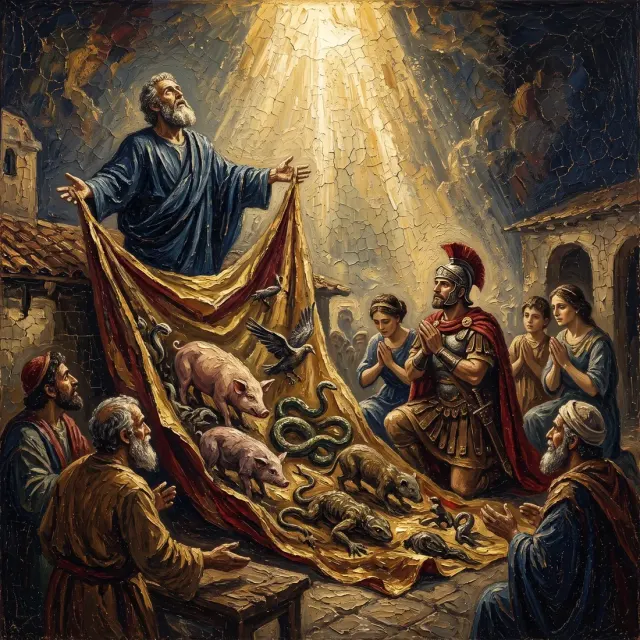



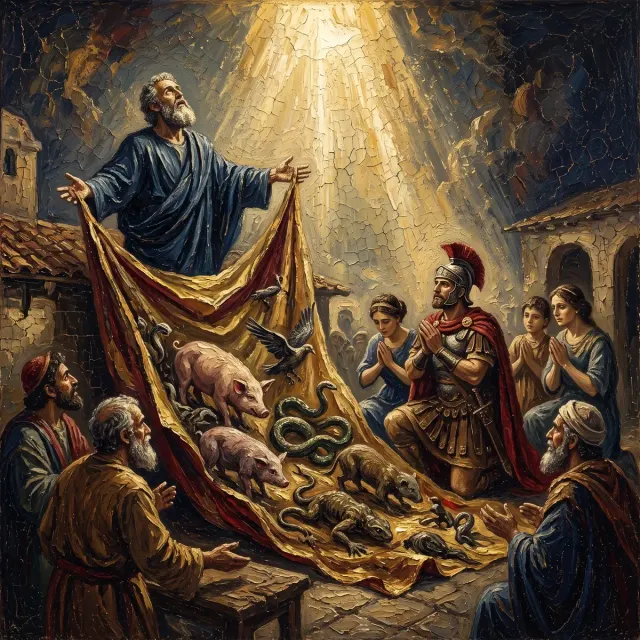



The first favorable judgment on Cornelius comes before Peter has met him. Acts calls him devout; the angel says his prayers and alms have come before God. The household is not introduced as a spiritual blank awaiting an apostle's arrival. Something real is already happening there, and heaven acknowledges it before Jerusalem has discussed the implications.
That acknowledgment does not make Peter unnecessary. The angel supplies a name, a second Simon to distinguish the host from the guest, an occupation, and a seaside location. Divine direction here has the practical precision of an address. Cornelius must send for someone who will speak, and Acts 11:14 will describe those words as the means by which the household will be saved. The account holds together what an oversimplified reading pulls apart: the man's existing devotion and his need to hear about Jesus. Even the delegation reflects his household's religious life. Alongside two servants goes a devout soldier, not merely an armed escort identified by force. The officer can issue orders, but the order that sets this journey moving has come to him.