New · FreePlay The Witnesses The in-depth puzzle battle quest through Bible history

People of the Bible

Delilah

Asked the same question four times while he watched her test every answer, and he told her anyway.

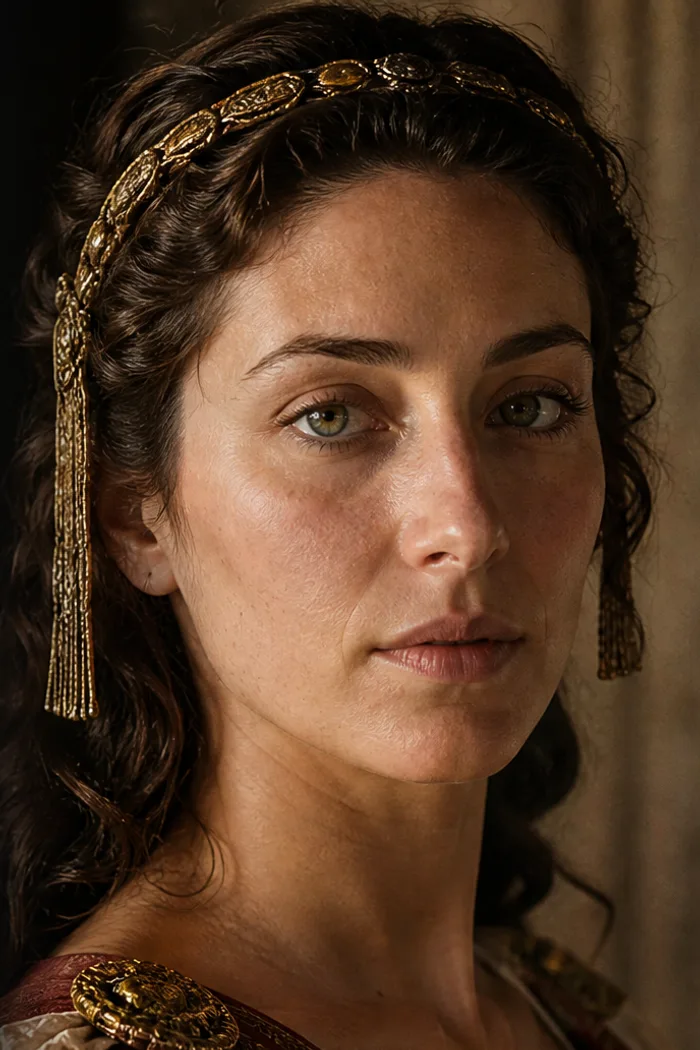
Delilah is from the valley of Sorek and she is the only woman in Samson’s account who is given a name. The lords of the Philistines come to her with an offer: find out where his great strength lies, and each of us will give you eleven hundred pieces of silver. She does not hide the task. She asks him directly, in the open, every time. Three times he lies and three times she does exactly what the lie describes while men wait in the inner room, and calls out that the Philistines are on him. Then she asks how he can say he loves her, and he tells her everything.

Where she appearsJudges 16

Scroll down to the account
Delilah

The movements, in the order the text gives them.

The Account of Delilah

  1. 01

    Judges 16:4-5

    Eleven hundred pieces of silver, each

    Five lords of the Philistines make the offer in person. The price is per lord, which puts it well beyond anything a village would ever see.

    The first fact about Delilah is that Samson loves her. The next is that the Philistine lords approach her with a price. The Book of Judges places affection and negotiation side by side, but does not give both sides the same vocabulary: his love is stated, hers is not.

    The offer is more specific than a request to kill him. They want the source of his strength discovered, a way to overpower him, and the means to bind and afflict him. The military problem has become a problem of access. Men unable to contain Samson are asking someone close to him to obtain what force has failed to secure. Each lord offers eleven hundred pieces of silver, not a share of one collective sum. The sentence ends with a price per participant. Delilah's personal explanation is absent; the terms of the transaction are not.

    Verse by verse

    1. 16:4

      The valley of Sorek locates the relationship. The verse does not state Delilah's nationality or call her a prostitute.

    2. 16:5

      "Every one of us" makes eleven hundred the individual offer of each lord, not the total collective payment.

    3. 16:5

      The stated objective is binding and afflicting Samson. No separate account of Delilah's private motives is supplied.

    Judges 16:4-5

    King James Version · 2 verses

    16:4And it came to pass afterward, that he loved a woman in the valley of Sorek, whose name was Delilah.

    16:5And the lords of the Philistines came up unto her, and said unto her, Entice him, and see wherein his great strength lieth, and by what means we may prevail against him, that we may bind him to afflict him: and we will give thee every one of us eleven hundred pieces of silver.

    Judges 16:4-5: Eleven hundred pieces of silver, each
  2. 02

    Judges 16:6-14

    Three lies, three tests

    Seven fresh bowstrings, new ropes, the seven locks woven into a loom. Each time she does the thing exactly and calls out, and each time he gets up and the men in the room have no hold on him.

    Delilah asks how Samson can be bound to afflict him, and he answers her. The question is not disguised as innocent curiosity about his exercise routine. Its stated purpose is captivity. After the first test fails, she accuses him of mockery and lying; her own attempt to bind him does not become the subject of the conversation. The complaint keeps attention on the unreliability of his answer rather than the use she has made of it.

    The tests repeat, but they do not stand still. Fresh withs give way to unused ropes, and ropes give way to the seven locks of his head woven into a web. The first two methods wrap something around him. The third takes hold of something belonging to him. Even the failed answer has now brought his hair into the equipment of the trap. The strength remains undiscovered at the end of the first test. Access has nevertheless become steadily more intimate.

    Verse by verse

    1. 16:7

      "Withs" denotes flexible binding material; the Hebrew term can designate cords or bowstrings. "Green" stresses that they have not dried, rather than specifying their color.

    2. 16:9

      The men waiting in the chamber are disclosed to the reader. The passage does not expressly say Samson knows they are there.

    3. 16:11

      "Never were occupied" means never used. It does not describe ropes stored in an uninhabited place.

    4. 16:13-14

      The web belongs to weaving equipment. This third test brings Samson's seven locks into the attempted restraint, though he still gives no account of his consecration.

    Judges 16:6-14

    King James Version · 9 verses

    16:6And Delilah said to Samson, Tell me, I pray thee, wherein thy great strength lieth, and wherewith thou mightest be bound to afflict thee.

    16:7And Samson said unto her, If they bind me with seven green withs that were never dried, then shall I be weak, and be as another man.

    16:8Then the lords of the Philistines brought up to her seven green withs which had not been dried, and she bound him with them.

    16:9Now there were men lying in wait, abiding with her in the chamber. And she said unto him, The Philistines be upon thee, Samson. And he brake the withs, as a thread of tow is broken when it toucheth the fire. So his strength was not known.

    16:10And Delilah said unto Samson, Behold, thou hast mocked me, and told me lies: now tell me, I pray thee, wherewith thou mightest be bound.

    16:11And he said unto her, If they bind me fast with new ropes that never were occupied, then shall I be weak, and be as another man.

    16:12Delilah therefore took new ropes, and bound him therewith, and said unto him, The Philistines be upon thee, Samson. And there were liers in wait abiding in the chamber. And he brake them from off his arms like a thread.

    16:13And Delilah said unto Samson, Hitherto thou hast mocked me, and told me lies: tell me wherewith thou mightest be bound. And he said unto her, If thou weavest the seven locks of my head with the web.

    16:14And she fastened it with the pin, and said unto him, The Philistines be upon thee, Samson. And he awaked out of his sleep, and went away with the pin of the beam, and with the web.

  3. 03

    Judges 16:15-20

    How can you say you love me

    She presses daily until he is sick to death of it, and he tells her about the razor. He sleeps on her knees, wakes to the same shout, and goes out as at other times not knowing.

    Delilah changes the test from strength to love. A withheld answer becomes evidence that Samson's heart is not with her, and daily pressure does what the cords could not. The chapter describes him as vexed unto death; there is no need to invent another emotional explanation when the text has supplied this one.

    His answer is not simply that his hair is long. He identifies himself as a Nazarite to God from his mother's womb. What Delilah receives is the connection between the uncut hair and a lifelong consecration. She recognizes that this disclosure is different, summons the lords, and the money arrives. The words about his whole heart are followed by silver in their hands.

    The final warning sounds like the previous warnings. Samson expects the previous outcome. But the familiar line is now followed by a fact he does not know: the LORD has departed. Delilah's plan succeeds within that larger explanation. She has learned his secret; he has lost the presence he assumed.

    Verse by verse

    1. 16:15

      Delilah treats disclosure as the proof of love. The text reports that argument without affirming that love actually requires giving her this information.

    2. 16:17

      The confession corresponds to the dedication announced in Judges 13:5-7. It names God, not hair alone, as the defining relationship.

    3. 16:19

      The shaving is carried out by a man Delilah summons. Her responsibility is explicit without changing who performs the act.

    4. 16:20

      The same alarm is repeated, but the LORD's departure changes the outcome. "Wist not" means did not know.

    Judges 16:15-20

    King James Version · 6 verses

    16:15And she said unto him, How canst thou say, I love thee, when thine heart is not with me? thou hast mocked me these three times, and hast not told me wherein thy great strength lieth.

    16:16And it came to pass, when she pressed him daily with her words, and urged him, so that his soul was vexed unto death;

    16:17That he told her all his heart, and said unto her, There hath not come a razor upon mine head; for I have been a Nazarite unto God from my mother’s womb: if I be shaven, then my strength will go from me, and I shall become weak, and be like any other man.

    16:18And when Delilah saw that he had told her all his heart, she sent and called for the lords of the Philistines, saying, Come up this once, for he hath shewed me all his heart. Then the lords of the Philistines came up unto her, and brought money in their hand.

    16:19And she made him sleep upon her knees; and she called for a man, and she caused him to shave off the seven locks of his head; and she began to afflict him, and his strength went from him.

    16:20And she said, The Philistines be upon thee, Samson. And he awoke out of his sleep, and said, I will go out as at other times before, and shake myself. And he wist not that the LORD was departed from him.

Why it matters

The uncomfortable thing about this chapter is that nothing is concealed. Samson watches his own secret being hunted, sees the bowstrings and the ropes and the loom tried in turn, hears the shout each time, and keeps coming back. Judges is not describing a man deceived. It is describing a man who could not stop, and it places the scene at the end of the book on purpose, where everyone does what is right in their own eyes.

2 songs

The music

Every song in the catalogue whose passage falls inside these chapters.

  1. Judges 15:1-16:3

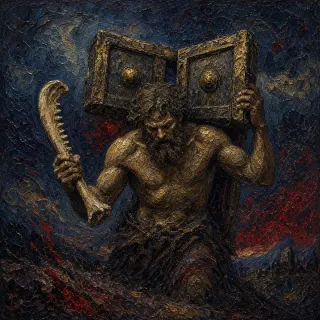
    The Jawbone and the Gates

  2. Judges 16:4-31

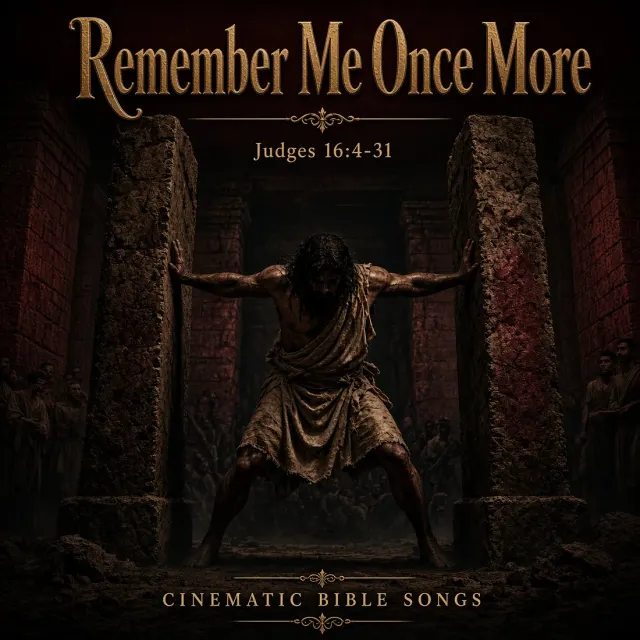
    Remember Me Once More

Nearby

All the people

Report an error on this page