

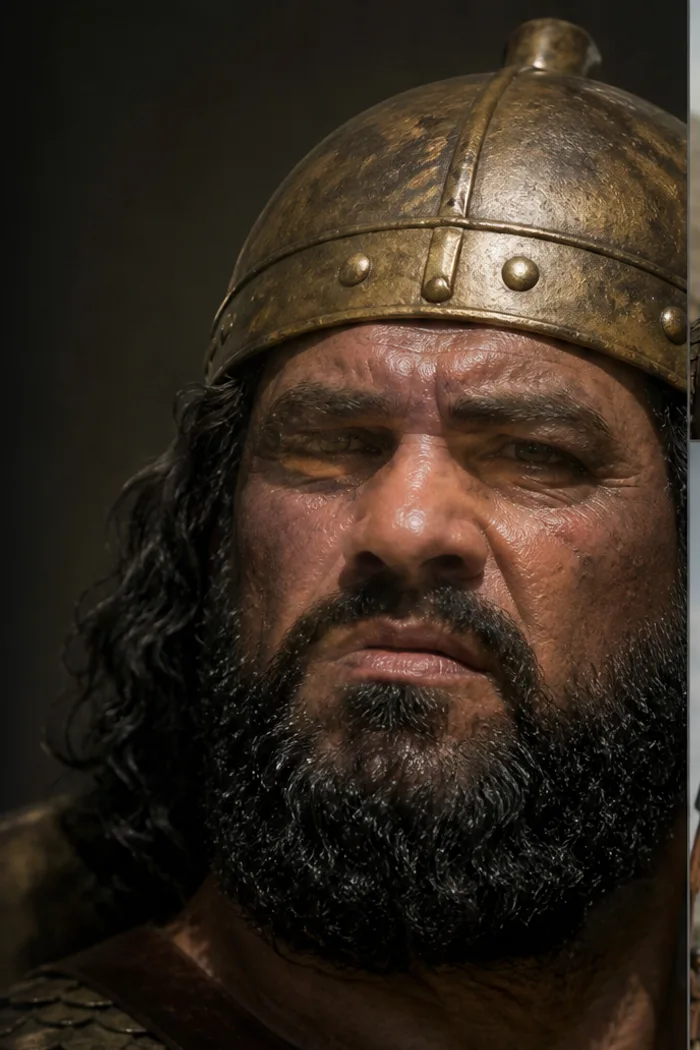
1 Samuel 17:4-11
The inventory
Six cubits and a span, five thousand shekels of bronze on his body, six hundred of iron in the spearhead, and a man ahead of him carrying the shield. Saul and all Israel are dismayed.
Verse by verse
- 17:4
Champion translates a Hebrew expression meaning a man of the space between, the combatant who steps between the opposing forces.
- 17:4
The KJV gives six cubits and a span. The Greek text represented in Brenton's Septuagint gives four cubits and a span; the difference is an ancient textual reading, not a modern conversion of units.
- 17:5
Shekels here measure weight, not a purchase price. The verse describes the mass of the armor, not what Goliath paid for it.
- 17:9
These are Goliath's proposed terms. The later Philistine flight in verse 51 is not a performance of the promised submission.
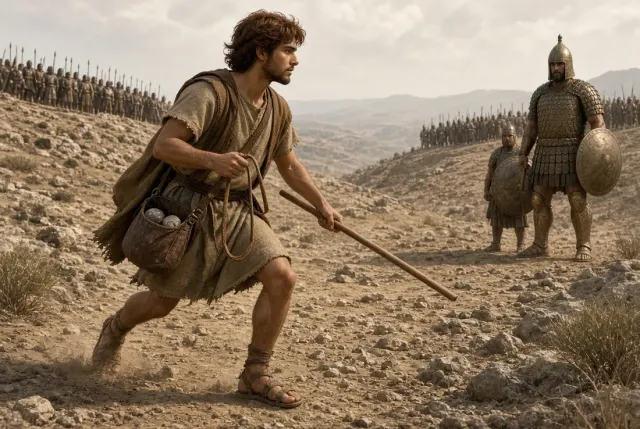

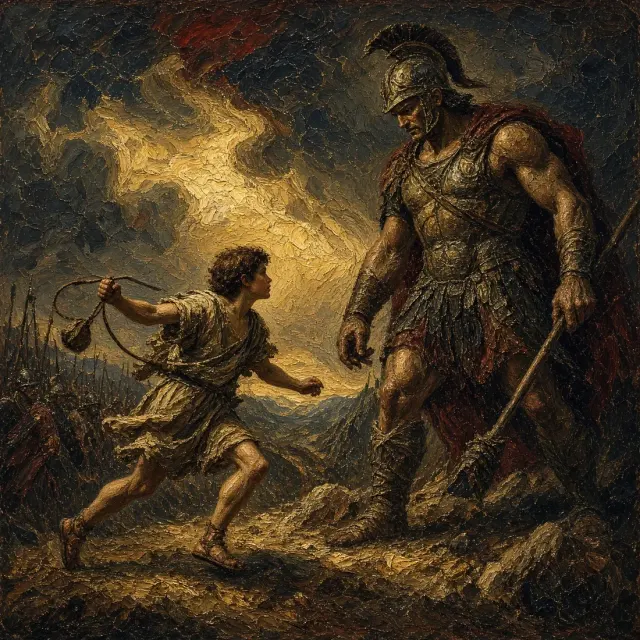
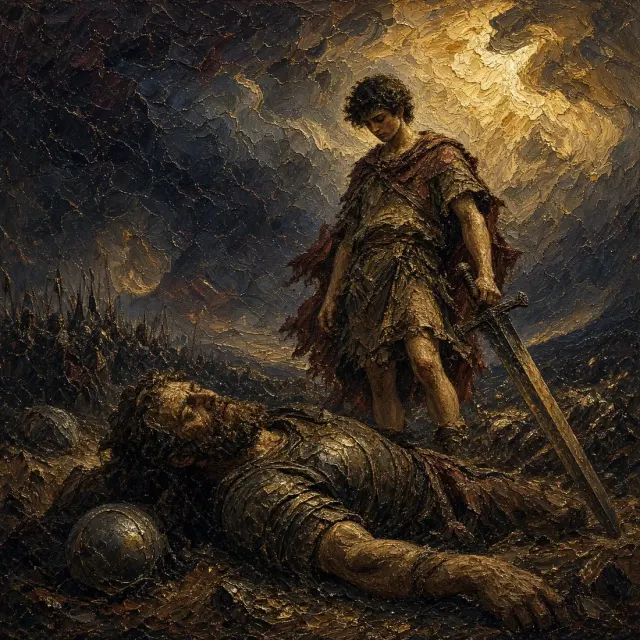



Goliath arrives accompanied by his measurements. Before he speaks, the passage supplies height, metal, weight, protective clothing, a spear shaft, a spearhead, and a man carrying his shield. The description makes the space between the armies feel occupied by something much larger than one man. Even his equipment needs an introduction.
His challenge then puts the entire nation behind a single proposed representative. Choose one man, let him fight, and let the defeated side become servants. This is not a private quarrel between two unusually memorable combatants. Goliath proposes to decide the standing of both peoples through one encounter, while calling Israel merely servants to Saul. His terms are as imposing as his armor.
Saul is included among those who are dismayed. The king introduced in 9:2 as taller than his people now hears the demand for a man and supplies none. The chapter does not need to call him a coward to establish that gap. Goliath has not yet struck an Israelite in this passage. His words, supported by the immense body that speaks them, have already held an army in place.