
O panorama
Josué 3 abre com “And Joshua rose early in the morning; and they removed from Shittim, and came to Jordan…”, muda perto do versículo 9 com “And Joshua said unto the children of Israel, Come hither, and hear the words of the LORD…” e termina com “And the priests that bare the ark of the covenant of the LORD stood firm on dry ground…”. Esses pontos traçam o movimento próprio do capítulo, da abertura à conclusão.
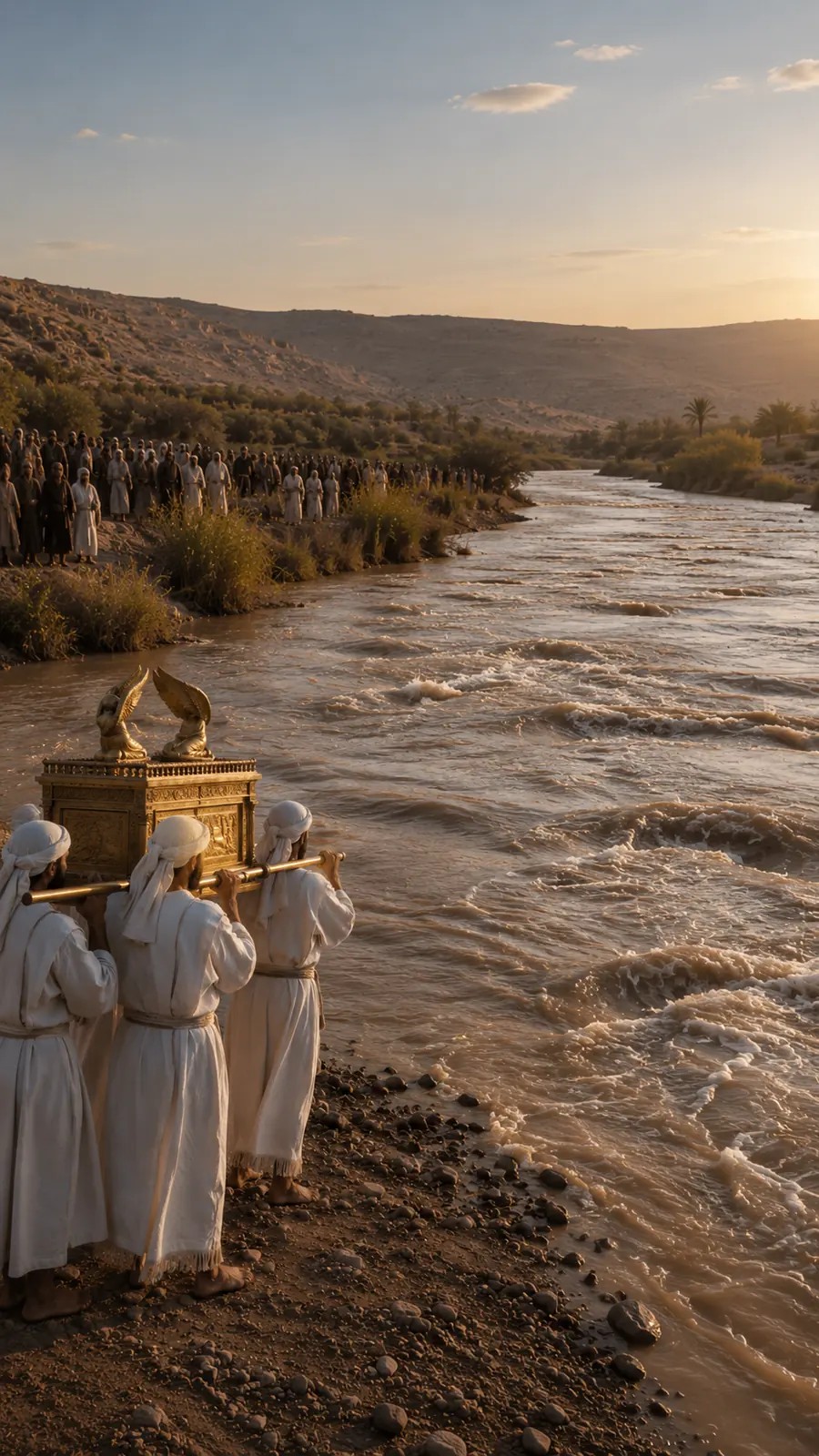
A Escritura ao lado do resumo
Josué · Versão King James · 17Josué 3:1-6
Versículos 1–6: Joshua rose early in the morning; and they removed from Shittim, and…
Josué 3:1–6 abre com “And Joshua rose early in the morning; and they removed from Shittim, and came to Jordan, he and…” e chega a “And Joshua spake unto the priests, saying, Take up the ark of the covenant, and pass over before…” no último versículo. Esse percurso desenvolve Josué 3 se desenvolve por meio de suas próprias vozes, ações, afirmações e consequências.
Contexto que dá vida à passagem
“And Joshua rose early in the morning; and they removed from Shittim, and came to Jordan, he and all the children of…” Nomear Israel e Jordan mantém o relato ligado a pessoas ou lugares concretos. Acompanhe onde o nome retorna e o que muda ao redor dele.
“And it came to pass after three days, that the officers went through the host;” Esse conhecido sinal narrativo faz o tempo avançar. O que segue é uma nova cena, consequência ou resposta a uma tensão anterior.
Josué 3:1-6
Versão King James1And Joshua rose early in the morning; and they removed from Shittim, and came to Jordan, he and all the children of Israel, and lodged there before they passed over.
2And it came to pass after three days, that the officers went through the host;
3And they commanded the people, saying, When ye see the ark of the covenant of the LORD your God, and the priests the Levites bearing it, then ye shall remove from your place, and go after it.
4Yet there shall be a space between you and it, about two thousand cubits by measure: come not near unto it, that ye may know the way by which ye must go: for ye have not passed this way heretofore.
5And Joshua said unto the people, Sanctify yourselves: for to morrow the LORD will do wonders among you.
6And Joshua spake unto the priests, saying, Take up the ark of the covenant, and pass over before the people. And they took up the ark of the covenant, and went before the people.
Josué 3:7-12
Versículos 7–12: The LORD said unto Joshua, This day will I begin to magnify thee in the…
Josué 3:7–12 abre com “And the LORD said unto Joshua, This day will I begin to magnify thee in the sight of all Israel…” e chega a “Now therefore take you twelve men out of the tribes of Israel, out of every tribe a man.” no último versículo. Esse percurso desenvolve Josué 3 se desenvolve por meio de suas próprias vozes, ações, afirmações e consequências.
Contexto que dá vida à passagem
“And the LORD said unto Joshua, This day will I begin to magnify thee in the sight of all Israel, that they may know…” Nomear Israel e Joshua mantém o relato ligado a pessoas ou lugares concretos. Acompanhe onde o nome retorna e o que muda ao redor dele.
“And thou shalt command the priests that bear the ark of the covenant, saying, When ye are come to the brink of the…” A linguagem de promessa, bênção ou aliança precisa de seu destinatário e alcance. Esses detalhes impedem que uma palavra pessoal da história seja separada do contexto.
Josué 3:7-12
Versão King James7And the LORD said unto Joshua, This day will I begin to magnify thee in the sight of all Israel, that they may know that, as I was with Moses, so I will be with thee.
8And thou shalt command the priests that bear the ark of the covenant, saying, When ye are come to the brink of the water of Jordan, ye shall stand still in Jordan.
9And Joshua said unto the children of Israel, Come hither, and hear the words of the LORD your God.
10And Joshua said, Hereby ye shall know that the living God is among you, and that he will without fail drive out from before you the Canaanites, and the Hittites, and the Hivites, and the Perizzites, and the Girgashites, and the Amorites, and the Jebusites.
11Behold, the ark of the covenant of the Lord of all the earth passeth over before you into Jordan.
12Now therefore take you twelve men out of the tribes of Israel, out of every tribe a man.
Josué 3:13-17
Versículos 13–17: It shall come to pass, as soon as the soles of the feet of the priests…
Josué 3:13–17 abre com “And it shall come to pass, as soon as the soles of the feet of the priests that bear the ark of…” e chega a “And the priests that bare the ark of the covenant of the LORD stood firm on dry ground in the…” no último versículo. Esse percurso desenvolve Josué 3 se desenvolve por meio de suas próprias vozes, ações, afirmações e consequências.
Contexto que dá vida à passagem
“And it shall come to pass, as soon as the soles of the feet of the priests that bear the ark of the LORD , the Lord of…” A ordem não pode ser entendida apenas pelo verbo. O destinatário, o propósito e seu lugar na aliança ou argumento definem a responsabilidade.
“And it came to pass, when the people removed from their tents, to pass over Jordan, and the priests bearing the ark of…” Esse conhecido sinal narrativo faz o tempo avançar. O que segue é uma nova cena, consequência ou resposta a uma tensão anterior.
“And as they that bare the ark were come unto Jordan, and the feet of the priests that bare the ark were dipped in the…” Nomear Jordan mantém o relato ligado a pessoas ou lugares concretos. Acompanhe onde o nome retorna e o que muda ao redor dele.
Josué 3:13-17
Versão King James13And it shall come to pass, as soon as the soles of the feet of the priests that bear the ark of the LORD , the Lord of all the earth, shall rest in the waters of Jordan, that the waters of Jordan shall be cut off from the waters that come down from above; and they shall stand upon an heap.
14And it came to pass, when the people removed from their tents, to pass over Jordan, and the priests bearing the ark of the covenant before the people;
15And as they that bare the ark were come unto Jordan, and the feet of the priests that bare the ark were dipped in the brim of the water, (for Jordan overfloweth all his banks all the time of harvest,)
16That the waters which came down from above stood and rose up upon an heap very far from the city Adam, that is beside Zaretan: and those that came down toward the sea of the plain, even the salt sea, failed, and were cut off: and the people passed over right against Jericho.
17And the priests that bare the ark of the covenant of the LORD stood firm on dry ground in the midst of Jordan, and all the Israelites passed over on dry ground, until all the people were passed clean over Jordan.
Detalhes que merecem atenção
A imagem de abertura
Joshua 3:1 começa com “And Joshua rose early in the morning; and they removed from Shittim, and came to Jordan, he and all the children of Israel, and lodged there before they…”
Onde o capítulo muda
Joshua 3:12 forma uma mudança natural: “Now therefore take you twelve men out of the tribes of Israel, out of every tribe a man.”
A nota final
Joshua 3:17 deixa o leitor com “And the priests that bare the ark of the covenant of the LORD stood firm on dry ground in the midst of Jordan, and all the Israelites passed over on dry…”
Um caminho de palavras pelo capítulo
As palavras Jordan, LORD, people, covenant, priests, Joshua ajudam a revelar as preocupações repetidas do capítulo.
Primeiro o texto
Onde os leitores divergem
O resumo começa com o que a passagem diz e como suas partes se relacionam. Ele não presume que uma denominação já resolveu todas as questões. A dependência de uma tradição, teoria literária ou reconstrução histórica é claramente identificada.
O texto KJV aparece primeiro. As conclusões interpretativas são identificadas, e as diferenças surgem quando ajudam a explicar por que comunidades sérias nem sempre chegam à mesma resposta.
As notas interpretativas comparativas deste capítulo estão em preparação. Até que as notas revisadas estejam prontas, esta página separa o texto KJV do resumo e da aplicação sem afirmar que leitores responsáveis concordam em todas as questões.