
Genesis 1:1–2:3
God creates the world
Ages 8 to 11
The account
Genesis begins with God. In the beginning, God created the heaven and the earth. The earth was without form and empty, and darkness was over the deep waters. The Spirit of God moved upon the waters.
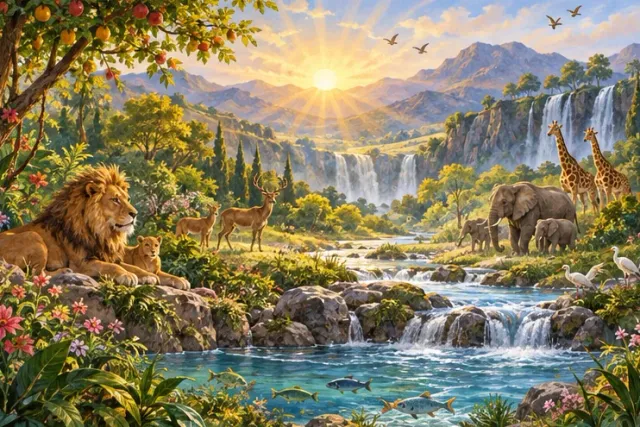
On the first day, God made light and separated light from darkness. On the second day, he made the firmament, which he called Heaven, dividing waters from waters. On the third day, dry land appeared. God called the dry land Earth and the gathered waters Seas. He also made grass, plants and fruit trees.
On the fourth day, God made lights in heaven for days, years and seasons. He made the greater light to rule the day, the lesser light to rule the night, and the stars. On the fifth day, God made living creatures in the waters and birds that fly above the earth.
On the sixth day, God made land animals. Then God made mankind in his image, male and female. He blessed them and gave them rule over the living creatures. God also gave plants and fruit for food.
God saw everything he had made, and it was very good. On the seventh day, God finished his work, rested, blessed the seventh day and made it holy.
Memory verse
In the beginning God created the heaven and the earth.
Genesis 1:1
Talk about it
- What did God make on the first day?
- What did God make on the sixth day?
- What did God do on the seventh day?
Try this
Fold a sheet of paper into seven spaces. Draw one part of the creation account in each space, in order from the first day through the seventh day.
What can we learn?
This account can teach us to notice the order and variety of the world God made. It can also remind us that people have a special responsibility within creation.
Ages 12 to 15
The account
The Book of Genesis opens before there are cities, nations or even people. Its first account begins with God creating the heaven and the earth. The earth is described as without form and void, with darkness over the deep, while the Spirit of God moves upon the waters.
Creation then unfolds in an ordered sequence. On the first day, God commands light to appear, separates light from darkness, and names them Day and Night. On the second day, he makes the firmament, calling it Heaven, and divides waters from waters. On the third day, the waters under heaven are gathered so that dry land appears. God names the dry land Earth and the gathered waters Seas. He also causes grass, seed-bearing plants and fruit trees to grow, each producing after its kind.
On the fourth day, God makes lights in the firmament of heaven to divide day from night and to mark signs, seasons, days and years. The greater light rules the day, the lesser light rules the night, and God makes the stars also. On the fifth day, he creates living creatures in the waters and winged birds. God blesses them and tells them to be fruitful and multiply.
On the sixth day, God makes the living creatures of the land: cattle, creeping things and beasts of the earth, each after its kind. Then the account turns to humanity. God says mankind will be made in his image and likeness and will have dominion over the other living creatures. God creates mankind in his own image, male and female, blesses them, and tells them to be fruitful, multiply, fill the earth and subdue it. He gives seed-bearing plants and fruit trees to people for food, and green plants to the animals.
Again and again, God sees what he has made and calls it good. After the sixth day, he sees everything he has made, and it is very good. Genesis 2:1-3 completes the account: the heavens and earth are finished, God ends his work on the seventh day, rests from his work, blesses the seventh day and sanctifies it.
For the first people in the account, this establishes where they came from and their place within creation. They are creatures made by God, made in his image, blessed by him, given food, and given responsibility within the world he made.
Memory verse
In the beginning God created the heaven and the earth.
Genesis 1:1
Think about it
- Why do you think Genesis repeats that God saw what he made and that it was good?
- What does the account show about God's authority over light, land, seas, living creatures and people?
- Why is the creation of mankind described differently from the creation of the other living creatures?
- What responsibilities are people given within creation?
Going deeper
Later parts of the Bible return to this account. Exodus 20:8-11 points back to God's six days of work and the seventh day of rest when explaining Israel's Sabbath. Psalm 8 reflects on humanity's honored place under God and its responsibility over living creatures. John 1:1-3 begins with the Word and says that all things were made by him. The creation account becomes a foundation that later biblical books use when speaking about God, humanity and the world.
What can we learn?
This account can teach us to see human life as both valuable and responsible: people are made in God's image and are given care over the created world. It also shows a pattern of purposeful work followed by a day that God blessed and made holy.