
1 Kings 17:1–16
Elijah fed by ravens, and the widow's jar that never ran out

Ages 8 to 11
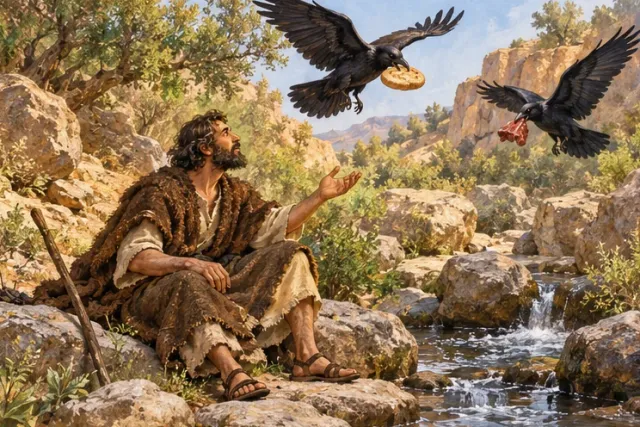
The account
Elijah the Tishbite told King Ahab that there would be no dew or rain for years except according to his word. Then the word of the LORD told Elijah to leave and hide by the brook Cherith, near the Jordan River.
Elijah drank from the brook. Ravens brought him bread and meat in the morning and again in the evening. After a while, the brook dried up because there had been no rain.
The LORD then told Elijah to go to Zarephath. There he saw a widow gathering sticks. Elijah asked her for water and a little bread. She explained that she had only a handful of meal in a barrel and a little oil in a cruse. She said she and her son expected to eat one last meal and then die because they had no more food.
Elijah told her not to fear. He asked her to make a small cake for him first, then prepare food for herself and her son. He also told her the LORD’s promise: the meal would not run out, and the oil would not fail, until the LORD sent rain again.
The widow did what Elijah said. She, Elijah and her household ate for many days. The barrel of meal did not run out, and the cruse of oil did not fail. The account says this happened according to the word of the LORD spoken by Elijah.
Memory verse
And the barrel of meal wasted not, neither did the cruse of oil fail, according to the word of the LORD, which he spake by Elijah.
1 Kings 17:16
Talk about it
- Where did Elijah get water and food while he stayed by the brook?
- What did the widow say she had left in her home?
- What happened to the meal and oil after the widow followed Elijah’s instruction?
Try this
Draw a small barrel and a small oil container on paper. Around them, write or draw the different ways food reached people in this account: the brook, the ravens, the widow’s meal and the oil.
What can we learn?
A lesson we can draw from this account is that God can provide in ways people do not expect. The passage also shows Elijah and the widow acting on what the LORD had said even when supplies were very small.
Ages 12 to 15
The account
First Kings 17 introduces Elijah during the reign of Ahab. Elijah, called the Tishbite and identified with Gilead, came to the king with a severe message: there would be neither dew nor rain for years except according to Elijah’s word. The seriousness of the drought becomes clear as the passage continues: the brook dries up, and a widow has almost no food left.
After speaking to Ahab, Elijah received instructions from the LORD to go east and hide by the brook Cherith, near the Jordan. He could drink from the brook, and God said ravens would feed him there. Elijah obeyed. The ravens brought him bread and meat in the morning and again in the evening.
As the drought continued, the brook dried up. The word of the LORD then sent Elijah to Zarephath, a town belonging to Zidon. God said a widow there would sustain him.
At the city gate Elijah saw a widow gathering sticks. He asked her for a little water, then also asked for a piece of bread. The woman explained how little she had left: only a handful of meal in a barrel and a little oil in a cruse. She was gathering sticks to prepare food for herself and her son. She said they would eat it and then die because they had no more food.
Elijah told her not to fear. He asked her to make a small cake for him first and then make food for herself and her son. He gave her a promise from the LORD God of Israel: the barrel of meal would not be used up, and the cruse of oil would not fail, until the day the LORD sent rain on the earth.
The widow did what Elijah said. The text reports that she, Elijah and her household ate for many days. The meal did not run out, and the oil did not fail. Their supply was not described as a huge storehouse appearing all at once. Instead, the food continued to be there as it was needed.
The passage links every stage to the word of the LORD: Elijah’s warning to Ahab, his move to Cherith, the ravens’ provision, his journey to Zarephath and the continuing supply of meal and oil.
Memory verse
And the barrel of meal wasted not, neither did the cruse of oil fail, according to the word of the LORD, which he spake by Elijah.
1 Kings 17:16
Think about it
- Why did the drying brook matter even after Elijah had obeyed the LORD by going there?
- What does the passage show about the different ways God provided for Elijah?
- Why was Elijah’s request difficult for the widow when she had so little food left?
- What does the widow’s response show about how she acted on the word Elijah gave her?
Going deeper
Elijah’s drought appears again elsewhere in the Bible. In Luke 4, Jesus refers to the widow of Zarephath when speaking about Elijah’s time, and James 5 points to Elijah when discussing prayer and the years without rain. Those later references show that this short passage became part of the Bible’s wider picture of Elijah’s ministry.
What can we learn?
A lesson we can draw from this account is that limited resources do not limit the ways God can provide. The passage also shows that obedience sometimes happens before a person can see how the need will be met.