
Luke 15
The lost sheep and the lost son

Ages 8 to 11
The account
Tax collectors and sinners came near to hear Jesus. The Pharisees and scribes complained that he received sinners and ate with them. Jesus answered with pictures of things that were lost and found.
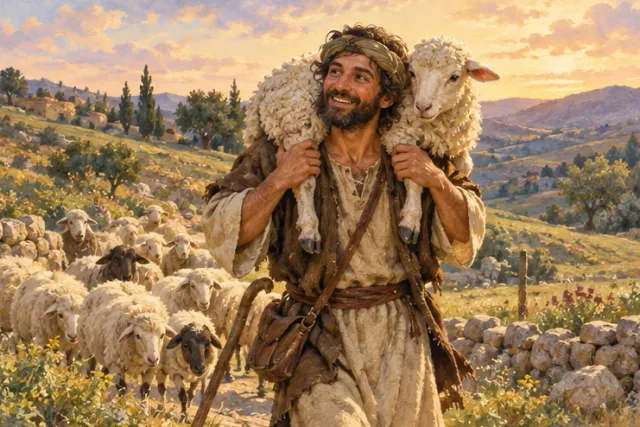
First, he spoke about a man with one hundred sheep. If one sheep became lost, the man would leave the ninety-nine and go after the missing one until he found it. When he found it, he would carry it on his shoulders, rejoicing, and call others to rejoice with him. Jesus said there is joy in heaven over one sinner who repents.
Jesus also spoke about a woman who searched carefully until she found a lost piece of silver.
Then Jesus spoke about a father with two sons. The younger son asked for his share of the family goods, left for a far country, and wasted what he had. When a famine came, he had nothing. He decided to return home and admit that he had sinned.
While he was still far away, his father saw him, had compassion, ran to him, and welcomed him. The father called for a robe, a ring, shoes, and a meal to celebrate because his son had returned.
The older son became angry and would not go in. His father came out and spoke with him too, explaining that it was right to be glad because his brother had been lost and was found.
Memory verse
Likewise, I say unto you, there is joy in the presence of the angels of God over one sinner that repenteth.
Luke 15:10
Talk about it
- What did the man do when one of his one hundred sheep was lost?
- What did the younger son decide to do after he had lost everything?
- How did the father respond when his younger son came home?
Try this
Divide a sheet of paper into three boxes labeled sheep, silver and son. In each box, draw or write what was lost, what happened when it was found, and how people responded afterward.
What can we learn?
A lesson we can draw is that Jesus' pictures place great value on seeking, finding and welcoming what was lost. They also connect repentance with joy rather than with pretending that nothing went wrong.
Ages 12 to 15
The account
Luke 15 begins with two very different reactions to Jesus. Publicans and sinners drew near to hear him. Pharisees and scribes murmured because Jesus received sinners and ate with them. Jesus answered with a set of connected pictures about what is lost and what happens when it is found.
First, he described a man with one hundred sheep. If one were lost, the man would leave the ninety-nine in the wilderness and search until he found the missing sheep. When he found it, he would place it on his shoulders rejoicing, then call friends and neighbours to rejoice with him. Jesus connected that joy with heaven's joy over one sinner who repents.
Next, Jesus described a woman with ten pieces of silver who lost one. She lit a candle, swept the house, and searched carefully until she found it. She too called others to rejoice. Jesus again connected finding what was lost with joy over repentance.
Then Jesus spoke of a man with two sons. The younger asked for the portion of goods that would fall to him. The father divided his living between them. The younger son gathered his share, traveled to a far country, and wasted it in riotous living. After he had spent everything, a severe famine came, and he began to be in want. He ended up feeding swine and longing for their food.
The son came to himself and decided to return to his father, confess his sin, and ask to be treated as a hired servant. While he was still a great way off, his father saw him, had compassion, ran to him, embraced him, and kissed him. The son confessed. The father ordered the best robe, a ring, shoes, and a feast, saying that his son had been dead and was alive again, lost and found.
But Jesus did not end there. The older son heard the celebration, became angry, and refused to go in. His father came out and entreated him. The older son complained about his years of service and the celebration given to his brother. The father answered that the older son was always with him and that all he had was his. Still, it was right to rejoice because the brother had been lost and was found.
The setting explains why these pictures mattered. Jesus was answering people who objected to his receiving sinners. Each picture ends with joy over recovery, while the final one also leaves the older brother standing outside the celebration, listening to his father's appeal.
Memory verse
Likewise, I say unto you, there is joy in the presence of the angels of God over one sinner that repenteth.
Luke 15:10
Think about it
- Why does Luke tell us about the complaint of the Pharisees and scribes before Jesus gives these pictures?
- What repeated pattern connects the lost sheep, the lost silver and the younger son?
- What does the father's response to the returning younger son show within the account?
- Why do you think Jesus ends with the older brother outside while his father appeals to him?
Going deeper
The image of lost sheep reaches back to passages such as Ezekiel 34, where God speaks about seeking scattered sheep. Later in Luke, Jesus describes the Son of man as coming to seek and save the lost in Luke 19:10. Luke 15 places that theme beside repentance, compassion, restoration and joy.
What can we learn?
A lesson we can draw is that admitting wrong and turning back are not the same as pretending the wrong never happened. The chapter also shows joy over restoration while leaving readers to think seriously about the older brother's anger at that joy.