
Acts 12:1–19
An angel frees Peter from prison

Ages 8 to 11
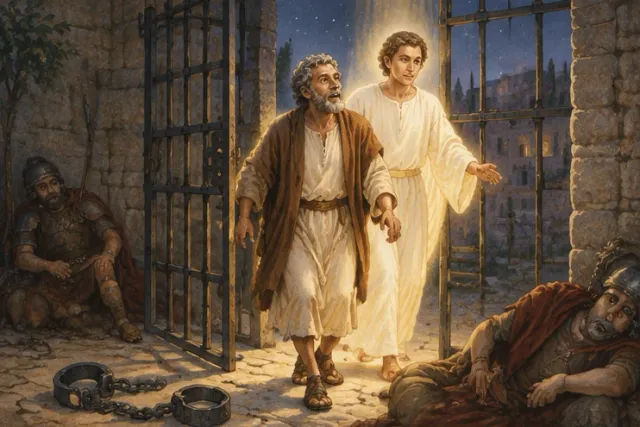
The account
King Herod began harming people in the church. He had James, the brother of John, killed. Then he arrested Peter and put him in prison. Soldiers guarded Peter closely. While Peter was in prison, the church kept praying to God for him.
The night before Herod planned to bring Peter out, Peter slept between two soldiers, bound with two chains. Guards were at the door. An angel of the Lord appeared, and a light shone in the prison. The angel struck Peter on the side, told him to get up quickly, and his chains fell off.
The angel told Peter to put on his sandals and garment and follow. Peter followed, thinking he might be seeing a vision. They passed the guards and came to an iron gate leading into the city. The gate opened for them. After they walked down one street, the angel left. Peter then understood that the Lord had sent his angel and delivered him.
Peter went to the house of Mary, the mother of John Mark, where many were praying. Rhoda recognized Peter's voice at the gate and was so glad that she ran inside before opening it. The others did not believe her at first. Peter kept knocking, and when they opened the door, they were astonished.
Peter told them how the Lord had brought him out of prison, then left for another place. The next morning Herod searched for him, questioned the guards and ordered them put to death.
Memory verse
Peter therefore was kept in prison: but prayer was made without ceasing of the church unto God for him.
Acts 12:5
Talk about it
- What were the people in the church doing while Peter was in prison?
- How did Peter get past the prison gate?
- What did Rhoda do when she recognized Peter's voice?
Try this
Draw four small pictures showing the order of the account: Peter in prison, the angel arriving, the gate opening, and Peter knocking at Mary's house. Under each picture, write one short sentence about what happened.
What can we learn?
This account can remind us that people can keep praying even when they cannot control what happens next. It also shows that an answer can arrive in a way people do not expect.
Ages 12 to 15
The account
Acts 12 begins during a dangerous time for the church. King Herod had James, the brother of John, killed with the sword. When Herod saw that this pleased some of the Jews, he arrested Peter too. Because it was the days of unleavened bread, Peter was placed in prison under heavy guard until Herod intended to bring him before the people. While he remained there, the church prayed to God for him without ceasing.
The night before Herod planned to bring Peter out, Peter was sleeping between two soldiers, bound with two chains. Guards stood before the prison door. Then an angel of the Lord appeared and a light shone in the prison. The angel struck Peter on the side, raised him and told him to get up quickly. His chains fell from his hands.
Peter was told to dress, put on his sandals and follow. He obeyed, but at first he did not realize that what the angel was doing was actually happening. He thought he was seeing a vision. They passed the first and second guard stations and reached the iron gate leading into the city. It opened for them by itself. They went out, passed along one street, and the angel departed.
Peter then understood that the Lord had sent his angel and delivered him from Herod. After considering what had happened, he went to the house of Mary, the mother of John whose surname was Mark. Many believers had gathered there and were praying.
Peter knocked at the gate. Rhoda came to listen, recognized Peter's voice and, because she was so glad, ran back inside without opening the gate. The people did not believe her at first. They even suggested it was his angel. Peter kept knocking. When they opened the door and saw him, they were astonished.
Peter motioned for quiet and explained how the Lord had brought him out of prison. He told them to report it to James and the brethren, then he left for another place.
At daybreak, the soldiers were in great confusion over Peter's disappearance. Herod searched for him, questioned the guards and ordered them put to death. He then left Judea for Caesarea.
Memory verse
Peter therefore was kept in prison: but prayer was made without ceasing of the church unto God for him.
Acts 12:5
Think about it
- Why does the account place the church's continuing prayer beside the fact that Peter was heavily guarded?
- What does Peter's confusion at first, followed by his understanding later, show about how unexpected the escape was?
- Why is Rhoda's reaction both amusing and important to the account?
- What does the response of the gathered believers show about people receiving an answer they were not ready to believe had happened?
Going deeper
Acts has already shown the apostles facing threats, imprisonment and commands to stop speaking about Jesus (Acts 4:1–31; 5:17–42). Peter's release in Acts 12 fits that larger pattern of opposition failing to end the church's witness. At the same time, James's death in the same chapter keeps the account from suggesting that every danger ends in the same way.
What can we learn?
Prayer is presented here as something the church continues to do while Peter's situation remains beyond its control. The account also warns against assuming that God's help must look the same in every case, since James and Peter face very different outcomes.